Blog Artificial Intelligence
How Claude Personal Finance Reads Your Bank Accounts
On this page· 7 sections
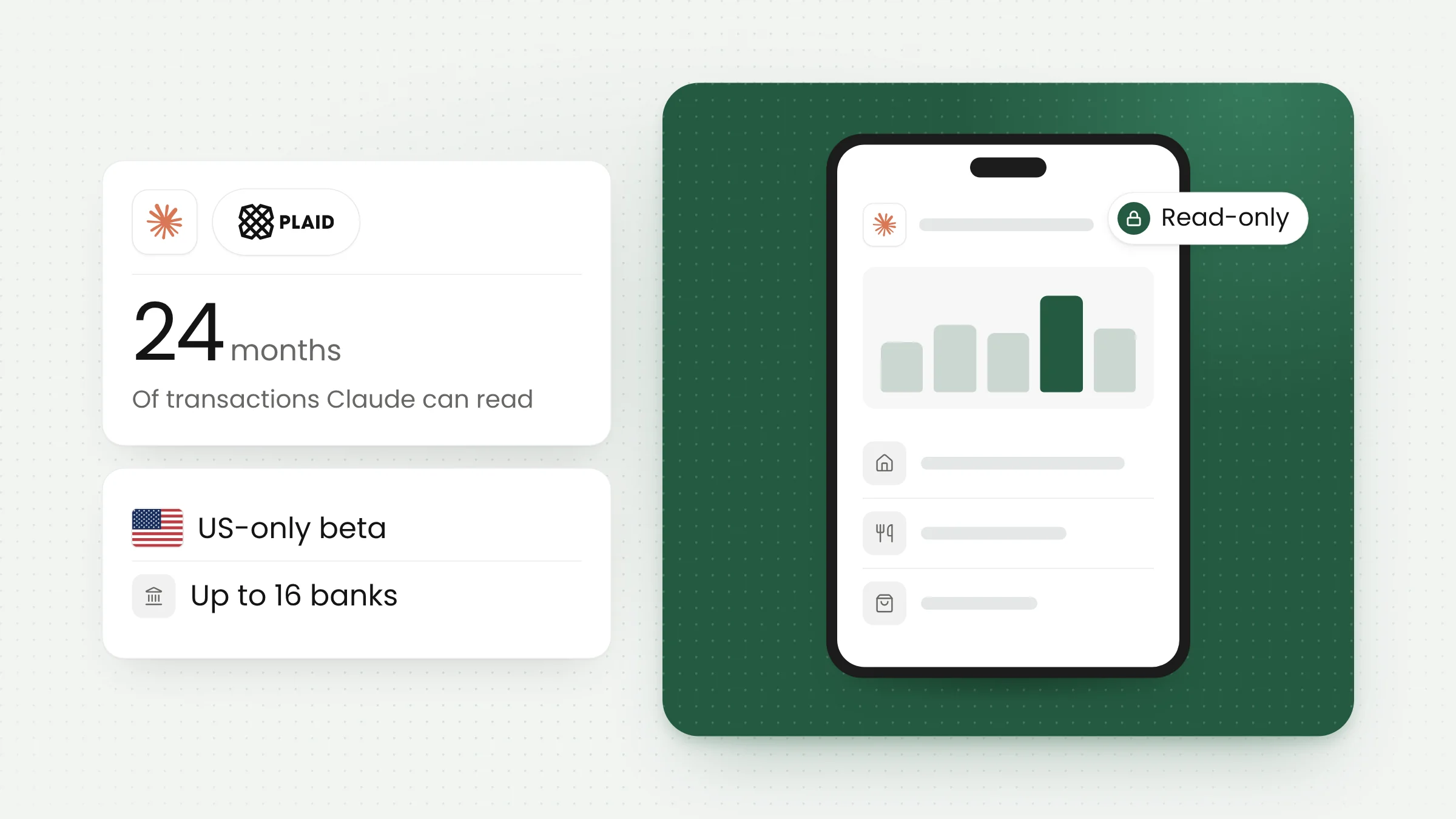
Anthropic launched Claude Personal Finance on November 5, 2026, a beta feature that links bank and credit card accounts to Claude through Plaid. Users ask questions about their spending in plain language, while Claude can only read the data and cannot move money. For now, the feature is limited to paying subscribers in the United States.
The launch follows OpenAI, which added a similar feature to ChatGPT in May 2026. Two major AI developers are now asking for access to some of the most personal data people have: their financial history. The limits Anthropic placed on that access are worth studying for anyone designing digital financial services, including teams in Indonesia.
What Personal Finance can do
According to Anthropic’s announcement, users open Personal Finance from the sidebar, connect one account and start asking questions. Claude answers from balances and transactions, explains unfamiliar terms, and can build charts, calendars or dashboards that users keep adjusting.
TechCrunch described how it works in practice. Claude totals spending across linked accounts and sorts it into categories such as rent and utilities, food and drink, and shopping. Users can follow up, for example by asking whether a given month’s spending is unusually high.
The feature also flags things people tend to miss: duplicate charges, unexpected fees and recurring bills that creep upward. Claude can compare spending with income, explain APR (the annual interest rate on a credit card) and calculate how much interest a user paid over the past year.
Personal Finance is in beta for the Pro, Max and Ultra plans in the United States, rolling out gradually from the week of the announcement. It works on Claude for web, the desktop app, and the iOS and Android apps. It is not available on the Free, Team or Enterprise plans.
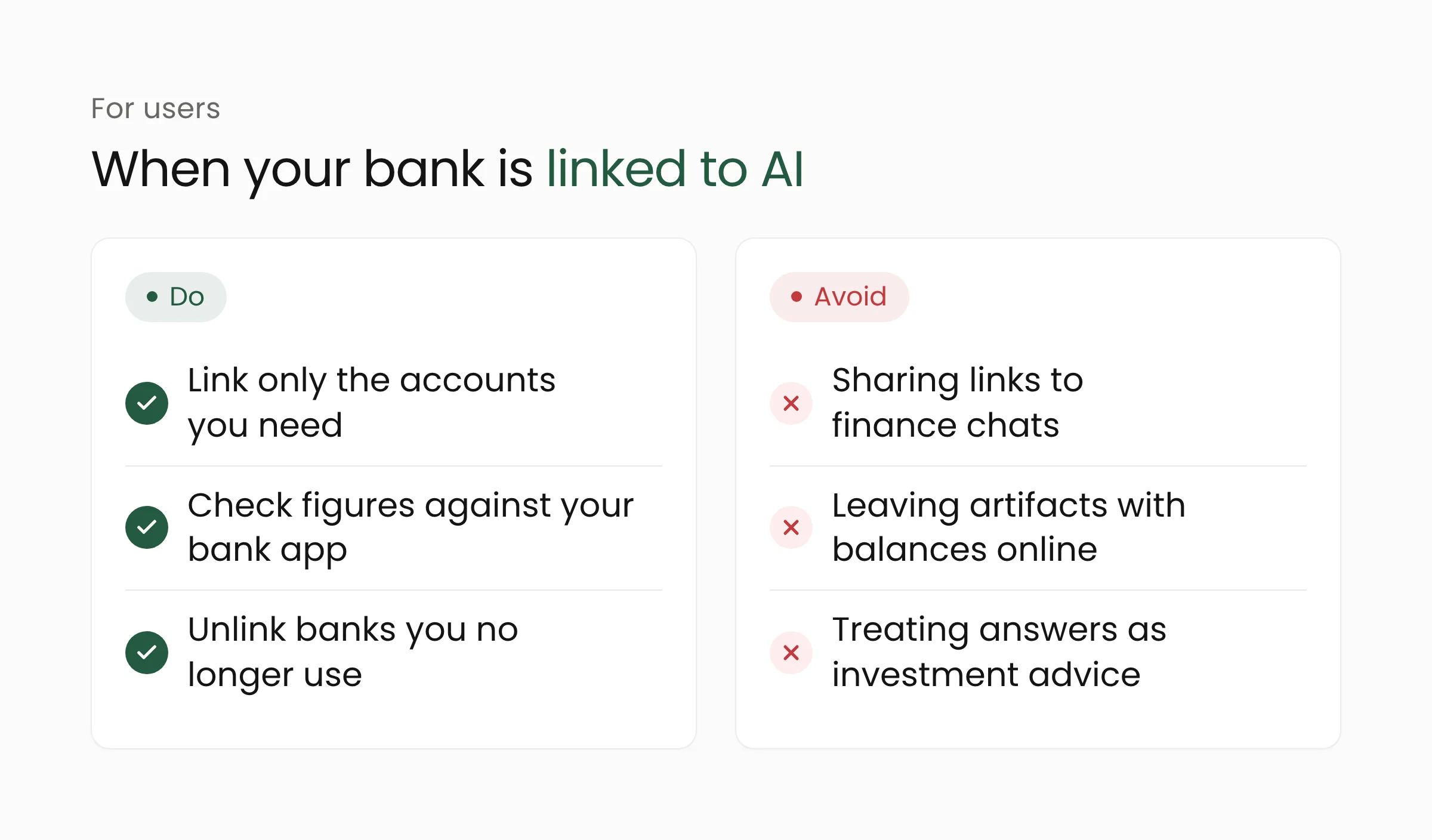
Anthropic says Personal Finance has no ads or sponsored recommendations, and the company does not offer its own credit cards, loans or savings accounts. It also states that the feature is not designed to give investment advice and that Claude can make calculation errors. Users are asked to check important figures against their bank’s app or statements.
Catching up with ChatGPT
According to The Next Web, OpenAI launched a similar feature in May 2026, also through Plaid, and first offered it on its US$200-a-month Pro plan. TechCrunch described Anthropic as playing catch-up. The Next Web pointed to one difference in business model: OpenAI has started showing ads in ChatGPT, while Anthropic says Claude carries no ads.
Anthropic says the next step is to have Claude work alongside licensed professionals and regulated firms on larger financial decisions. The company is also seeking input from banks, wealth managers and other financial services firms. No partnership with a specific bank has been announced.
What Claude can see and where the limits are
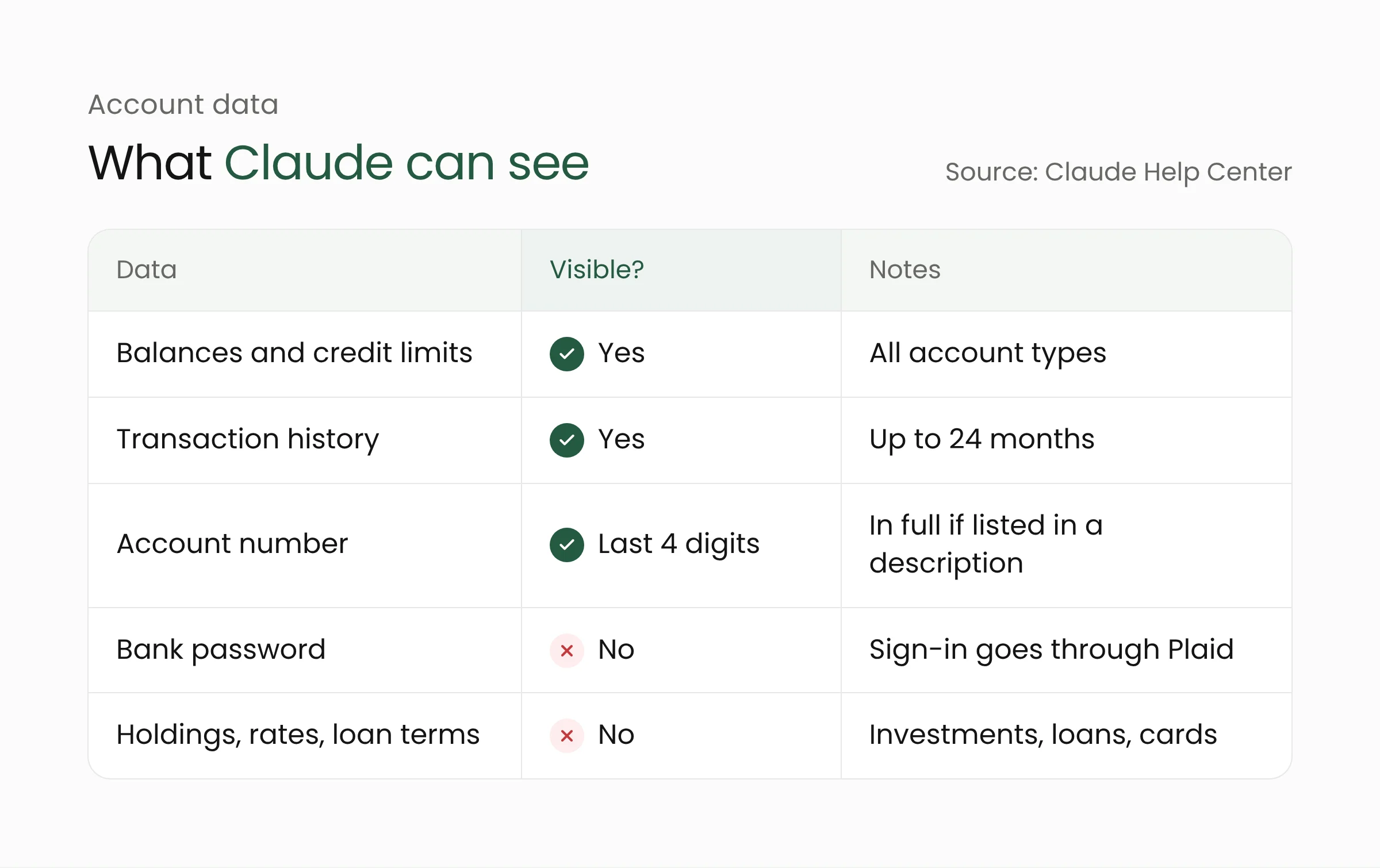
The bank connection runs through Plaid, a financial technology company that sits between apps and banks. Users sign in to their bank through Plaid, so the bank password never reaches Claude. According to the Claude Help Center, the Plaid step has to be completed within 10 minutes, and transactions can take a few minutes to sync.
For every shared account, Claude can see the bank name, the account name and type, the last four digits of the account number, balances and credit limits. It also reads up to 24 months of transactions, including the amount, date, merchant, category and the bank’s description.
Detail is restricted for investment, loan and card accounts. For these, Claude reads balances and credit limits but does not see investment holdings, trades, interest rates or loan terms. The Help Center adds one important caveat: a full account number can still appear if a bank includes it in an account name or a transaction description.
There are other limits. Users can link up to 16 banks, and must unlink one before adding a 17th. Balances can lag by a day or two, so figures may differ from the bank’s records. Linked accounts also cannot be used in scheduled tasks, Cowork, Claude Code or Claude Duet.
Financial privacy inside and outside Personal Finance
Anthropic keeps conversations in the Personal Finance hub separate from other chats. Conversations in the hub are not used to train Anthropic’s models, while chats outside it follow each user’s privacy settings.
Chats that draw on linked accounts are also designed to stay out of Claude’s memory feature, out of chat search and out of the monthly recap. That reduces the chance of financial figures resurfacing in unrelated conversations.
The bigger exposure comes when users share results. Claude asks before publishing an artifact (a page Claude generates) from a finance chat. Once published, though, an artifact remains until it is deleted, even if the original chat is gone. Shared chat links and artifacts can reveal financial figures to anyone who opens them.
Disconnecting also deserves attention. Users unlink by bank login, so every account under that login is removed together. Access can also be revoked at my.plaid.com. Unlinking the last bank permanently deletes the dashboard, widgets, budgets and setup answers, but Claude’s earlier responses stay in chat history until the user deletes them.
The Help Center also notes that banks remain linked after a paid plan ends, until the user unlinks them. Deleting a Claude account unlinks all banks automatically. Plaid and hosting providers handle bank data under their own terms.
What this means for bank and fintech product teams
Personal Finance cannot be used in Indonesia because it only supports US banks, and Anthropic has not announced plans for other countries. Even so, many Indonesian banks, fintech firms and digital cooperatives are weighing AI assistants inside their own apps. Anthropic’s design offers a concrete checklist.
The legal baseline is clear. Article 4(2)(f) of Law No. 27 of 2022 (Undang-Undang tentang Pelindungan Data Pribadi, Indonesia’s Personal Data Protection Law) classifies personal financial data as specific personal data, in the same group as health and biometric data. For app-to-app integration, Bank Indonesia set the national open payment API standard (Standar Nasional Open API Pembayaran, SNAP), which covers technical and security standards as well as governance guidelines on consumer protection and data protection. Management of SNAP moved to the Indonesian Payment System Association (ASPI) on September 1, 2023.
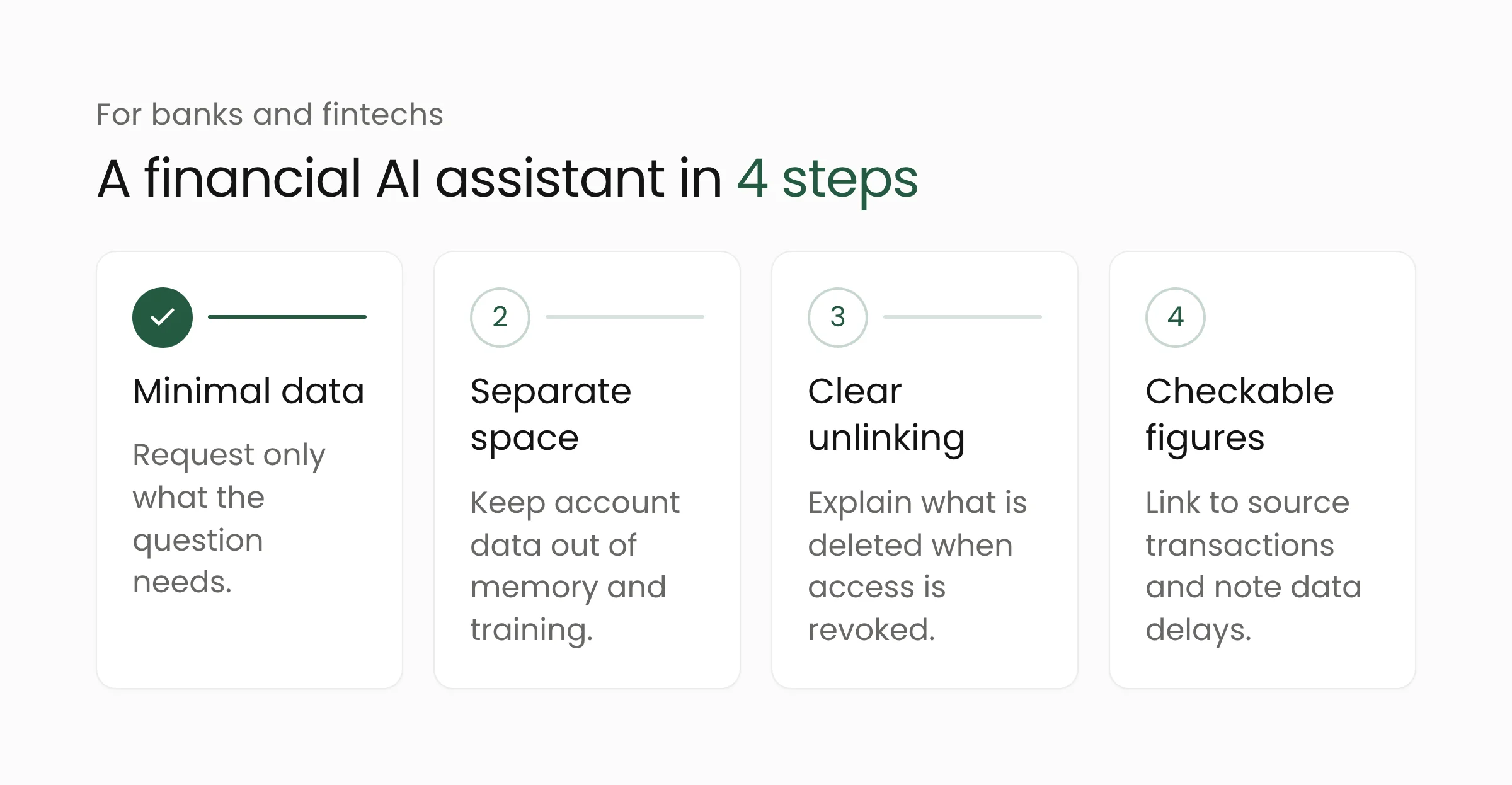
On the product side, four lessons carry over.
First, limit data to what is needed. Anthropic opens balances and transaction history, but withholds investment holdings, interest rates and loan terms. An AI assistant in a banking app should request only the data required for the question it is meant to answer.
Second, keep financial data in its own space. Chats that touch accounts stay out of general memory, recaps and training data. The same principle applies when a bank uses a third-party AI model: contracts and configuration should ensure customer data is not used for training.
Third, make disconnection clear. Customers should know what is deleted and what remains when they revoke access, including anything already shared. Fourth, show the limits of accuracy. Say when data may be delayed and link back to the original transactions so customers can check figures themselves.
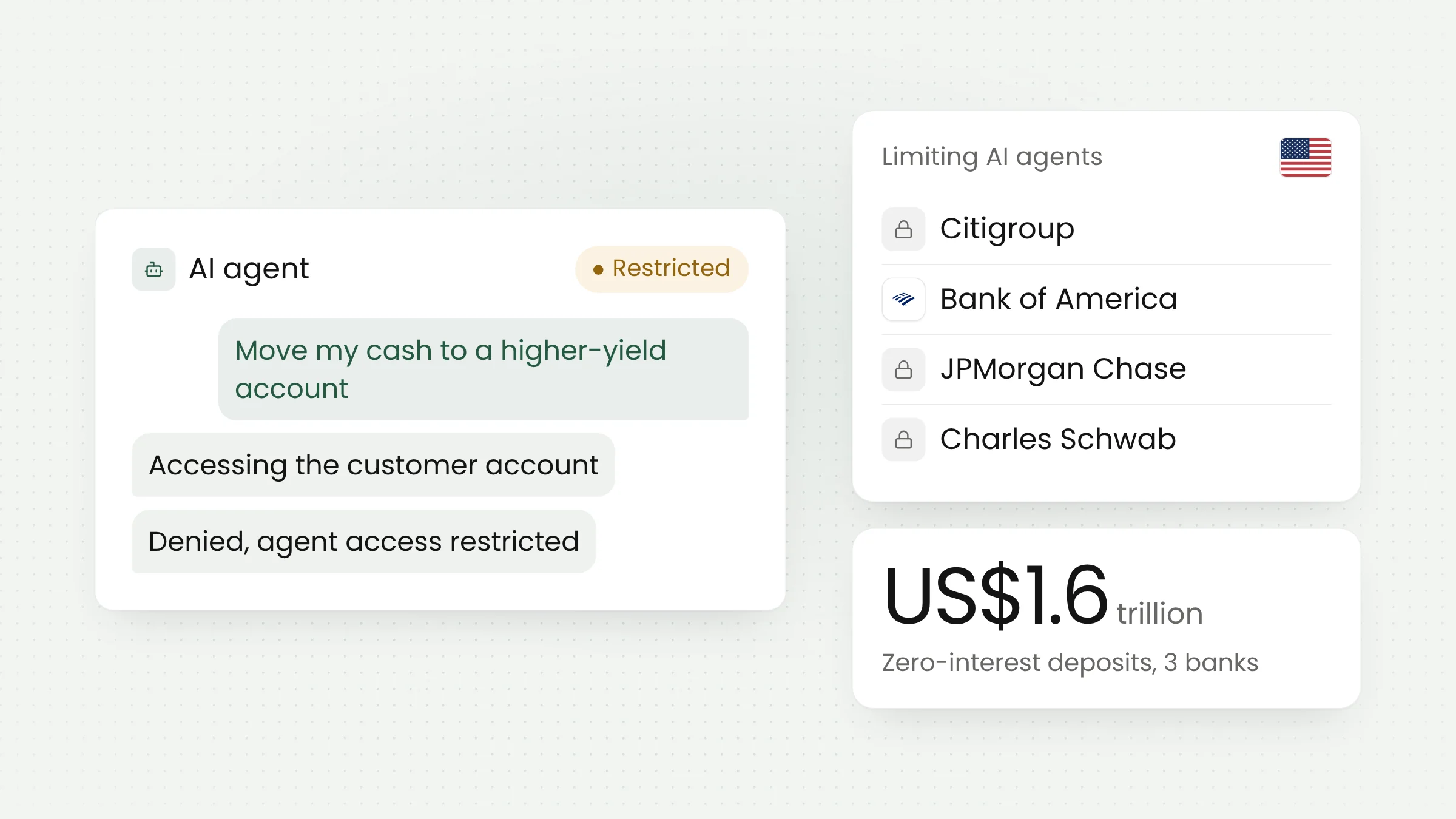
These lessons build on our earlier coverage of US banks restricting AI agents, which focused on agents that use customers’ own credentials. Personal Finance shows a pattern that is easier to supervise: official access through an intermediary, a limited data scope and no permission to transact. Teams building digital financial services solutions can use it as a starting point and adapt it to the rules of OJK, Bank Indonesia and the data protection law.
Frequently asked questions
Can Claude Personal Finance be used in Indonesia?
Not yet. The feature is a beta for Pro, Max and Ultra subscribers in the United States and only supports US banks. Anthropic has not announced a timeline for other countries.
Can Claude transfer money from a linked account?
No. Anthropic says access is read-only. Claude cannot move, manage or invest a user’s money.
Is account data used to train AI models?
According to Anthropic, conversations in the Personal Finance hub are not used for training. Chats outside the hub follow the user’s privacy settings, and chats that use linked account data are designed to stay out of Claude’s memory.
Conclusion
Claude Personal Finance shows that an AI assistant for money matters can be built with firm limits: read-only access, only the data that is needed, and separation from memory and model training. The feature has not reached Indonesia, but the design questions it raises already apply to local banks and fintech firms. If your team is preparing something similar, Merakit’s artificial intelligence services can help map the data flows and permissions from the start.
Sources
- Claude: Introducing Personal Finance in Claude (November 5, 2026)
- Claude Help Center: Use Personal Finance in Claude (accessed November 9, 2026)
- TechCrunch: Claude can now analyze your spending with its new Personal Finance tool (November 5, 2026)
- The Next Web: Anthropic lets Claude read your bank accounts, but not move money (November 5, 2026)
- Pasal.id: Law No. 27 of 2022, Article 4 (accessed November 9, 2026)
- Bank Indonesia: Standar Nasional Open API Pembayaran (SNAP) (accessed November 9, 2026)