Blog AI Agents
US Banks Block AI Agents From Customer Accounts
On this page· 6 sections
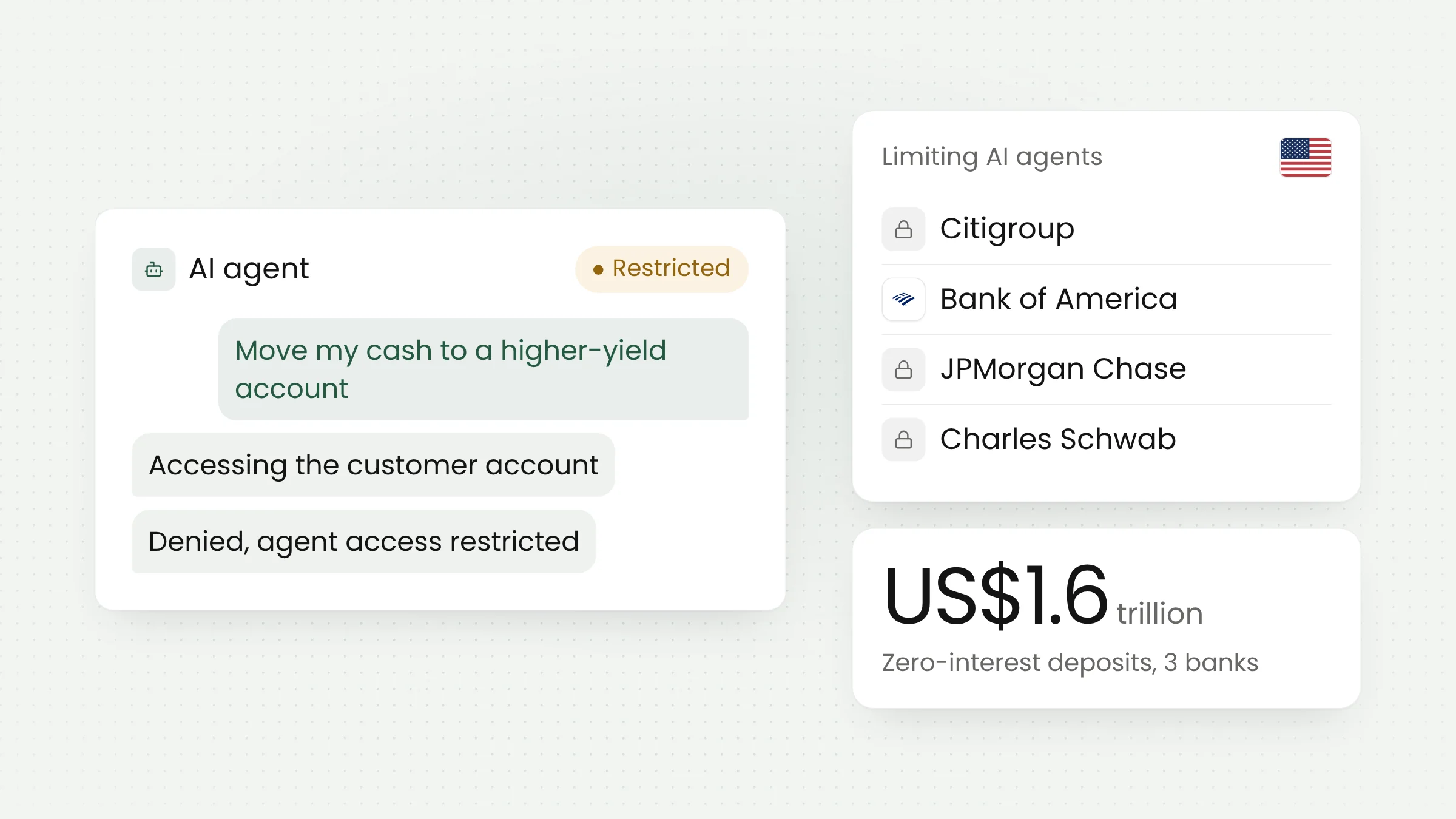
Citigroup and Bank of America have shut third-party AI agents out of customer accounts, joining JPMorgan Chase and Charles Schwab. According to a Financial Times report relayed by several outlets, the banks fear that agents will move customers’ cash into accounts that pay higher interest. The restrictions are an early test for AI agents that act on behalf of an account holder.
What the banks are restricting
The Financial Times reported the Citigroup and Bank of America moves on Friday, October 16, 2026, as summarized by DigitalToday and Retail Banker International. An AI agent here is an assistant that can answer questions, sign in to an account and carry out transactions on its owner’s instructions.
Citigroup says it does not allow third-party AI agents or assistants to log in to customer accounts or transact on its digital banking platforms. Customers can still give certain open banking providers limited, read-only access. Open banking is the formal mechanism that lets other apps see account data with a customer’s permission.
Bank of America, according to The Paypers, is limiting agent access to consumer deposits until protocols exist to decide who is liable for AI-authorized payments. In a CNBC interview on October 14, 2026, CEO Brian Moynihan said a person should approve money leaving an account. The bank also says it is working with agent providers so that consumers can trace funds an agent moves.
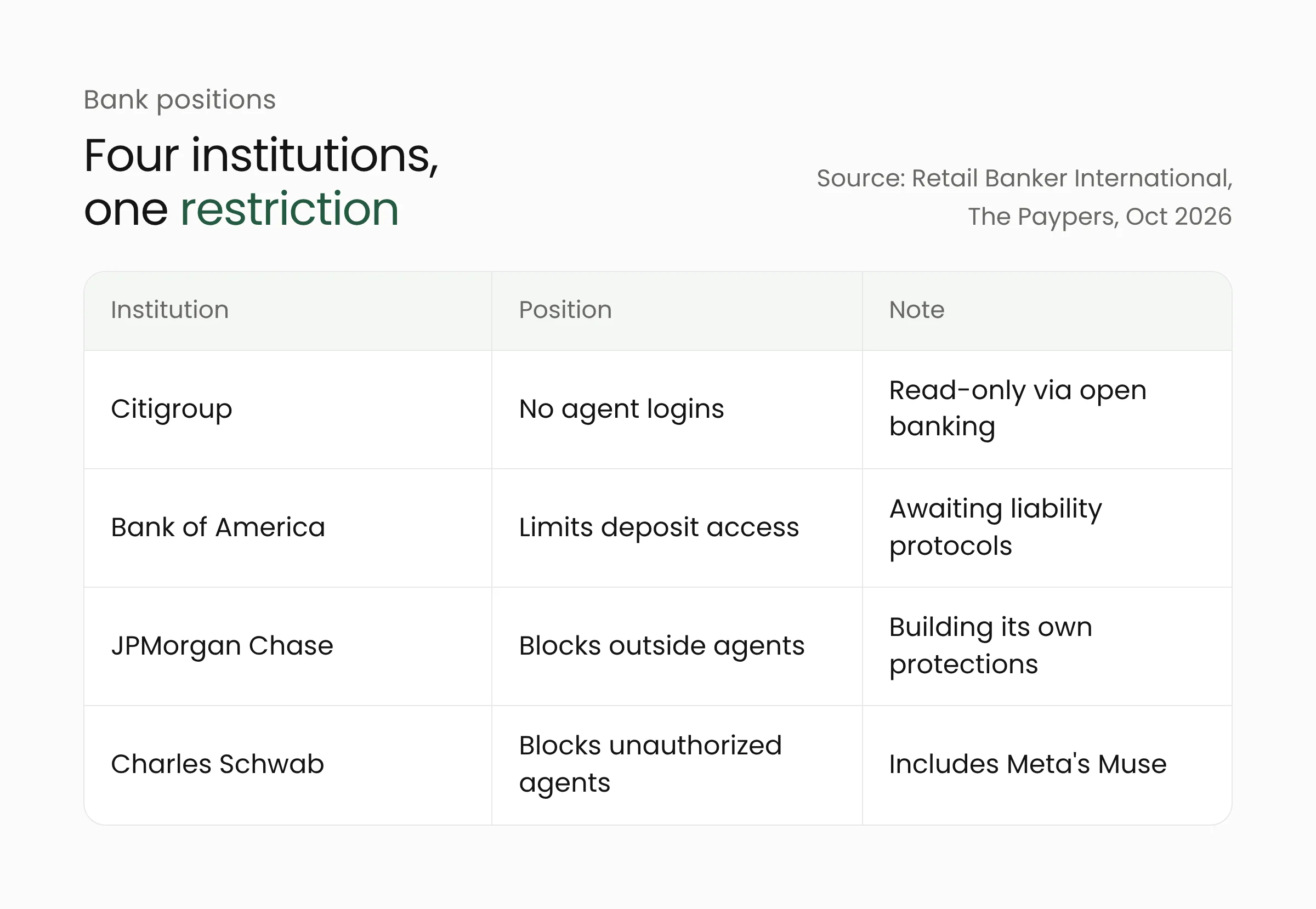
JPMorgan Chase set out its position on its third-quarter results call. CEO Jamie Dimon cited the risk of rogue agents, which he said could number in the thousands, and the bank is building its own protection tools. Charles Schwab CEO Rick Wurster told Bloomberg that the firm is blocking unauthorized agents that try to move clients’ money, including Meta’s Muse. Meta released the Muse personal assistant in September 2026.
According to DigitalToday, citing CNBC, JPMorgan also blocks outside agents such as Muse and Instinct from customer accounts. The same outlet reports that Amazon has stopped Muse from shopping on customers’ behalf, citing privacy and security risks. The restrictions are not limited to banks, since retailers are also starting to decide which agents may act on their platforms.
Why banks are worried
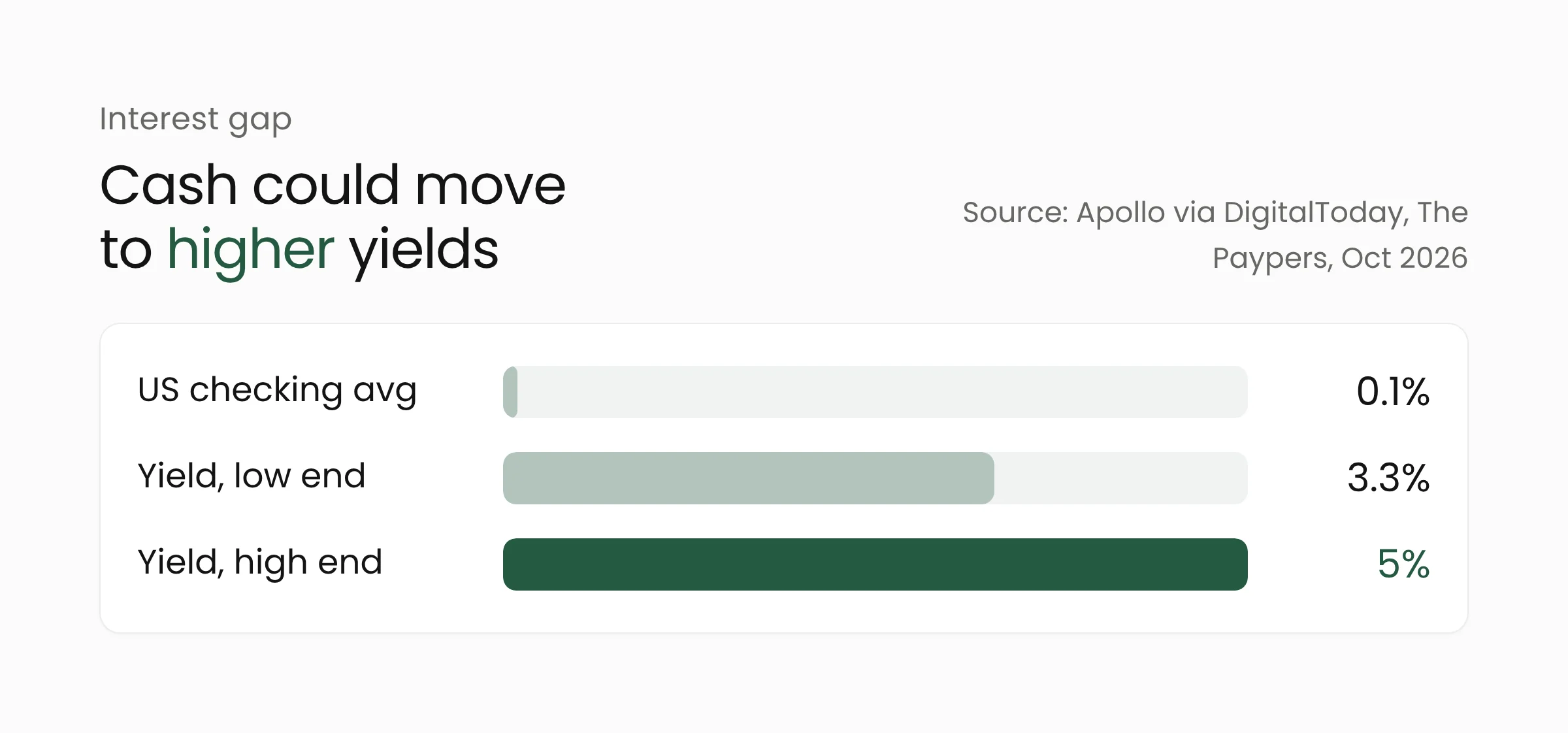
The main trigger is deposits. Apollo chief economist Torsten Slok warned that AI assistants could automatically move household cash from checking accounts paying an average of about 0.1 percent to accounts paying 3.3 to 5 percent. The figures describe the US market, as quoted by DigitalToday and The Paypers.
The scale is large. Non-interest-bearing deposits at JPMorgan, Bank of America and Wells Fargo total US$1.6 trillion, about 16 percent of the three banks’ liabilities. If they had to pay 3 percent on that money, the cost would be roughly US$47 billion a year, close to half of their combined annual profit. The calculation comes from the same reports and is a scenario, not something that has happened.
The second concern is liability. If an agent moves money by mistake, it is unclear whether the customer, the bank or the agent provider bears the loss. A JPMorgan spokesperson, as reported by DigitalToday, said the bank does not allow third parties to obtain customers’ login credentials, and that customers who hand credentials to an agent bear the consequences. Officials cited in the reports believe the law may need to clarify how customers authorize autonomous systems to act for them and who is responsible when something goes wrong.
Wall Street executives have reportedly contacted Federal Reserve regulators about the rapid growth of AI agents in financial transactions. The Federal Reserve declined to comment, and regulators have privately welcomed the restrictions, according to the reports.
Many questions remain open. The reports do not say when banks might open an official channel for agents, what requirements agent providers would have to meet, or how customers would grant authority. The answers will likely decide whether financial AI agents grow through cooperation with banks or stay locked outside.
A senior partner at Simon-Kucher, who is not named in The Paypers, suggested that banks give customers other reasons to keep their savings, such as loyalty programs tied to borrowing rates.
What this means for banks and fintechs in Indonesia
The sources we read cover US banks only. We found no comparable statements from banks or regulators in Indonesia, so this section offers considerations, not a forecast of policy.
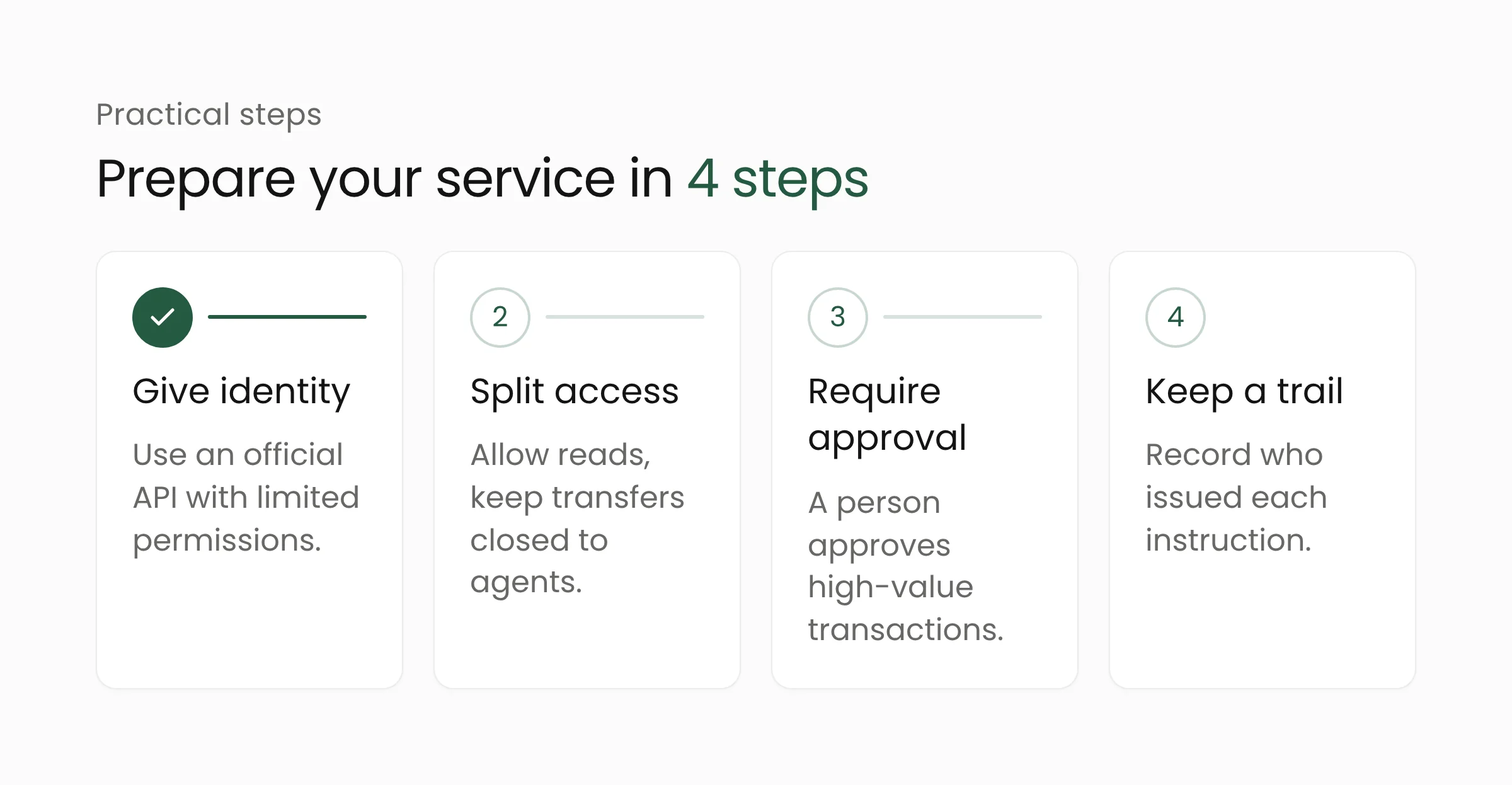
First, treat an AI agent as a third party with its own identity. The model the US banks object to is an agent using a customer’s own login credentials. Access through an official application programming interface (API), with clear permissions, a limited scope and the ability to revoke it, is easier to supervise than an agent that imitates a person on an app screen.
Second, separate read access from transaction access. Citigroup still allows limited read-only access through open banking providers, while transfer instructions stay closed to agents. The same split works for finance apps, digital cooperatives and e-wallets.
Third, require human approval above a chosen transaction value and keep an audit trail that records who or what issued each instruction. Bank of America itself names the ability to trace funds as part of the answer.
Fourth, strengthen monitoring. Highly regular access patterns, very high speed, or many accounts accessed from the same source are worth treating as signals. Merchants and small businesses that accept payments, for example through QRIS as covered in our article on zero-percent QRIS MDR, should also expect that buyers may use AI agents to shop.
Fifth, explain to customers what an AI assistant may and may not do with their accounts. JPMorgan’s position that customers bear the consequences when they hand credentials to an agent shows why this education matters: account passwords should never be given to unofficial apps or assistants.
Merakit works on digital financial services and artificial intelligence, including API access design and permission controls. The central question is how well your systems can tell customers, official apps and automated agents apart.
Frequently asked questions
Are bank customers in Indonesia affected directly?
We found no comparable statements from banks or regulators in Indonesia in the sources we read. The reported restrictions apply in the United States. Customers anywhere should still avoid sharing account passwords with unofficial apps or AI assistants.
Are all AI agents banned?
No. Citigroup still allows limited read-only access through certain open banking providers. What is restricted are third-party agents that sign in to customer accounts or run transactions on a bank’s platform.
Who pays if an AI agent moves money by mistake?
There is no firm answer yet. Bank of America says it is still developing protocols to decide liability, and officials quoted by the media believe the law may need to clarify the split. JPMorgan’s stance is that customers who give credentials to an agent bear the consequences.
Conclusion
The US banks’ restrictions show that AI agents in finance need clear rules on access, approval and liability before wide use. If your organization is designing a digital financial service, contact the Merakit team to discuss access design that is safe for customers and partner apps.
Sources
- DigitalToday: Major financial firms move to block access by personal AI agents, citing deposit flight risk (October 17, 2026)
- Retail Banker International: US banks limit AI agents’ access to customer accounts (October 19, 2026)
- The Paypers: Citi and Bank of America restrict AI agents from accessing accounts (October 19, 2026)