Blog Web Development
Spacefast Hosts AI-Built Apps: What IT Teams Should Know
On this page· 7 sections
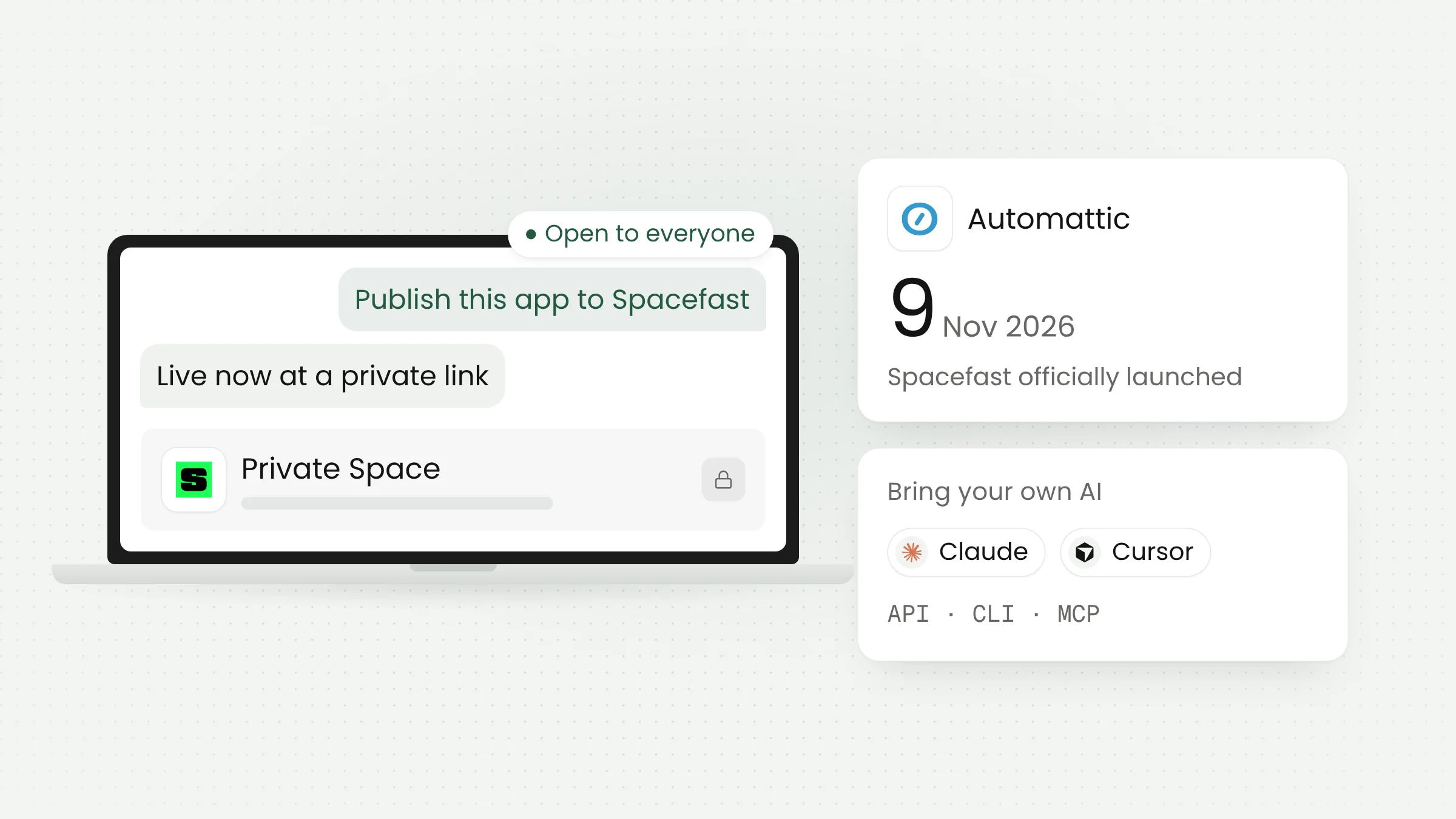
Automattic, the company behind WordPress.com, opened Spacefast to the public on November 9, 2026. Spacefast hosts websites and apps built with AI tools such as Claude, ChatGPT and Cursor. Users ask their AI to publish a project, and a private link appears in the chat within seconds.
Spacefast operates as a new company inside Automattic. According to the official press release, it is led by founder and CEO Batuhan İçöz, who joined Automattic through its acquisition of the messaging app Texts and built the first version during an internal program called Radical Speed Month. TechCrunch reported that Spacefast had been in a limited soft launch since September 2026 to gather feedback before the public release.
How Spacefast works
Spacefast does not include its own app builder. People keep working in the AI assistant they already use, and Spacefast takes care of the parts that usually trip up beginners: hosting, a database and domains. Automattic describes the approach as “bring your own AI.”
The supported tools Automattic lists include ChatGPT, Claude, Grok Bot and Muse, along with the coding agents Claude Code, Codex and Cursor. Other assistants can connect through an API, a command-line tool or an MCP server, the protocol that lets AI assistants call outside tools. Spacefast is also available as an official plugin in Claude, ChatGPT and Grok Bot. Developers who prefer the terminal can run npx spacefast publish.
The workflow is short. Once the AI has built a project, the user asks it to put the project on Spacefast. A private link then appears in the conversation and can be shared with colleagues, who can leave comments directly on the page. Those comments can be passed back to the AI as fix requests.
Hosting, database and version history
Each project on Spacefast is called a Space. The base offering covers hosting, custom domains and a SQL database. According to Automattic’s announcement, every publish creates a new version with its own permanent URL, so users can roll back if an update breaks something.
Spacefast supports popular web frameworks including Vite, TanStack Start, Next.js and Astro, and offers starter templates such as a portfolio, a menu and a landing page. Built-in app sign-in, transactional email and shared team knowledge are not available yet. Automattic says all three are coming in the next few weeks.
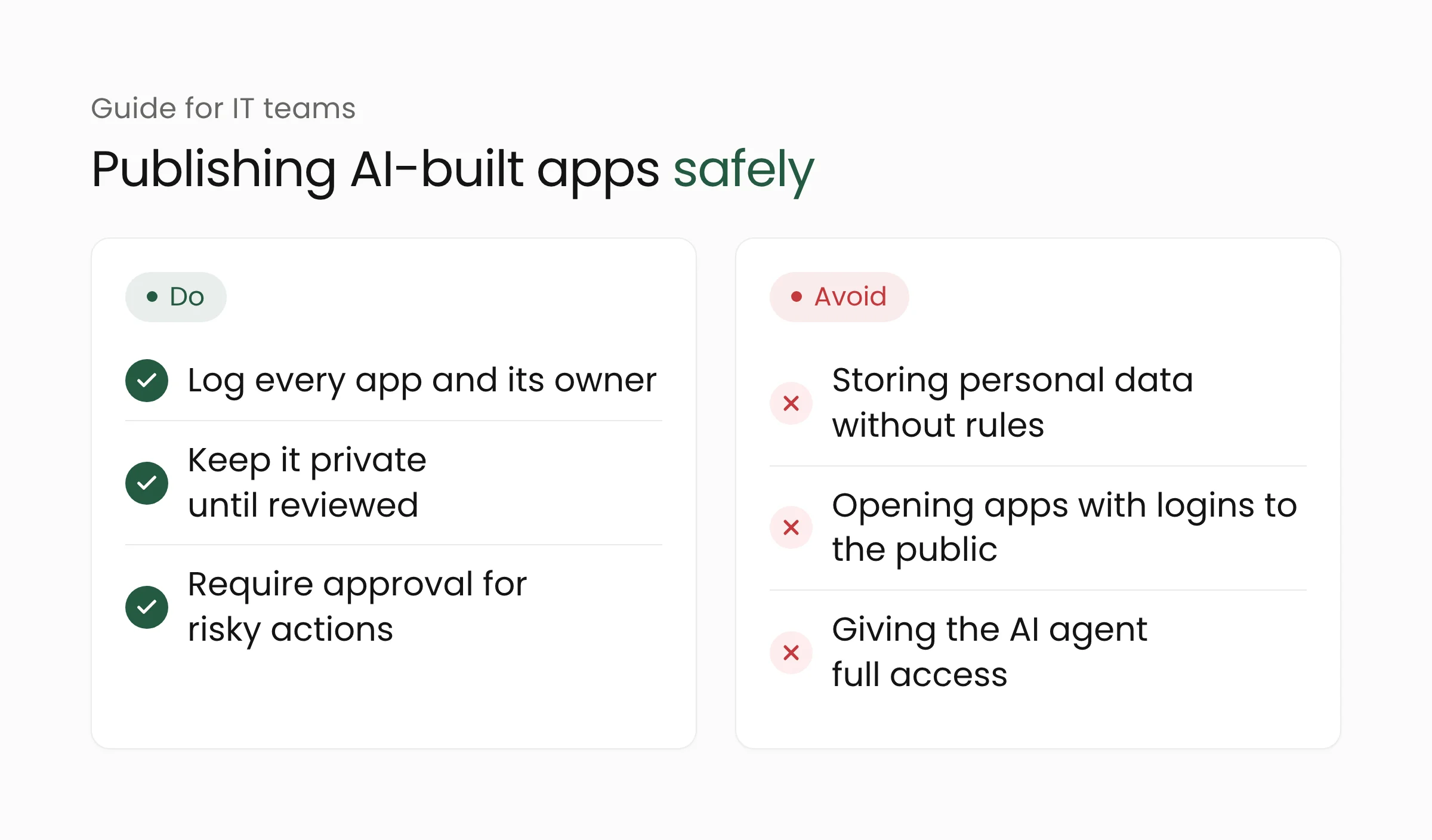
On the security side, every Space is private by default. Owners can open it with a password, an invite, a share link or by making it public. Users can also limit what the AI agent may access, and sensitive actions such as rollbacks or DNS changes require approval.
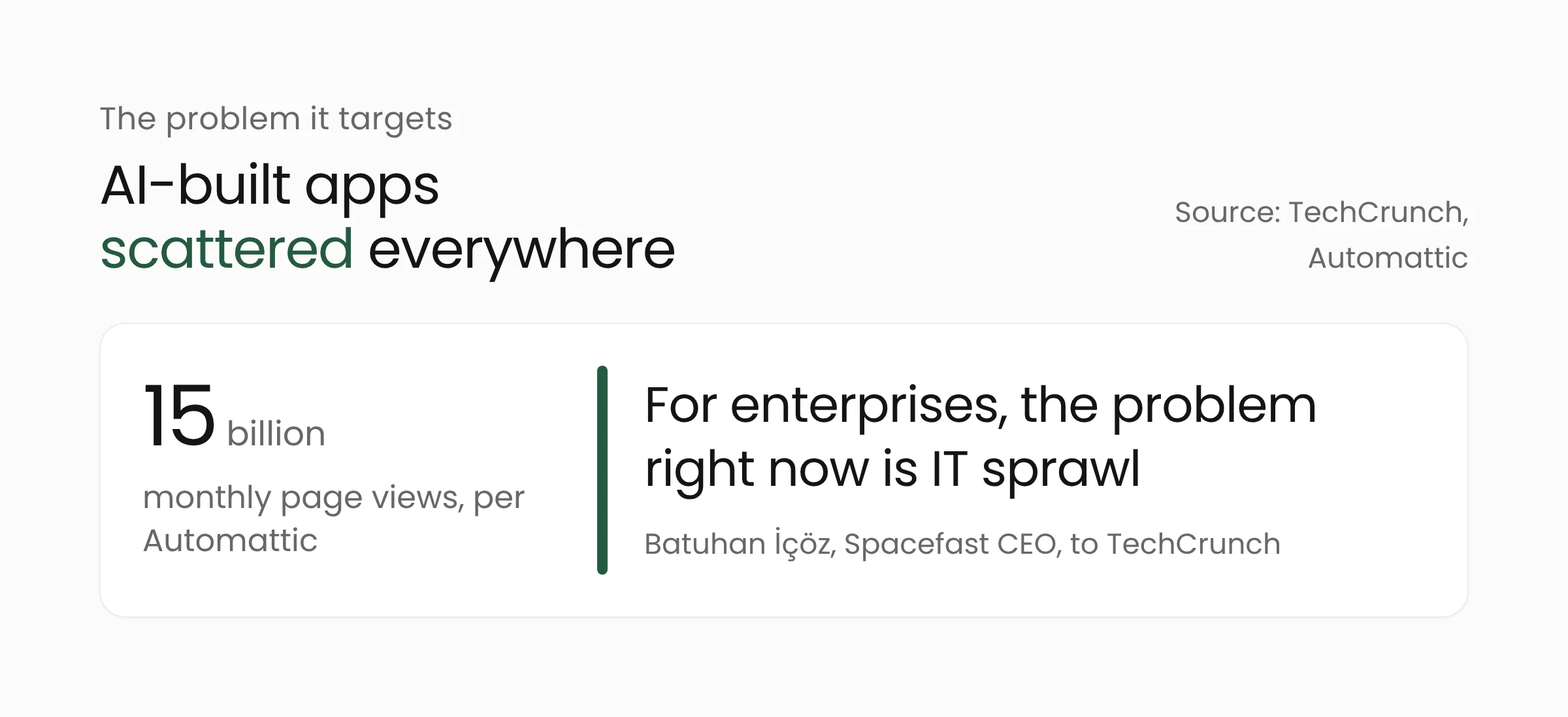
Spacefast runs on the same infrastructure as WordPress.com and Tumblr. Automattic says that infrastructure serves more than 15 billion page views a month. The figure comes from the company and has not been independently verified.
Pricing based on infrastructure use
Spacefast charges for infrastructure, while users keep paying for AI through their own subscriptions. Automattic says the model is meant to stop customers from paying for AI processing twice.
According to Spacefast’s pricing page, the Personal plan is free and includes $1 of usage a month, 20 Spaces and 20 custom domains. The Go plan costs $5 a month and includes $5 of usage, 100 Spaces, hourly database backups and a choice of data center. The Pro plan costs $15 a month and includes $15 of usage and 500 Spaces. Every plan allows commercial use.
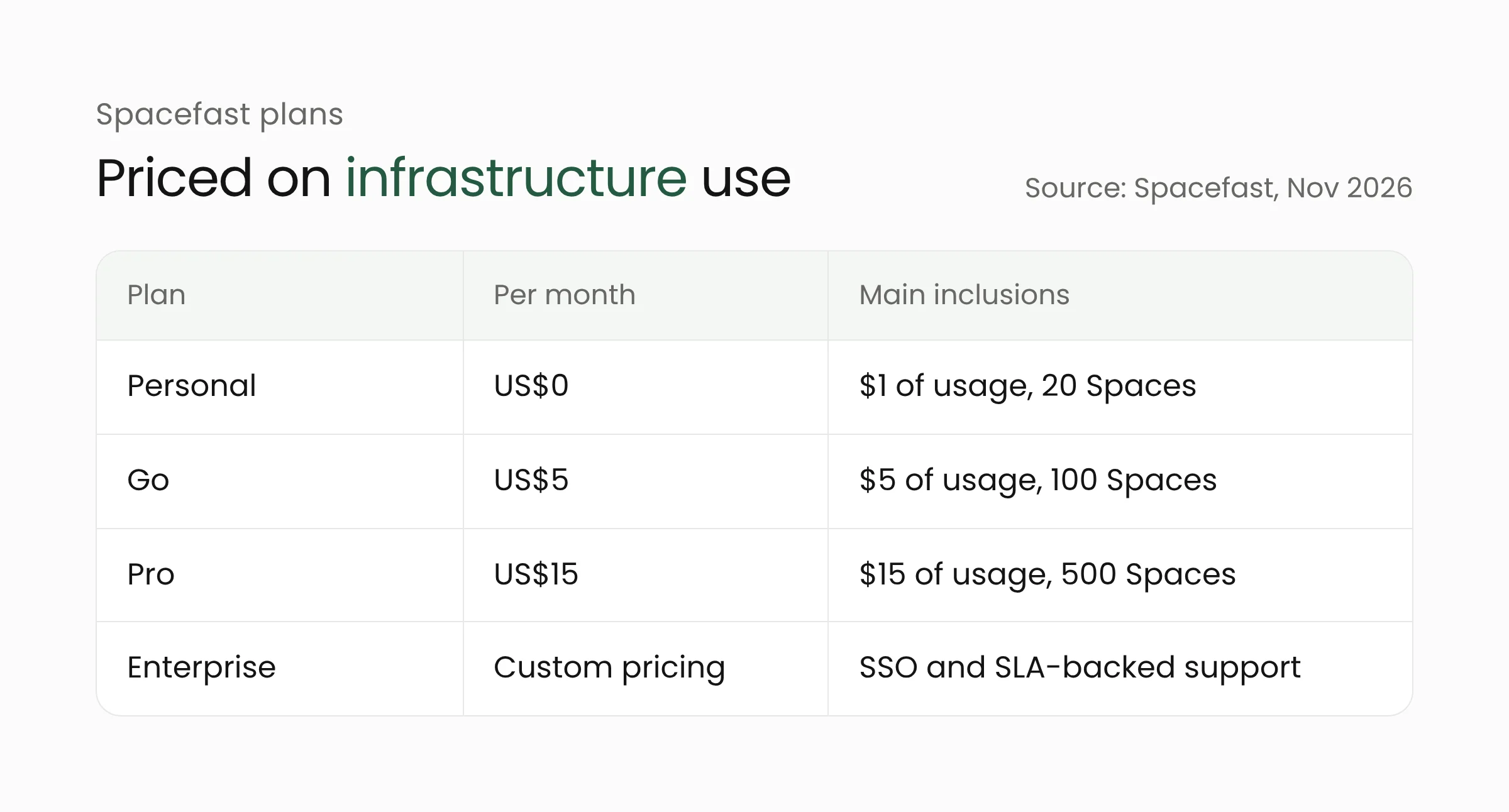
The two official sources differ slightly on Pro. The press release lists it at $15 per member per month, while the pricing page lists $15 a month per team, free for up to five members, then $15 a month for each additional member. Enterprise, priced on request, adds single sign-on (SSO), network policies and dedicated support with a service-level agreement (SLA).
The pricing page also explains what happens at the limit. On the Personal plan, once the $1 allowance is used, new builds and Workers pause, but Spaces that are already live keep serving. Go and Pro customers can set a spending cap with alerts at 50%, 75% and 100%. All prices are in US dollars before tax.
Bringing scattered AI-built apps under control
According to TechCrunch, the idea for Spacefast came from İçöz receiving a steady stream of project links from non-technical friends who were building apps with AI. Building software by describing it to an AI in plain language is widely known as vibe coding. The harder question is where to publish the result, and projects tend to end up spread across many services, each with its own account and settings.
İçöz sees the same pattern in large companies, where marketing teams spin up landing pages on services such as Lovable without involving IT. “For enterprises, the problem right now is IT sprawl,” İçöz told TechCrunch. IT sprawl refers to apps and services that keep multiplying without central tracking or oversight.
Spacefast competes with services such as Lovable and Emergent, which bundle an app-building interface with the infrastructure behind it. Automattic’s pitch is the freedom to choose any AI agent, plus easy access to analytics, WordPress and WooCommerce stores. İçöz also acknowledged that some users will leave, since not everyone wants to build apps.
What this means for IT teams
In Indonesia, AI-built apps are starting to appear outside IT departments. Marketing staff build promotional pages, teachers create simple quizzes and local government staff put together data collection forms. Services like Spacefast shorten the path from prototype to a link other people can open. For IT teams, that brings both benefits and new responsibilities.
First, build an inventory of the AI-built apps already in use. Record who made each one, what data it stores and where it lives. Without that list, a small app holding customer or citizen data is easy to forget once its creator moves to another role.
Second, set data rules before any app stores personal data. Indonesia’s Undang-Undang Nomor 27 Tahun 2022 tentang Pelindungan Data Pribadi (the Personal Data Protection Law) applies to AI-built apps as much as to any other system. Check where data is stored and who can reach the database. Spacefast’s pricing page mentions a choice of data center on the Go plan but does not list the locations.
Third, use the access controls that exist today. Keep apps private until they have been reviewed, turn on approvals for sensitive actions and limit the AI agent to what it actually needs. Because built-in authentication is not available yet, apps that require user accounts should not be opened to the public for now.
Fourth, plan a path to production. An experiment can quickly become a service many people depend on. At that point its code needs review, its security needs testing and its management should move to an accountable team. Merakit’s web application development and cloud computing services can help with that review and with migration to infrastructure the organization controls.
The same principle applies to code written by AI agents in general. Our piece on DeepSeek Super-agent covers why human review matters before agent output is merged into core systems.
Frequently asked questions
Can Spacefast be used from Indonesia?
Automattic says Spacefast has been open to everyone since November 9, 2026, and the Personal plan starts without a payment card. Prices are listed in US dollars before tax. Automattic has not announced specific plans for Indonesia, including any data center in the region.
Do I need a separate AI subscription to use Spacefast?
Spacefast does not sell AI access. Users bring the assistant they already have, such as Claude or ChatGPT, and Spacefast bills for hosting, the database and other resources consumed. The Personal plan includes $1 of usage a month.
How is Spacefast different from WordPress.com?
WordPress.com is a website service built on a content management system (CMS), where users write and arrange pages through a dashboard. Spacefast is designed for sites and apps whose code is written by AI, so much of the management happens through conversations with that AI. Both run on the same Automattic infrastructure.
Conclusion
Spacefast points to a new kind of hosting service, one that takes instructions directly from AI agents. For organizations in Indonesia, that convenience needs to be matched with an app inventory, clear data rules and review before apps go into wide use. If your team wants to turn scattered AI-built apps into secure, well-managed services, the Merakit team is ready to talk.
Sources
- Automattic launches Spacefast, a new company that gets apps and websites live in seconds, PR Newswire, November 9, 2026
- Meet Spacefast, Everything Your Agents Need to Bring Your Ideas to Life, Automattic, November 9, 2026
- Automattic debuts a platform to deploy vibe-coding apps amid a changing internet, TechCrunch, November 9, 2026
- Pricing, Spacefast, accessed November 10, 2026
- Automattic Soft-Launches Spacefast, WP Content, September 30, 2026