Blog Digital Finance
Tokenized MAS Bills Settle in Wholesale CBDC in Singapore
On this page· 7 sections
Singapore’s central bank has issued S$100 million of tokenized MAS Bills and taken payment in wholesale CBDC, the form of central bank digital money reserved for transactions between financial institutions. The auction took place on November 6, 2026 and was announced on November 19. The Monetary Authority of Singapore plans larger issuances with more participants in 2027.
A S$100 million auction on the MAS test network
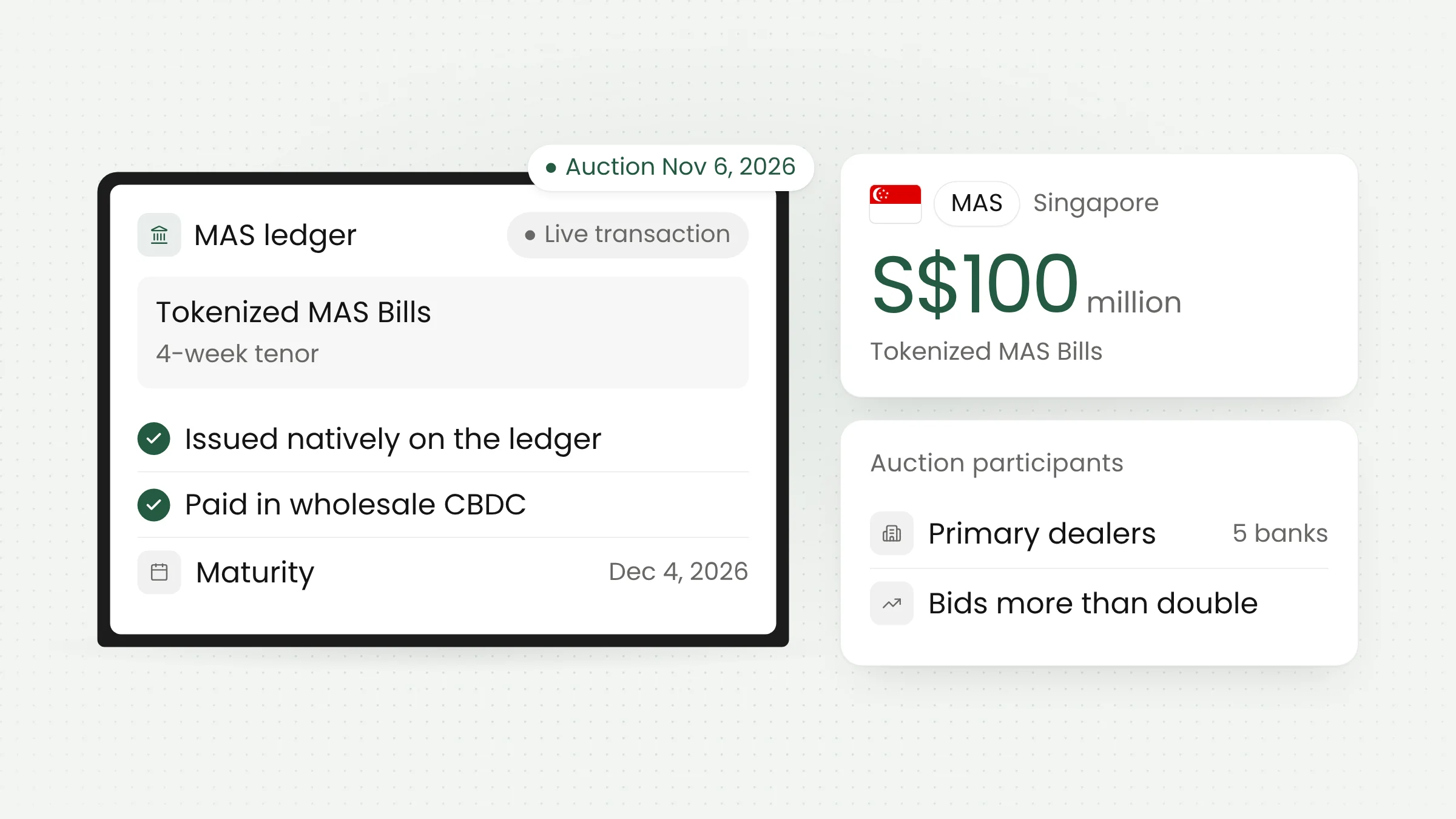
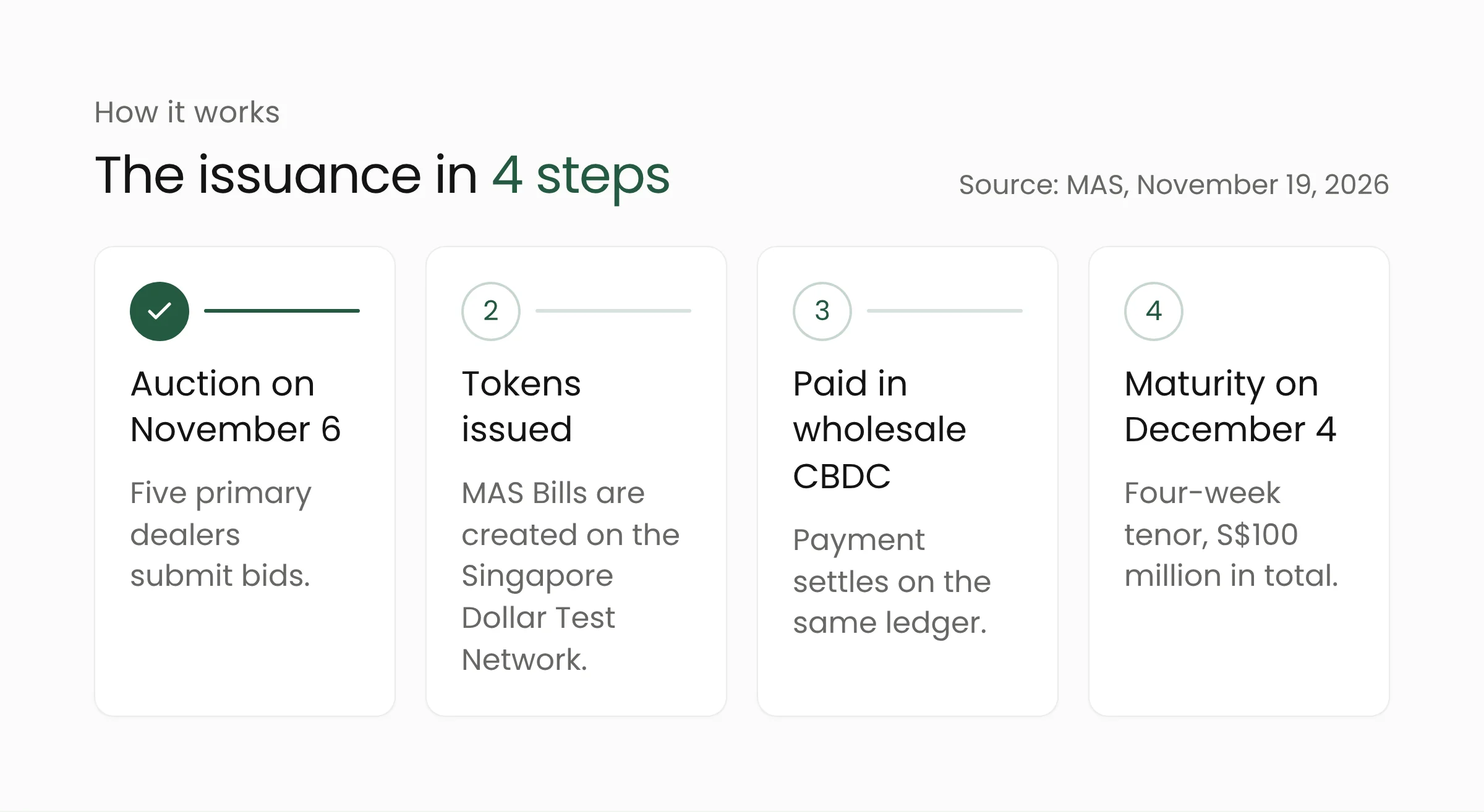
MAS Bills are short-term debt securities that the Monetary Authority of Singapore (MAS) issues to manage liquidity in the banking system. In a media release dated November 19, 2026, MAS said it had issued S$100 million of four-week tokenized MAS Bills on November 6. The Block put the value at about US$77.5 million.
The bills were issued on the Singapore Dollar Test Network, a shared ledger that MAS operates to test the settlement of tokenized financial assets. Payment was made in Singapore dollar wholesale CBDC on the same network. Wholesale CBDC circulates only among banks and other institutions with access to the central bank.
Five primary dealers took part in the auction: DBS Bank, HSBC’s Singapore branch, OCBC, Standard Chartered in Singapore, and UOB. MAS said applications came to more than double the issuance size. The bills mature on December 4, 2026.
The token is the security
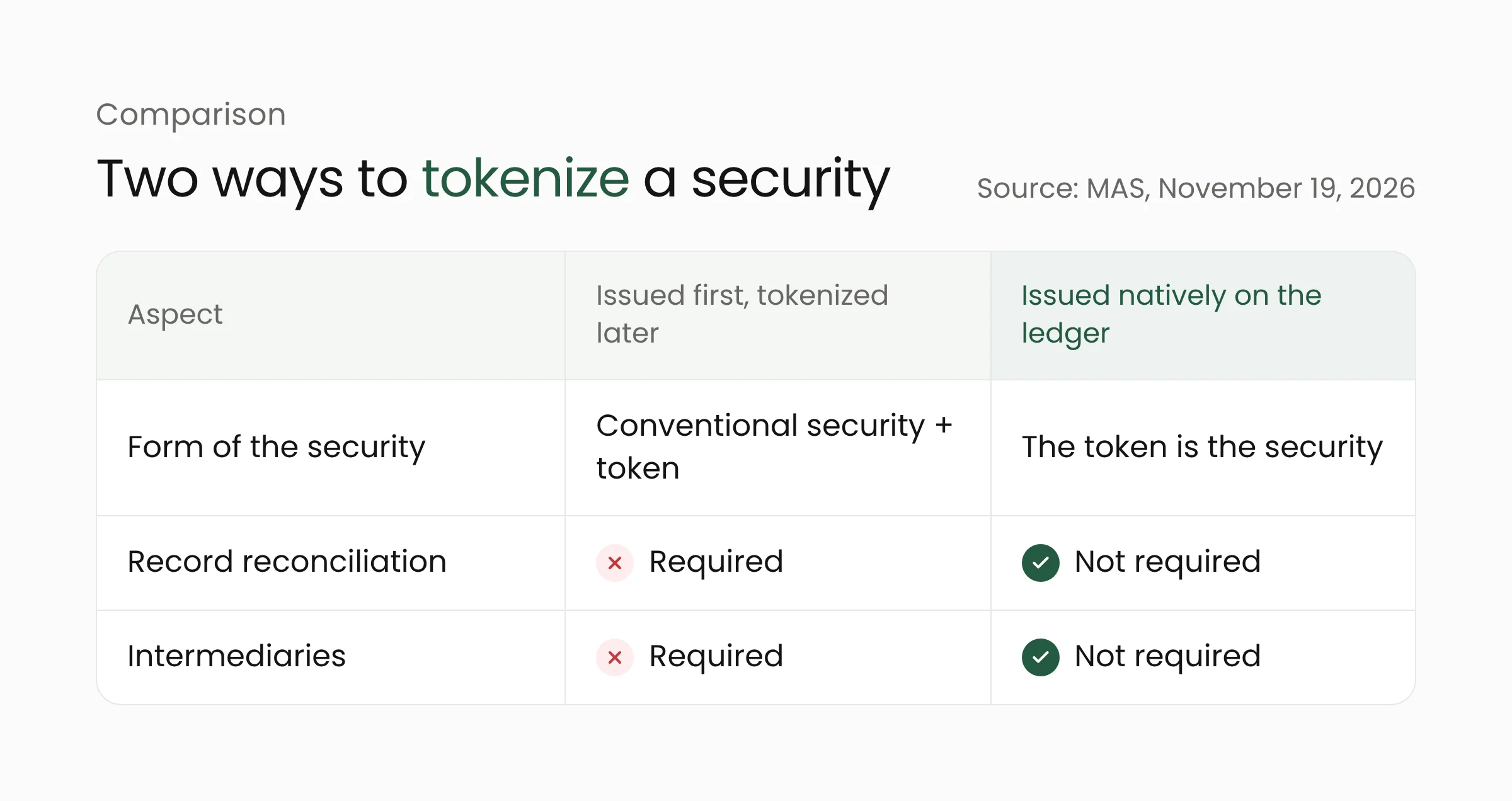
Many tokenization projects so far have kept two layers of records. A security is first issued in a conventional system, and a token representing it is then created on a blockchain. The two records then have to be reconciled, usually with the help of an intermediary.
MAS took a different route. These bills were issued natively on the digital ledger, so the token is the security itself. MAS said native issuance removes the need for reconciliation and intermediaries. Crypto.news noted that conventional MAS Bills settle through the MEPS+ system and that MAS has set no timetable for replacing it.
With the bills and the money that pays for them on the same ledger, the exchange can be completed in one place. MAS Managing Director Chia Der Jiun described the issuance as a chance to test a new method of issuing securities. According to Crypto.news, he sees the tokenized bills as a complement to conventional MAS Bills.
The issuance builds on a 2025 trial in which an interbank overnight lending transaction was settled in wholesale CBDC. Crypto.news named DBS, OCBC, and UOB as the banks involved in that November 2025 test.
MAS plans for the SG Digital Ledger
The auction was announced on the same day as Chia’s keynote address at the Singapore FinTech Festival 2026. He said the Singapore Dollar Test Network will be renamed the SG Digital Ledger and repositioned as an operational utility. It is designed to support settlement across institutions, tokenized assets, forms of digital money, and separate ledgers. Chia said take-up would be led by market demand.
He also set out three conditions for tokenized assets to reach scale: commercially compelling use cases, trusted digital money, and interoperable settlement infrastructure. On digital money, MAS named three options, namely tokenized bank deposits, regulated stablecoins, and wholesale CBDC.
Chia drew a line between tokenized financial assets and crypto assets. Tokenization changes the form of an asset and the rails on which ownership moves, while its economic substance stays the same.
Collateral is the next use case
MAS said the issuance paves the way for secured lending transactions involving tokenized assets on its test network. In the next phase, it plans to scale up issuances, bring in more financial institutions, and expand the use of tokenized MAS Bills in collateral management. Institutions that want to join live trials in 2027 have been invited to contact MAS.
Chia said in the official statement: “MAS will continue to improve the functionality and liquidity of tokenised MAS Bills as market acceptance grows.”
On the same day, MAS and industry partners published the Guardian Tokenised Collateral Framework. It sets out a common approach across the collateral lifecycle, covering eligibility, custody, valuation, return, and enforcement. Chia named widely used foreign government securities and money market funds as candidates for the tokenized collateral pool.
According to Crypto.news, the Singapore Exchange intends to explore using the tokenized bills in collateral management. Ruby Ho of HSBC said the trial offered insights into issuing and settling digital securities, and added that governance, operational resilience, and risk controls remain necessary.
A cross-border test with the Bundesbank
Three days before the auction was announced, MAS and Deutsche Bundesbank reported results from Project Simbolon. According to the Bundesbank press release of November 16, 2026, the two central banks tested the settlement of euro and Singapore dollar foreign exchange trades in wholesale CBDC across two separate test environments. DBS and Deutsche Bank took part, with Partior as the technology provider.
The two ledgers were not directly integrated. Each environment used zero-knowledge proofs, a cryptographic method that confirms a condition has been met without revealing the underlying data, to verify that settlement conditions on the other side were satisfied.
Where Indonesia stands on digital rupiah and SRBI
Indonesia has an instrument that plays a role similar to MAS Bills. Bank Indonesia issues Sekuritas Rupiah Bank Indonesia (SRBI, Bank Indonesia rupiah securities) as part of its rupiah open market operations. The central bank’s monetary operations page lists SRBI tenors of 6, 9, and 12 months. Bank Indonesia has not announced a tokenized version of the instrument.
On the money side, Bank Indonesia runs Project Garuda. In a press release dated December 13, 2024, it said it had completed the first proof of concept for the digital rupiah, a wholesale cash ledger for transactions between institutions. The test used distributed ledger technology, and Bank Indonesia said the results met every test scenario. The release gave no schedule for the next stage.
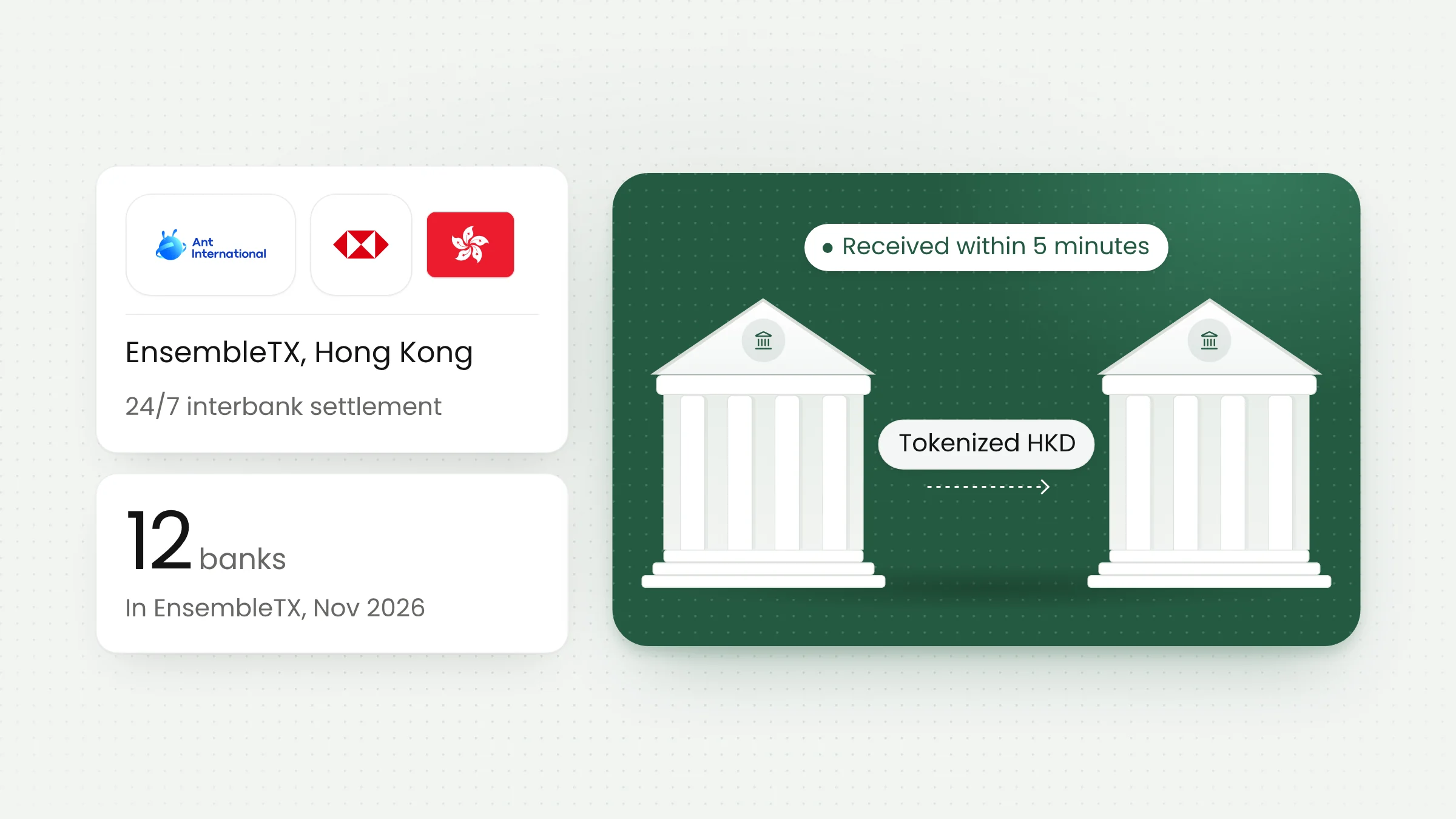
Bank Indonesia has tested the money side. Singapore has now tested money and securities on one ledger in a live transaction. For another regional development, see our earlier piece on tokenized deposits in Hong Kong.
What this means for banks and financial institutions
For banks, asset managers, and securities firms in Indonesia, the trial changes no obligations today. It does show which capabilities would be needed if a similar instrument reached the rupiah market. Treasury, operations, and IT teams can start here.
- Map existing reconciliation work. Record how many systems hold securities ownership data and how often those records are matched. The list shows where native issuance on a ledger would help most.
- Review whether core systems can connect to an external ledger. In the Singapore trial, five primary dealers submitted bids and received the bills on a network run by the central bank. Teams responsible for financial services systems should know whether their treasury and custody platforms have interfaces for that kind of connection.
- Prepare key management and access rights. Ownership of a token is determined by cryptographic keys. Policies on key storage, segregation of duties, and recovery procedures should be in place before any pilot begins.
- Follow the regulators. Track Bank Indonesia’s publications on Project Garuda and the Financial Services Authority’s (OJK) policies on digital financial assets. Technology investments are safer when they follow an official roadmap.
- Start with a limited pilot. A prototype on a closed network, built with a blockchain development partner, lets a team learn before touching market instruments. Internal collateral records are one candidate.
Companies with entities in Singapore can ask their partner banks whether they will join the 2027 trials and what services they expect to offer corporate clients.
Frequently asked questions
How are tokenized MAS Bills different from crypto assets?
Tokenized MAS Bills are Singapore dollar debt securities issued by the central bank and recorded on a digital ledger. Chia Der Jiun said tokenization changes the form of an asset and the rails on which ownership moves, while its economic substance does not change.
Can retail investors buy tokenized MAS Bills?
No. Only five primary dealers took part in the auction, and payment was made in wholesale CBDC, which circulates among financial institutions. The 2027 trials are open to financial institutions and market infrastructure providers, with no mention of individual investors.
Will Indonesia issue tokenized securities?
There has been no official announcement. Bank Indonesia has tested a wholesale cash ledger for the digital rupiah under Project Garuda, but it has not announced plans to issue SRBI or other securities in tokenized form.
Closing
Chia acknowledged that tokenized financial assets remain small next to conventional markets. The S$100 million auction shows that a central bank’s debt and the money used to pay for it can be issued and settled on one ledger. The 2027 phase will show whether demand can carry the approach into routine use. If your organization wants to assess how ready its financial systems are for tokenized assets, the Merakit team is glad to talk.
Sources
- MAS Announces Successful Issuance of Tokenised MAS Bills on the Singapore Dollar Test Network, Monetary Authority of Singapore, November 19, 2026
- Keynote Address by Mr Chia Der Jiun at the Singapore FinTech Festival 2026, Monetary Authority of Singapore, November 19, 2026
- Guardian Tokenised Collateral Framework, Monetary Authority of Singapore, November 19, 2026
- Singapore’s MAS issues $77 million in tokenized bills settled via CBDC, The Block, November 19, 2026
- Singapore’s MAS issues $77.5M in tokenized bills using wholesale CBDC as expansion plans advance, Crypto.news, November 19, 2026
- MAS and Deutsche Bundesbank Advance Cross-Border Digital Asset Settlement Connectivity, Deutsche Bundesbank, November 16, 2026
- Proof of Concept Proyek Garuda, Babak Baru Eksplorasi Rupiah Digital, Bank Indonesia, December 13, 2024
- Operasi Moneter (monetary operations), Bank Indonesia, accessed November 22, 2026