Blog WHOOP Humans
WHOOP Humans and the Privacy Lessons for Health Apps
On this page· 7 sections
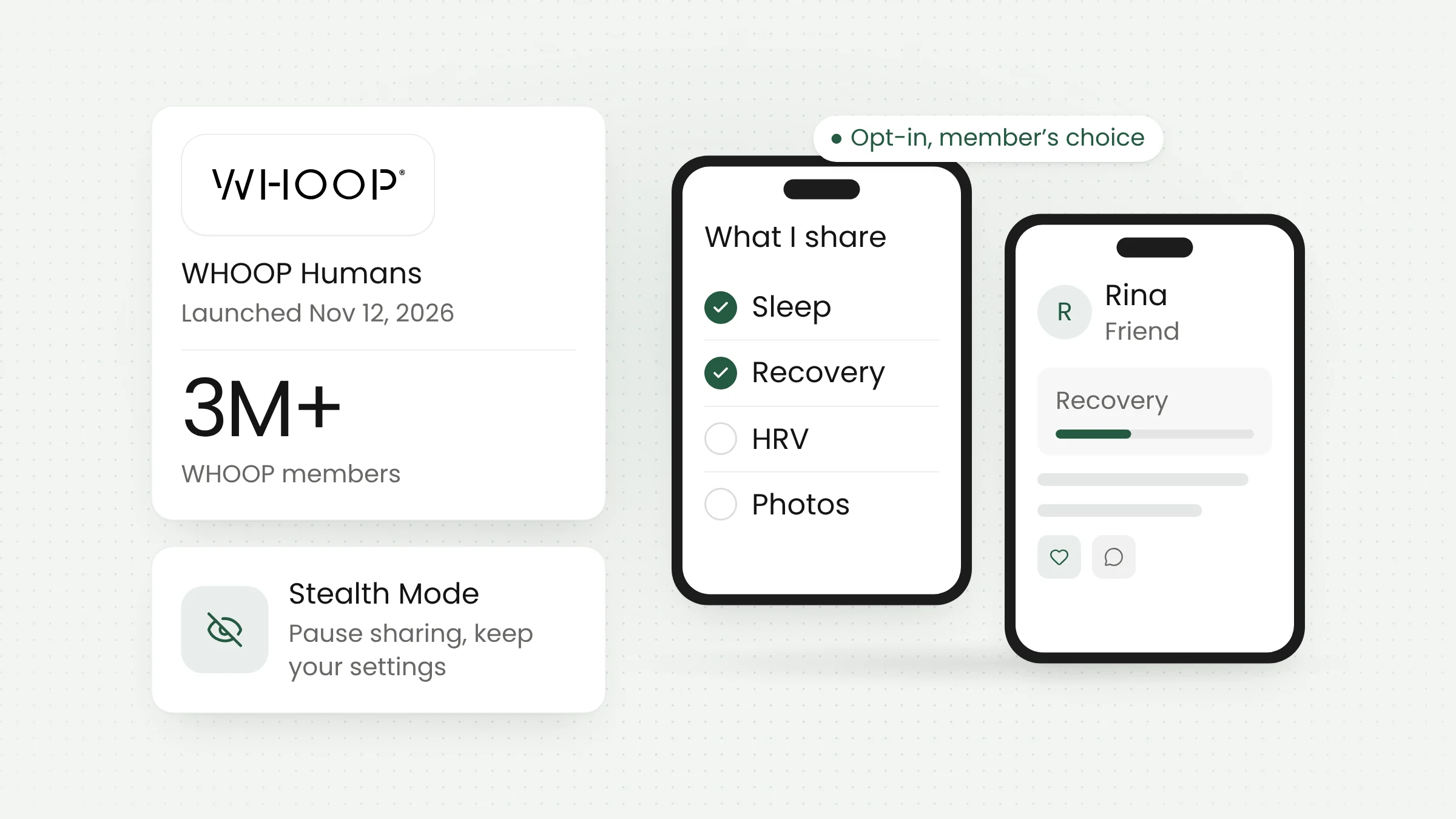
WHOOP launched WHOOP Humans on November 12, 2026, adding a social network inside the WHOOP app. Members can share their sleep, recovery, and workout scores with friends and family, and each member decides which data appears. The launch is a useful case study in how health apps handle permission to share very personal data.
How WHOOP Humans works
WHOOP is a Boston-based company that makes screenless fitness bands and sells them through memberships. According to the WHOOP press release distributed by Business Wire, Humans became available in the WHOOP app on November 12, 2026. Members can follow friends and family, see the data those people choose to share, and react or comment.
Shareable data includes Sleep, Recovery, and Strain scores, along with heart rate variability (HRV), resting heart rate, activities, and achievements. Members can also post workout photos or personal milestones through a feature called Moments, and Moments can be kept private.
TechCrunch reports that Humans is included in every membership tier at no extra cost. Notebookcheck says the feature is rolling out globally and works with the WHOOP 4.0, WHOOP 5.0, and WHOOP MG.
The claim of a network made of real people
WHOOP markets Humans as a social network whose members can be verified as human. Every account belongs to someone wearing a WHOOP device, and the heartbeat data from that device serves as proof. The press release says physiological data cannot simply be generated the way a conventional text post can. CEO Will Ahmed positions Humans as a response to social platforms crowded with automated accounts and AI-generated content.
That claim comes from the company and has not been independently tested. PPC Land points out that the release does not explain how WHOOP confirms that the person wearing the band is the account holder. It also describes no checks on comments or photos.
How Humans differs from Teams
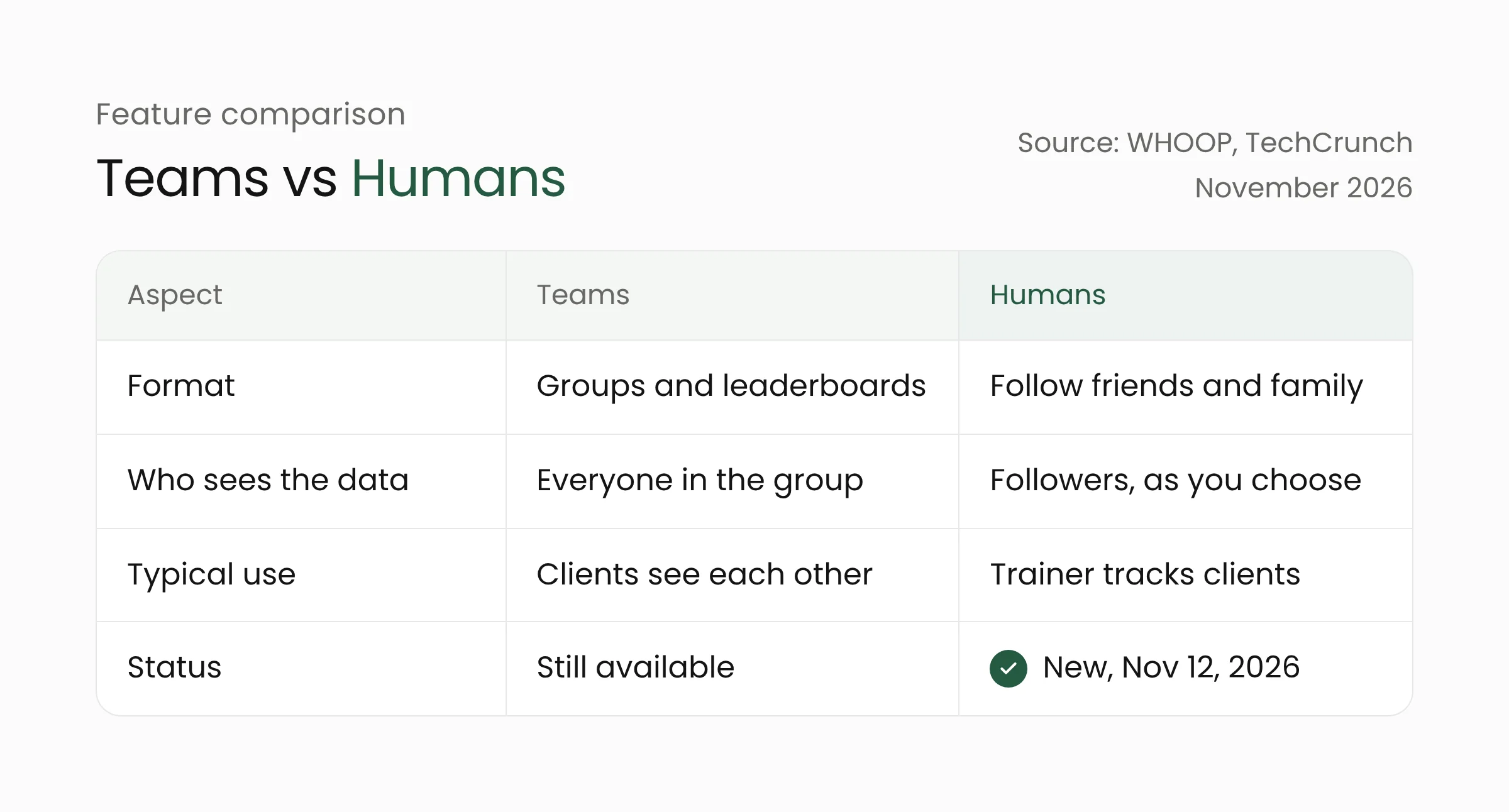
WHOOP already offers Teams, a group feature built around leaderboards. The company says 57% of its members belong to at least one Team. In Teams, everyone in the group sees everyone else’s data. Humans works person by person: each member controls who follows them and what those followers can see.
TechCrunch gives a practical example. A trainer can track a set of clients without the clients seeing one another’s data. Teams remains available, so members can use both.
Competition over shared fitness data
Others have tried metric sharing before. Fitt Insider notes that Oura, through Circles, and Garmin, through Garmin Connect, have explored similar features. Strava, the activity social network with more than 200 million users worldwide, has long been where many devices and apps send workout data. With Humans, WHOOP wants that social activity to happen inside its own app.
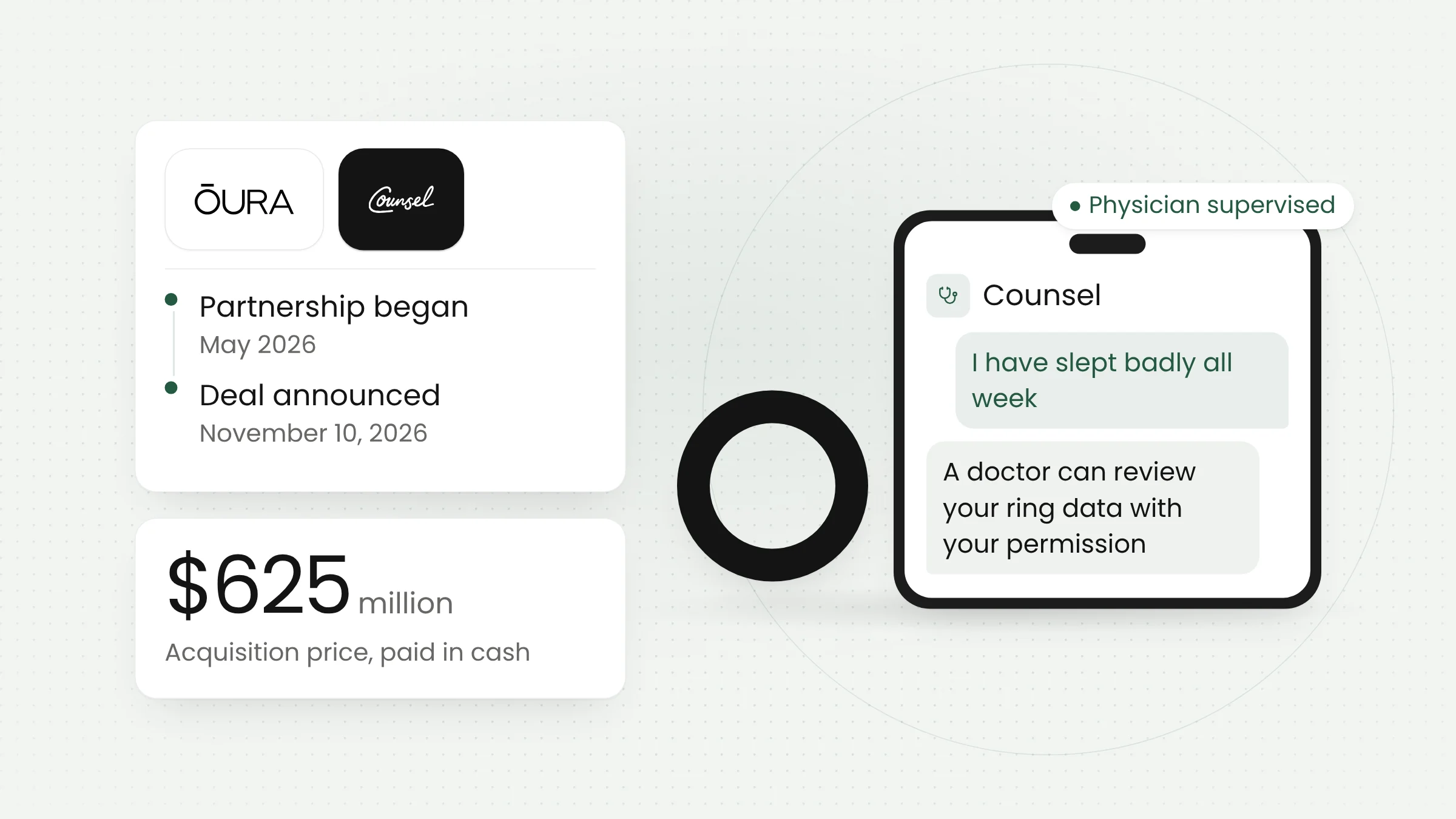
WHOOP says it has more than three million members. The company told TechCrunch it expects to reach nearly 4 million by the end of this year. Competition among health wearables is intensifying as well: Oura recently announced plans to buy the online physician service Counsel Health for $625 million.
The privacy controls WHOOP provides
The WHOOP press release and Ahmed’s interview with TechCrunch describe the following controls:
- Per-metric choices. Members decide which health metrics they share and who can see them.
- Follower control. Members manage who follows them and can remove followers at any time.
- Stealth Mode. Shared data is hidden temporarily without changing any settings. TechCrunch describes it as a way to go dark for a few days.
- Sensitive activities. Activities marked as sensitive are not shared by default.
- Health alerts and medical information. According to Ahmed, neither is shared at all.
- Flexible settings. Sharing preferences can be changed at any time.
Ahmed said every sharing feature is opt-in, meaning it stays off until a member turns it on. Reported comments or photos are reviewed. WHOOP also says it does not sell or monetize members’ personal health data and does not license data to third parties. “Our product is not you; it’s the membership,” Ahmed told TechCrunch. In other words, the company says its revenue comes from membership fees.
Ahmed also said that during the beta, people engaged more when someone posted a low recovery score than when someone posted a nearly perfect one. WHOOP expects families to be heavy users, for example adult children checking on aging parents.
Open questions about WHOOP Humans
Several questions remain open. PPC Land notes that the release does not explain how WHOOP uses follower relationships, comments, or Moments photos. The pledge not to sell data refers specifically to personal health data. The release also does not state the default visibility when a member first opens Humans.
On younger users, the minimum age for WHOOP members is 13, and higher in some countries. When TechCrunch asked whether a parent could follow a teenager’s data, Ahmed did not answer directly and pointed to the privacy settings. The TechCrunch writer also wondered how much one spouse would want to see the other’s sleep score.
These questions matter because sleep patterns, heart rate, and activity load can reveal a person’s habits and physical condition. Once that data appears in someone else’s feed, its owner no longer fully controls where the information travels.
What this means for health app teams
In Indonesia, many organizations handle similar data: hospitals and clinics with patient apps, local fitness apps, insurers running healthy-lifestyle programs, and employers with staff wellness programs. Any feature that shares data with family, coaches, or doctors faces the same questions WHOOP does.
On the legal side, Article 4(2) of Indonesia’s Undang-Undang Nomor 27 Tahun 2022 tentang Pelindungan Data Pribadi (Personal Data Protection Law, or UU PDP) classifies health data and information, as well as biometric data, as specific personal data. Article 20(2) lists valid, explicit consent for specific purposes as one legal basis for processing, and Article 22 says that consent must be written or recorded, including electronically. Article 9 gives data subjects the right to withdraw consent. Article 34(1) requires an impact assessment when processing may pose a high risk. This is our reading and is not legal advice.
Drawing on the WHOOP Humans design and those provisions, teams building health data sharing features can take several steps:
- Separate permissions by metric and by recipient. Sharing a step count with a friend differs from sharing blood pressure with a doctor. Let users control each one separately.
- Start with nothing shared. Data appears only after the user opts in. Lab results, diagnoses, and medical alerts should stay out of social features from the start.
- Offer a pause button and easy withdrawal. A feature like Stealth Mode lets users stop sharing for a while. Withdrawing consent should be as easy as giving it.
- Log every consent. Record who granted permission, when, for which data, and to whom. That log serves as evidence of recorded consent.
- Run an impact assessment before release. Map the ways the feature could be misused, including comments, photos, and power imbalances such as manager and employee or parent and child.
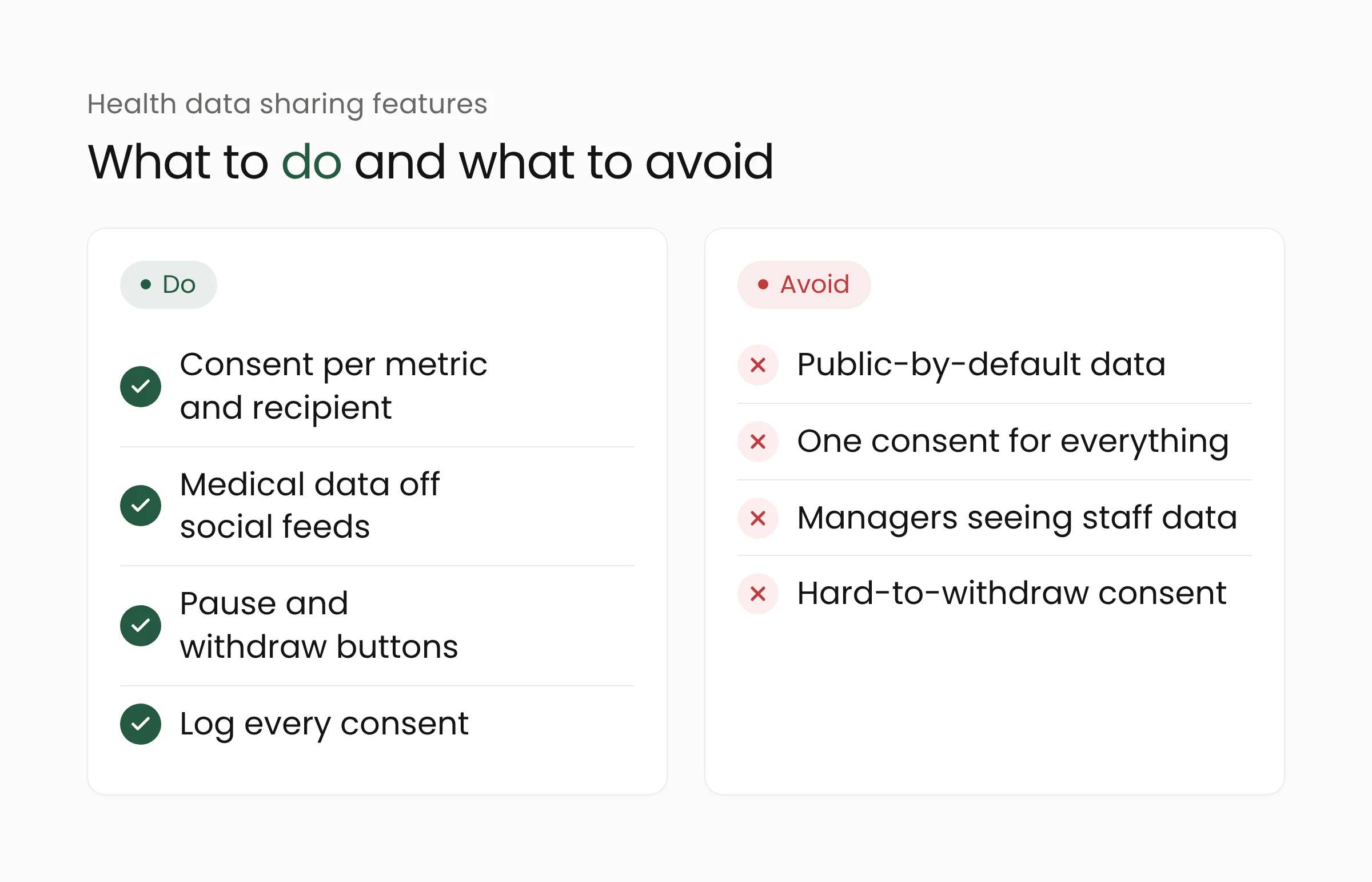
Employee wellness programs need particular care. When a manager can see a staff member’s sleep score, the choice to share may not be entirely voluntary. Design these programs so the company receives only aggregated, de-identified reports.
For teams building patient or fitness apps, these design decisions belong in the planning stage, because adding them later costs far more. Merakit supports this work through its mobile app development service and digital healthcare solutions.
Frequently asked questions
What is WHOOP Humans?
WHOOP Humans is a social networking feature in the WHOOP app, launched on November 12, 2026. Members can follow friends and family, share sleep, recovery, strain, and achievements, and react or comment.
Does WHOOP Humans cost extra?
According to TechCrunch, Humans is included in every WHOOP membership tier at no extra cost. Users still need a WHOOP membership and the device that comes with it.
Does WHOOP sell health data from Humans?
WHOOP says it does not sell or monetize members’ personal health data, and Ahmed said the company does not license data to third parties. The press release has not explained how comment data, follower relationships, and Moments photos are used.
Closing thoughts
WHOOP Humans shows that health data is becoming part of social interaction. Controls such as per-metric sharing, Stealth Mode, and the exclusion of medical data set a baseline that users will soon expect from any health app. If your organization is designing a patient app or a health data sharing feature, the Merakit team can help you build a clear consent flow that fits Indonesia’s data protection law.
Sources
- WHOOP Launches WHOOP Humans, the Most Verifiably Human Social Network, WHOOP press release via Business Wire, November 12, 2026
- Whoop just launched a social network, TechCrunch, November 12, 2026
- Whoop launches Humans, a social network that verifies members by their heartbeat, Notebookcheck, November 13, 2026
- WHOOP Humans lets 3 million members share health data with friends, PPC Land, November 12, 2026
- WHOOP launches in-app social network WHOOP Humans, Fitt Insider, November 12, 2026
- Undang-Undang Nomor 27 Tahun 2022 tentang Pelindungan Data Pribadi, Pasal.id, accessed November 19, 2026