Blog SIM Registration
Indonesia Biometric SIM Registration Hits 41.49M: App Impact
On this page· 7 sections
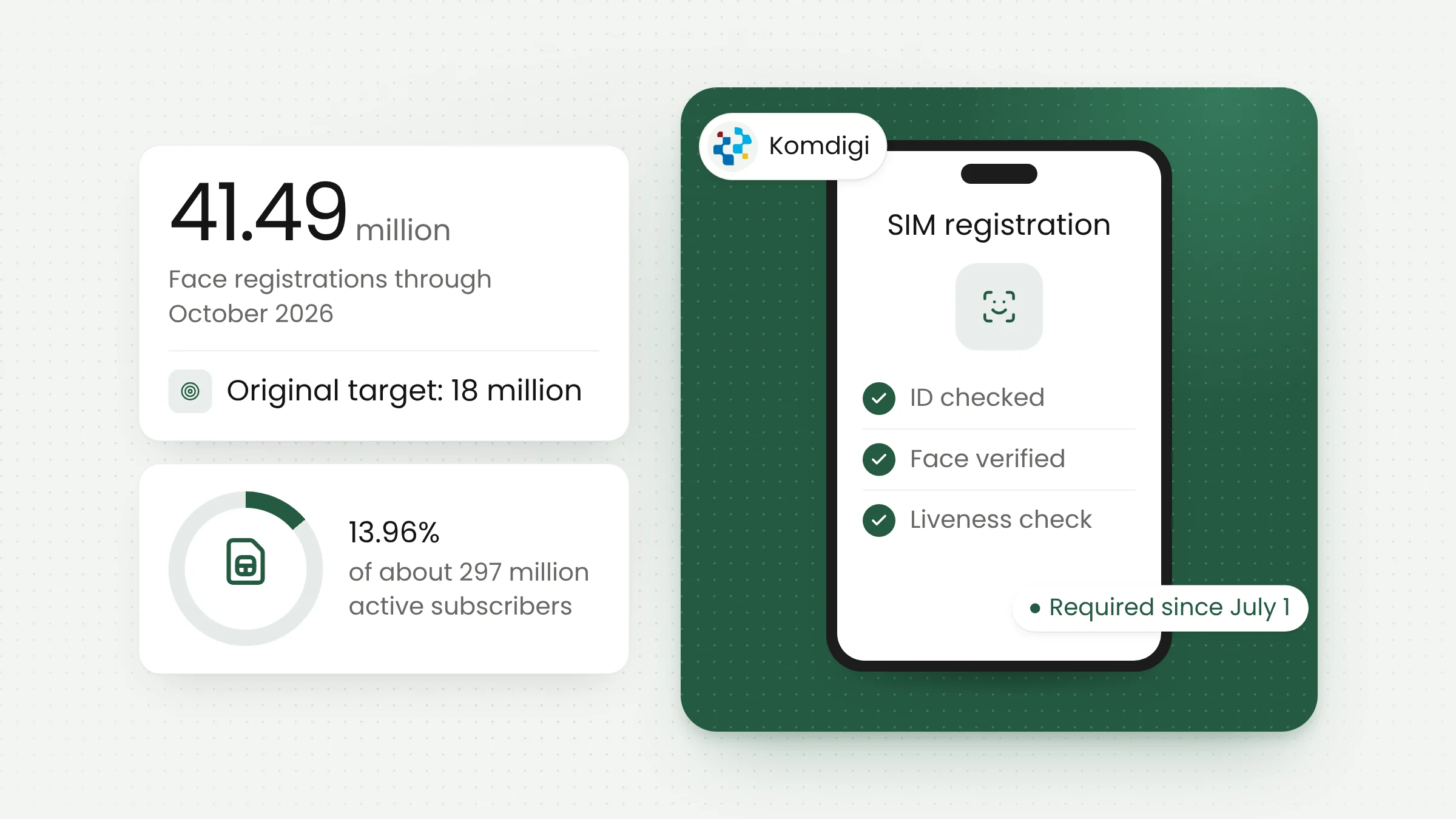
Indonesia’s biometric SIM registration, which checks a subscriber’s face against national population records, had been completed by 41.49 million mobile customers by the end of October 2026. The Ministry of Communication and Digital Affairs (Komdigi) released the figure in Jakarta on November 13, 2026. That beats the original target of 18 million but covers only 13.96% of roughly 297 million active subscribers.
For many apps in Indonesia, the phone number is the front door to an account, from SMS one-time passcodes to account recovery. A change in how numbers are registered affects how far app teams can trust the numbers users type in.
The latest biometric registration figures
The update came from Dany Suwardany, Komdigi’s director of digital ecosystem control. According to Investortrust, he described the uptake as fast, saying the cumulative total had reached 41.49 million.
ANTARA reported that the government’s original goal was 18 million customers by December 2026, so the target was passed about two months early. Face-based registration has now run nationwide for four months. The three largest mobile operators, Telkomsel, Indosat Ooredoo Hutchison, and XLSmart, have closed registration based on national ID (NIK) and family card numbers and moved entirely to face verification.
Most of the roughly 297 million active numbers were registered under the old method, because face verification is mandatory only for new registrations and SIM replacements. Komdigi’s evaluation, cited by Investortrust, found that the process takes one to two minutes at an outlet or through self-service channels.
How face-verified SIM registration works
The legal basis is Komdigi Ministerial Regulation No. 7 of 2026, Peraturan Menteri Komunikasi dan Digital tentang Registrasi Pelanggan Jasa Telekomunikasi melalui Jaringan Bergerak Seluler (on customer registration for mobile cellular services). It was enacted and promulgated on January 19, 2026, and gave operators a six-month transition. Since July 1, 2026, every new subscriber has had to register with facial biometrics.
Indonesian citizens register with their phone number, NIK, and a face match against population data. For self-registration through an app or website, operators must also run liveness detection, a check that the face being scanned belongs to a real person in front of the camera rather than a photo or recording.
The regulation also sets technical standards. Operators must hold, or partner with a party that holds, ISO/IEC 30107-3 certification for presentation attack detection at level 2 or higher, along with ISO 27001 certification for information security. A clause-by-clause summary by Justisio notes that the regulation’s annex sets a minimum face-matching accuracy of 95 percent.
Who has to verify their face
People buying a new number, eSIM users, and customers replacing a SIM card must all complete the face check. A replacement for a lost or damaged card can only be issued at an official outlet, using the same verification steps as an initial registration.
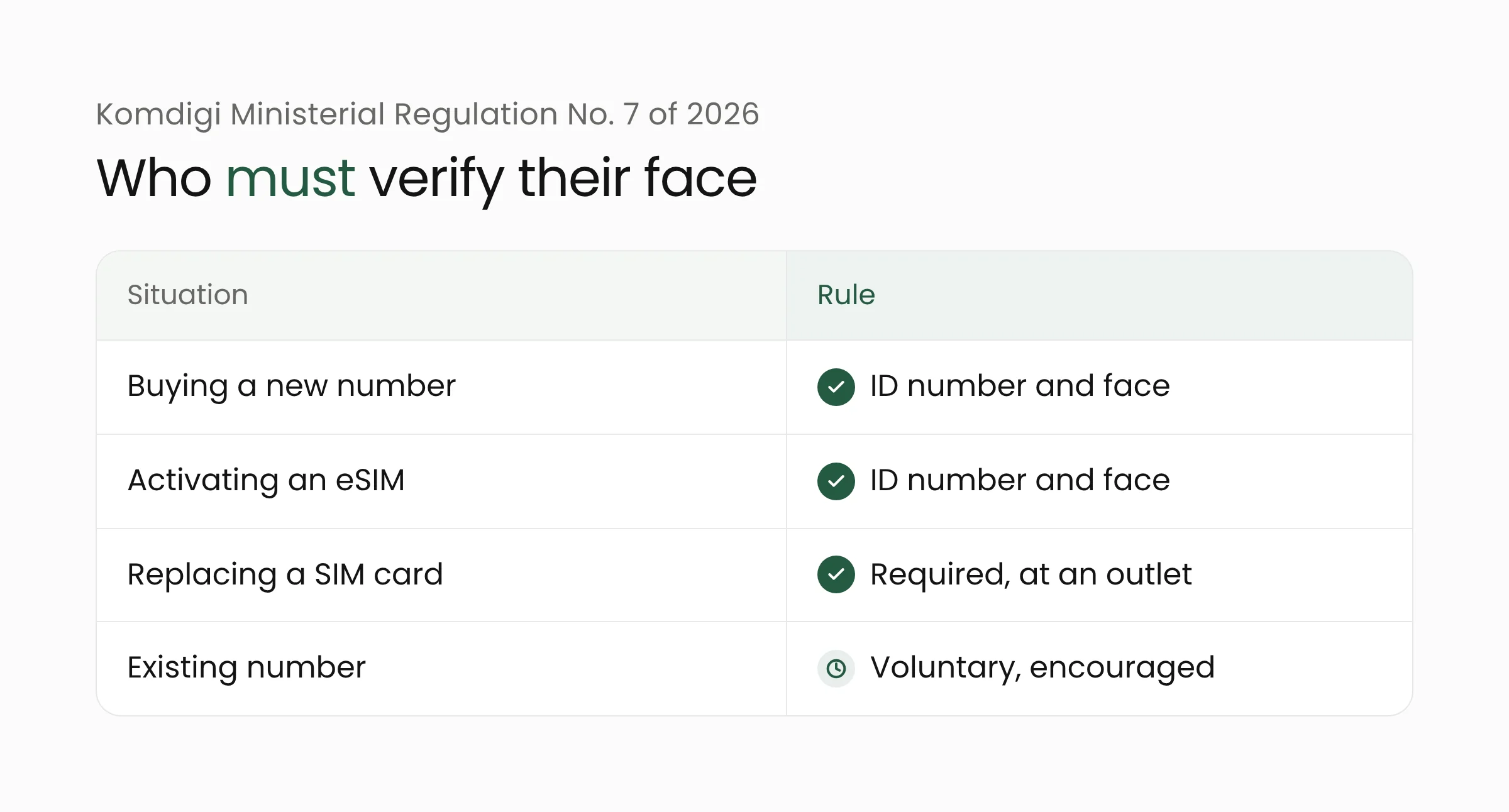
Existing customers do not have to register again. Numbers that were properly registered before the rule took effect remain active, and operators must offer re-registration with a face scan. In July 2026, Dany told Metrotvnews that re-registration for older numbers was voluntary while Komdigi evaluated the rollout before deciding on next steps.
The regulation also caps each identity at three prepaid numbers per operator. Machine-to-machine (M2M) lines, IoT devices, operator testing, and certain legal entities are exempt but must be registered at an outlet. That detail matters for organizations that deploy large fleets of SIM-equipped sensors or trackers.
Early effects of the policy
Komdigi points to a drop in verification requests sent to the Directorate General of Population and Civil Registration (Dukcapil) as an early sign. According to figures Dany presented to detikInet in July 2026, requests to verify new-number registrations at the three largest operators averaged about 1 million a day in April 2025. The figure fell to about 700,000 in February 2026, about 300,000 in June 2026, and about 6,000 a day in data through July 5, 2026.
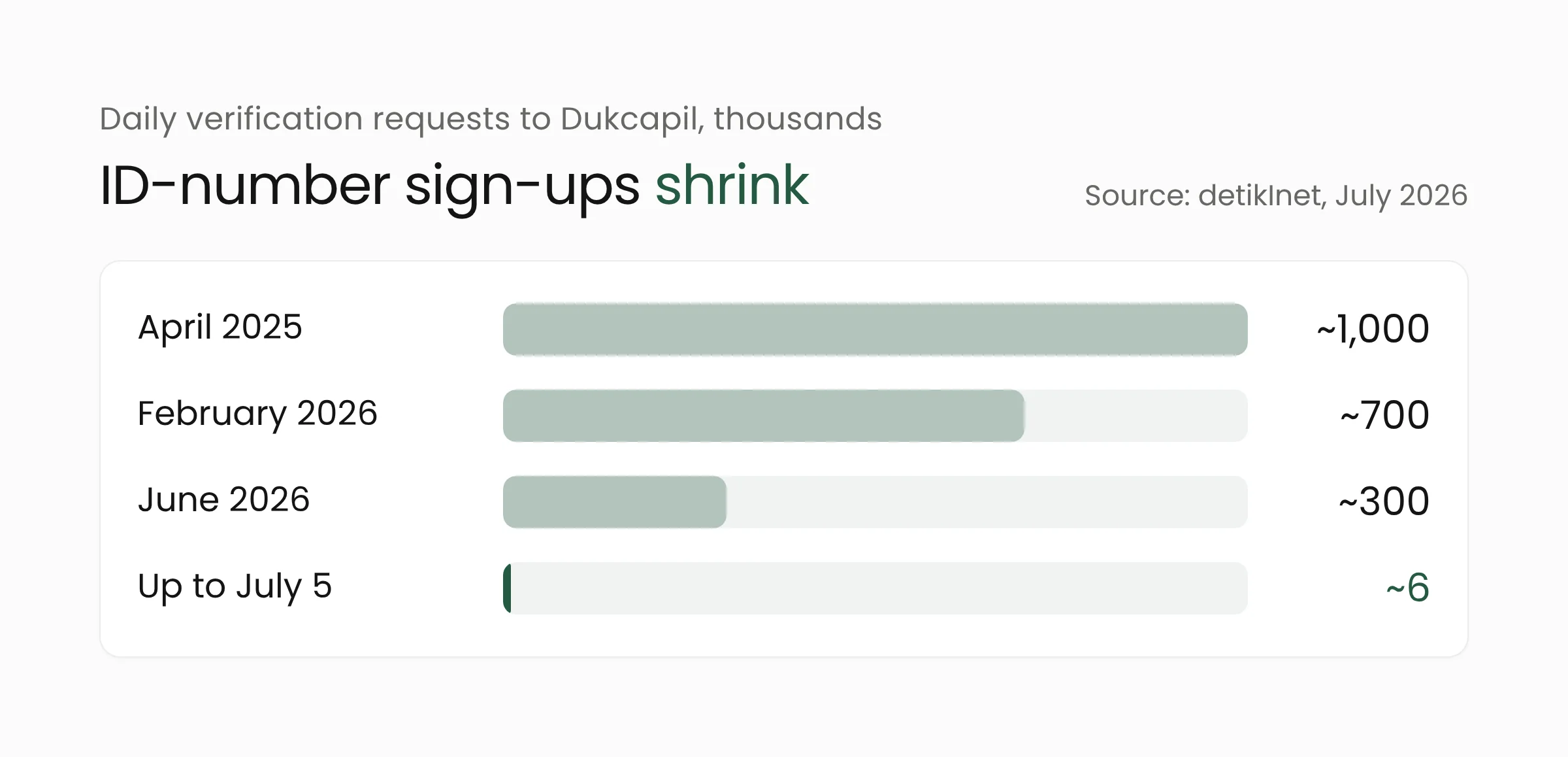
The ministry reads the decline as fewer attempts to register numbers with other people’s identities, while Dany acknowledged some misuse may still slip through. That interpretation has not been independently verified.
Komdigi also says face registration cannot be fooled by deepfakes, meaning AI-generated fake images or video of a face. ANTARA reported that during trials, operators caught people trying to register with face data altered by deepfake tools, and those applications were rejected. The claim rests on the liveness detection standards operators use, and no open third-party test results have been published.
On the industry side, ANTARA reported that subscriber churn fell to about 2.8% in the third quarter of 2026, from 20% at the start of the first quarter of 2025, before the rule took effect. Average revenue per user (ARPU) rose to Rp46,000 in the third quarter of 2026 from Rp45,800 in the first quarter. Both figures come from the government and may reflect other factors.
Remaining limits
About 86% of active numbers have not been verified with a face scan. Most of the numbers people use to sign in to apps today still come from NIK and family card registrations, the method that was open to abuse.
Komdigi is also preparing a portal at ceknomor.komdigi.go.id so customers can see which numbers are registered under their NIK. Investortrust reported that the portal has been trialed but is still being refined. Until it opens, a customer who finds an unknown number under their name has to visit an official operator outlet to ask for it to be blocked.
What this means for app teams
Biometric registration happens on the operator’s side. Apps do not receive the face verification result, the customer’s photo, or the registration status of a number. What changes is the likelihood that a new number belongs to the person whose identity was used, and how hard it is to take over someone else’s number through a SIM replacement without appearing at an outlet and passing a face scan.
For digital wallets, lending services, online stores, and public service apps, these steps are worth considering.
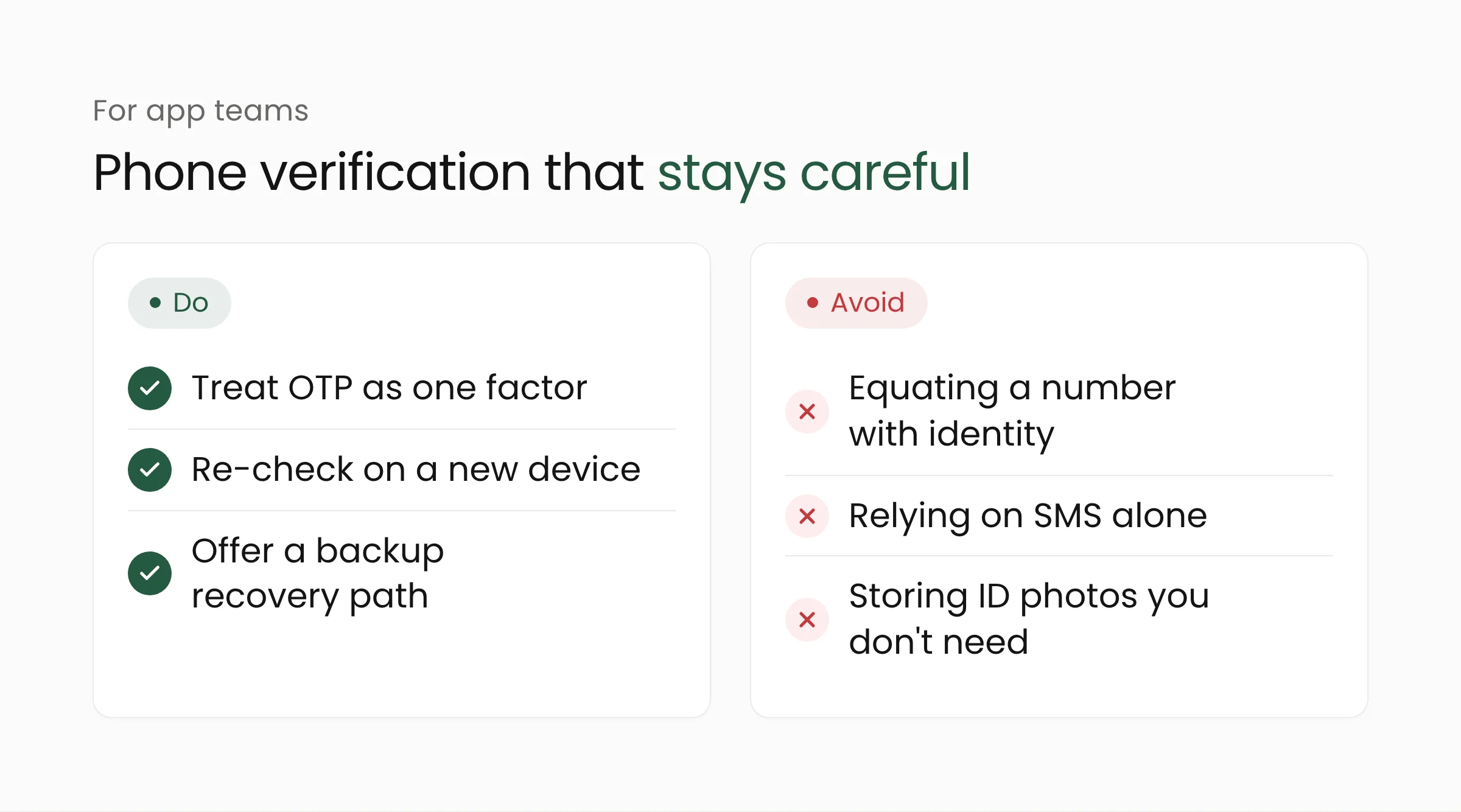
- Treat SMS OTP as one factor. A number verified by the operator helps, but codes can still be stolen through scams that trick users into reading them out. For high-value transactions, add another factor such as an in-app PIN or on-device biometrics.
- Re-verify when the device changes. Sign-ins from a new device, number changes, and account recovery requests are the riskiest moments. Ask for additional verification and send an alert to another registered channel, such as email.
- Offer a recovery path beyond SMS. Users lose numbers when cards go missing or prepaid validity lapses. A verified email address or recovery codes can fill the gap.
- Avoid collecting biometric data without a clear basis. ID card photos and selfies are sensitive personal data, so collect them only when your sector’s rules require it and store them with proper safeguards.
- Educate users. Encourage users to check which numbers are registered under their NIK at an operator outlet, or on the Komdigi portal once it opens, and never to share an OTP with anyone.
Phone verification methods are also shifting on the platform side. Google will bar Android apps from reading call logs for missed-call OTP verification starting in January 2027, as we covered in our piece on Google Play’s flash call verification policy. Teams responsible for mobile app development should work with risk teams so technical choices match the risk of each transaction.
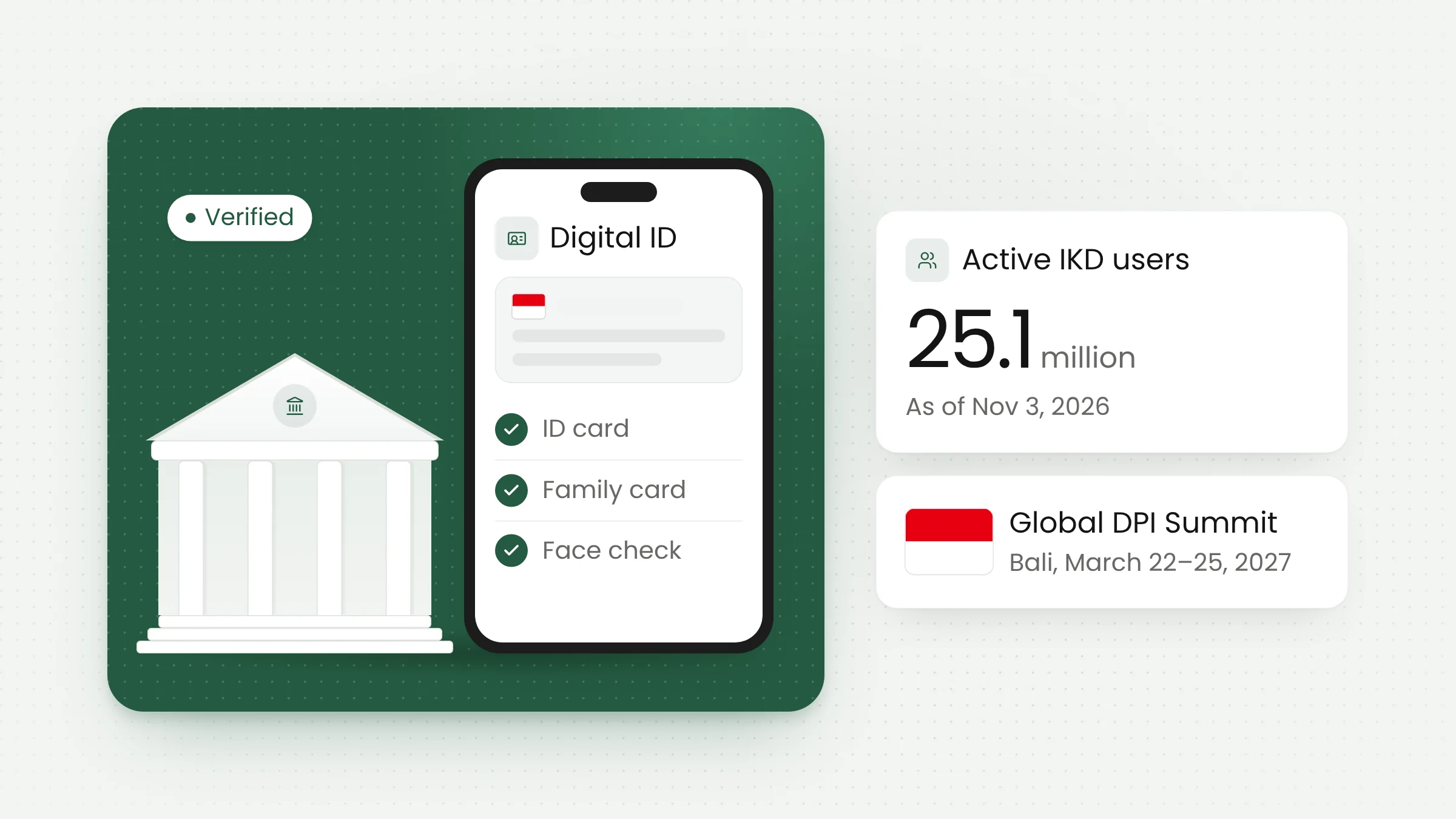
Government agencies can read the policy alongside other digital identity efforts. Indonesia’s digital population ID (IKD), which we covered when the IKD digital ID passed 25 million users, offers a verification route separate from phone numbers.
Frequently asked questions
Do existing numbers have to be re-registered with a face scan?
No. Properly registered numbers remain active. Komdigi encourages existing customers to re-register voluntarily at an outlet or through an operator’s self-service channel.
How can I check which numbers are registered under my NIK?
For now, customers can ask at an official operator outlet and request that any unfamiliar number be blocked. Komdigi is also preparing the ceknomor.komdigi.go.id portal for this purpose, but no launch date has been announced.
Is face verification really immune to deepfakes?
Komdigi says the deepfake attempts it found during trials were rejected, and operators must meet the ISO/IEC 30107-3 presentation attack detection standard. The claim has not been tested publicly by independent parties, so apps should keep their own security layers in place.
Conclusion
Reaching 41.49 million face registrations shows the new rule is moving faster than its target. Still, most active numbers come from the old registration method, and apps receive no guarantee from the operator’s process. Phone numbers remain a useful verification tool as long as they are treated as one of several layers of protection.
The Merakit Indonesia team can help review the sign-up, sign-in, and account recovery flows in your app so they stay secure and easy to use. Get in touch to discuss what you need.
Sources
- Kemenkomdigi Sebut Registrasi Biometrik Tembus 41,49 Juta Orang, Investortrust, November 13, 2026
- Kemkomdigi: Registrasi SIM biometrik tak bisa diakali “deepfake”, ANTARA, November 13, 2026
- Peraturan Menteri Komunikasi dan Digital Nomor 7 Tahun 2026, JDIH Ministry of Communication and Digital Affairs, January 19, 2026
- Validasi Biometrik Wajib untuk Registrasi Seluler, Justisio, 2026
- Komdigi: Registrasi SIM Biometrik bagi Nomor Lama Bersifat Sukarela, Metrotvnews, July 7, 2026
- Pasca Registrasi Kartu SIM Biometrik, Penyalahgunaan Identitas Diklaim Menyusut, detikInet, July 7, 2026