Blog Semiconductors
Chip Merah Putih: Indonesia's E-Passport Chip Prototype
On this page· 8 sections
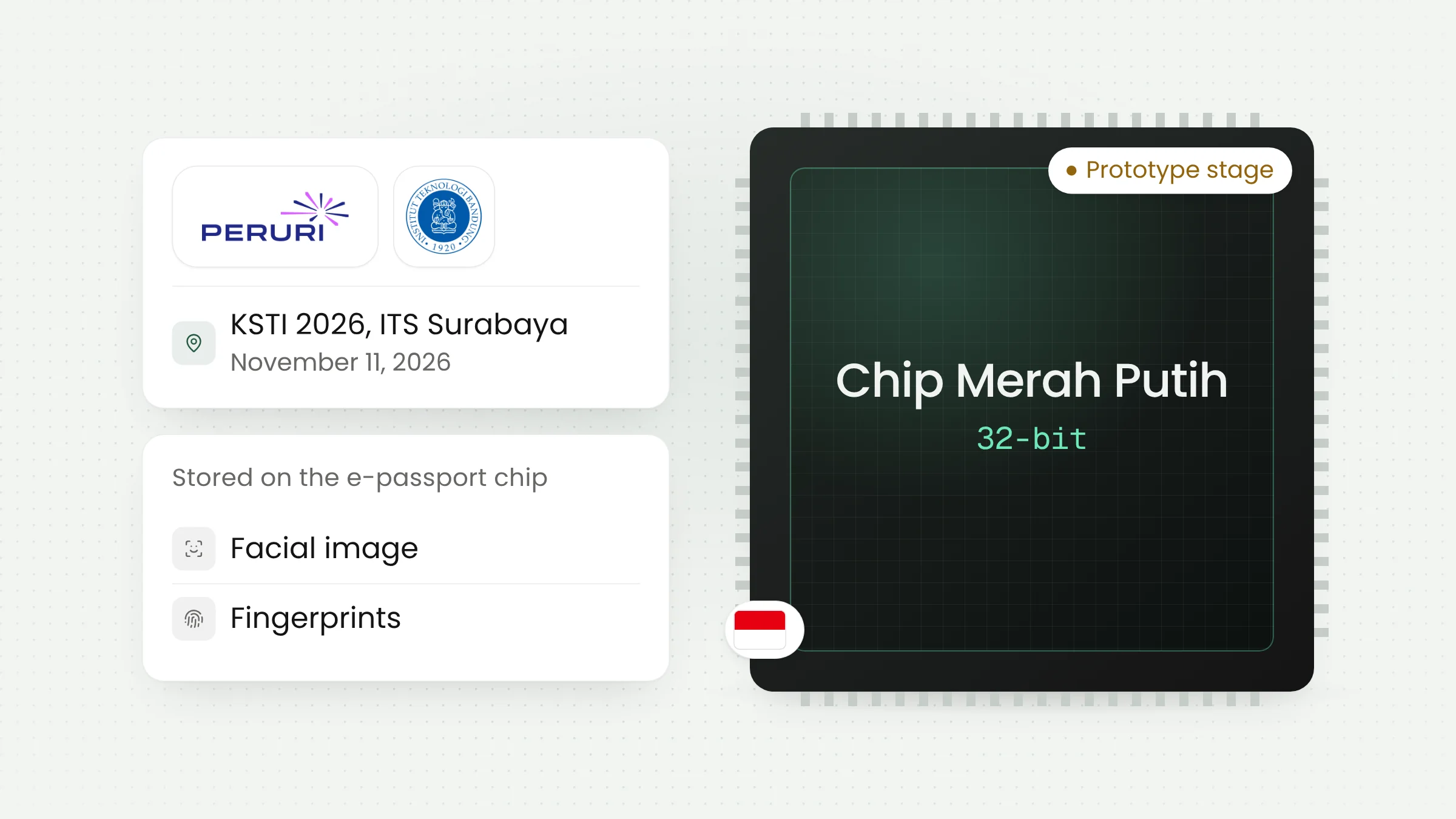
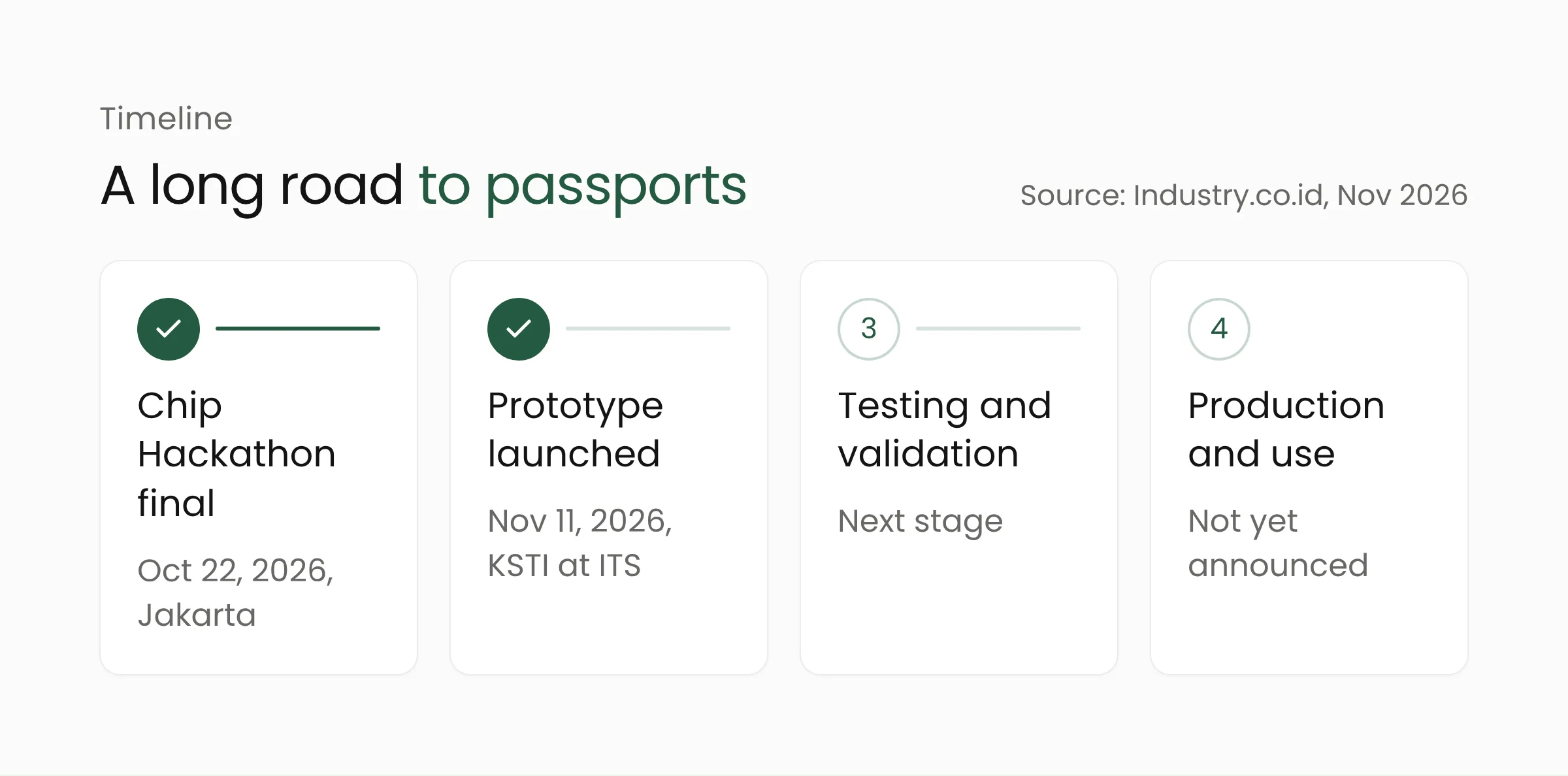
Indonesia’s state security printer Perum Peruri and the Bandung Institute of Technology (ITB) unveiled Chip Merah Putih on November 11, 2026, a prototype 32-bit security chip designed for electronic passports. The launch took place at the Indonesian Science, Technology, and Industry Convention (KSTI) 2026 in Surabaya. The chip is still a prototype and is not yet used in any issued passport.
What was launched at KSTI 2026
According to Indonesia’s Ministry of Higher Education, Science, and Technology, the main KSTI 2026 event was held at the Sepuluh Nopember Institute of Technology (ITS) on Wednesday, November 11. The event showcased a prototype 32-bit security chip for electronic passports developed by Peruri and ITB. The convention also displayed 567 research products from universities and the national research agency BRIN, drew more than 2,400 invited guests, and produced more than 40 cooperation commitments between universities, industry, and government.
The chip was launched by Higher Education, Science, and Technology Minister Brian Yuliarto, Peruri President Director Teguh Arief Indratmoko, and ITB Rector Tatacipta Dirgantara. Industry.co.id reported that the project began as a research partnership to design a chip for e-passports, with security and electronic identity systems as its intended use.
For Peruri, which has protected Indonesia’s state documents for more than five decades, the chip extends that role into hardware design. Teguh Arief Indratmoko said the company wants to show that Indonesia can develop secure strategic technology on its own.
Official sources have not disclosed other technical details, such as the manufacturing process, the fabrication partner, or a mass production schedule. Technical figures beyond the official “32-bit” description should be treated with caution until Peruri or ITB publishes them.
What a security chip does in an e-passport
An electronic passport carries a chip that stores the holder’s biometric data. According to Indonesia’s Directorate General of Immigration, that data includes a facial image and fingerprints, and it is encrypted to make forgery very difficult. Automated passport gates at airports read this chip.
A security chip differs from an ordinary processor. Its main job is to store data and cryptographic keys safely, then answer read requests from inspection machines without exposing its secret keys. If the chip can be copied or read without authorization, every other security layer in the passport becomes weaker. When Peruri launched its chip design sandbox a few months earlier, Teguh said that the ability to design chips independently would deliver higher security standards.
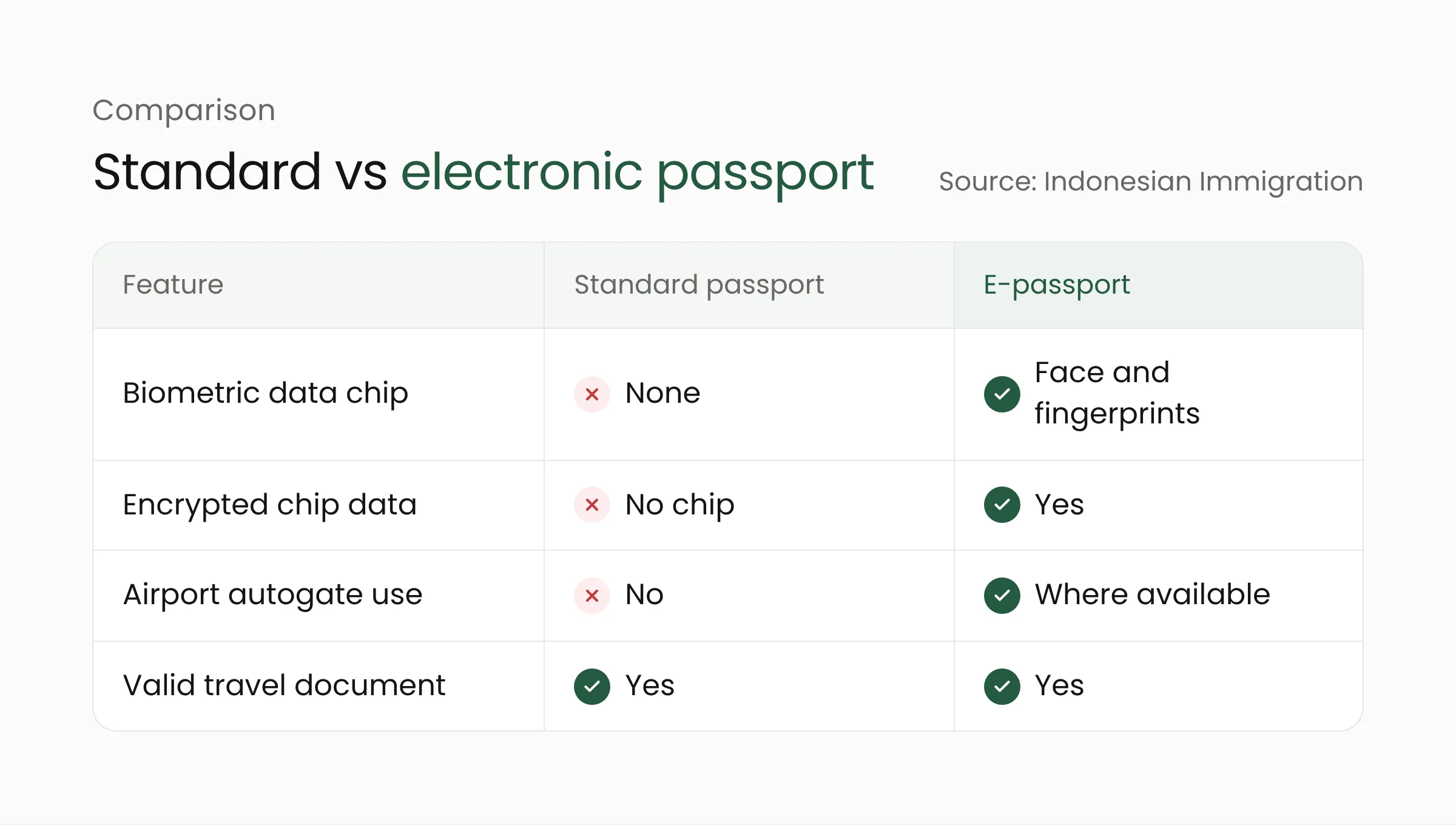
Indonesia is already moving to e-passports in stages. Since December 1, 2024, the immigration directorate has issued only electronic passports at 13 pilot immigration offices, with plans to extend the policy to every office in the country. As demand grows, a domestically designed chip would give national travel documents a new supply option, although that outcome is still some way off.
From prototype to passports in circulation
A prototype is an early milestone. IDX Channel noted that design is only one stage and that the chip still needs further research, testing, and development before it can meet industry requirements. Republika reported that the next steps are technology refinement, testing, and further validation, while Peruri will explore uses that meet industry standards.
For travel documents, those standards are demanding. The immigration directorate describes e-passports as an international standard and notes that several countries use automated passport checks with chip readers. A locally designed chip therefore has to be read correctly by inspection machines in many countries. No date has been announced for when Chip Merah Putih might appear in passports issued by Indonesian Immigration.
Peruri also plans to expand cooperation with the higher education ministry, the Ministry of Industry, the Coordinating Ministry for Economic Affairs, the sovereign wealth fund Danantara, and the state enterprise agency BP BUMN, alongside industry and academia. Merakit previously covered Danantara’s plans for locally designed chips and data center equipment, which point to the same interest in domestic semiconductors.
Building chip design talent on campus
Alongside the prototype, Peruri runs two programs aimed at young talent. The first is the Chip Merah Putih Sandbox, a platform that, according to Industry.co.id, students, researchers, startups, and industry players can use for free in a web browser to practice chip design.
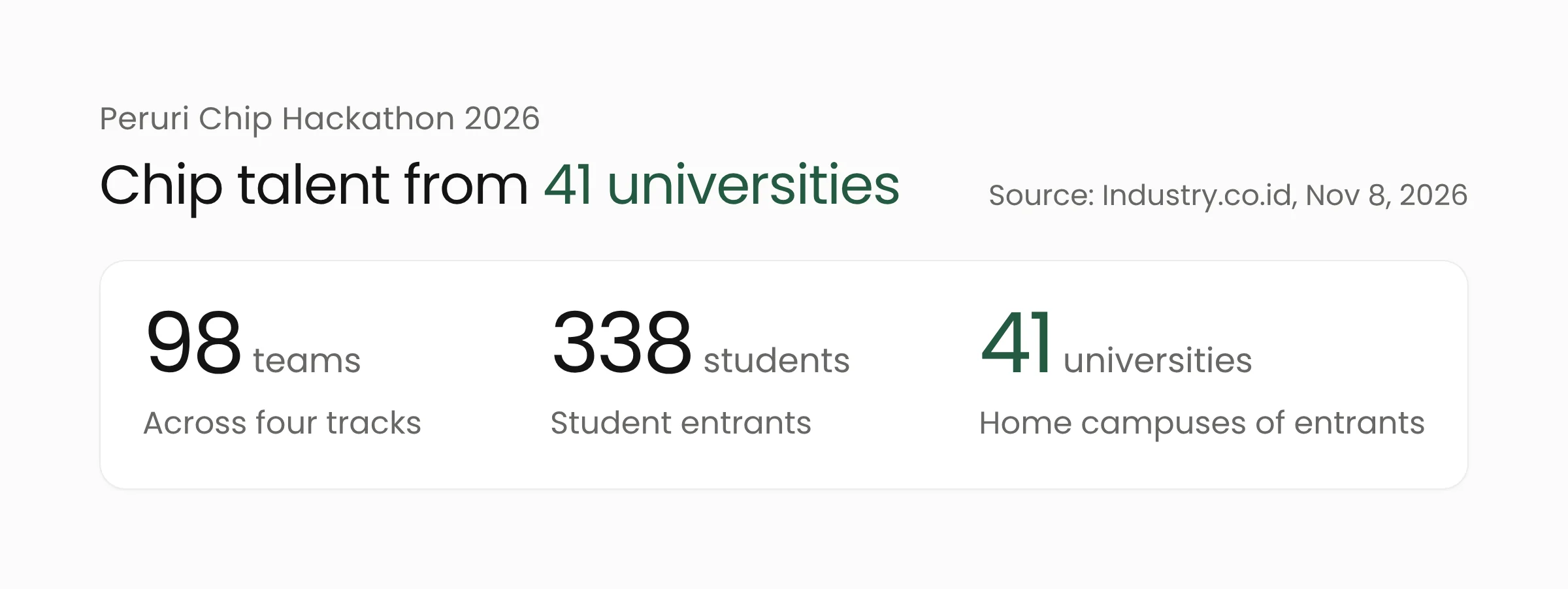
The second is the Peruri Chip Hackathon 2026, which drew 98 teams made up of 338 students from 41 universities. Participants chose one of four tracks, including secure identity and secure element chips and hardware cryptography accelerators. The final round took place in Jakarta on October 22, 2026.
The winning team, Casa Tubagus from ITB, built an e-passport security chip that uses each chip’s unique physical fingerprint as its identity to prevent counterfeiting and duplication. Third place went to Digilarp from Universitas Indonesia, which designed protection for encryption keys and sensitive e-passport data against physical attacks. Both projects show that campus research is already tackling the same problems as Peruri’s own work.
Not every entry dealt with identity documents. Runner-up iSeeDesignITB, also from ITB, designed an AI-based chip to help robots move more safely and efficiently when working alongside people. The range of tracks suggests that chip design skills built for passports could also serve other sectors, such as manufacturing and connected devices.
What this means for government agencies
Chip Merah Putih does not change any public service today. The direction it signals is clear, though: identity documents will rely more and more on chips, biometric data, and automated checks. Agencies that manage or consume citizen identity data can start preparing now.
- Map the biometric data you hold. Facial images and fingerprints are classified as specific personal data under Article 4(2) of Indonesia’s Undang-Undang Nomor 27 Tahun 2022 tentang Pelindungan Data Pribadi (Personal Data Protection Law). Record which applications store that data, who can access it, and how long it is kept.
- Design systems that are not tied to one device. Services that read cards or electronic documents should separate application logic from the chip reader, so a change of hardware supplier does not force a full rebuild.
- Test the security of verification flows. Data encrypted on a chip can still leak after it is read if the receiving server, database, or API is weak. Regular reviews through a cybersecurity service help close those gaps.
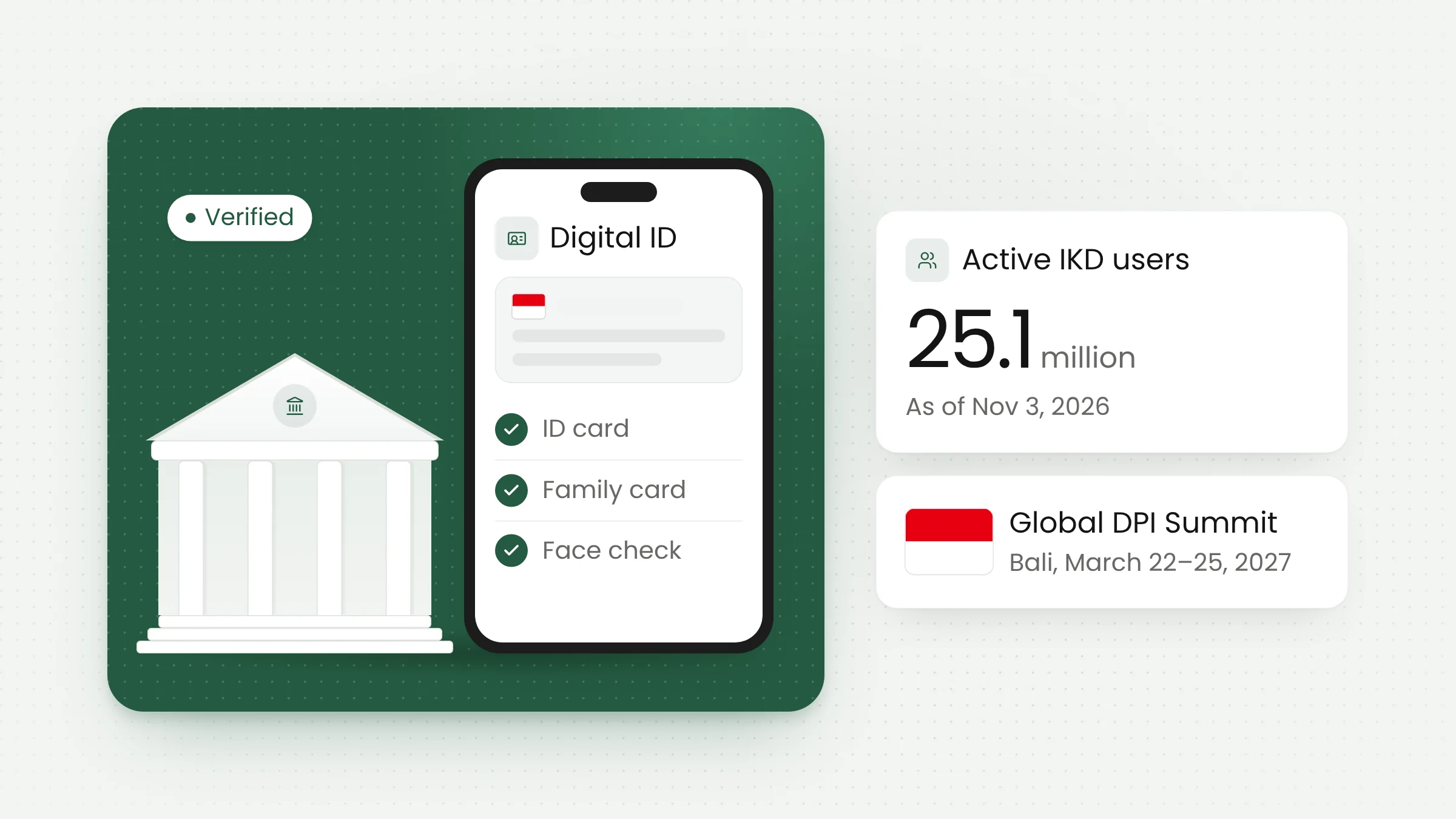
- Connect to existing identity services. Many agencies now verify citizens through Indonesia’s digital population ID. Merakit has written about the growth of the IKD digital ID and its role in national ID number verification.
For agencies redesigning identity-based public services, Merakit supports the work through its digital government solutions, from data integration to application security.
Frequently asked questions
Does my e-passport already use Chip Merah Putih?
No. Chip Merah Putih is still a prototype that will go through refinement, testing, and validation. No date has been announced for its use in passports issued by Indonesian Immigration.
Who developed Chip Merah Putih?
The chip comes from a research partnership between Perum Peruri and the Bandung Institute of Technology. The prototype was launched with the Minister of Higher Education, Science, and Technology at KSTI 2026 at ITS in Surabaya.
What data does an e-passport chip store?
According to Indonesian Immigration, the chip stores the holder’s biometric data, such as a facial image and fingerprints. The data is encrypted and can be read by automated passport gates at airports that offer them.
Closing thoughts
The Chip Merah Putih prototype is Indonesia’s first step toward designing a core component of its identity documents at home. Its impact will depend on how testing and validation go, but agencies can already put their biometric data and verification flows in order. If your organization wants to review the readiness and security of its identity systems, the Merakit team is ready to talk.
Sources
- Kemdiktisaintek: Director General of Research Presents KSTI 2026 Results (November 12, 2026)
- Industry.co.id: Chip Merah Putih Prototype Officially Launched (November 16, 2026)
- IDX Channel: Peruri and ITB Launch Chip Merah Putih Prototype (November 16, 2026)
- Republika: Chip Merah Putih Launched (November 16, 2026)
- Industry.co.id: Peruri Chip Hackathon 2026 Winners (November 8, 2026)
- Industry.co.id: Peruri Launches Chip Merah Putih Design Sandbox (August 1, 2026)
- Indonesian Immigration: Transition to 100% Electronic Passports (December 1, 2024)
- Indonesian Immigration: Electronic vs Standard Passports (September 27, 2022)
- JDIH Coordinating Ministry for Infrastructure: Law No. 27 of 2022