Blog QRIS
Bank Indonesia Plans QRIS Data for MSME Credit Scoring
On this page· 7 sections
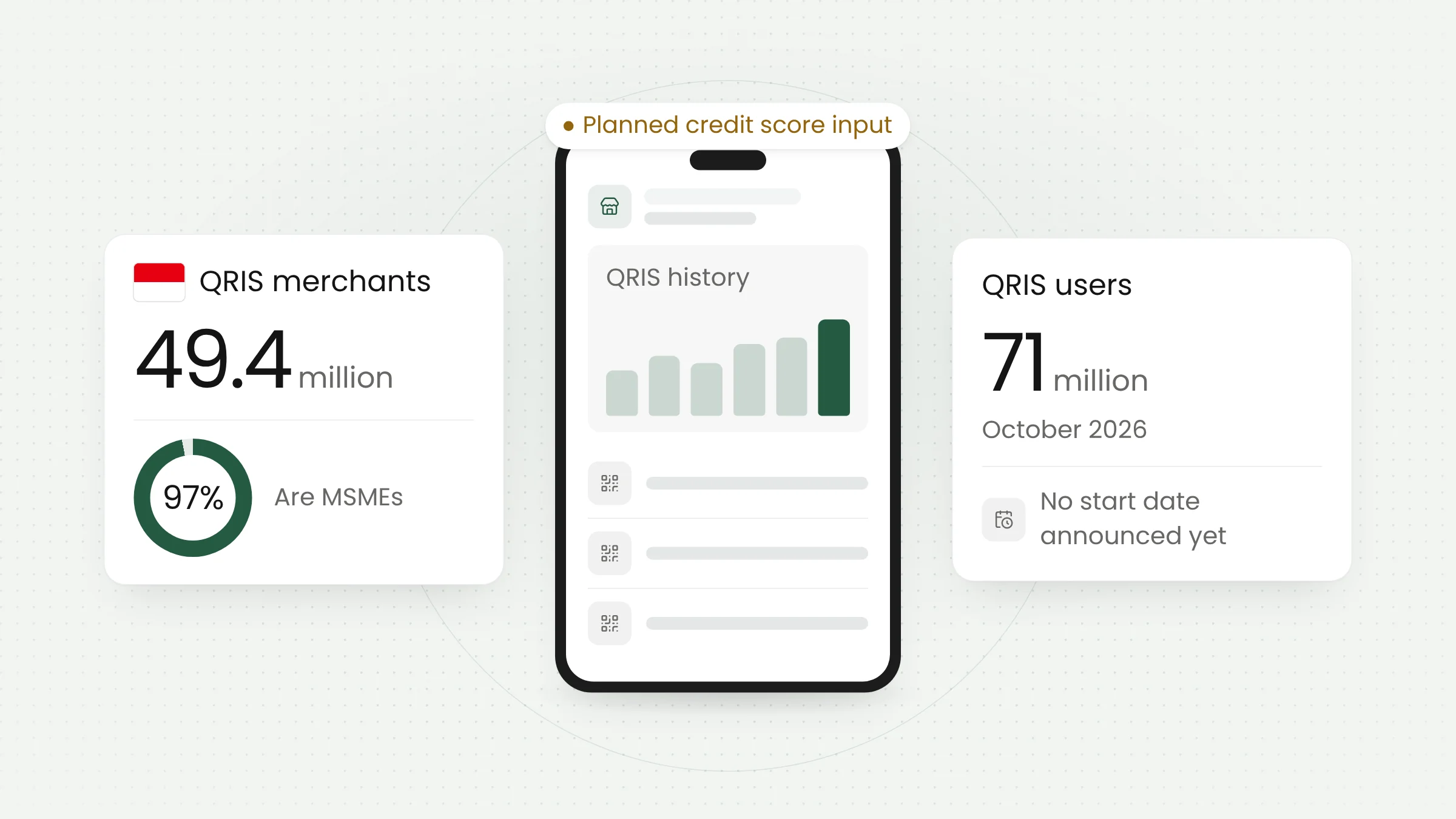
Bank Indonesia plans to use QRIS transaction data as one input for credit scoring of micro, small, and medium enterprises (MSMEs). Governor Destry Damayanti outlined the idea in Jakarta on October 26, 2026. Payment histories that now sit inside merchant apps could eventually help banks and lenders judge whether a small business can repay a loan.
What the governor said
Destry spoke to reporters after the Danantara Technology Innovation Investment Forum 2026 in Jakarta. According to ANTARA, the aim is to open up financing for small traders who already accept QRIS payments. She described the spread of QRIS as a success in giving financial access to businesses at the lower end of the market.
As quoted by CNN Indonesia, she said that for small merchants, “nantinya data ini bisa menjadi semacam credit scoring,” meaning the data could later serve as a kind of credit score. She gave no timeline, saying only that this is the direction going forward.
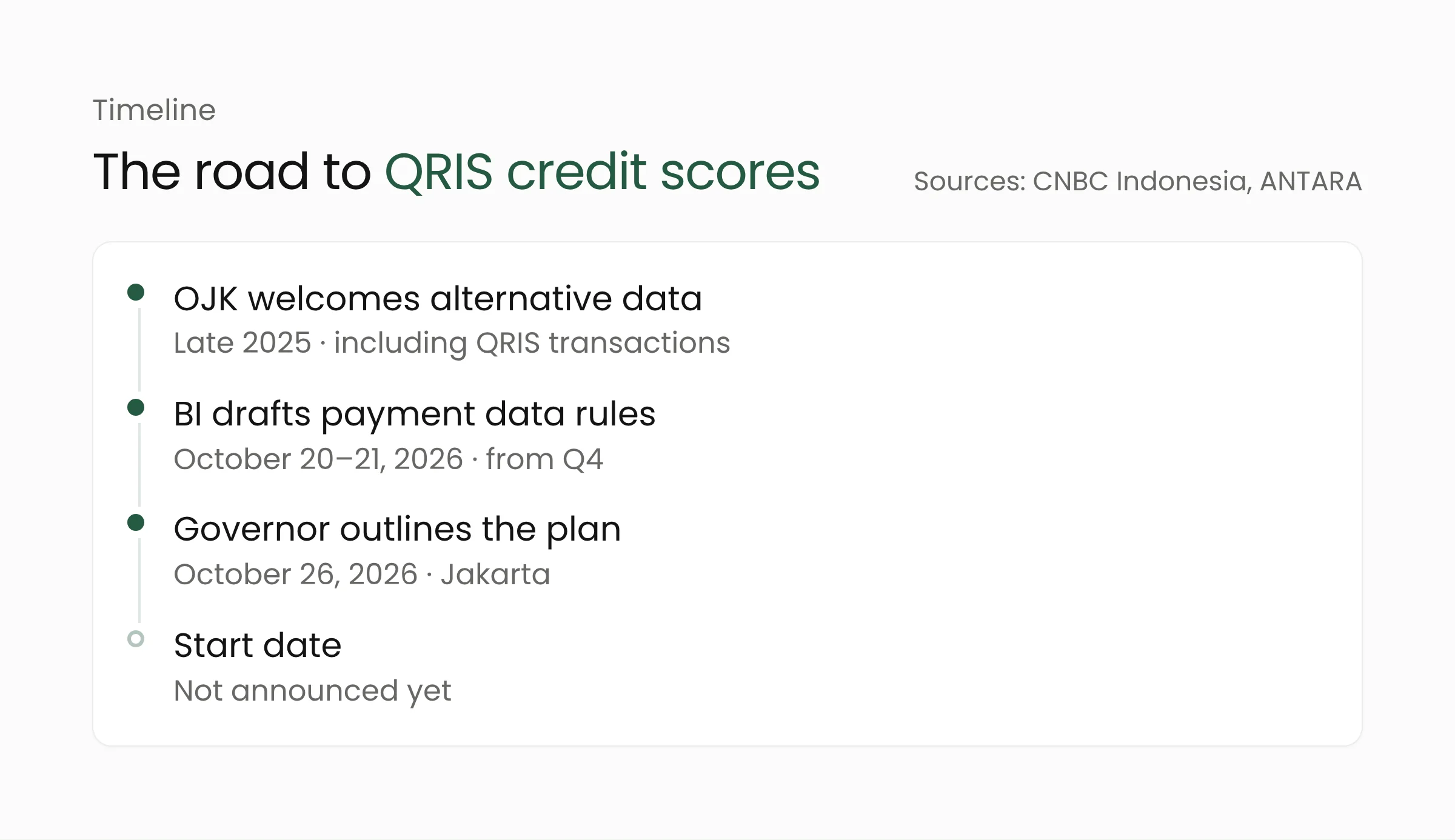
The plan has no schedule yet. None of the sources we read gives a start date, names the institutions that would use the data, or explains how a score would be calculated. CNBC Indonesia noted that the idea has been discussed since last year without being put into practice.
The pool of data is large. At the forum, Destry said QRIS has 71 million users and 49.4 million merchants, 97% of them MSMEs. CNBC Indonesia reported that the user count stood at 67 million in September 2026, roughly a quarter of Indonesia’s population.
Third-quarter 2026 figures cited by Liputan6 and ANTARA differ slightly: 70.6 million users and 49.4 million merchants, with QRIS transactions up 75.8% from a year earlier. The gap between 71 million and 70.6 million likely reflects different reporting dates, so we list both.
Over the same quarter, BI-FAST, the central bank’s round-the-clock fast transfer service, processed 1.631 billion transactions, up 31.78%, worth Rp4,049 trillion, up 33.91%. Destry said few other central banks run a comparable service.
How payment data can inform a credit decision
A credit score is a short number lenders use to estimate how likely a borrower is to repay. Traditional scores lean heavily on past borrowing. Many small traders have never taken a bank loan, so their credit file is empty even though their shop trades every day.
QRIS records can fill that gap as alternative data. Every payment a merchant receives is logged with a time and an amount. Over several months, those logs show patterns a lender cares about: how regularly a shop gets paid, whether revenue is steady or seasonal, and which way sales are trending.
As an illustration, a food stall that receives hundreds of QRIS payments a day at fairly stable values sends a different signal from a shop that is busy only in certain months. This is our own example of how alternative data works, not a design published by Bank Indonesia.
The data has limits. QRIS only captures payments made by scanning a QR code, while many traders still take cash and bank transfers. A shop whose customers mostly pay cash could look smaller than it really is. Payment data also needs to be read alongside other information, such as operating costs and existing debts, for the assessment to be fair.
For lenders, this kind of work depends on careful data analytics: combining transaction histories, removing duplicates, and building scoring models that can be explained to borrowers and supervisors.
Data rules and privacy are still being drafted
The biggest open question is about the data itself. Who may access a merchant’s transaction history, with whose consent, and for which purposes was not explained in the October 26 remarks.
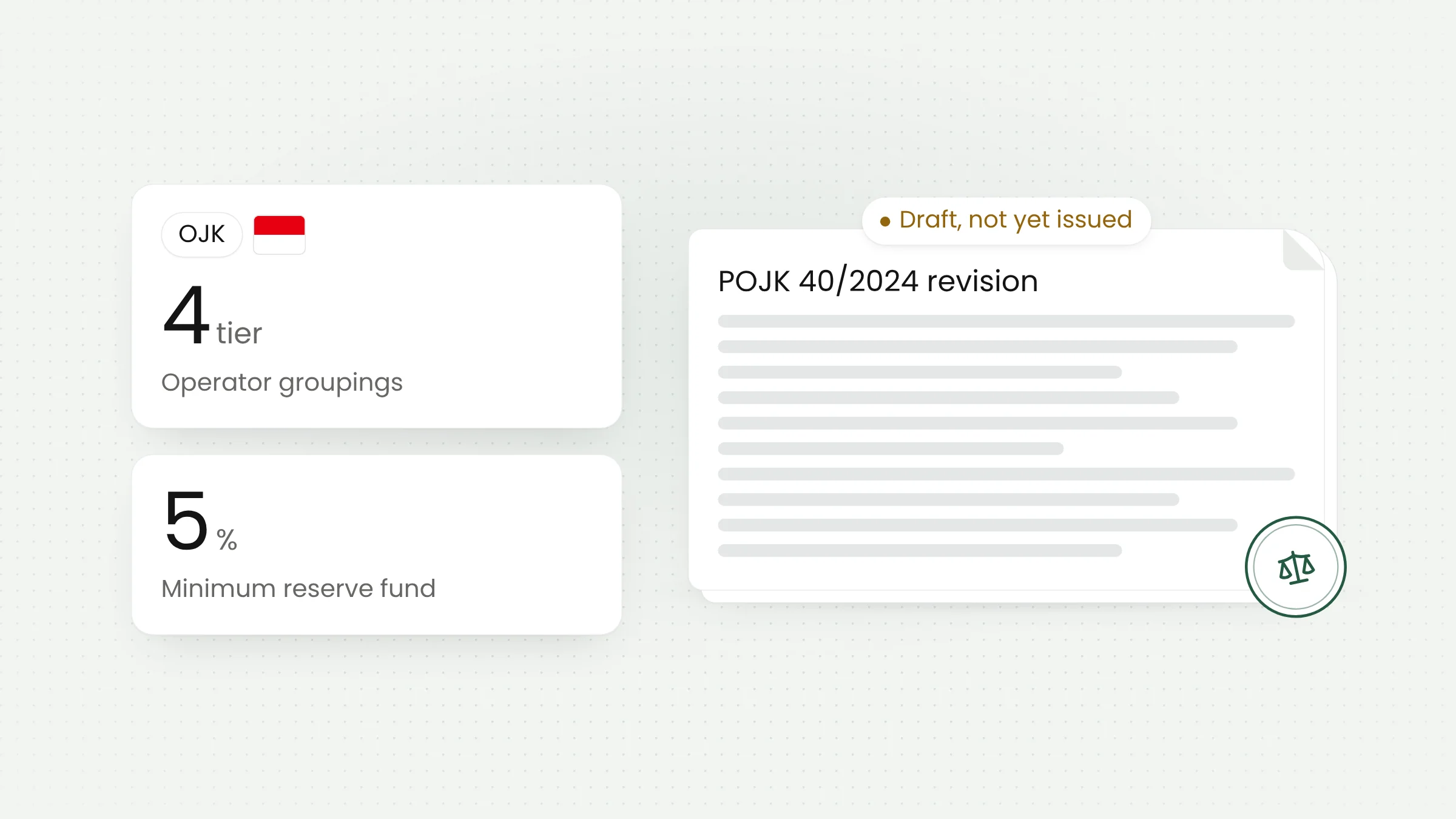
The legal framework is under construction. At its board meeting on October 20 and 21, 2026, according to CNBC Indonesia, Bank Indonesia began preparing a central bank regulation on payment system data in the fourth quarter of 2026. The rule is expected to provide the legal basis for data exchange within the payment system. Its provisions have not been published.
The Financial Services Authority (OJK) signaled its view in late 2025. According to CNBC Indonesia, Agusman, OJK’s chief executive supervisor for finance companies, venture capital, microfinance, and other financial institutions, welcomed the use of financial transaction data, including QRIS, as alternative data in credit assessment. He also said implementation needed further study, especially on personal data protection, data validity, and prudence.
Those three points are linked. Data protection concerns a merchant’s rights over its own business records, which also fall under Indonesia’s personal data protection law (Undang-Undang Pelindungan Data Pribadi). Data validity concerns the risk of fake transactions made to inflate a score. Prudence concerns a lender’s duty not to grant credit on the strength of a single data source.
What this means for small businesses and lenders
The technical rules have not been issued, so nothing has to change today. But the data that may be assessed later is the data being collected now, which makes it sensible to start preparing early.
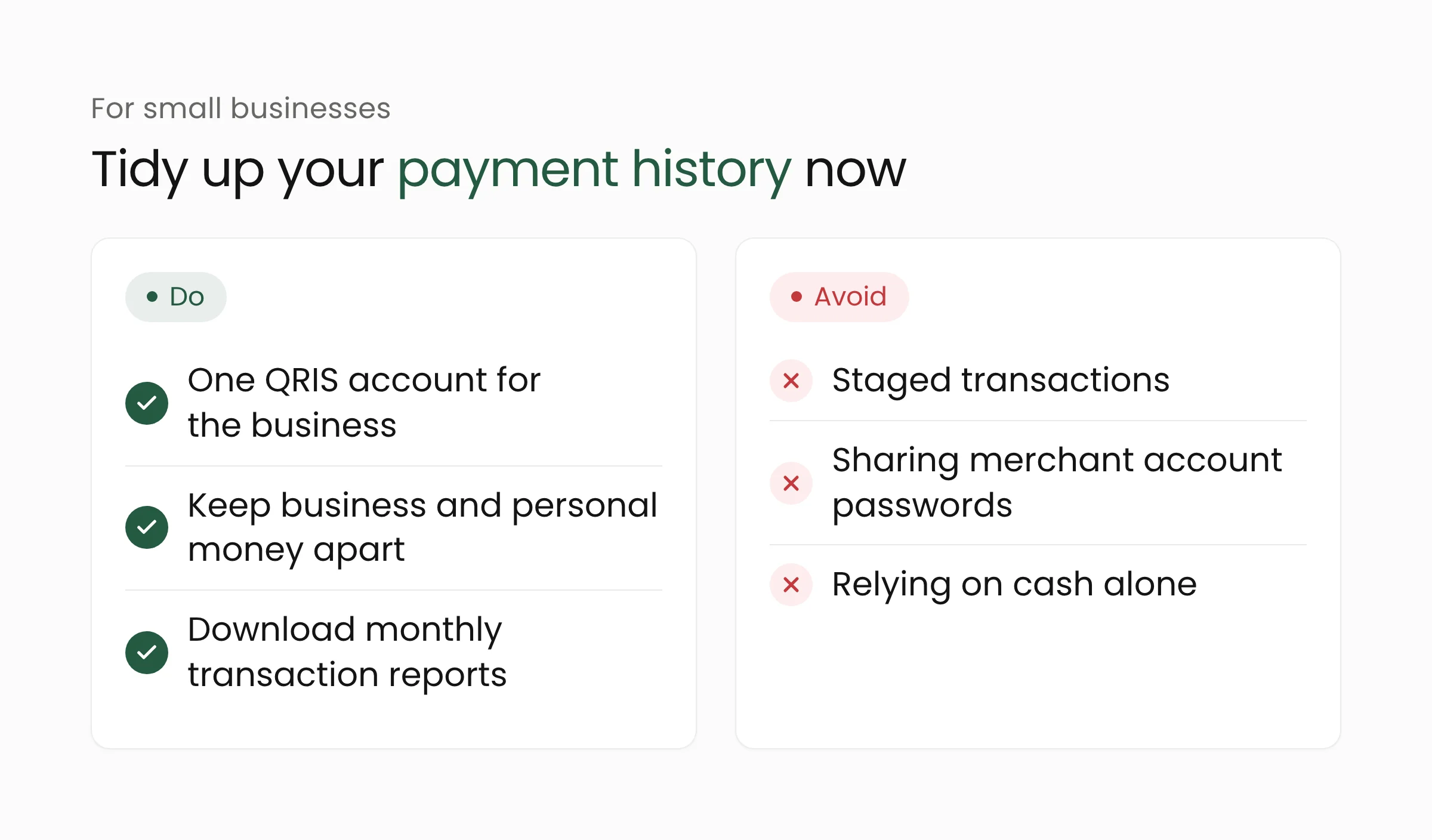
For small business owners, the simplest step is to route business payments into one QRIS account that belongs to the business. A consistent history in one place is easier to read than payments scattered across several personal accounts.
Keep business and personal money apart. An account mixed with household spending hides the pattern of the business, both from lenders and from the owner.
Do not stage transactions. Scanning your own QR code to pad sales may look like a shortcut. OJK has already named data validity as a condition, so unusual patterns are more likely to hurt than help.
Be wary of anyone asking for account access. Until official rules are out, offers to “raise your credit score” that ask for a password or access to a merchant app deserve suspicion. In regulated financial services, access to business data should go through clear consent and procedures.
For banks, rural banks, and finance companies, the plan is worth tracking from the draft stage. Several things can be prepared now: a clear customer consent flow before any data is used, retention and deletion policies, and a way to explain a rejected application to the applicant. Scoring models that use alternative data also need testing so they do not disadvantage particular groups of traders, such as businesses in regions where cash still dominates.
Internal systems also need to receive data from other parties securely. That integration work, from transaction records to risk monitoring dashboards, is part of what we build in our financial services solutions.
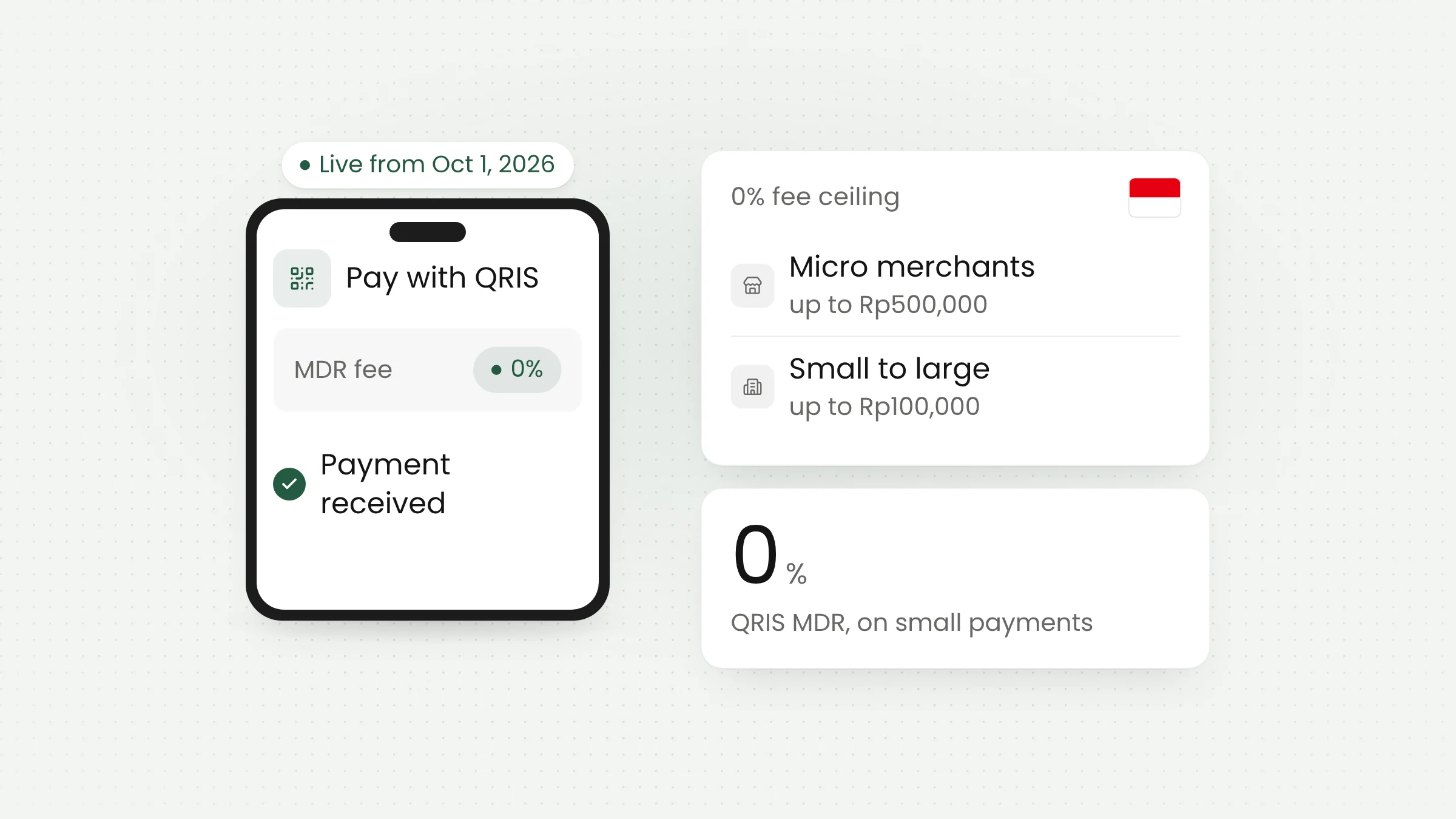
For developers of point-of-sale and bookkeeping apps, the plan points to clear feature needs: monthly transaction reports that are easy to export, income categories, and cash records kept alongside QRIS. Those features are useful today and will matter more once the data rules arrive. For shops that are new to QRIS, our explainer on the 0% QRIS merchant fee covers the fee limits in force since October 1, 2026.
Frequently asked questions
Is QRIS data already used to assess loans?
Not as an official Bank Indonesia policy. On October 26, 2026, the governor described it as a future plan, without a timeline or mechanism. Lenders continue to assess credit under their own procedures.
Will merchants have to give consent before their data is used?
The sources we read do not describe a consent mechanism yet. OJK has stressed personal data protection as a condition, and Bank Indonesia is preparing a regulation on payment system data. The details will only be clear once that regulation is issued.
Could merchants who mostly take cash be at a disadvantage?
That risk exists if QRIS data becomes the only reference. This is why OJK points to prudence, and QRIS data is framed as one input among several. Keeping tidy cash sales records still helps as supporting evidence in a loan application.
Closing
Using QRIS data in credit scoring could open financing to millions of traders who have no borrowing history. How well it works will depend on the data rules now being drafted and on the quality of each business’s transaction records. If your organization wants to prepare transaction data processing or a credit scoring model it can stand behind, our team is happy to talk.
Sources
- ANTARA: BI plans to use QRIS transactions as a reference for creditworthiness (October 26, 2026, in Indonesian)
- CNBC Indonesia: 71 million users, BI wants QRIS as credit scoring (October 26, 2026, in Indonesian)
- Liputan6: QRIS transaction records to become a reference for MSME credit (October 26, 2026, in Indonesian)
- CNN Indonesia: BI to use QRIS data as a reference for MSME credit scores (October 27, 2026, in Indonesian)
- CNBC Indonesia: List of Bank Indonesia decisions at the October 2026 board meeting (October 21, 2026, in Indonesian)