Blog Delivery Robots
Serve and DoorDash Delivery Robots Begin Trial in Australia
On this page· 7 sections
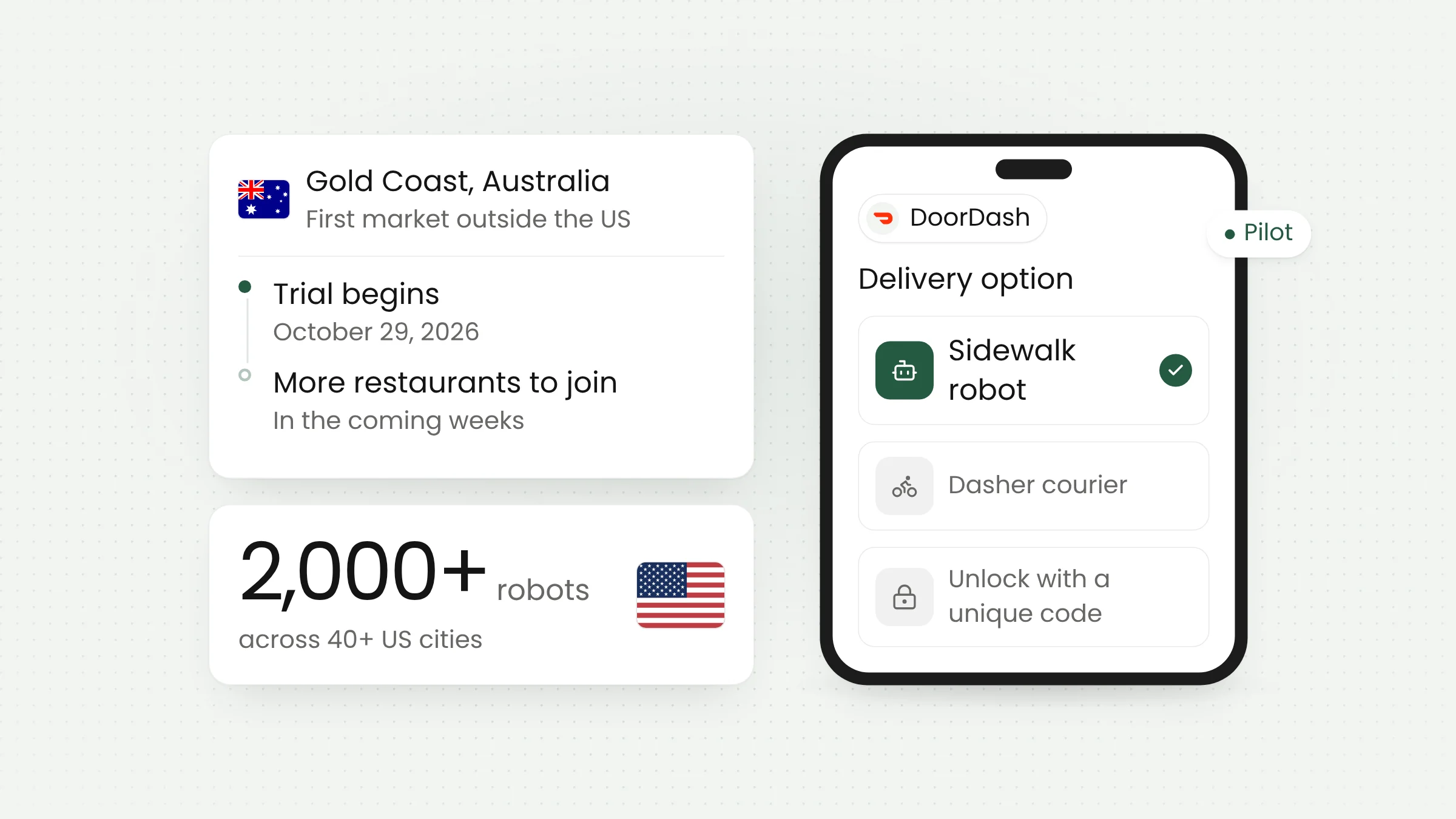
Serve Robotics’ sidewalk delivery robots started carrying DoorDash orders on Australia’s Gold Coast on October 29, 2026. The trial is Australia’s first footpath robot delivery service and Serve’s first market outside the United States. For now, the robots operate only within a single campus and health district.
Serve’s first trial outside the United States
According to a joint release from Serve Robotics and DoorDash, the service launched in the Gold Coast Health and Knowledge Precinct, an area that includes Griffith University’s Gold Coast campus and nearby health facilities. The first participating restaurant is Gnocchi Gnocchi Brothers in Southport, with more local restaurants expected to join in the coming weeks.
Serve is an established operator in the United States. It runs more than 2,000 robots across more than 40 U.S. cities, Reuters reported, and the company says it has delivered for more than 4,500 restaurants there. Serve and DoorDash have worked together in the U.S. since 2025. Reuters also noted that Serve signed a partnership with Grubhub earlier this year after its long-running arrangement with Uber Eats ended.
“This is the first time we’ve taken Serve beyond the US, and the Gold Coast is the right place to start,” CEO and co-founder Ali Kashani said, according to Reuters. Serve plans to invest about $500,000 in the region over the next year and is hiring local operations staff and technicians who will work from a depot at Griffith University.
Both companies describe the service as a pilot. Its results, including feedback from the local community, will shape whether delivery zones expand or change. Customer fees and plans for other countries, including Indonesia, have not been announced.
How sidewalk robot delivery works
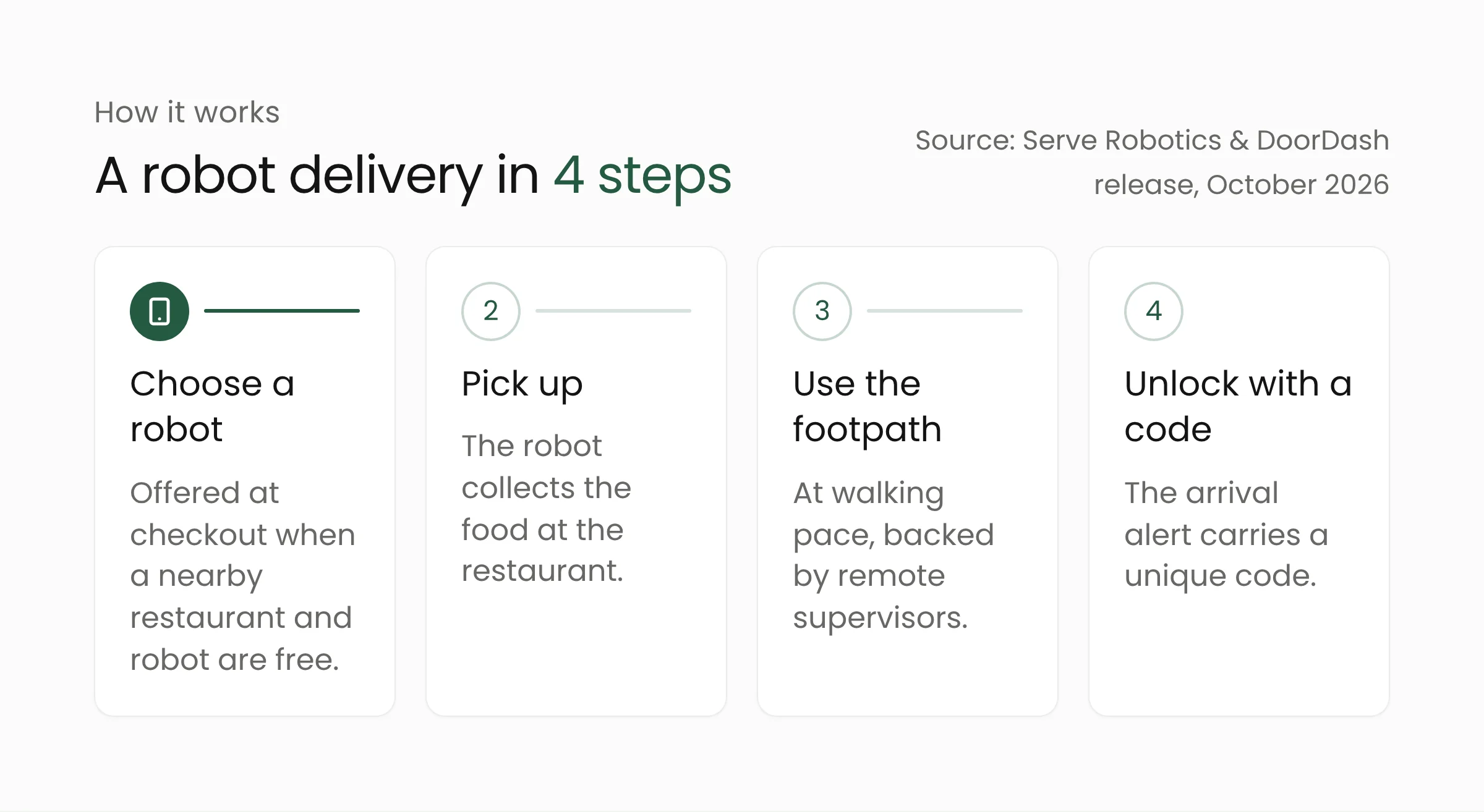
Customers do not need a separate app. When they order through DoorDash, robot delivery appears as an option at checkout if a participating restaurant is nearby and a robot is available. Customers can opt in or out.
Once the order is placed, the robot collects the food from the restaurant and travels along the footpath to the customer’s address. When it arrives, the customer receives a notification with a unique code that opens the robot’s locked compartment. Australian business outlet SmartCompany described the four-wheeled robot as resembling an esky, or cooler box, on wheels.
The release also sets out several operating rules:
- Robots travel at walking pace and give way to pedestrians.
- Every robot is supported by trained remote supervisors.
- Each robot displays a public contact number that residents can call.
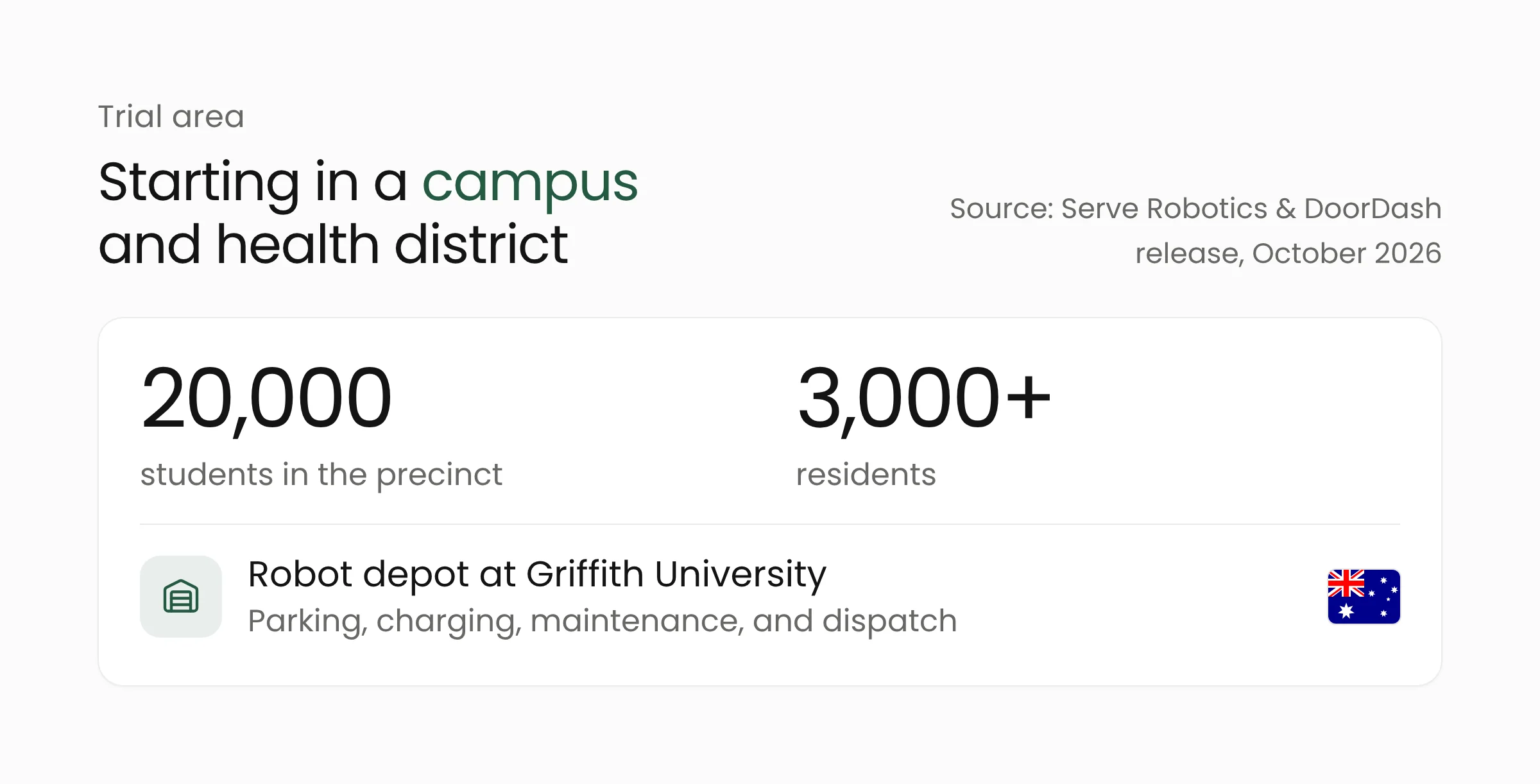
- At the end of each shift, robots return to Serve’s depot at Griffith University for charging, maintenance, and dispatch.
That last point is easy to overlook. Robots need parking, charging, technicians, and a team watching them remotely. Without a depot and an operations crew, a robot fleet cannot run day after day.
Why the trial starts in a campus and health district
The Gold Coast Health and Knowledge Precinct is home to more than 3,000 residents and 20,000 students, according to the release. Districts like this tend to have short distances between destinations, plenty of foot traffic, and steady demand for food throughout the day. Kashani said the Gold Coast’s walkable layout makes it a strong testing ground for Serve’s first expansion.
Local backing is clear. The City of Gold Coast, Griffith University, and the precinct’s management support the pilot. Gold Coast Mayor Tom Tate said the city wants to be a place where new technologies are developed, tested, and put to work. Griffith is the first university to host a Serve operations team, and the two are exploring internships and early-career roles in robotics, autonomy operations, and field engineering.
Robots for short trips, couriers for longer ones
DoorDash frames the robots as part of a multi-modal delivery strategy. In the release, robots handle short, local trips in dense areas, while human couriers, known as Dashers, continue to take longer-distance orders.
Simon Rossi, DoorDash’s vice president for Asia-Pacific, said the company continues to support the Dashers who are central to its platform, SmartCompany reported. Questions about how robots affect courier earnings will grow if the service expands, and the Gold Coast pilot has not yet produced data to answer them.
What this means for retailers and restaurants
Sidewalk delivery robots do not operate in Indonesia, and no plans have been announced. Still, the Gold Coast pilot shows what restaurants, stores, and property managers need in place before delivery automation becomes a practical option.
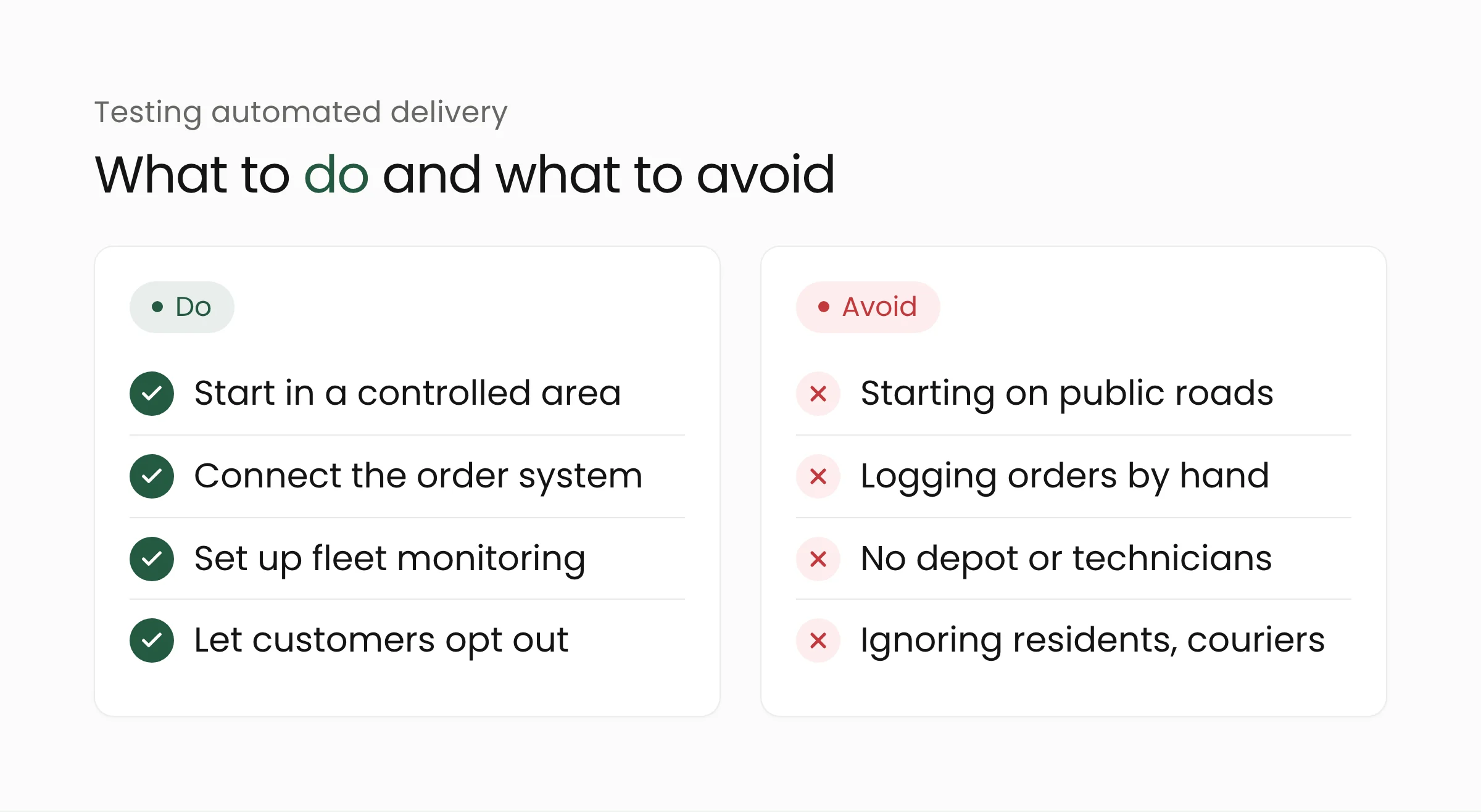
Start in controlled areas. University campuses, hospital complexes, industrial estates, and office parks have short routes, a single manager, and their own internal rules. They are easier places to run a trial than public streets. Site managers can begin by mapping pedestrian routes, handover points, and charging locations.
Clean up order data first. Robot delivery only works when a restaurant’s order system talks to the ordering app and the fleet in real time. Restaurants that still log orders by hand need point-of-sale and kitchen systems that send order status automatically. This is where retail management solutions that tie together stock, orders, and sales reports start to pay off.
Plan for devices and monitoring. A delivery robot is a connected device that reports its location, battery level, and compartment status. Fleet operators need a monitoring dashboard and a way for supervisors to step in. The same principles apply to smart lockers, electric service vehicles, and warehouse sensors, all of which fall under IoT services.
Bring residents and workers along. Serve and DoorDash let customers opt out, put a contact number on every robot, and tie expansion to community feedback. A similar approach matters in Indonesia, where sidewalks are often shared by street vendors, pedestrians, and motorbikes. Couriers and restaurant staff also need to know their role from the start.
Robotics is moving from factories into public spaces step by step. Last week we covered early production of Tesla’s Optimus humanoid robot, which is still focused on factory work. Serve’s delivery robots show a different path: narrow tasks, short routes, and plenty of human support behind them.
Frequently asked questions
Do Serve’s robots drive entirely on their own?
The robots move autonomously along the footpath, but every robot is supported by trained remote supervisors. Each one also displays a public contact number so residents can report problems.
Do customers have to accept robot delivery?
No. DoorDash customers in the trial area can opt in or out of robot delivery in the app. The robot option only appears when a participating restaurant is nearby and a robot is available.
Will the service come to Indonesia?
Neither Serve nor DoorDash has announced plans for Indonesia. The Gold Coast is Serve’s first market outside the United States, and any expansion depends on how the pilot performs.
Closing
The Gold Coast trial shows that delivery robots depend on much more than the robots themselves: connected order systems, a depot, remote supervisors, and support from the city and residents. For restaurants and site managers in Indonesia, the most realistic step today is to get order data and connected devices in order first. If you want to start there, the Merakit team can help you plan it.
Sources
- Serve Robotics and DoorDash via Mirage News: Serve Robotics, DoorDash Launch Footpath Robots in Australia (October 29, 2026)
- Reuters: Serve launches robot deliveries in Australia in first international push (October 28, 2026)
- Griffith News: Griffith home to first Serve robot delivery service outside US (October 29, 2026)
- SmartCompany: Watch your toes, DoorDash launches Gold Coast delivery robot (October 29, 2026)