Blog Education Technology
Studio Guru Launches: How Indonesia's Live Lessons Work
On this page· 7 sections
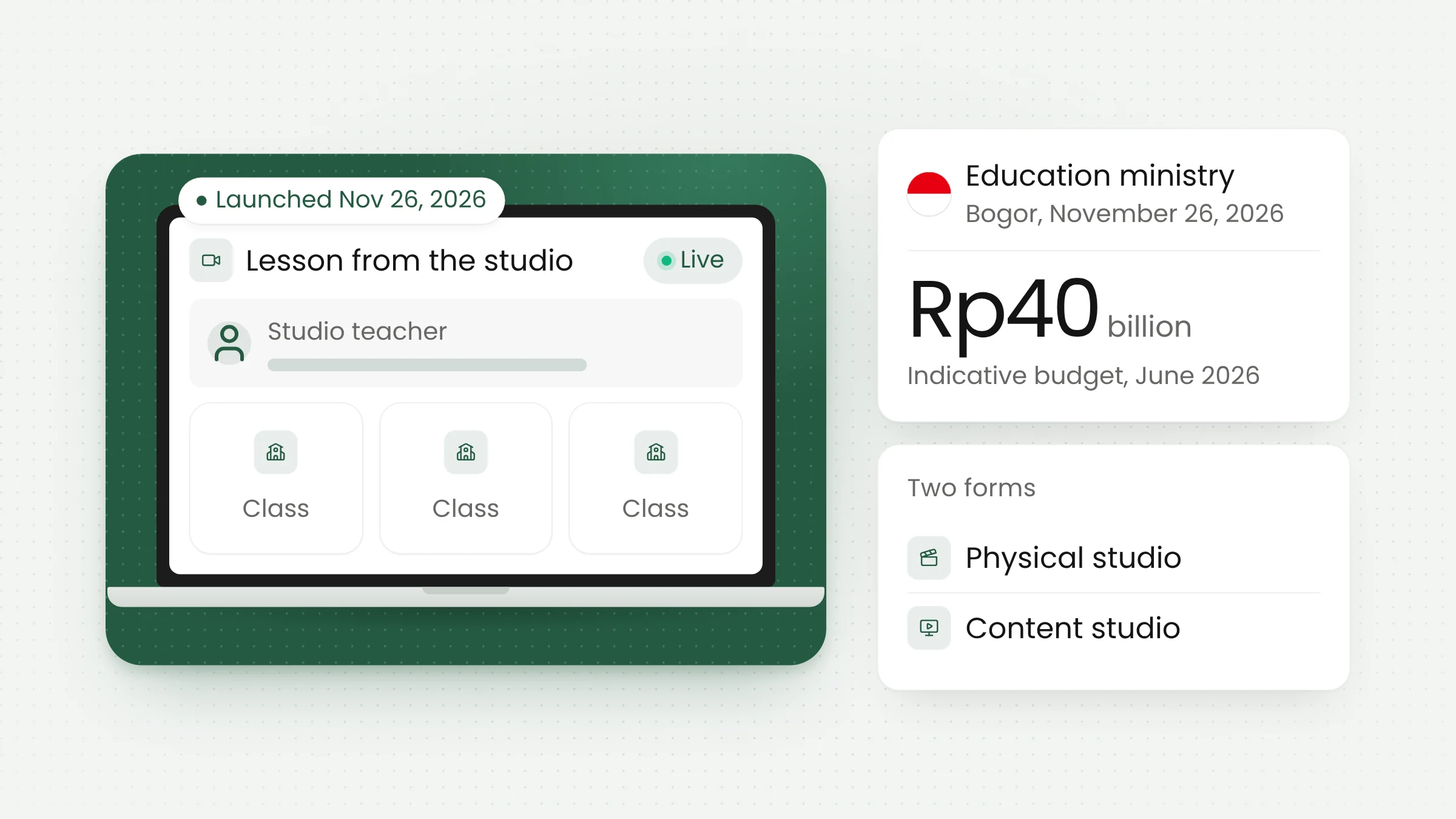
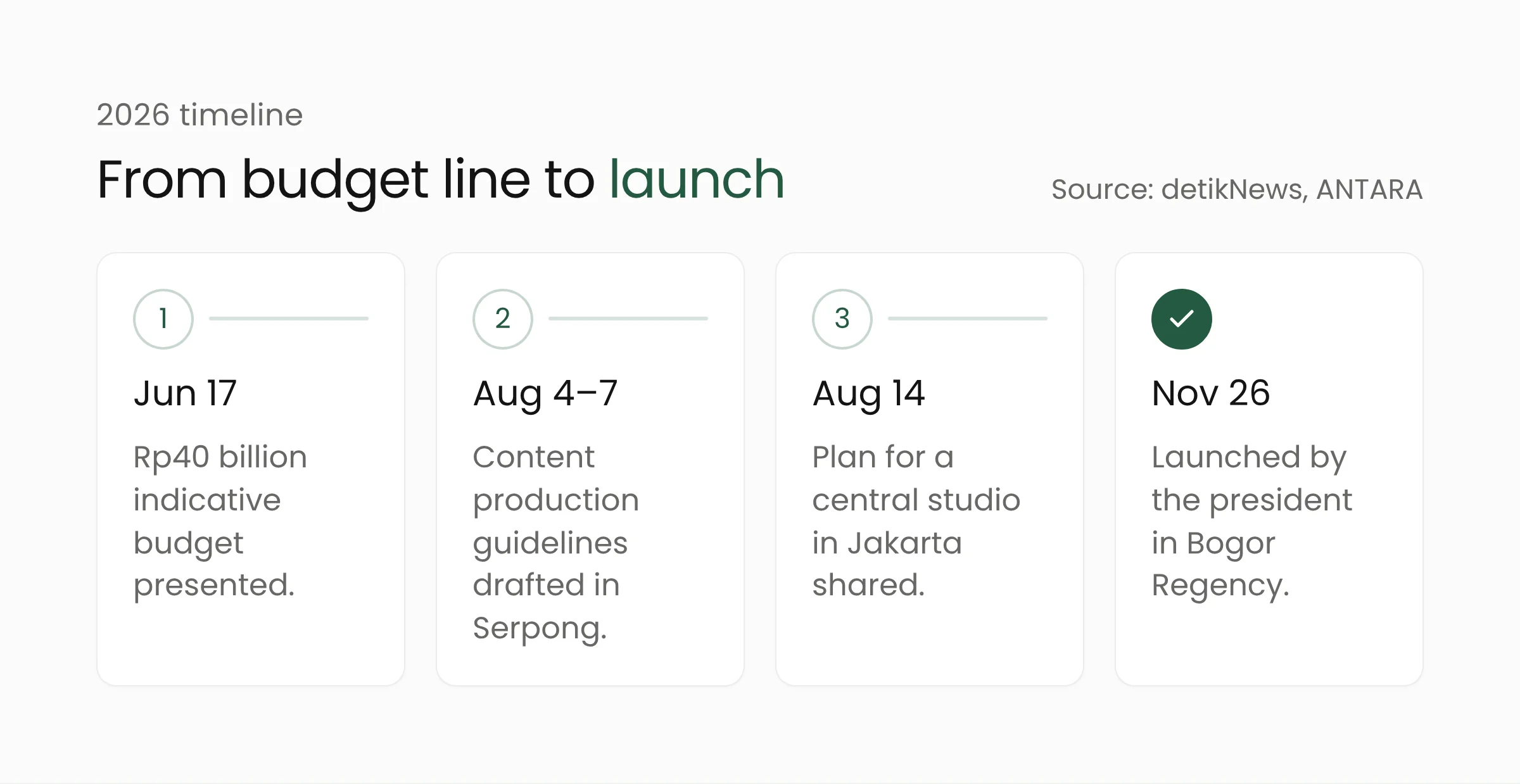
Indonesia launched Studio Guru on Thursday, November 26, 2026, at the country’s National Teachers’ Day event. Under the education ministry program, top teachers give lessons from a central studio, and the sessions are broadcast interactively to schools across the archipelago. Schedules, subjects, and technical requirements have yet to be published.
What was announced on National Teachers’ Day
President Prabowo Subianto opened the program at the Sentul International Convention Center in Bogor Regency, West Java. According to a press release from the Ministry of Primary and Secondary Education, known locally as Kemendikdasmen, 9,000 teachers attended. Education Minister Abdul Mu’ti accompanied the president.
The official name is Studio Guru Republik Indonesia, which translates roughly as the Teacher Studio of the Republic of Indonesia. A ministry statement carried by its Banten quality assurance office says the program aims to widen access to quality teaching, especially for schools in remote areas, and to support teacher development through education technology. The president said the best teachers in important subjects would be able to reach schools throughout the country by broadcast.
The problem is a familiar one. Many Indonesian schools lack teachers for specific subjects, and geography makes the gap hard to close in a nation of thousands of islands. With studio broadcasts, a class no longer depends entirely on having a subject specialist on site.
The launch closed the day’s program. Alinea.id, citing the state news agency ANTARA, reported that the event also honored outstanding teachers and recognized those completing a government scheme that funds degree studies for teachers. Enrollment in that scheme grew from 12,000 to 150,000 teachers in 2026.
How Studio Guru works
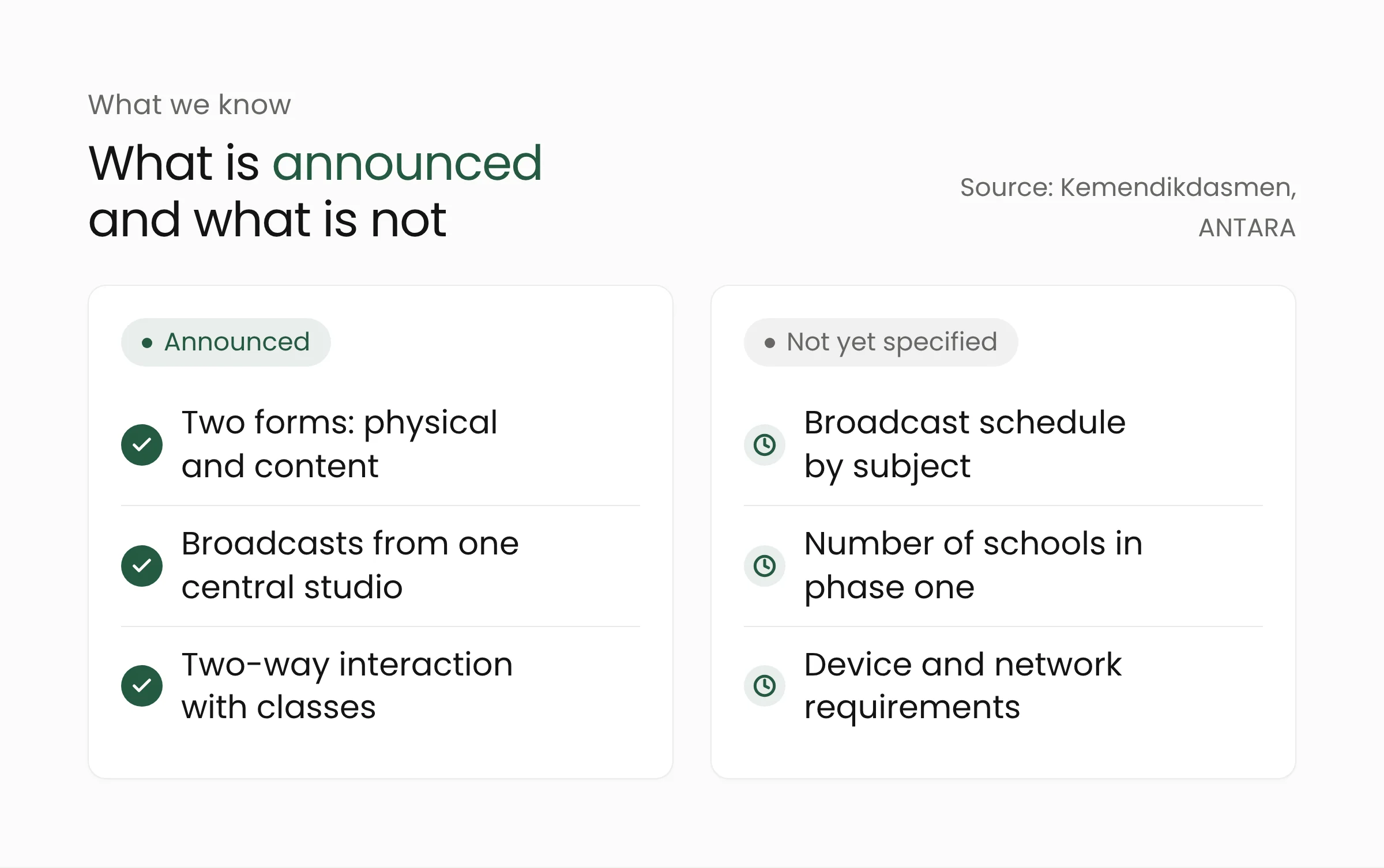
The ministry is developing Studio Guru in two forms, a physical studio and a content studio. Both are meant to let teachers work with students in different regions live and interactively. The material we reviewed does not explain in more detail how the two forms divide the work.
The flow has three parts. A selected teacher gives the lesson from the central studio. The lesson is broadcast to many schools at once. Teachers and students at each school follow it from their own classroom.
The broadcast is designed to be interactive. At a media briefing before the event, Nunuk Suryani, the ministry’s director general for teachers and education personnel, said teachers would teach live from the studio to students across Indonesia, naming Aceh and Papua as examples, as reported by Headline.co.id. According to Info Denpasar, the president also said in his speech that the central studio can see the classrooms that join a lesson.
The studio is also intended as a workplace for teachers. During a workshop on video production guidelines in August 2026, ministry director Arif Jamali listed five functions: training, production of teaching media, teaching simulation, reflective discussion, and development of new teaching methods.
The road to launch since June 2026
Studio Guru had been under discussion for months. On June 17, 2026, detikNews reported the minister’s presentation of an indicative budget ceiling of Rp58.24 trillion for the ministry. Within it, Studio Guru was listed at Rp40 billion as a national priority program, next to Rp5.83 trillion for the digitalization of learning. An indicative ceiling is a provisional figure, so the final amount may differ.
From August 4 to 7, 2026, the ministry’s teacher directorate drafted production guidelines for Studio Guru video content in Serpong, Banten. The work refers to Instruksi Presiden Nomor 7 Tahun 2025, the presidential instruction that underpins the digitalization of learning. Mailia Dinia Husni Rahiem, a special adviser to the minister, asked for content grounded in context so students can relate it to daily life.
The studio plan followed a week later. ANTARA reported on August 14, 2026 that Abdul Mu’ti said the central studio would be built in Jakarta by reusing an educational television studio the ministry once operated. Broadcasting would then expand to the regions through the ministry’s technical units. He also left open cooperation with professional teachers from other countries for particular expertise.
The link to interactive flat panels
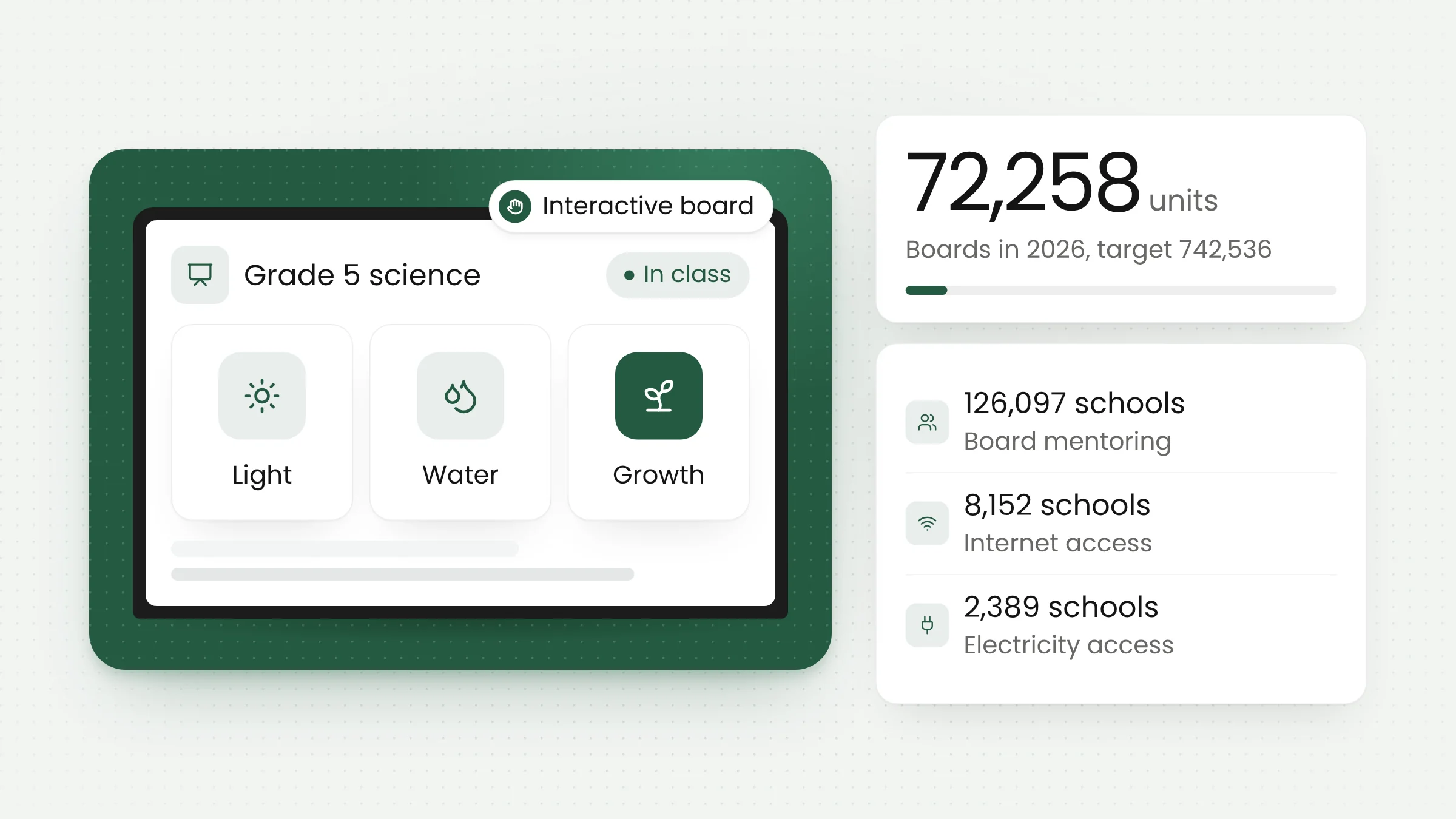
A studio broadcast needs a screen in the classroom. The ministry’s launch statement mentions the distribution of interactive flat panels to schools as part of the same effort. It does not describe how the panels connect to Studio Guru.
The number of panels keeps growing. detikEdu reported on November 13, 2026 that Abdul Mu’ti expects more than one million panels to be distributed by the end of 2026, with some schools now receiving three to five units. We covered teacher readiness and connectivity for these devices in our article on interactive boards in Indonesian schools.
The president stressed that technology serves as a tool for education. That point matters in practice, because a good broadcast still needs a teacher in the room to guide students, take follow-up questions, and assess their work.
Details still missing
Several important details are missing from the announcement and the coverage we read. Broadcast schedules by grade and subject have not been published. ANTARA noted only the president’s earlier remark that the studios could carry any subject, including foreign languages from primary school.
The number of schools in the first phase, how schools sign up, and how studio teachers are chosen are also unknown. On the technical side, nothing has been said about the application used, the internet speed required, or how schools without a stable connection can take part. Recordings for later viewing have not been mentioned either.
Broadcast teaching has limits that date back to educational television. One teacher in a studio will struggle to match the pace of hundreds of classes with different abilities. Two-way interaction helps, but question time shrinks as the audience grows. The results of Studio Guru will depend on how classroom support is designed.
What this means for schools and education offices
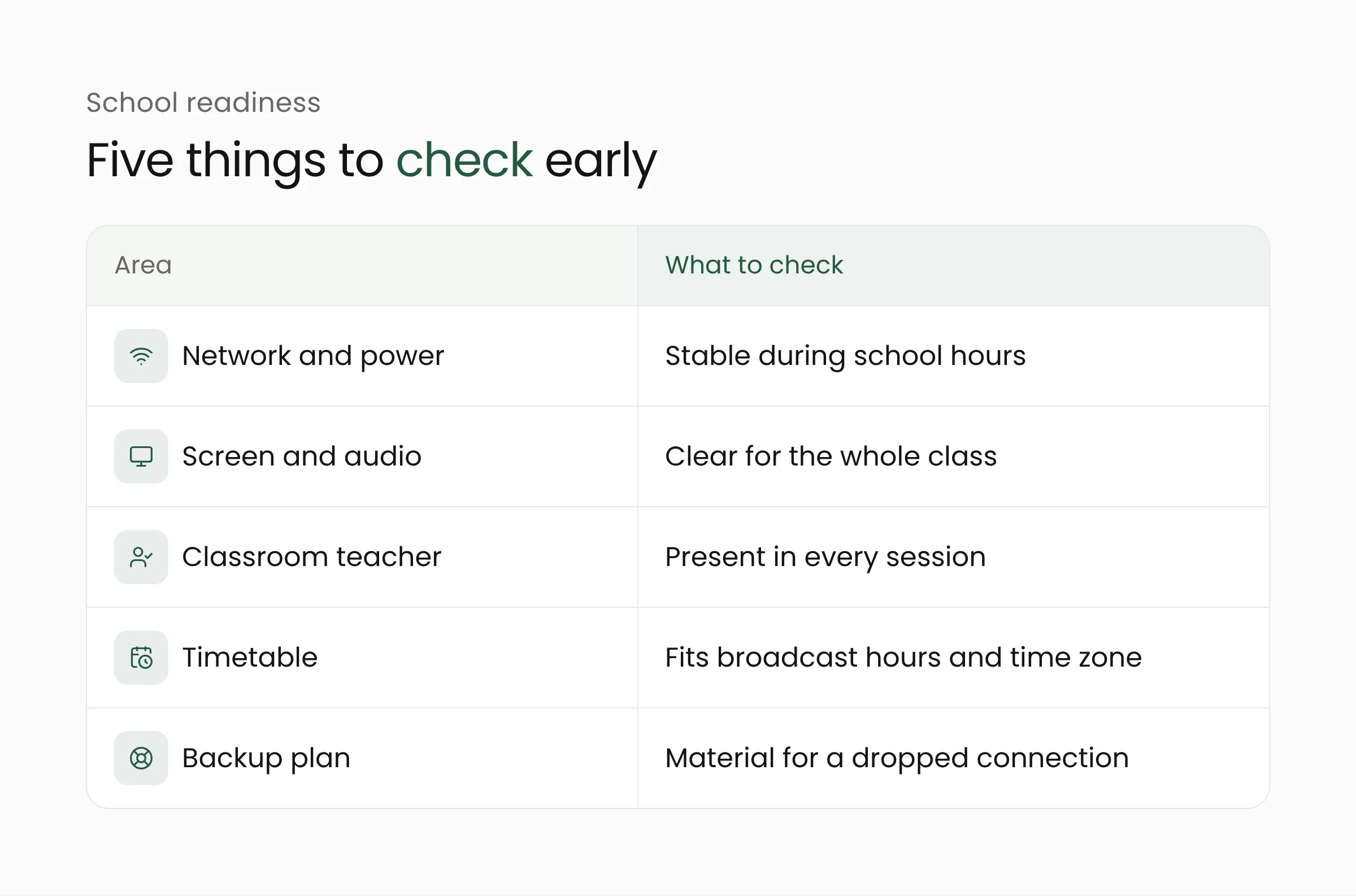
Technical guidelines are not out yet, but some preparation can begin now.
- Test connectivity and power in classrooms. Measure the network during school hours, when many devices are connected, and record which rooms have weak signal. Two-way video is far more demanding than opening stored material.
- Decide which room and screen to use. Schools that already have an interactive flat panel can use it as the classroom display. Check that audio reaches the back row and that a microphone or camera is available if the class needs to ask questions.
- Assign a classroom teacher to each session. That teacher manages students, collects questions, and continues the material once the broadcast ends. The role should appear in teaching assignments.
- Adjust the timetable. A central broadcast runs at fixed hours, and Indonesia spans three time zones. Leave room for the broadcast and for a follow-up session with the school’s own teacher.
- Plan for a dropped connection. Keep substitute material or recordings, if they become available, so lesson time is still used.
- Record usage and outcomes. Education offices can collect session attendance, technical problems, and student results to find out which schools need help.
Schools and foundations that run their own learning platforms face extra work in connecting broadcast schedules, attendance, and grades to the systems they already use. That kind of integration is part of Merakit’s education technology solutions. Organizations that want to stream their own classes also need to size servers and networks for live video, which falls under cloud computing services.
Frequently asked questions
Does Studio Guru replace teachers in schools?
The government has made no such statement. The ministry describes the program as help for schools short of teachers in particular subjects. Teachers and students follow the broadcast together, so the classroom teacher keeps a supporting role.
Which subjects will be broadcast?
The list has not been announced. The president referred to the best teachers in important subjects, and earlier said the studios could carry any subject, including foreign languages from primary school. Schedules by grade are still pending.
What do schools need in order to join?
Official requirements have not been issued. Based on how the program works, a school needs a classroom screen, audio equipment, a stable internet connection for two-way video, and a teacher in the room. Schools should follow updates from their local education office and the ministry.
Closing
Studio Guru adds a new layer to school digitalization in Indonesia: after devices were distributed, the teaching itself is now being broadcast. Its value for schools short of teachers can be judged once schedules, technical guidelines, and first-phase results are published. Schools, foundations, and education offices that want to prepare their networks, classrooms, and record systems early are welcome to talk with the Merakit team.
Sources
- Kemendikdasmen: Guru Hebat, Indonesia Kuat, Presiden Prabowo Rayakan Hari Guru Nasional 2026 Bersama 9.000 Guru (press release, November 26, 2026)
- BPMP Banten, Kemendikdasmen: Studio Guru Diluncurkan, Perluas Akses Pembelajaran (November 26, 2026)
- Alinea.id, citing ANTARA: Prabowo hadirkan Studio Guru, mengajar hingga ke pelosok (November 26, 2026)
- Info Denpasar: Prabowo Luncurkan Studio Guru, Jamin Akses Berkualitas untuk Semua (November 27, 2026)
- Headline.co.id: Studio Guru Jadi Agenda Puncak Hari Guru Nasional 2026 (November 2026)
- ANTARA: Kemendikdasmen siap hidupkan kembali studio TV pendidikan untuk PJJ (August 14, 2026)
- Directorate of Early Childhood and Non-Formal Education Teachers, Kemendikdasmen: Studio Guru Siap Sajikan Konten Pembelajaran Berkualitas (August 6, 2026)
- detikNews: Mendikdasmen Usul Tambahan Anggaran Rp 40,75 T untuk Revitalisasi Sekolah (June 17, 2026)
- detikEdu: 1 Juta Papan Interaktif Digital Dibagikan Kemendikdasmen Sepanjang 2026 (November 13, 2026)