Blog Digital Health
TBScreen.AI: UGM's TB Screening AI Tested at Five Sites
On this page· 7 sections
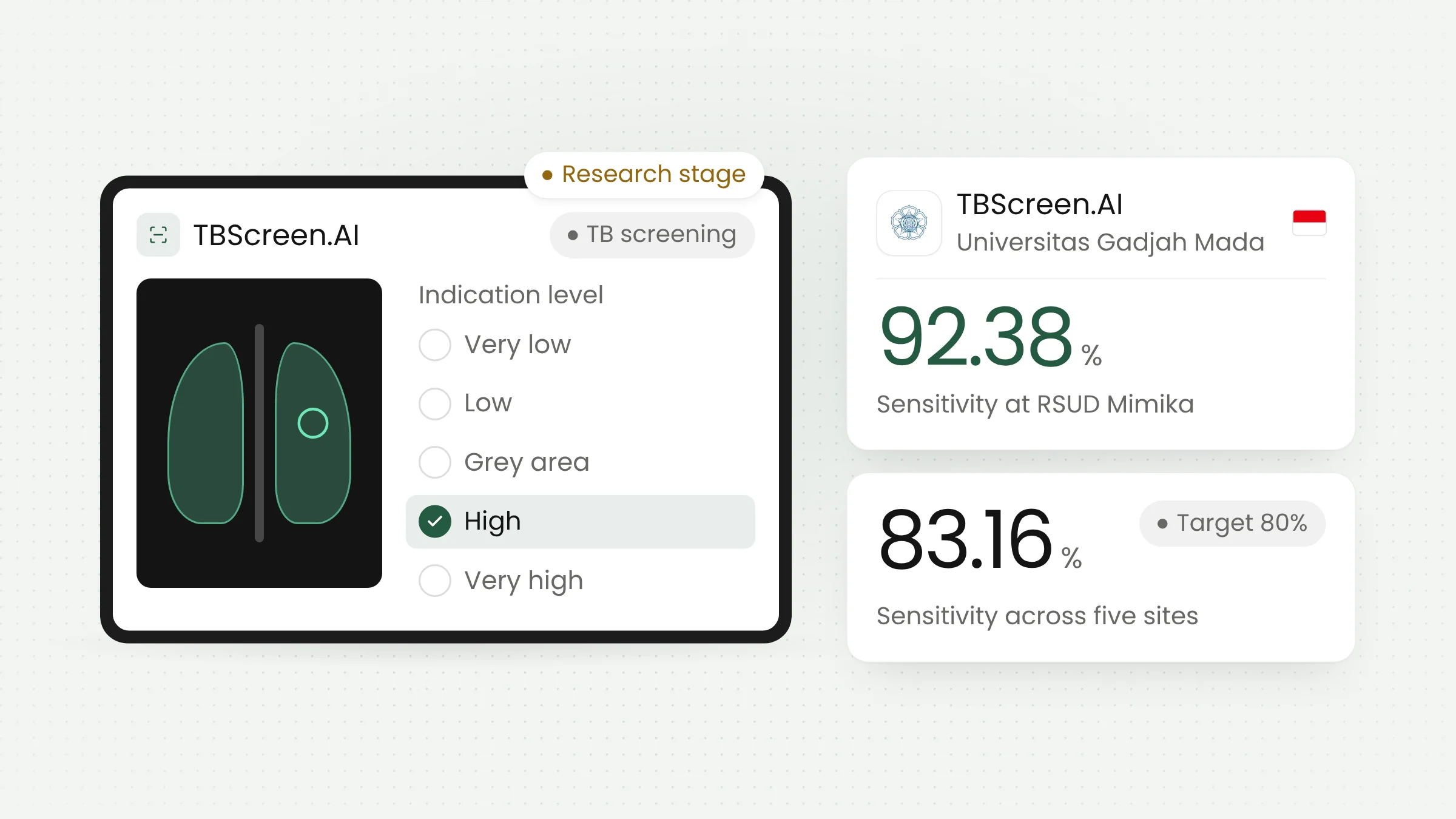
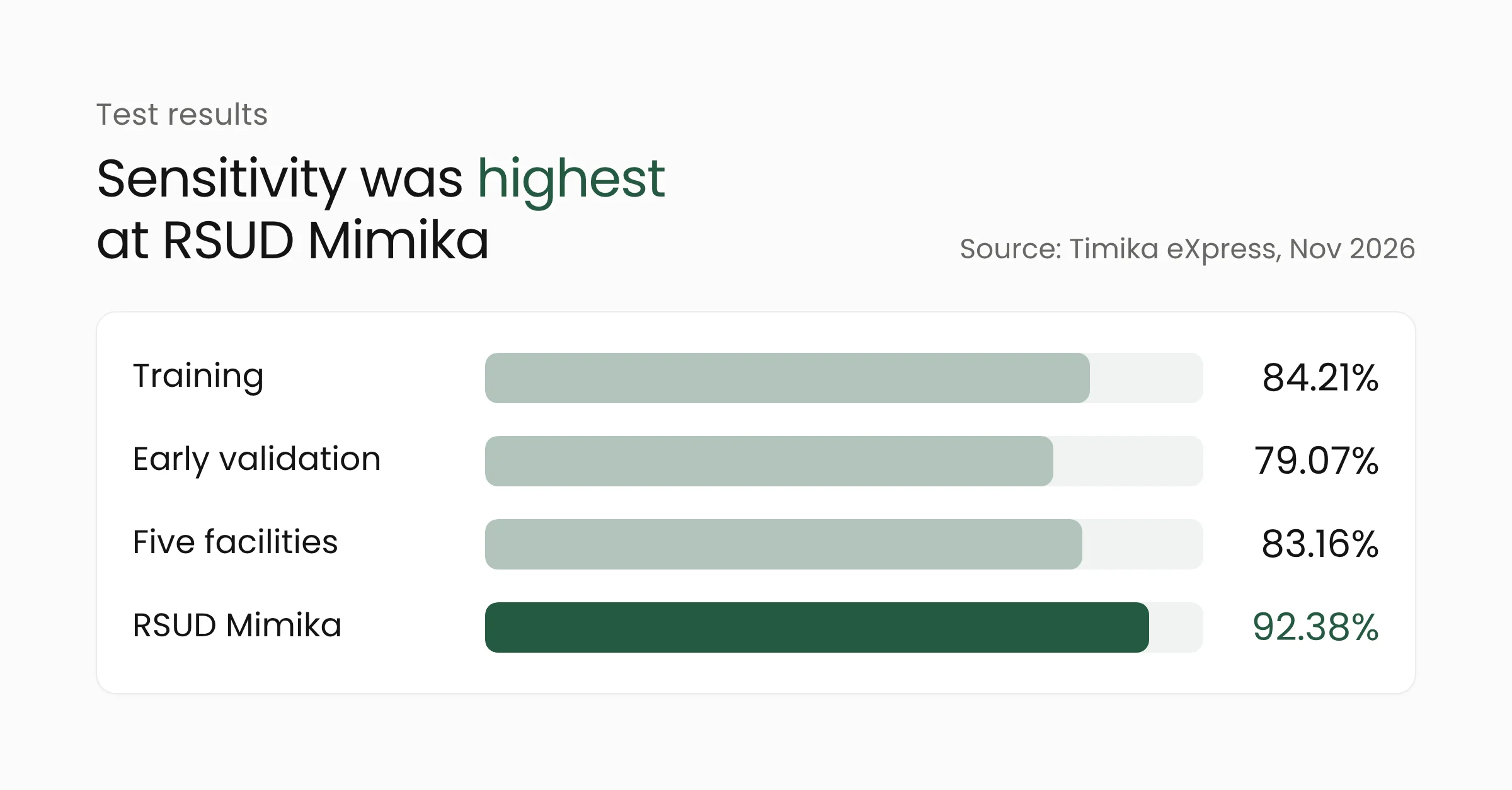
TBScreen.AI, a chest X-ray reading tool built at Universitas Gadjah Mada (UGM) in Indonesia, reached 83.16% sensitivity in tests at five health facilities. The highest figure, 92.38%, came from Mimika regional hospital (RSUD Mimika) in Central Papua. Researchers presented the tuberculosis screening results in Timika on 24 November 2026, along with a list of unfinished work.
TBScreen.AI results presented in Timika
The findings were shared at a research dissemination event in Timika, Central Papua, on Tuesday, 24 November 2026. According to Timika eXpress, the project is run by the Center for Tropical Medicine at UGM’s Faculty of Medicine, Public Health and Nursing (FK-KMK) with the KONEKSI Indonesia-Australia program, and has been under way since 2024.
UGM researcher Wahyono told the audience that development and early validation drew on 1,034 chest X-ray images from Central Papua, Central Java and the Special Region of Yogyakarta. Radiologists and a clinical team reviewed each image. The model reached 84.21% sensitivity in training and 79.07% in early validation.
External validation followed, meaning tests on data from separate facilities. Across five health facilities in three provinces, overall sensitivity was 83.16%, above the study’s initial target of 80%. RSUD Mimika recorded the highest figure of the five sites at 92.38%.
At an earlier dissemination event in Jakarta on 3 August 2026, FK-KMK UGM reported 83% sensitivity and 87% specificity. A year before that, when the app was in limited release and trained on about 936 images from Sardjito Hospital in Yogyakarta, UGM put its validity at around 64%.
Reading sensitivity and specificity
Sensitivity describes how many true cases a tool flags. At 83.16%, out of every 100 X-rays from patients who do have tuberculosis (TB), the system flags about 83 and misses 17. Specificity covers the opposite group. A specificity of 87% means that out of every 100 X-rays from people without TB, about 13 are still flagged and need further checks.
Suppose 1,000 people are screened and 50 of them have TB. With those two figures, about 42 cases would be found and 8 missed, while roughly 124 healthy people would also be flagged. That arithmetic is why a screening result always leads to another test.
Two questions remain open after the Timika briefing. Coverage of the event did not give the number of images tested at each facility, and it did not report specificity by site. The 92.38% figure from RSUD Mimika is best read as a single-site result that may not repeat elsewhere.
How TBScreen.AI works on a tablet with portable X-ray
TBScreen.AI belongs to a class of software called computer-aided detection (CAD), which helps health workers read medical images. The app is designed to run on a tablet connected to a portable X-ray unit. Staff could then carry the equipment to a community health center, known in Indonesia as a puskesmas, so screening would no longer depend on a hospital visit.
Wahyono described that need in his presentation. Radiology is very helpful for TB screening, he said, but the equipment is not available everywhere and is generally reached only through hospitals.
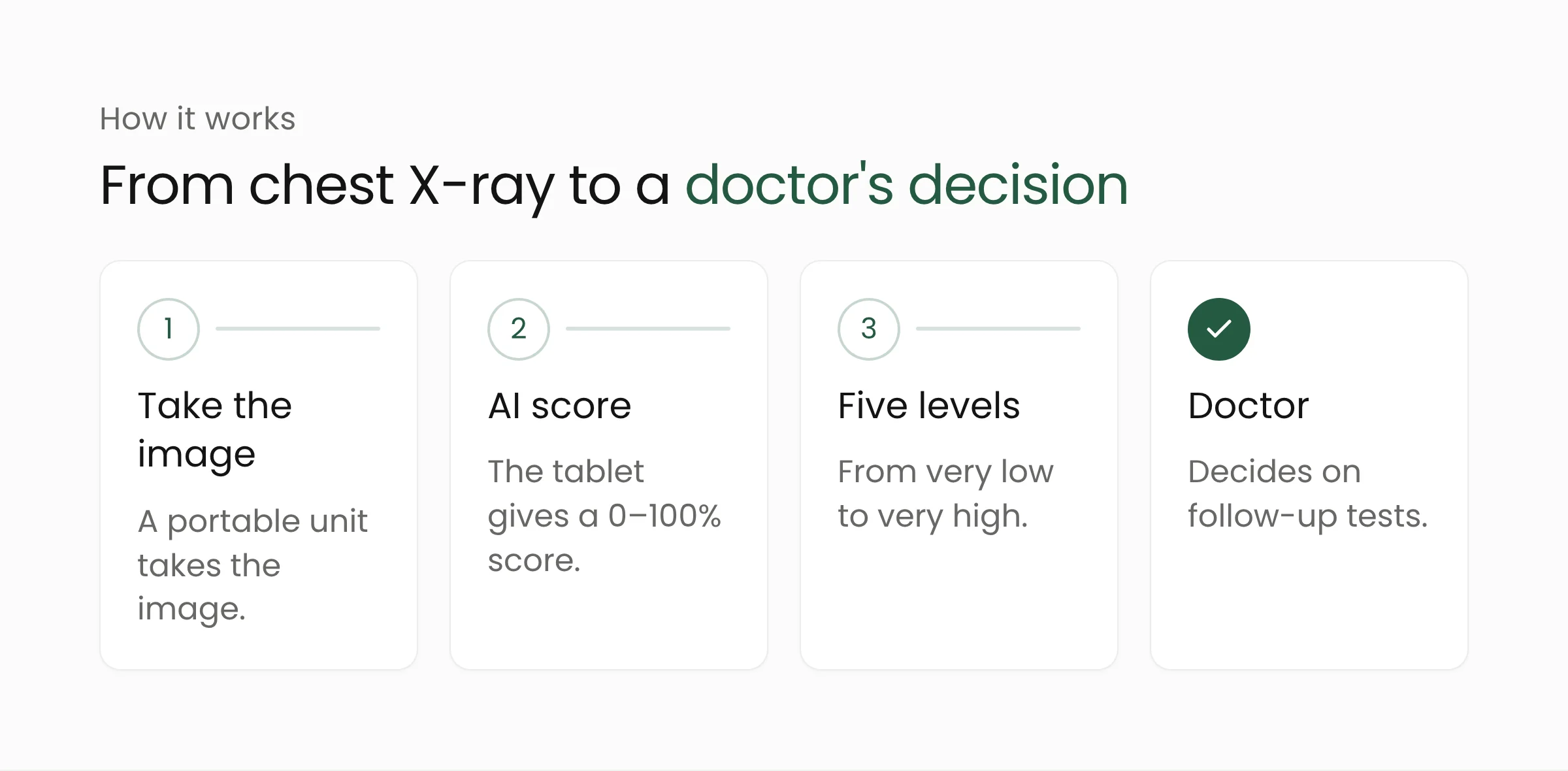
Once a chest X-ray is loaded, the system returns a confidence score from 0 to 100%. According to Fajar Papua, the score is sorted into five indication levels: very low, low, grey area, high and very high. A grey-area result calls for additional examination. High and very high results must be followed by a clinical examination.
The team has been clear that the score cannot serve as a final diagnosis. In a UGM statement in August 2026, Wahyono said screening results have to be combined with clinical symptoms, patient risk factors, a doctor’s assessment and supporting tests.
Why the team wants Indonesian data
CAD products for TB already exist on the global market. The World Health Organization (WHO) has recommended CAD for TB screening since 2021, and on 11 June 2025 it said six products met its performance standards for people aged 15 and older.
The UGM team argues that data from Indonesian patients is still needed, because tools developed abroad may not fit local populations. The design of TBScreen.AI also takes account of patients’ sex, age and disability, as well as cost and long-term sustainability.
Rita Aryati, a member of the tuberculosis working team at Indonesia’s Ministry of Health, said at the August event that the country still ranks second in the world for TB case burden. An analysis published by ANTARA, citing the Global Tuberculosis Report 2025, said Indonesia accounted for about 10% of global TB cases in 2024, behind India.
Limits that still need work
The researchers themselves say TBScreen.AI is not ready for wide use. Four tasks came up in the Timika and Jakarta briefings.
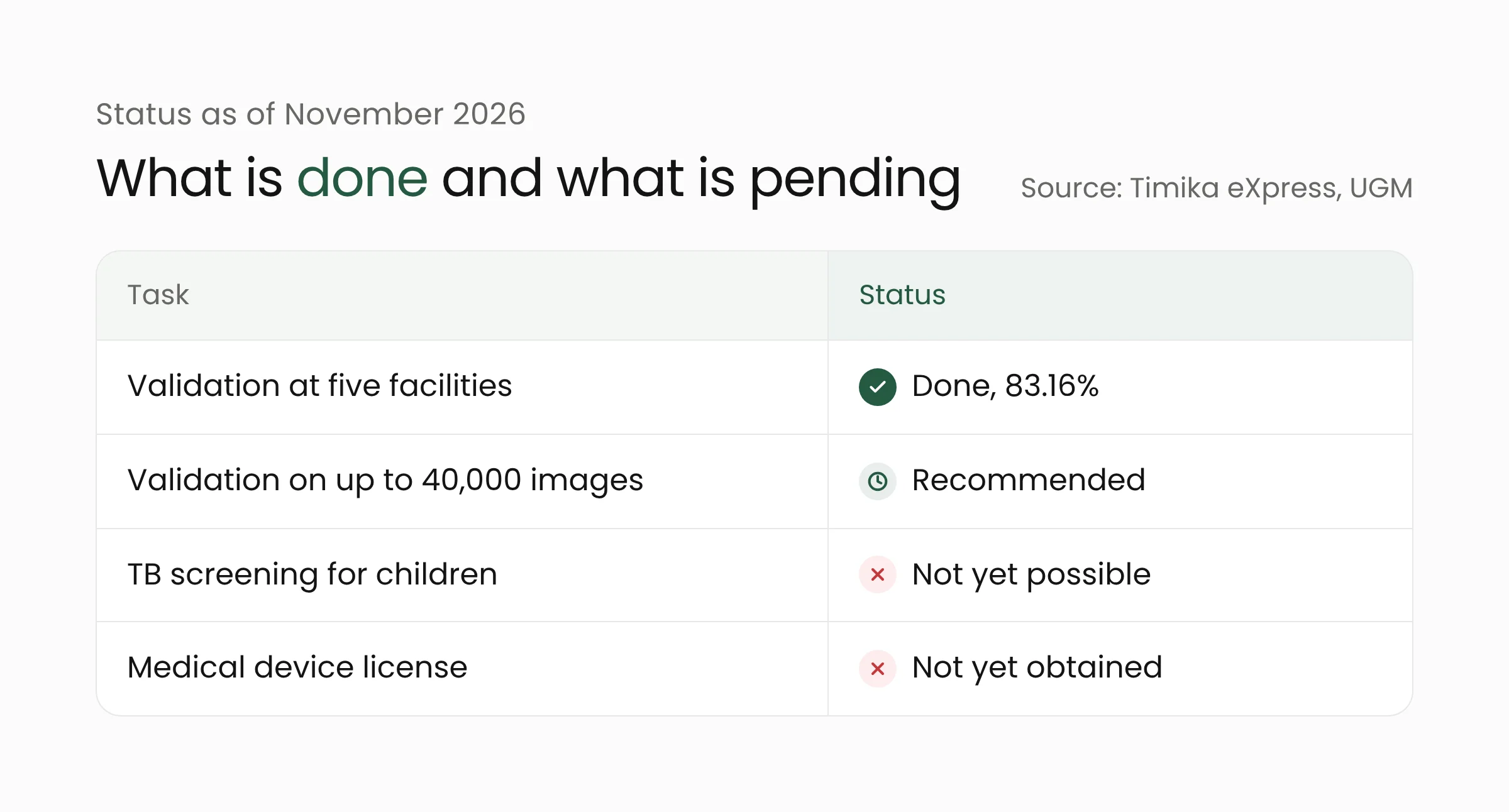
First, the app cannot yet be used to screen children for TB. The same limit applies globally, since WHO does not yet recommend CAD for children and adolescents under 15.
Second, the model needs refinement and further validation. In August the team recommended testing it on up to 40,000 chest X-ray images to measure performance in a broader population.
Third, TBScreen.AI must meet licensing requirements as a medical device before it enters routine care. We covered the testing route for such products in our article on the Indonesian health ministry’s regulatory sandbox.
Fourth, field deployment depends on cooperation with local governments and health facilities. At national level, the ministry hopes the tool can eventually be linked to its free health check program, Cek Kesehatan Gratis.
What this means for hospitals and clinics
TBScreen.AI cannot be bought or installed today. Other CAD products are already in circulation, though, and the questions raised by this research apply to all of them. Hospital managers, district health offices and primary care clinics can use five considerations when assessing AI that reads X-rays.
Ask for validation figures from a similar population. TBScreen.AI’s sensitivity ranged from 79.07% to 92.38%, depending on the test stage and site. Ask the supplier where the tool was validated, how many images were used, and what sensitivity and specificity it achieved. A single figure from one site is too little to predict performance in your area.
Define the follow-up for every score level. Five indication levels are useful only when each has a clear next step: who is contacted, which test is ordered and how soon. WHO states that people who screen positive need confirmatory testing before starting TB treatment.
Treat X-ray images as health data. Indonesia’s personal data protection law, Undang-Undang Nomor 27 Tahun 2022 tentang Pelindungan Data Pribadi, classifies health data as specific personal data. Tablets taken into the field should be locked and encrypted, with rules on where images are stored and who may open them. Ask how screening results reach the electronic medical record.
Check the licensing status. The UGM team says TBScreen.AI must meet medical device licensing requirements before wide use. Put the same question to suppliers of other CAD products, and keep unlicensed tools within research settings.
Monitor performance after deployment. Compare AI results with doctors’ readings at regular intervals and record missed cases. Model performance can shift when the X-ray equipment, image quality or patient group differs from the training data.
In information systems for healthcare providers, referral flows, result logging and audit trails are best designed together with the AI feature, because adding them after rollout is much harder.
Frequently asked questions
Can TBScreen.AI replace a doctor in diagnosing TB?
No. The research team says the AI reading cannot be used as the basis for a final diagnosis. The score helps decide who should be examined first. A doctor still makes the diagnosis, weighing symptoms, risk factors and supporting tests.
Is TBScreen.AI already used in primary care clinics?
Not for routine care. The app is still at the research stage, has no medical device license and is awaiting further validation. Since 2025 the team has introduced it in a limited way to health workers at two pilot sites, Balkesmas Klaten in Central Java and RSUD Mimika.
Why was sensitivity at RSUD Mimika higher than the overall figure?
The available reports do not explain the gap and do not give image counts per site. Variation between sites is common in studies of this kind, because sample sizes, X-ray equipment and patient conditions differ.
Closing
Since its limited release in August 2025, TBScreen.AI has moved from a prototype with around 64% validity to a model that cleared its 80% target at five health facilities. Licensing, pediatric screening and large-scale validation come next. If your health facility or research team is preparing a system that uses machine learning models to read clinical data, the Merakit team is open to discussing a design that is easy to test and audit.
Sources
- UGM Kembangkan AI untuk Deteksi Dini TBC, Hasil Uji di RSUD Mimika Capai 92,38 Persen, Timika eXpress, 24 November 2026
- UGM Kembangkan AI Deteksi TBC, Hasil Uji di RSUD Mimika Capai Sensitivitas 92,38 Persen, Fajar Papua, 24 November 2026
- FK-KMK UGM Diseminasikan Hasil Riset TBScreen AI untuk Perkuat Skrining Tuberkulosis di Indonesia, FK-KMK UGM, 3 August 2026
- Dobrak Keterbatasan Akses, UGM Kembangkan Teknologi Skrining Tuberkulosis untuk Wilayah 3T, Universitas Gadjah Mada, 7 August 2026
- UGM Develops Indonesia’s First AI-Powered Tuberculosis Screening App, Universitas Gadjah Mada, 14 August 2025
- WHO approves six software products for computer-aided detection of TB on chest X-ray, WHO, 11 June 2025
- AI membaca rontgen, memburu TBC sebelum terlambat, ANTARA, 27 August 2026