Blog Xiaomi 18 Pro
Xiaomi 18 Pro Back Display Heads to Indonesia in December
On this page· 7 sections
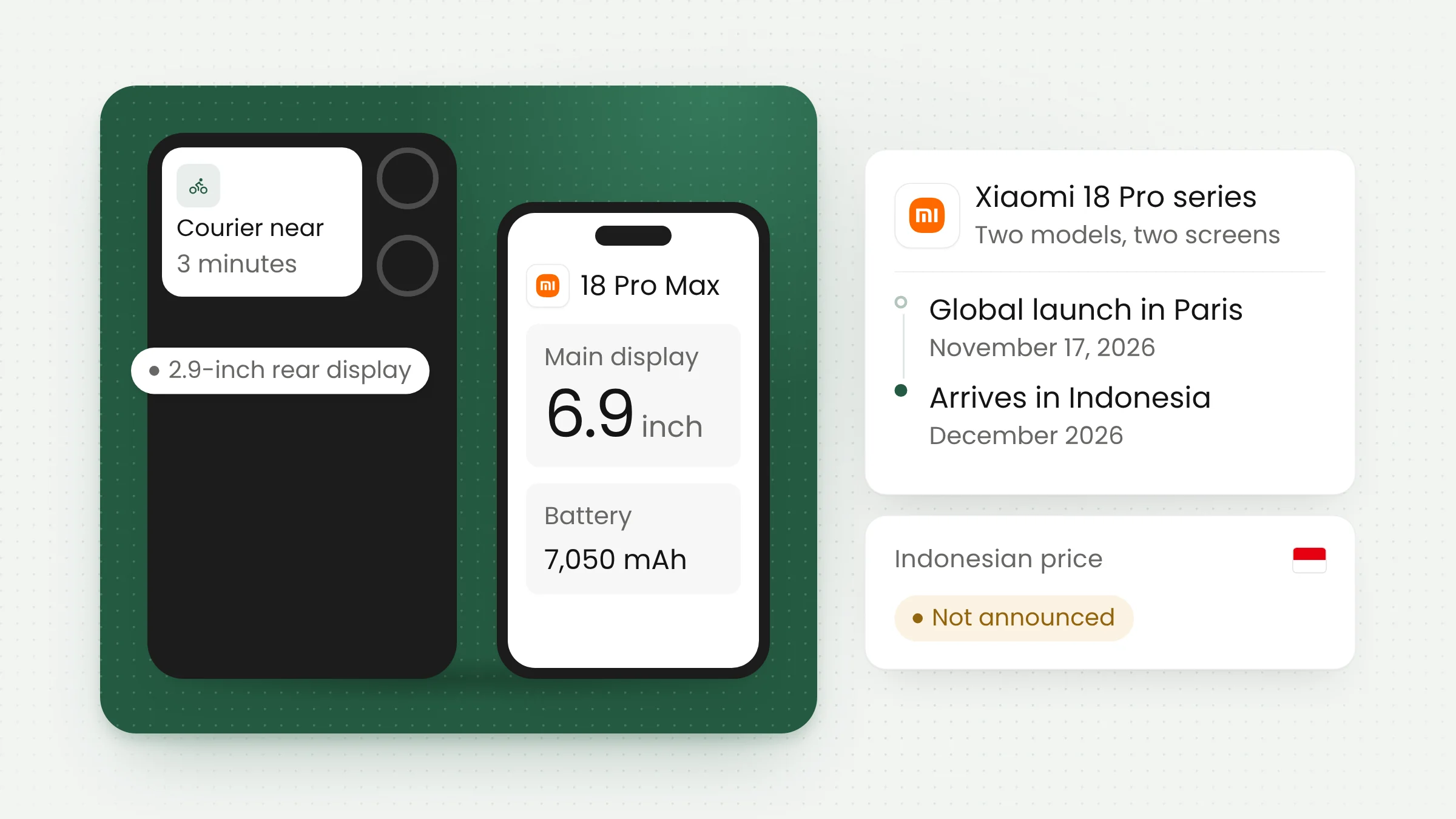
The Xiaomi 18 Pro and Xiaomi 18 Pro Max launched globally in Paris on November 17, 2026, and are scheduled to reach Indonesia in December 2026. Both carry a second screen on the back, right beside the cameras. Indonesian prices and sales dates have not been announced.
Two models with a second screen on the back
The series first appeared in China in September 2026. According to Kompas Tekno, this is the first time Xiaomi has released a phone with a rear screen worldwide, since last year’s Xiaomi 17 Pro, which had a similar feature, was sold only in China.
Xiaomi calls the second screen the Back Display. It measures 2.7 inches on the Xiaomi 18 Pro and 2.9 inches on the Xiaomi 18 Pro Max. The main screens are 6.4 and 6.9 inches, both LTPO AMOLED panels with a 1–120 Hz adaptive refresh rate and a claimed peak brightness of 4,000 nits.
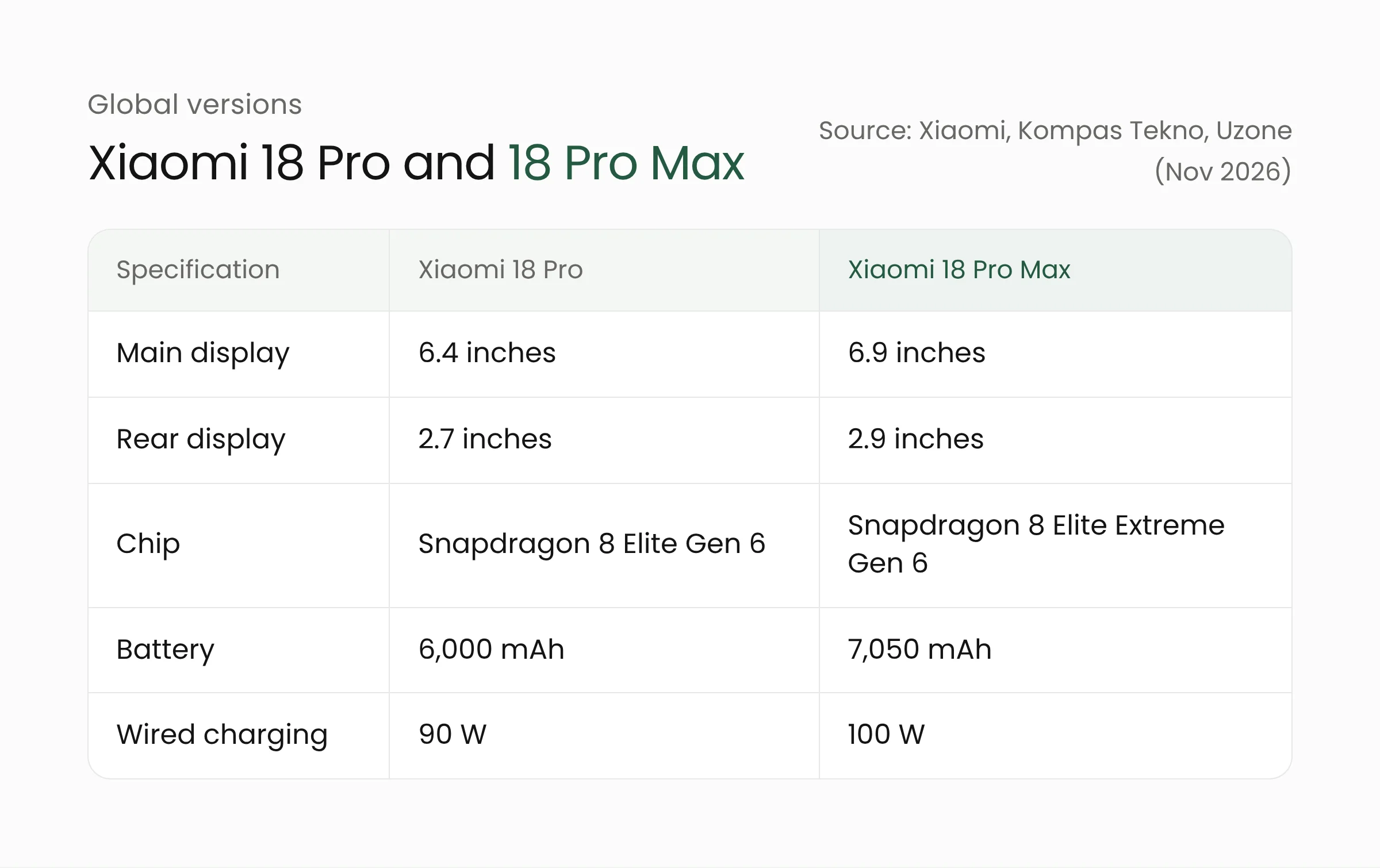
The Xiaomi 18 Pro runs on the Snapdragon 8 Elite Gen 6, while the Max uses the Snapdragon 8 Elite Extreme Gen 6. Both ship with HyperOS 4 on Android 17 and carry an IP68 rating for dust and water resistance. Talk Android reports that Xiaomi promises four years of operating system updates.
The camera system was developed with Leica. It combines a 200 MP main camera, a 200 MP periscope telephoto with 3.2x optical zoom, and a 50 MP ultra-wide. The front camera is also 50 MP.
Battery capacity on the global versions is 6,000 mAh for the Xiaomi 18 Pro and 7,050 mAh for the Xiaomi 18 Pro Max, as listed on Xiaomi’s official product page. Kompas Tekno notes that these capacities differ from the Chinese versions and that the cells use silicon-carbon technology with 28 percent silicon content. Wired charging reaches 90 W on the 18 Pro and 100 W on the 18 Pro Max, with 50 W wireless charging on both. Xiaomi states that no power adapter is included in the box.
Both main screens also feature Privacy Display, a hardware-based function that limits how readable the screen is from the side. Xiaomi’s own footnote says content may remain visible at certain angles or under certain conditions.
What the rear display does
Xiaomi’s product page groups the Back Display functions into several categories. Three stand out.
The main camera becomes the selfie camera
The rear display shows a live preview while the user shoots with the rear cameras. Selfies, group photos, and vlogs can therefore be taken with the 200 MP camera, which has a higher resolution than the 50 MP front camera. Xiaomi provides Selfies, Group Photos, Vlogging, and Photo Booth modes, along with an open-palm gesture that starts the capture countdown.
There are limits. Imaging Resource notes that framing through the rear display is restricted to 0.7x and 1x, and that Leica filters are unavailable in this mode.
Notifications and ongoing activities
When the phone lies face down, the rear display shows incoming notifications, ongoing activities, and other key information. Imaging Resource lists calls, maps, ride-hailing, food delivery, and audio recordings as examples.
Xiaomi also offers Pin to Back Display. The user selects text or an image and pins it through the Share menu. That suits booking codes, queue numbers, or a destination address.
One footnote on the product page deserves developers’ attention. Xiaomi writes that Back Display notifications and activities depend on third-party app adaptation, and that availability is subject to each app’s compatibility.
Mini apps from a text prompt
The AI Back Display feature turns a text prompt into a small app for the rear screen. Xiaomi’s examples include handy tools and mini games. Back Display Wallpapers add dynamic clocks, animated pets, or stylised images generated from the user’s photos.
Michael Feng, Country Director of Xiaomi Indonesia, said the rear display adds value to both the design and the function of the phone, as reported by Uzone. That is a manufacturer’s claim. The practical benefit will depend on how many apps adapt to it.
Global prices and the Indonesian schedule
In Europe, the Xiaomi 18 Pro starts at 1,399 euros and the Xiaomi 18 Pro Max at 1,599 euros, according to Imaging Resource. Talk Android lists UK prices from 1,199 pounds for the 18 Pro and 1,399 pounds for the 18 Pro Max. Uzone reports Japanese prices from 209,800 yen for the 18 Pro, about Rp24 million, and 239,800 yen for the 18 Pro Max, about Rp27.4 million. Xiaomi does not officially sell either model in the United States or Canada.
For Indonesia, only the month is confirmed. Andi Renreng, Marketing Director of Xiaomi Indonesia, told reporters in Paris that the series will come to Indonesia in December 2026. According to Kompas Tekno, he expects the date to fall in early December but did not give a specific day.
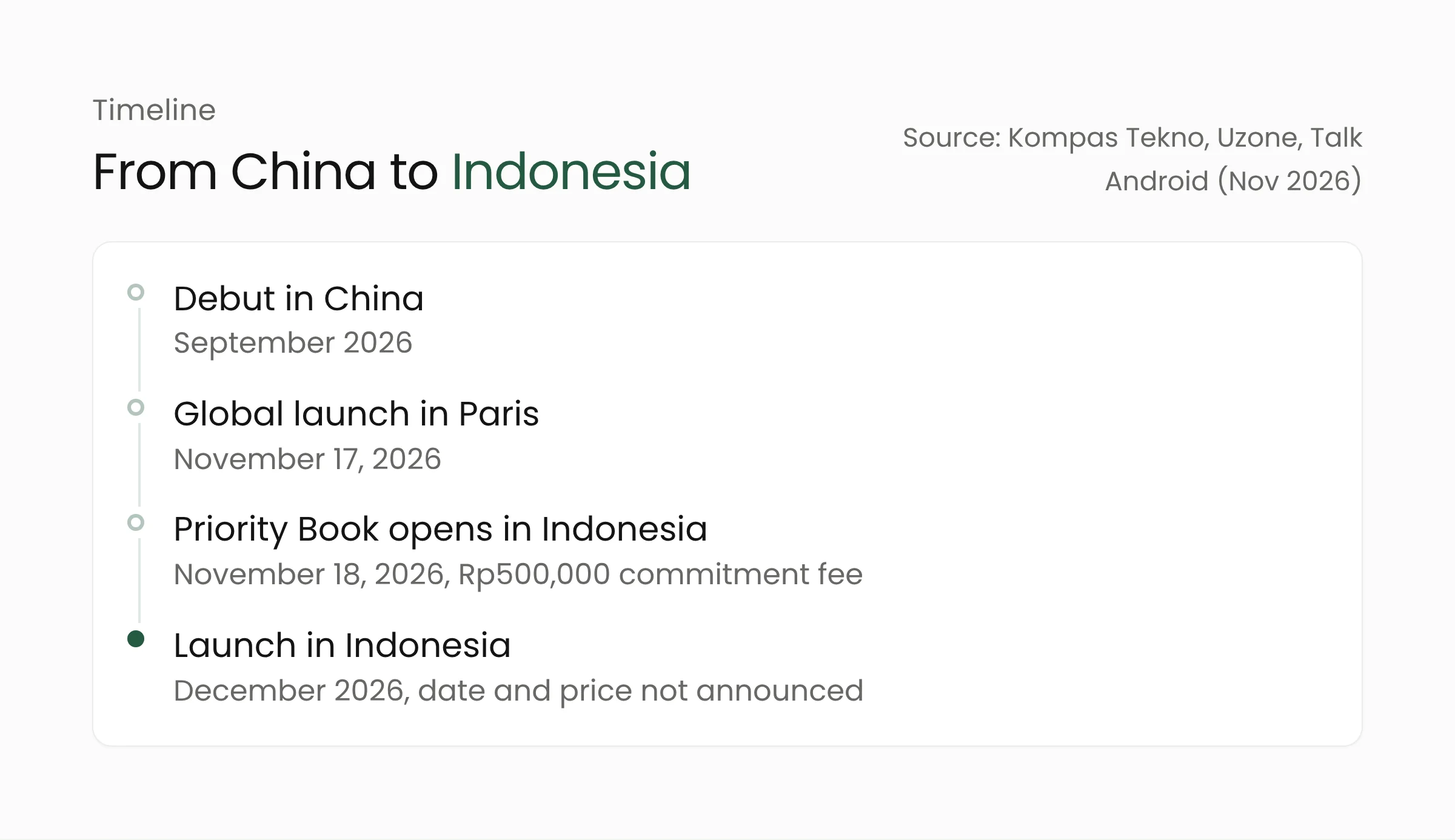
On November 18, 2026, a day after the Paris event, Xiaomi Indonesia opened a registration-of-interest program called Priority Book. Uzone reports that participants sign up at a Xiaomi Official Store or an authorized partner, fill in a form, and pay a commitment fee of Rp500,000. The program registers interest and is not yet a purchase.
Participants who go on to buy are promised after-sales benefits, including unit replacement for hardware defects in the first year, one free screen replacement within two years, one free battery replacement within three years, and an international warranty, according to Marketing.co.id and Uzone.
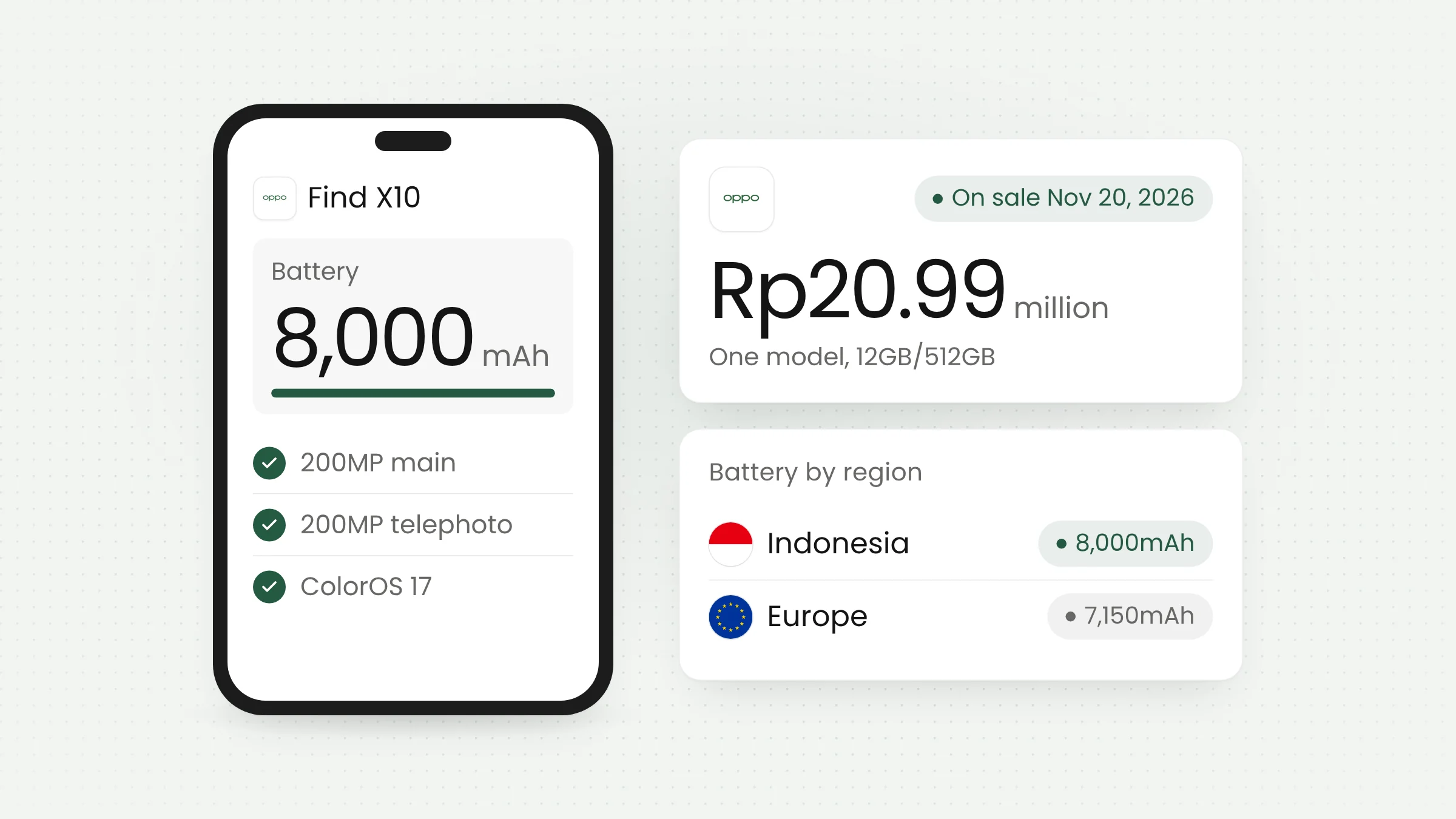
Official prices, memory variants, and the sales date for Indonesia have not been announced. For comparison, the OPPO Find X10 that went on sale in Indonesia on November 20 costs Rp20,999,000.
What this means for app teams and buyers
For app owners, the rear display is one more surface for showing information. It is small, and a phone lying face down on a table shows it to everyone nearby. Those two traits shape how notifications should be written.
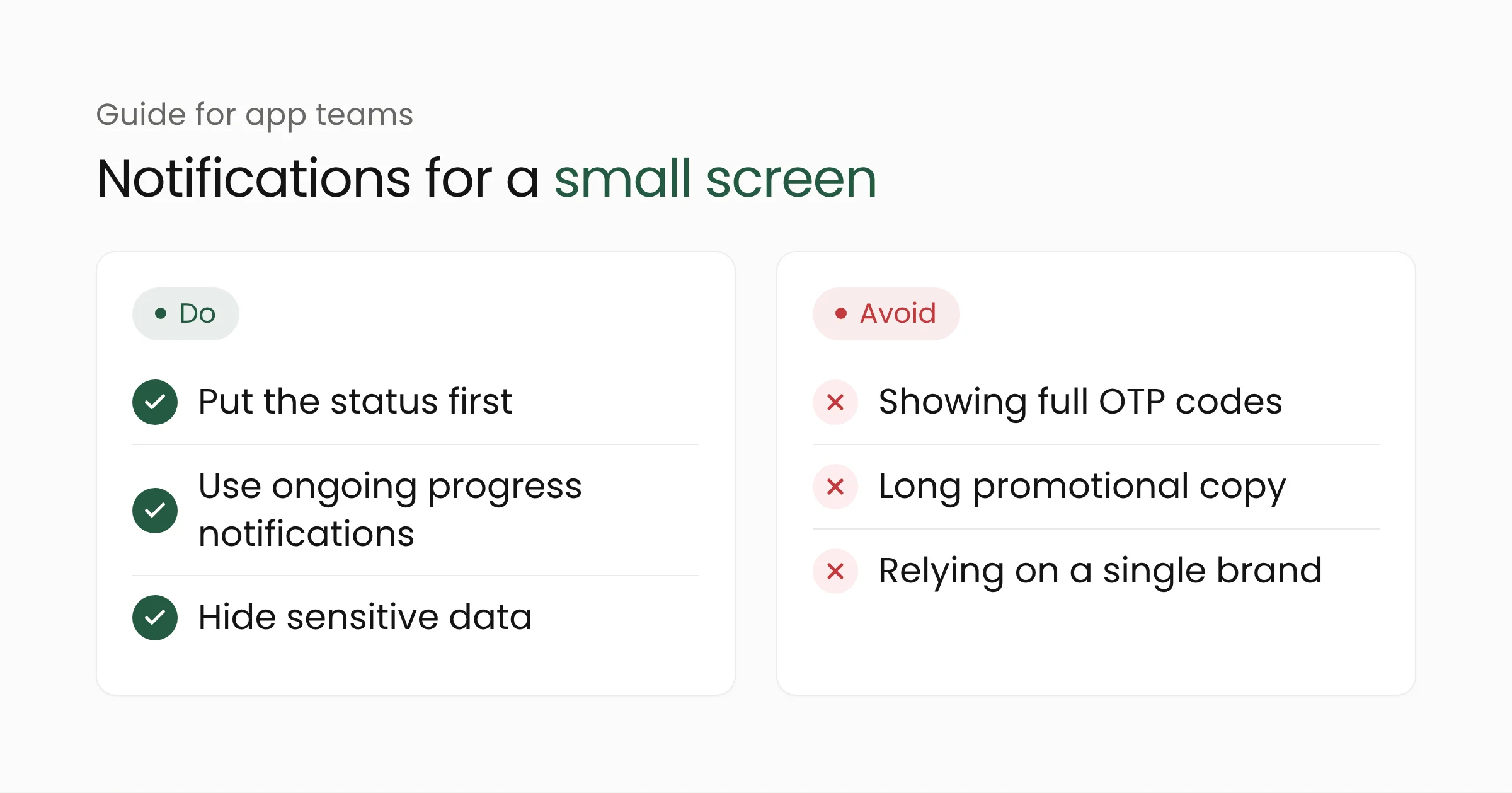
Steps for product and engineering teams:
- Put the status at the start of the sentence. “Courier arrives in 3 minutes” reads in full on a 2.7-inch screen. A sentence that opens with a greeting gets cut off before the information.
- Use ongoing progress notifications for flows with stages. Food orders, rides, clinic queues, and parcel deliveries work better as a single notification that updates than as a string of separate ones.
- Review sensitive notification content. OTP codes, balances, and health results should not appear in full on a surface other people can see. Android has long offered notification visibility settings for the lock screen. The sources we read do not say whether the Back Display follows those settings, so the behavior needs to be tested on a device.
- Do not tie core features to one brand. Rear screens exist on a small share of devices. Treat support for them as an enhancement while the main flow keeps working on ordinary phones.
Teams that run delivery or transport apps can add these checks to their device test plans once units reach Indonesia. This kind of work usually sits within mobile app development, alongside adjustments for other form factors such as those covered by the Google Play adaptive standard for foldables.
For buyers, three points are worth weighing. There is no Indonesian price yet, so the Priority Book commitment fee is paid before the price is known. The value of the rear display beyond the camera depends on support from the apps you use every day. The fastest charging also requires an adapter bought separately, because the box does not include one.
Frequently asked questions
When will the Xiaomi 18 Pro go on sale in Indonesia, and at what price?
Xiaomi Indonesia says the series arrives in December 2026 and expects it early in the month. The exact date, prices, and variants have not been announced. European prices start at 1,399 euros for the Xiaomi 18 Pro and 1,599 euros for the Xiaomi 18 Pro Max.
What is the Xiaomi 18 Pro rear display for?
It works as a viewfinder when shooting with the rear cameras, shows notifications and ongoing activities, holds pinned text or images, and runs mini apps and dynamic wallpapers. Notifications from third-party apps depend on each app’s support.
How do the Xiaomi 18 Pro and Xiaomi 18 Pro Max differ?
The Max has a 6.9-inch main display, a 2.9-inch rear display, the Snapdragon 8 Elite Extreme Gen 6 chip, a 7,050 mAh battery, and 100 W wired charging. The Xiaomi 18 Pro is more compact, with a 6.4-inch display, a 2.7-inch rear display, a 6,000 mAh battery, and 90 W charging. The rear camera layout is the same.
Closing
Xiaomi is taking a second screen on the back of a phone to global markets for the first time, with the 200 MP camera as its main argument. For users, its value will become clear once Indonesian prices are announced and local apps begin to use it.
Merakit helps teams design and test mobile apps across device form factors. If you are reviewing your app’s notifications and flows, our mobile app development service is a good place to start the conversation.
Sources
- Xiaomi product pages: 18 Pro Max, 18 Pro (accessed November 23, 2026)
- Kompas Tekno: Indonesian launch confirmed for December (November 18, 2026)
- Uzone: debut, specifications, and Priority Book (November 17, 2026)
- Imaging Resource: global launch report (November 18, 2026)
- Talk Android: global launch and UK prices (November 18, 2026)
- Marketing.co.id: Priority Book benefits (November 18, 2026)