Blog Digital Economy
ASEAN Signs DEFA: What the Digital Trade Pact Means for SMEs
On this page· 7 sections
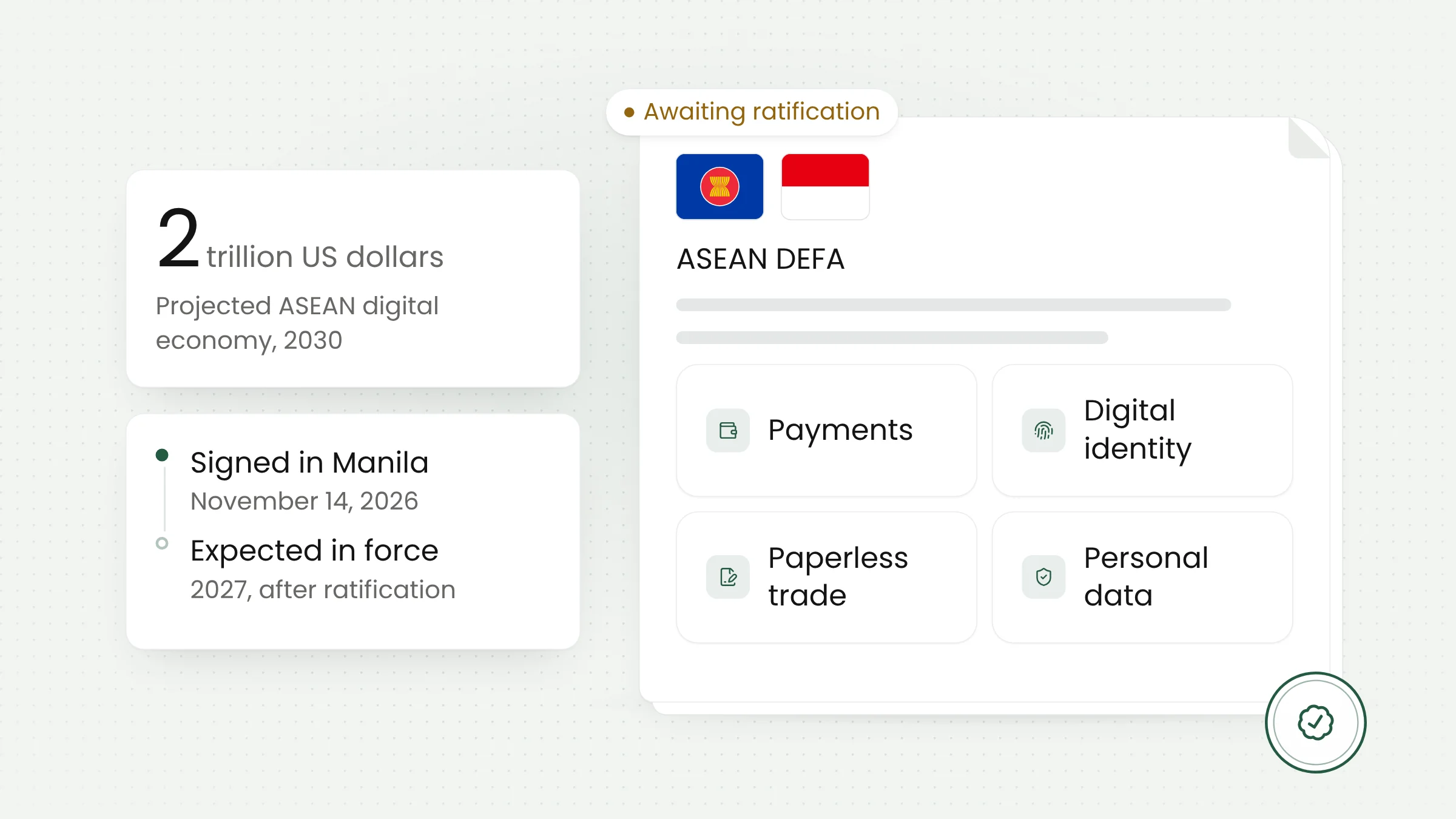
ASEAN member states signed the ASEAN Digital Economy Framework Agreement (DEFA) in Manila on Saturday, November 14, 2026. The pact sets common rules for digital trade, electronic payments, digital identity and data protection across the region. It is not yet in force and is expected to take effect in 2027, after each country ratifies it.
What was signed in Manila
The signing took place on the sidelines of the 28th ASEAN Economic Community Council Meeting, held alongside the 49th ASEAN Summit. ASEAN Secretary-General Kao Kim Hourn attended the ceremony, according to the ASEAN Secretariat. Indonesia was represented by Coordinating Minister for Economic Affairs Airlangga Hartarto, alongside representatives of the ten other member states, Kompas TV reported.
A day later, at the opening of the summit on November 15, Philippine President Ferdinand Marcos Jr. symbolically handed the signed documents to the Secretary-General. The Philippines chairs ASEAN this year. The Manila Times described DEFA as the world’s first region-wide digital economy pact of its kind.
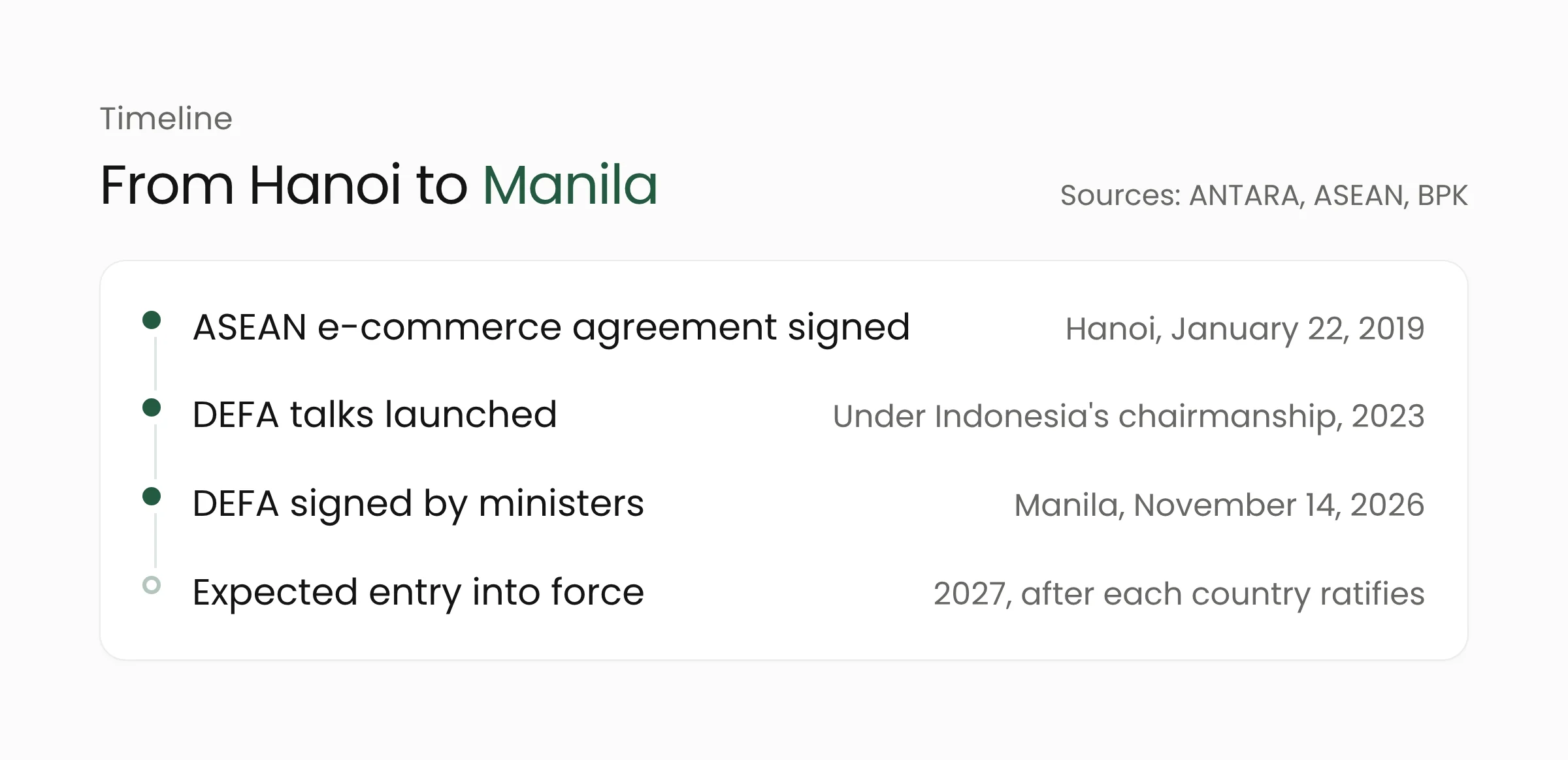
The agreement has Indonesian roots. Negotiations were launched during Indonesia’s ASEAN chairmanship in 2023, according to ANTARA. Thailand then chaired the negotiating committee through to the conclusion of talks in 2026, as noted by The Nation.
Once in force, DEFA will replace the ASEAN Agreement on Electronic Commerce. That earlier agreement was signed in Hanoi on January 22, 2019, and Indonesia ratified it through Undang-Undang Nomor 4 Tahun 2021 (Law No. 4 of 2021). Ratifying DEFA in Indonesia will therefore also have to address the status of that law.
From payments to digital identity
We could not find the full text of DEFA in public channels, so its individual provisions cannot yet be checked. The picture of what it contains comes from ministers’ statements and media coverage in member states. According to The Nation, it covers artificial intelligence, data innovation, submarine cable cooperation, non-discrimination against digital products, regulatory sandboxes for startups and small businesses, paperless trade, electronic payments, digital identity verification, personal data protection, online consumer protection, and cybersecurity cooperation, including responses to online scams.
For a business owner, that list comes down to four practical areas:
- Electronic documents and signatures. The Indonesian government says DEFA supports digitized trade documents, simpler customs procedures and stronger ASEAN Single Window connectivity. Cross-border recognition of electronic documents and signatures is expected to cut the cost of exports and imports, ANTARA reported.
- Cross-border payments. Payment interoperability, meaning one country’s payment systems can connect with another’s, is a core goal. Jakarta hopes DEFA will help extend the use of QRIS, Indonesia’s national QR payment standard, across ASEAN.
- Data and identity. The pact supports trusted cross-border data flows while protecting personal information, and it covers digital identity verification.
- Transaction safety. Online consumer protection and cooperation against online scams are part of the agreement.
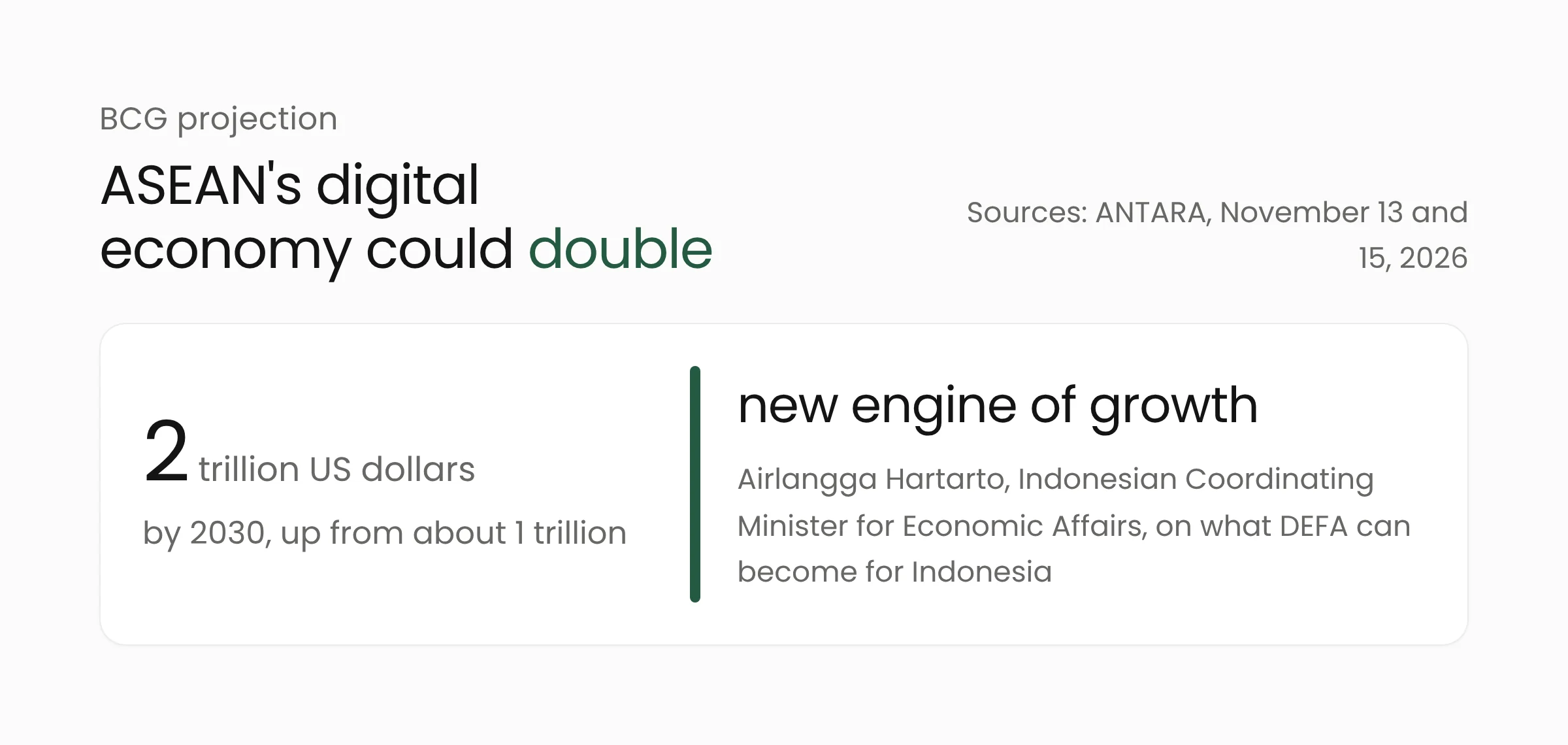
The targets are ambitious. A Boston Consulting Group study cited by governments estimates that full implementation could lift the value of ASEAN’s digital economy from about $1 trillion to $2 trillion by 2030. That is a projection, not a measured result. Airlangga, in a statement in Jakarta, called DEFA a potential “new engine of growth” for Indonesia.
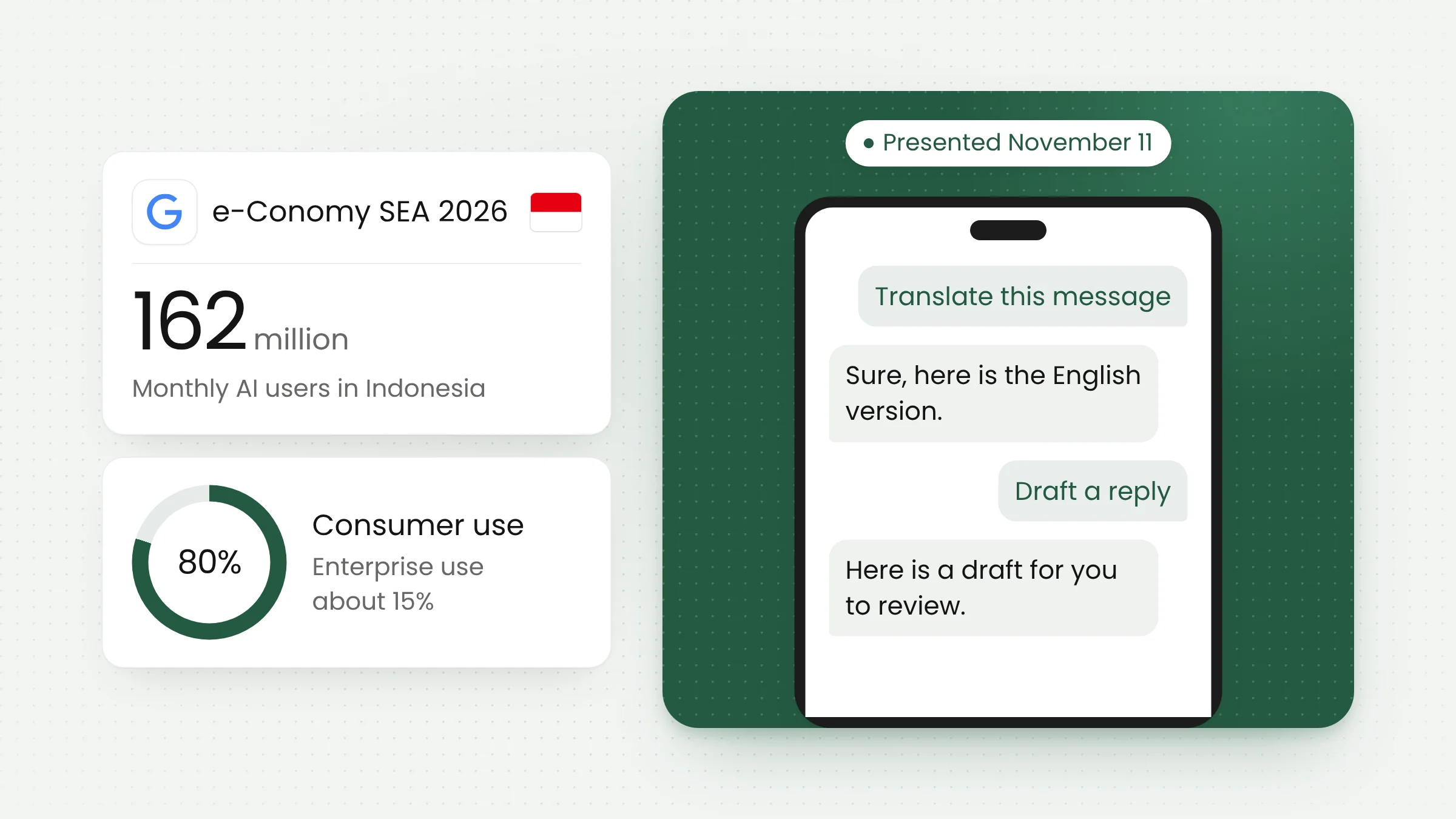
That projection should be read alongside a caution from the signatories themselves. Singapore’s Deputy Prime Minister Gan Kim Yong said member states are at different levels of digital readiness, and those differences must be taken into account when the agreement is implemented across the region, according to Kompas TV. The e-Conomy SEA 2026 report also listed DEFA as one of the conditions for the region’s projected growth in AI use.
The road to entry into force in 2027
Ministers’ signatures do not change the rules on the ground yet. Each country still has to ratify the agreement under its own legal procedures. Official and media sources give slightly different timelines:
- The ASEAN Secretariat says DEFA is expected to enter into force in early 2027.
- ANTARA, in a report published before the signing, said DEFA takes effect 180 days after the last member state signs.
- Thailand plans to speed up domestic ratification and aims for DEFA to take effect by mid-2027, according to The Nation.
In Indonesia, the government will set up an inter-ministerial committee to review the legal instruments required. According to ANTARA, its post-signing priorities are faster ratification, preparing domestic regulations and stronger coordination between agencies, including identifying which rules need to change. As of this writing, Indonesia has not announced a ratification timetable.
The waiting period gives businesses time. Implementing rules, such as how electronic signatures from other countries will be recognized or what cross-border consumer protection standards will look like, are likely to emerge only once ratification is under way.
What this means for small businesses and retailers
For online shops, craft producers, small exporters and local brands that already sell, or want to sell, to neighboring countries, DEFA changes nothing today. Its direction is clear enough to start preparing, because it targets the usual obstacles to selling across borders: paperwork, payments, customer data and buyer trust.
Several steps can begin without waiting for implementing rules:
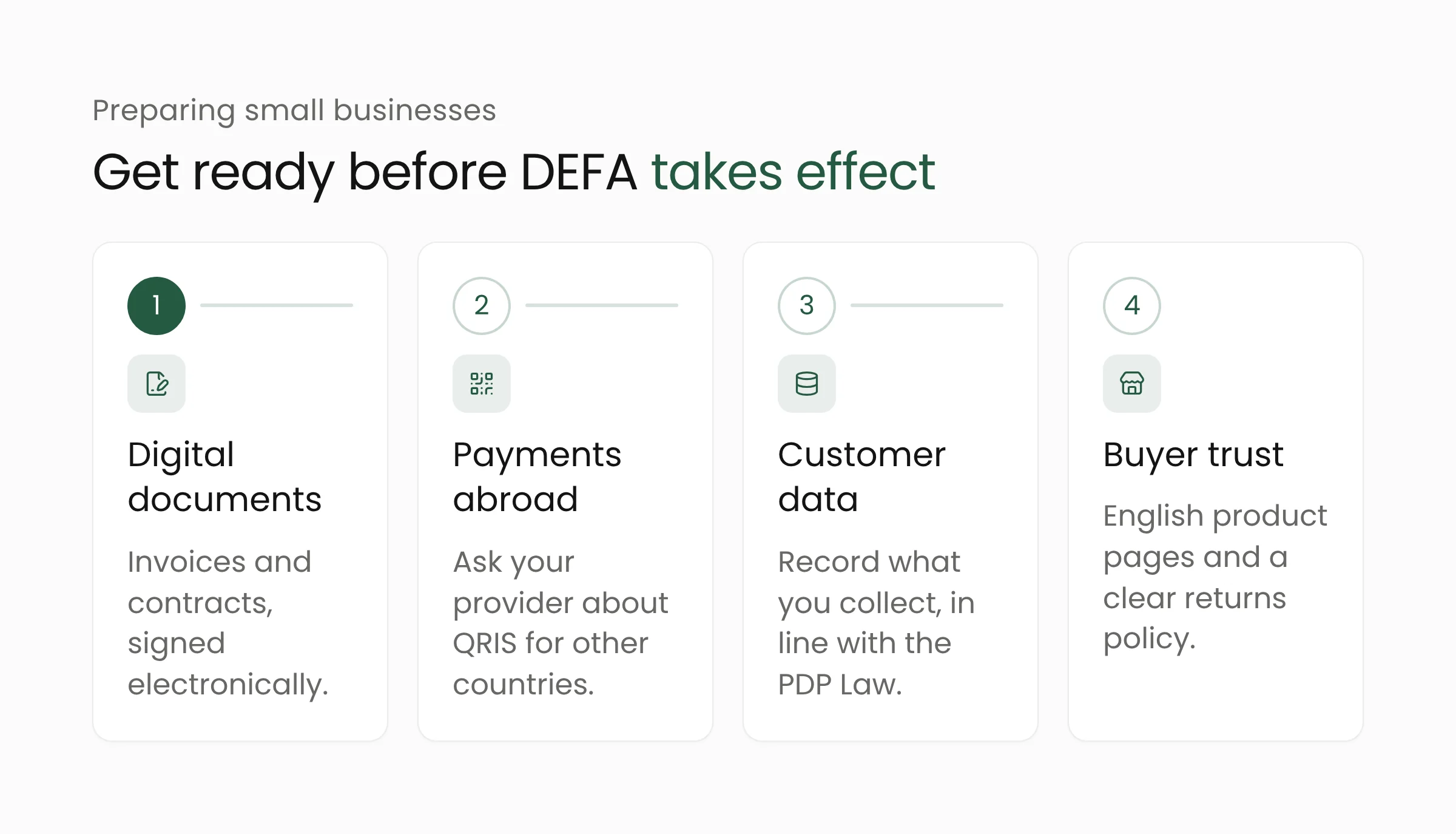
- Move transaction documents into digital form. Invoices, packing lists and contracts should already be created and stored electronically, with legally valid electronic signatures. If cross-border recognition of electronic documents takes effect, businesses with digital records will be able to use it sooner.
- Prepare for cross-border payments. Cross-border QRIS was connected with Malaysia, Thailand, Singapore, Japan, South Korea and China as of August 2026, according to Bank Indonesia. Shops serving tourists or buyers from those countries can check whether their payment provider already supports it.
- Organize customer data under Indonesia’s data protection law. DEFA emphasizes trusted data flows. At home, the reference is Undang-Undang Nomor 27 Tahun 2022 tentang Pelindungan Data Pribadi (the Personal Data Protection Law). Record what data you collect, where it is stored and who can access it.
- Build trust with foreign buyers. English product pages, a clear returns policy and an easy-to-find complaints channel will matter more once online consumer protection is governed by shared rules.
Each of those steps depends on the systems behind it. A shop that still records orders by hand will struggle to produce electronic invoices, stock levels and transaction histories in a form that can be checked. Retail management solutions that link the point of sale, inventory and online sales help prepare that data. Shops that want to reach buyers in neighboring countries also need a fast, secure bilingual website or online catalog, which can be built through web application development.
Security deserves attention from the start. Including online scams in DEFA’s scope shows that ASEAN governments treat cross-border fraud as a shared problem. For online sellers, the basics are enabling two-step verification on payment and marketplace accounts, limiting staff access to customer data, and being wary of messages claiming to come from overseas buyers or couriers.
Frequently asked questions
Is ASEAN DEFA already in force?
No. DEFA was signed on November 14, 2026, and must still be ratified by each member state. The ASEAN Secretariat expects it to enter into force in early 2027, while Thailand is aiming for mid-2027.
Do small businesses need to register or obtain new permits because of DEFA?
The sources we reviewed do not mention any new registration or permit requirements for small businesses. DEFA is an agreement between governments, so any rules that bind businesses directly will come through domestic regulations prepared after ratification.
How does DEFA differ from ASEAN’s 2019 e-commerce agreement?
The 2019 agreement focused on trade conducted through electronic systems. According to coverage by The Nation and The Manila Times, DEFA has a wider scope, including digital identity, artificial intelligence, regulatory sandboxes for small businesses, submarine cables and cooperation against online scams. Once in force, DEFA will replace the 2019 agreement.
Conclusion
ASEAN DEFA gives the region a single framework for digital trade, payments, data and digital identity. Its benefits for small businesses will arrive only after ratification and implementing rules, likely in 2027. Businesses that start organizing their digital documents, payments and customer data now will be better prepared when those rules take effect.
The Merakit Indonesia team helps retailers and small businesses build sales systems and websites ready to serve buyers across borders. Get in touch if your business wants to start preparing.
Sources
- Secretary-General of ASEAN attends the Signing Ceremony of the ASEAN Digital Economic Framework Agreement (DEFA), ASEAN Secretariat, November 14, 2026
- Indonesia siap tandatangani ASEAN DEFA pada 14 November 2026, ANTARA, November 13, 2026
- Indonesia bidik pasar digital ASEAN untuk perluas peluang UMKM, ANTARA, November 15, 2026
- ASEAN Tandatangani Perjanjian Ekonomi Digital DEFA, Pertama di Dunia yang Mengikat Secara Hukum, Kompas TV, November 15, 2026
- Thailand plays key role in ASEAN DEFA signing to advance digital trade, The Nation, November 15, 2026
- Asean ministers sign landmark digital economy pact, The Manila Times, November 16, 2026
- Undang-Undang Nomor 4 Tahun 2021, BPK Legal Database
- Jelajahi Indonesia Makin Mudah dengan QRIS Antarnegara dan Indonesia Travel Pack, Bank Indonesia, September 26, 2026