Blog ChatGPT
ChatGPT for Academic Researchers Adds 50,000 Free Grants
On this page· 7 sections
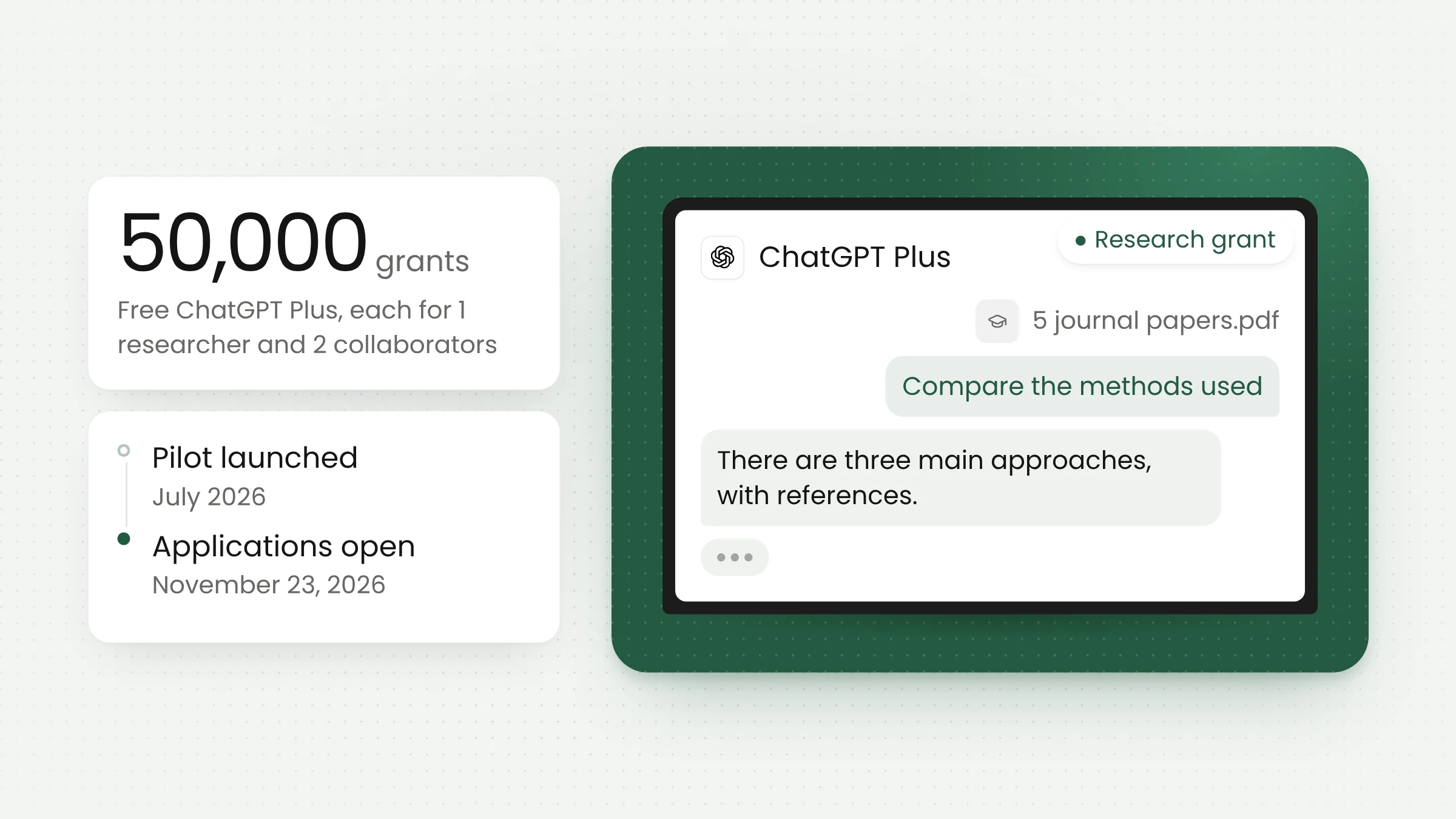
OpenAI is expanding ChatGPT for Academic Researchers with 50,000 new grants, and applications open on November 23, 2026. Each grant gives one researcher and up to two collaborators free access to ChatGPT Plus. For universities in Indonesia, the opportunity is best approached alongside clear rules on research data and AI use.
What OpenAI announced
OpenAI announced the expansion on Monday, November 16, 2026. According to Semafor, it could give up to 200,000 researchers free access to the company’s frontier models. According to CASRAI, the 200,000 figure is a target for the program as a whole and differs from the number of new grants.
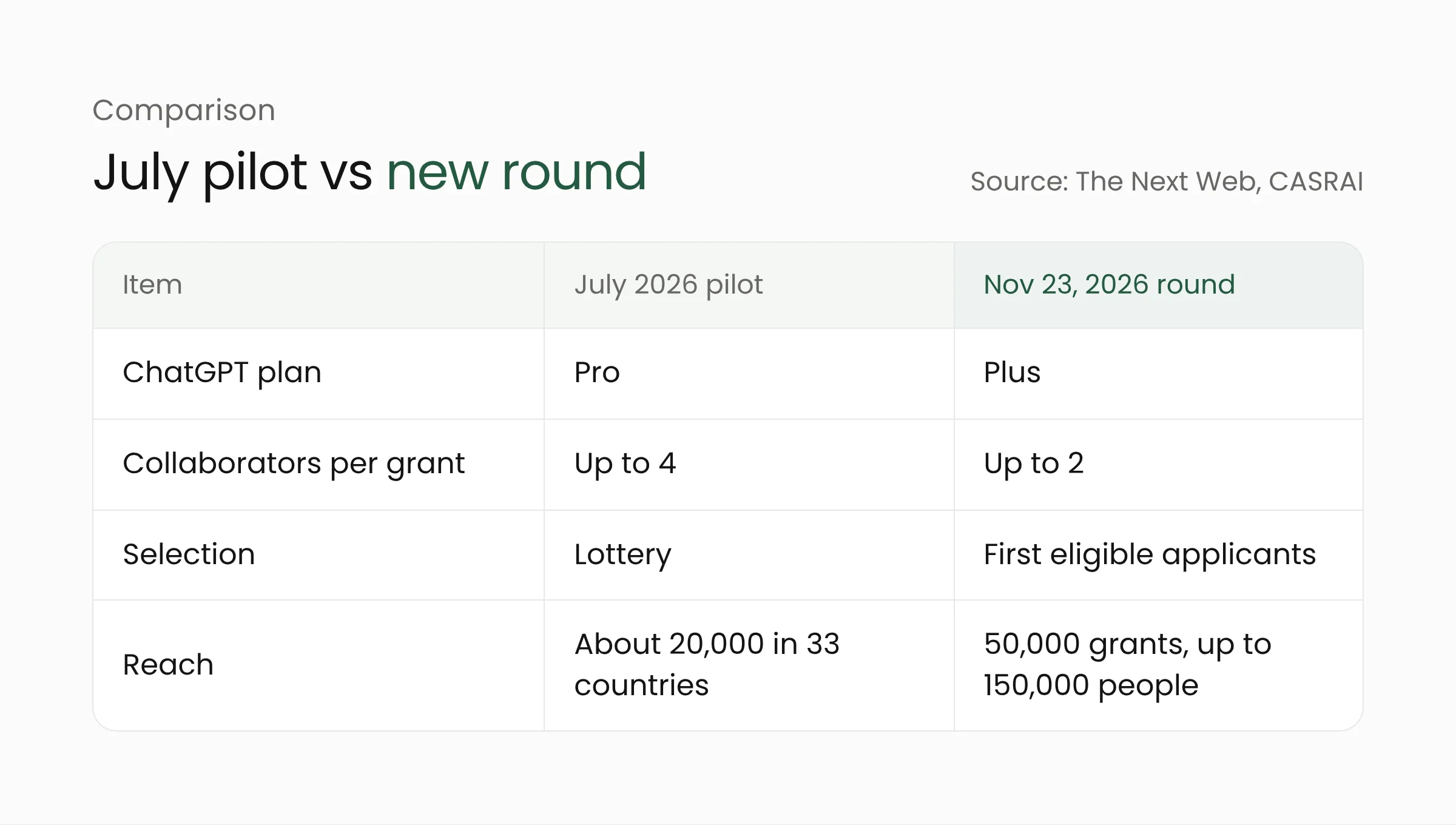
The program started as a pilot in July 2026. The Next Web reports that about 20,000 researchers in 33 countries have joined since then. The new round adds 50,000 grants, and because each grant covers up to two collaborators, it could reach up to 150,000 people on its own.
Applications open on Monday, November 23, 2026. OpenAI has not given a time of day. According to CASRAI, a research administration organization, eligible researchers who are already on the waitlist will receive an email with activation instructions before applications open.
From Pro to Plus, and from lottery to first in line
Two things change compared with the July pilot. First, pilot participants received ChatGPT Pro, OpenAI’s top tier, while new grant recipients get the cheaper ChatGPT Plus. OpenAI says most pilot users would have stayed within Plus limits, so the switch lets the program reach more teams.
Second, selection works differently. The pilot used a lottery. The new round gives grants to the first 50,000 applicants who meet the eligibility requirements. The number of collaborators also drops, from up to four in the pilot to up to two per grant.
Who can apply and how data is handled
OpenAI has not named Indonesia specifically. CASRAI, citing OpenAI’s researcher access guide, says the program is available in all regions except China and Hong Kong. The same guide lists research faculty and postdoctoral researchers as applicants, with identity and academic status verified. CASRAI also notes that final eligibility and collaborator rules for this intake are still to be confirmed.
Sources differ on how long access lasts. CASRAI says OpenAI’s guide describes three Plus seats with a duration of 12 months. The Next Web says the grant duration and the exact Plus limits have not been specified. According to CASRAI, the program also excludes API credits and specialized models, so researchers who want to process large datasets through code still need a separate budget.
On data, Semafor reports that OpenAI says it will not collect data from users enrolled in the program. CASRAI uses narrower wording: data shared through the program is not used to train OpenAI’s models by default. CASRAI adds that OpenAI’s own study still analyzed usage patterns with automated classifiers. Researchers should read the official terms when they apply and should not assume that every kind of data is safe to upload.
A usage study and a crowded field
Alongside the announcement, OpenAI published a study called Science at the Frontier. According to CASRAI, it analyzed 580,186 science-related messages from 1,819 scientists between August 20 and September 22, 2026, plus a survey with 251 responses. The Next Web reports that reading and learning made up 28% of science messages on average, and writing made up 27%.
Survey participants estimated that the same work would have taken about 1.9 times as long without AI. That figure is self-reported. OpenAI says the study does not prove AI speeds up discovery, and it points to funding, staff and lab capacity as limits on testing new ideas.
The move also comes amid competition. The Next Web notes that Anthropic launched Claude Science, an AI workbench for labs, in June, and that Google DeepMind opened its science models to 200 European researchers in October. AI is already reshaping parts of biology, as shown by AlphaGenome 2 predicting the effects of DNA variants by cell type.
What this means for universities and researchers
Campus rules and data protection still apply
Free access does not remove research ethics obligations. In October 2024, Indonesia’s education ministry, then called Kemendikbudristek, published Panduan Penggunaan Generative Artificial Intelligence (GenAI) pada Pembelajaran di Perguruan Tinggi (guidelines on using generative AI in higher education learning). According to detikEdu, the guidelines ask lecturers to state when generative AI is allowed and when it is not. When it is allowed, its use should be documented, attributed and critically verified.
The guidelines were written for teaching, but the same principles carry over to research. Research data often contains personal information, such as survey responses, medical records or student data. Processing that data falls under Undang-Undang Nomor 27 Tahun 2022 tentang Pelindungan Data Pribadi (Indonesia’s Personal Data Protection Law), including when it is uploaded to a third-party service.
Steps research offices can take
For universities, the November 23 round is a limited opportunity. Research offices, known in Indonesia as LPPM, can prepare in four ways.
- A list of eligible researchers. Identify active research faculty and postdoctoral researchers, with proof of affiliation such as a university email address and a profile on SINTA, Indonesia’s national research index. Since grants go to the first eligible applicants, ready documents improve the odds.
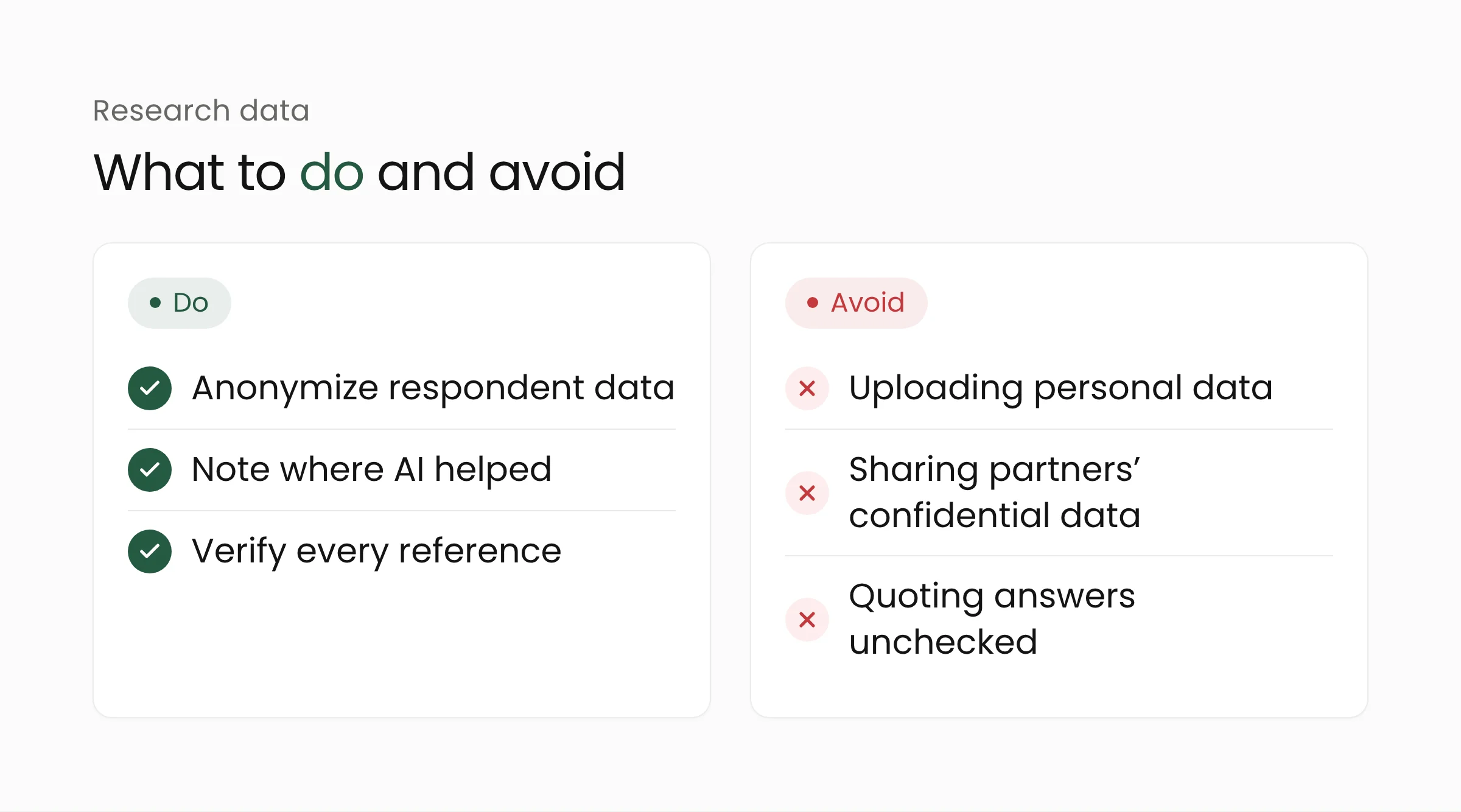
- Written data rules. Decide which kinds of data may and may not be uploaded to public AI services. Personal data from respondents or patients should be anonymized first, and data covered by confidentiality agreements should not be uploaded at all.
- Notes on AI use in methods. Ask researchers to record which parts of the work AI helped with, such as literature searches or language editing, and to verify every suggested reference. These notes make life easier for ethics committees, journal editors and grant reviewers.
- A plan for when the grant ends. According to the guide cited by CASRAI, the grants last 12 months. Universities should decide which workflows are worth continuing on their own budget and which are better run on an AI service the university controls.
Universities that want an in-house AI service, for example a search assistant for thesis repositories or summaries of research reports with data kept on their own servers, can start with the most common needs. Technology choices can be discussed with a team that builds education technology solutions or provides artificial intelligence services with Indonesian data rules in mind.
Frequently asked questions
Can researchers in Indonesia apply?
OpenAI has not named Indonesia specifically. The access guide cited by CASRAI says the program is available in all regions except China and Hong Kong. Researchers should confirm this on the application form when it opens on November 23, 2026.
Can students take part?
The guide cited by CASRAI lists research faculty and postdoctoral researchers as applicants. Students are not named as primary applicants, and OpenAI has yet to confirm the collaborator rules for this round.
How is this different from ChatGPT Edu?
ChatGPT Edu is OpenAI’s offering that gives campuses access to ChatGPT for academic purposes, as Semafor notes. The ChatGPT for Academic Researchers grants go to individual researchers and their collaborators rather than to institutions.
Conclusion
The expansion brings AI access to more researchers, including those at universities with tight budgets. The benefits will be greater if universities set data rules, record-keeping practices and a longer-term plan from the start. If your university wants to design a research AI service that fits data regulations, the Merakit team is happy to talk.
Sources
- OpenAI announces program boosting access to AI for scientists, Semafor, November 16, 2026
- OpenAI widens free ChatGPT for researchers but swaps Pro for Plus, The Next Web, November 16, 2026
- OpenAI expands free AI access to 200,000 researchers, CASRAI, November 16, 2026
- 35 generative AI apps for students and lecturers, with Kemdikbud guidelines (in Indonesian), detikEdu, October 14, 2024
- Kemendikbudristek launches GenAI guidebook (in Indonesian), Medcom.id, October 11, 2024