Blog GPT-6
GPT-6 and Intelligent UI Make ChatGPT Answers Interactive
On this page· 6 sections
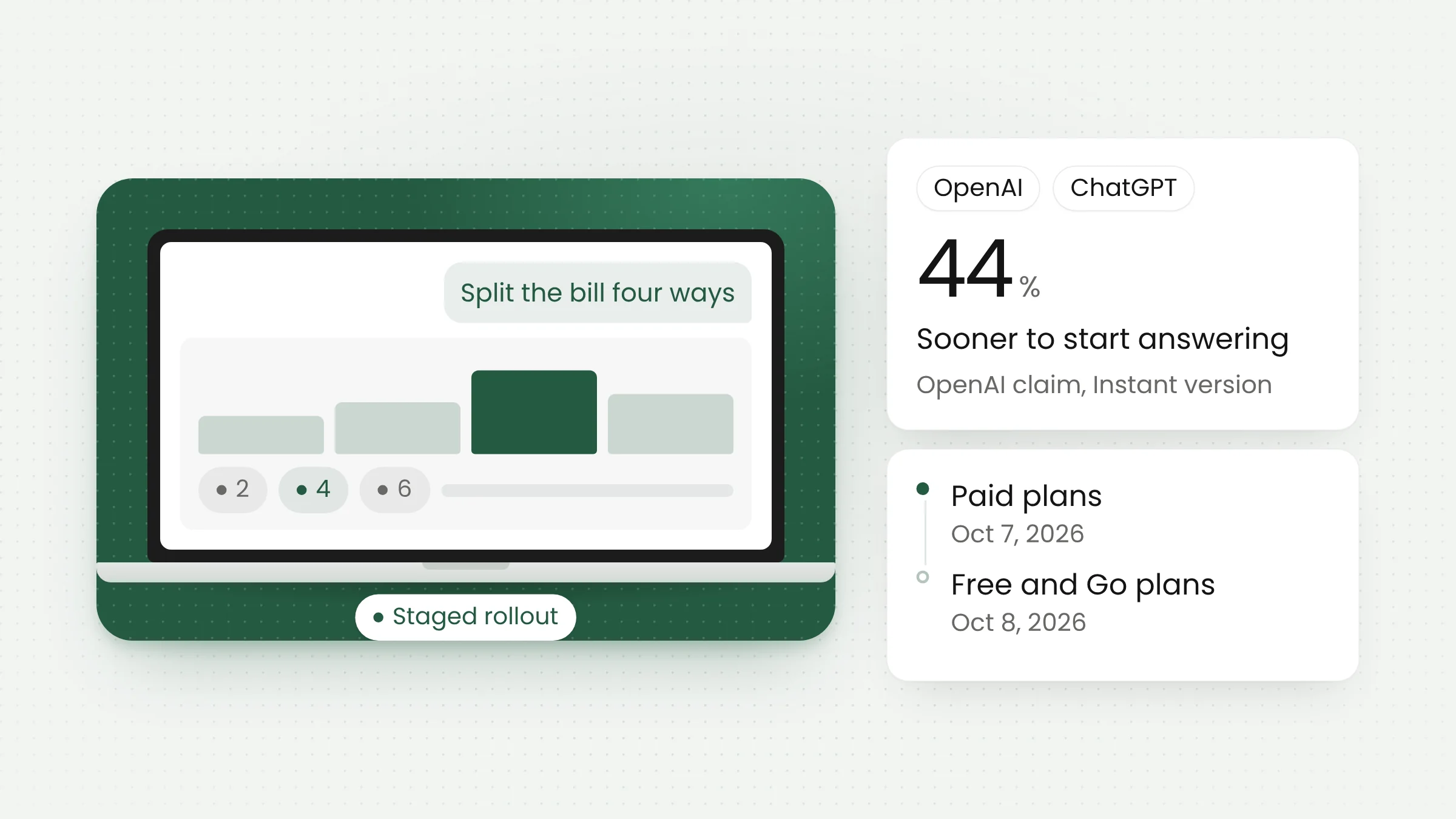
OpenAI began rolling out GPT-6 with a feature called Intelligent UI in ChatGPT on October 7, 2026. Answers can now include charts, buttons, forms and small tools such as calculators that work inside the conversation. Paid plans received it first, and Free and Go users started receiving it on October 8.
What OpenAI announced and how it works
Until now, a ChatGPT answer has mostly been text, sometimes with a table or a block of code. With Intelligent UI, GPT-6 composes a response from text, visuals and interactive elements, and picks the mix based on the question. A comparison can appear side by side, while an explanation of how something works can appear as a diagram the user can tap. When plain text is the most useful format, ChatGPT still replies with text.
OpenAI gave several examples. A travel itinerary can come with a map and suggested stops, and a recipe can pair each step with its cooking time. Users can also ask for a small tool, such as a savings-growth calculator, a dinner bill splitter or a game to play in the chat. According to BusinessToday, which cites OpenAI’s blog post, users can change the inputs on a diagram for a complex topic and see how the outcome shifts.
An interface that appears in stages
OpenAI says the interface is built from a library of native components and a compiler that displays the layout while the model is still generating the answer. The result is a set of components the user can change, unlike a static image attached to a reply. GPT-6 can also begin answering while it is still thinking. BusinessToday reports that the model was trained so users do not have to stare at a loading screen while it works through a hard problem.
OpenAI reports that GPT-6 Instant starts answering questions that need a web search 44 percent sooner on average than GPT-5.6 Instant. The figure measures the time until an answer begins to appear. It does not cover the time until the answer is finished. For everyday agentic tasks, OpenAI also says GPT-6 Extra High begins answering in the same time as GPT-5.6 Medium while scoring better overall than GPT-5.6 Extra High. The company adds that GPT-6 is more reliable at finding supporting information and better at addressing the core of a difficult question than GPT-5.6. All of these figures and statements are OpenAI’s own claims, and we have not found independent testing of them.
Availability and limits
OpenAI describes the rollout as global and tied to the Chat tab. Plus, Pro, Business and Enterprise plans began receiving it on October 7 with the GPT-6 Sol model. Free and Go plans began on October 8 with GPT-6 Luna. Both models are described as tuned for everyday conversation.
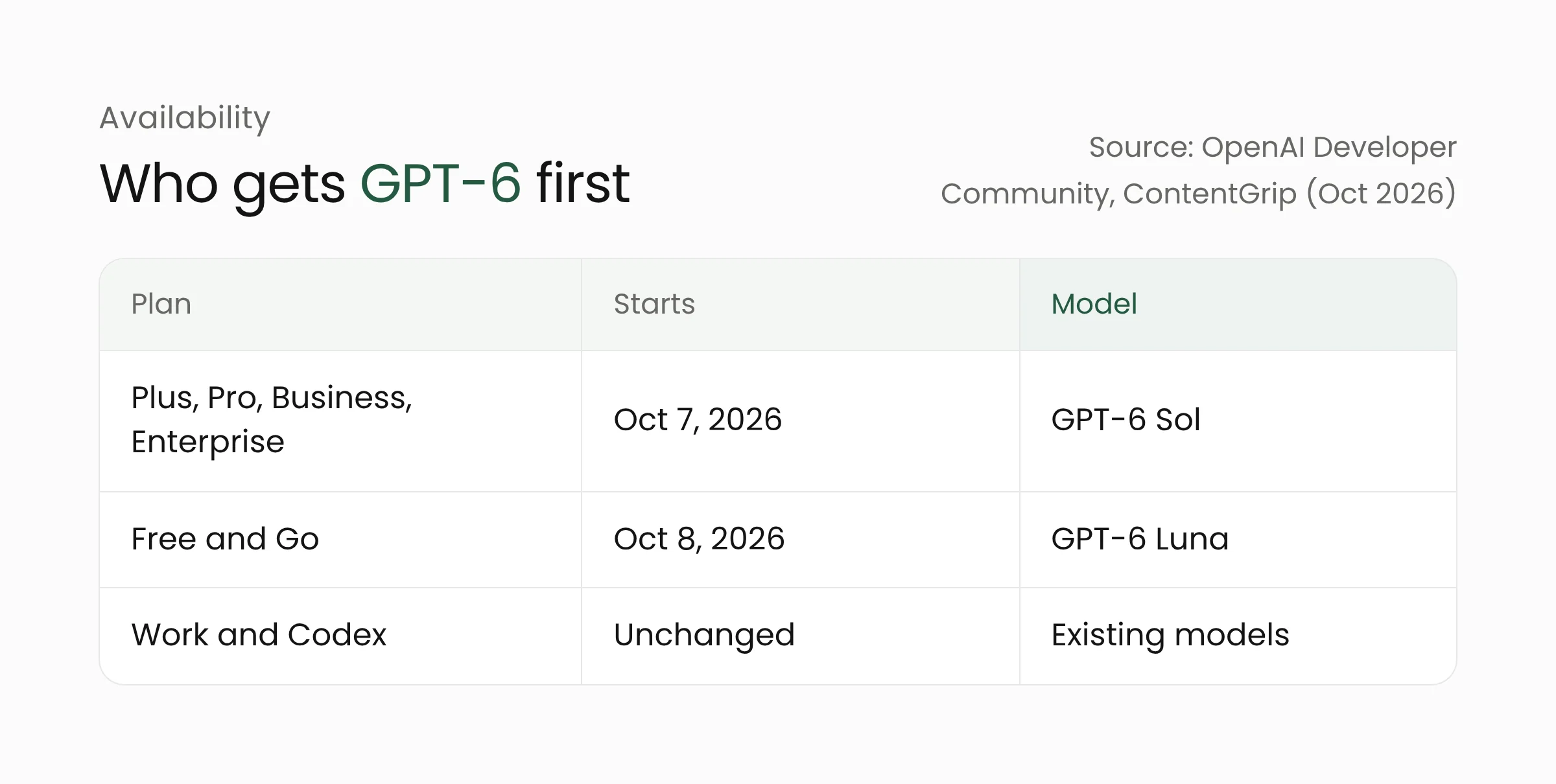
Several limits apply. According to ContentGrip, the models behind the Work and Codex experiences do not change in this release, and availability on Enterprise plans depends on workspace administrator settings. A rollout start also does not guarantee that every account receives the feature at the same moment. OpenAI says more than 1.2 billion people use ChatGPT each week. That number describes the platform as a whole and does not show how many people have used Intelligent UI.
How an answer takes shape, and what remains unclear
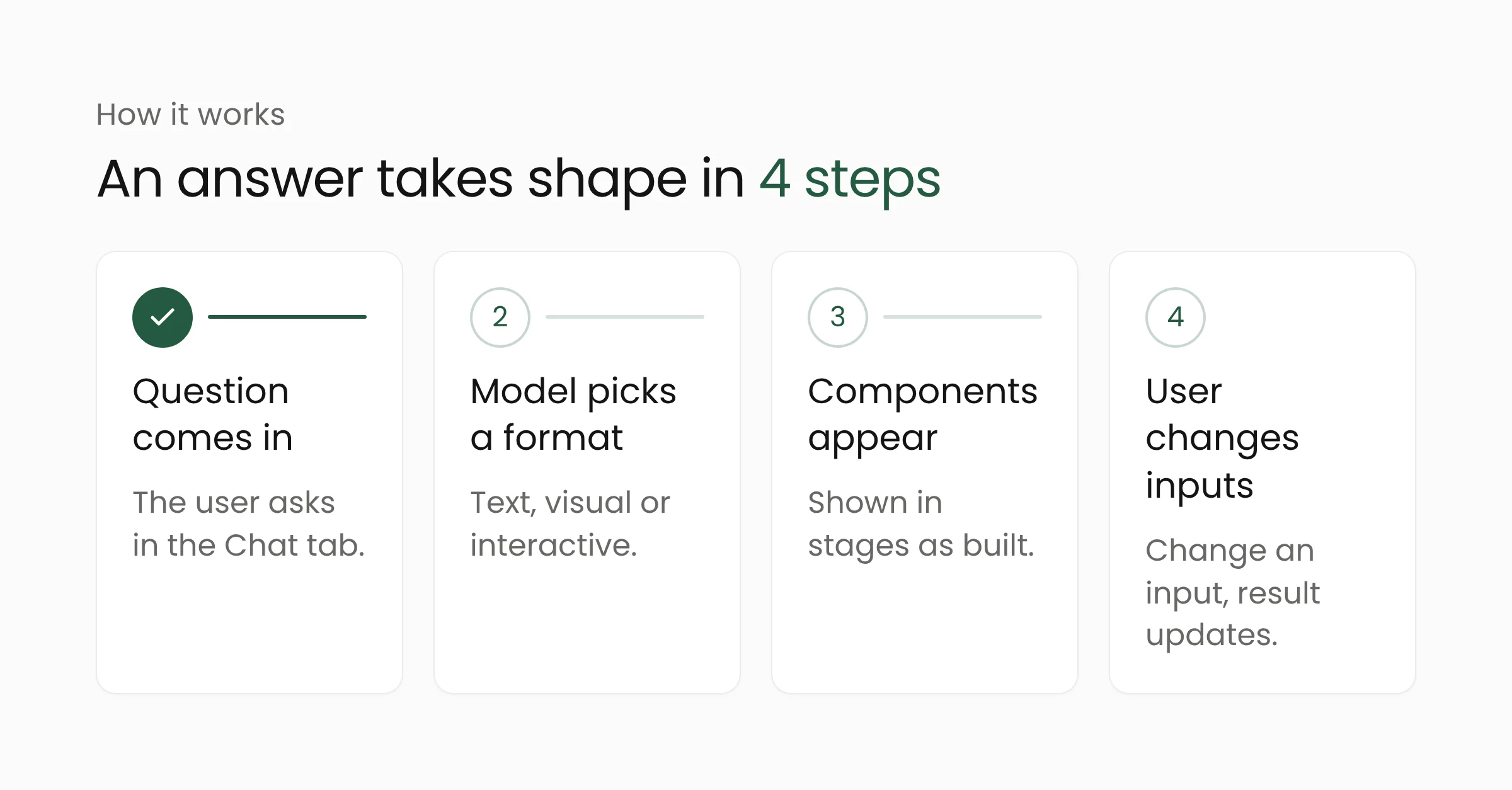
The flow can be pictured like this. A question comes in, the model chooses a format, components appear in stages, and the user changes an input and watches the result change.
Several points are not answered by the sources we read. OpenAI does not publish adoption figures by country, or data on how well the feature works in Indonesian. ContentGrip notes that the launch examples were in English, so users should test it themselves with questions that represent their own needs. The announcement also does not describe availability in the API; ContentGrip stresses that a new look in ChatGPT does not automatically mean the same capability is available through an API or a company’s automated workflow.
One more point deserves a note. A tidy chart does not guarantee correct content. A calculator that the model builds from a single prompt uses a formula the model wrote, and users still need to check the formula and the assumptions behind it.
What this means for schools and education providers
One of OpenAI’s examples is learning a concept through a visual explanation and then changing an input to see what happens. For teachers and lecturers, this opens a new way to explain topics that are hard to convey in paragraphs, such as compound interest, food chains or how a computer network works. A few practical considerations:
Use it as an aid, then check the output. Ask students to explain why a number in the calculator changes when the input changes, and ask teachers to check the formula before sharing a tool with a class. OpenAI’s speed claims say nothing about accuracy.
Set rules for use. A tool that can build a calculator or a game from one prompt changes how students approach assignments. Schools need to state when such tools are allowed and when they are not. Our article on sector-specific AI guidelines and child protection offers a reference for policy direction.
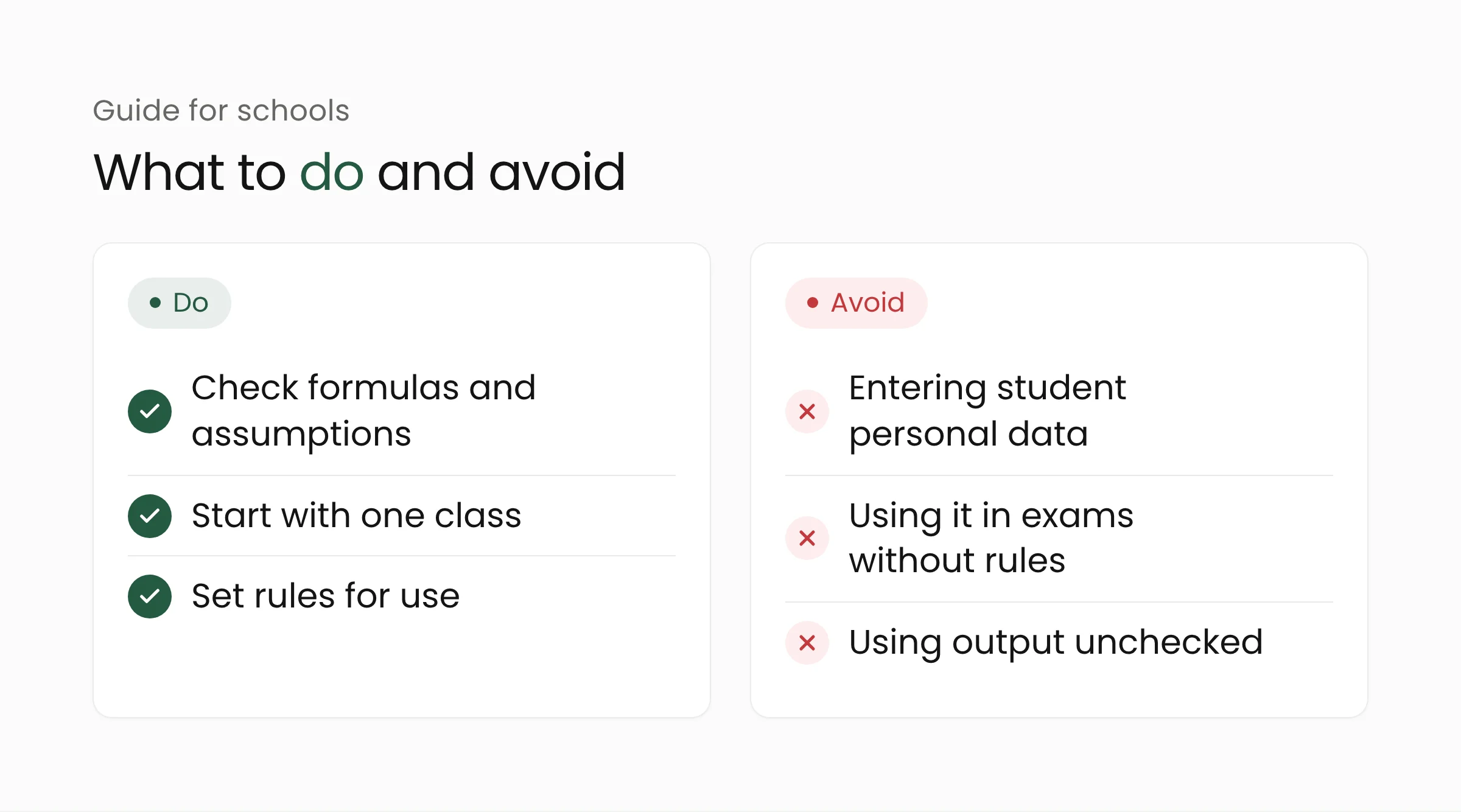
Protect student data. Grades, identities and student conditions are personal data protected by Law Number 27 of 2022 on Personal Data Protection. Do not enter them into a general chat service without a clear basis and a written school policy.
Prepare teachers first. A short training session on writing clear questions, reading visual results and spotting errors will be more useful than a blanket ban. Start with one subject and one class, note what helps and what misleads, then expand in stages.
Keep learning and exams apart. Exams that need to stay authentic should run on a system that manages sessions and monitors participants, such as Merakit Exam. A wider view of the sector is on the education technology solutions page, and for help applying AI in your organization, see our artificial intelligence services.
For teams building web and education apps, the release is a signal that users will grow used to answers that take the form of an interface. That is our reading of OpenAI’s announcement, not a claim by OpenAI. Developers should first observe how users respond to interactive answers, then adjust how lessons, exercises and feedback are presented in their own products. Changes like this tend to arrive in stages, so a small trial is safer than a large change all at once.
Frequently asked questions
Is Intelligent UI available on the free plan?
Yes. OpenAI states that Free and Go users began receiving GPT-6 with Intelligent UI on October 8, with the GPT-6 Luna model. The rollout is staged, so your account may not have it right away.
Does the feature also apply to Codex and Work?
Not yet. According to ContentGrip, this release applies to the Chat experience, and the models behind Work and Codex do not change. Availability in the API is not described in the sources we read.
Does ChatGPT always answer with an interactive layout?
No. OpenAI says the format depends on the question, and ChatGPT still gives a text answer when that is the most useful.
Closing
Intelligent UI shows where AI answers are heading: from text to read toward layouts to try. For schools and other organizations, its value will depend on the accuracy of the content, the rules for use and the habit of checking results. If you are drafting a policy or workflow built on AI, the Merakit team is available to talk through the AI services page.
Sources
- GPT-6 and Intelligent UI in ChatGPT, OpenAI Developer Community, October 7, 2026
- OpenAI rolls out GPT-6 to all ChatGPT users with Intelligent UI, BusinessToday, October 8, 2026
- ChatGPT Intelligent UI makes answers interactive, ContentGrip, October 2026
- OpenAI Launches GPT-6 in ChatGPT With Intelligent UI, HighTechDad, October 7, 2026