Blog Semiconductors
Danantara Plans Locally Made Data Center Chips and Equipment
On this page· 7 sections
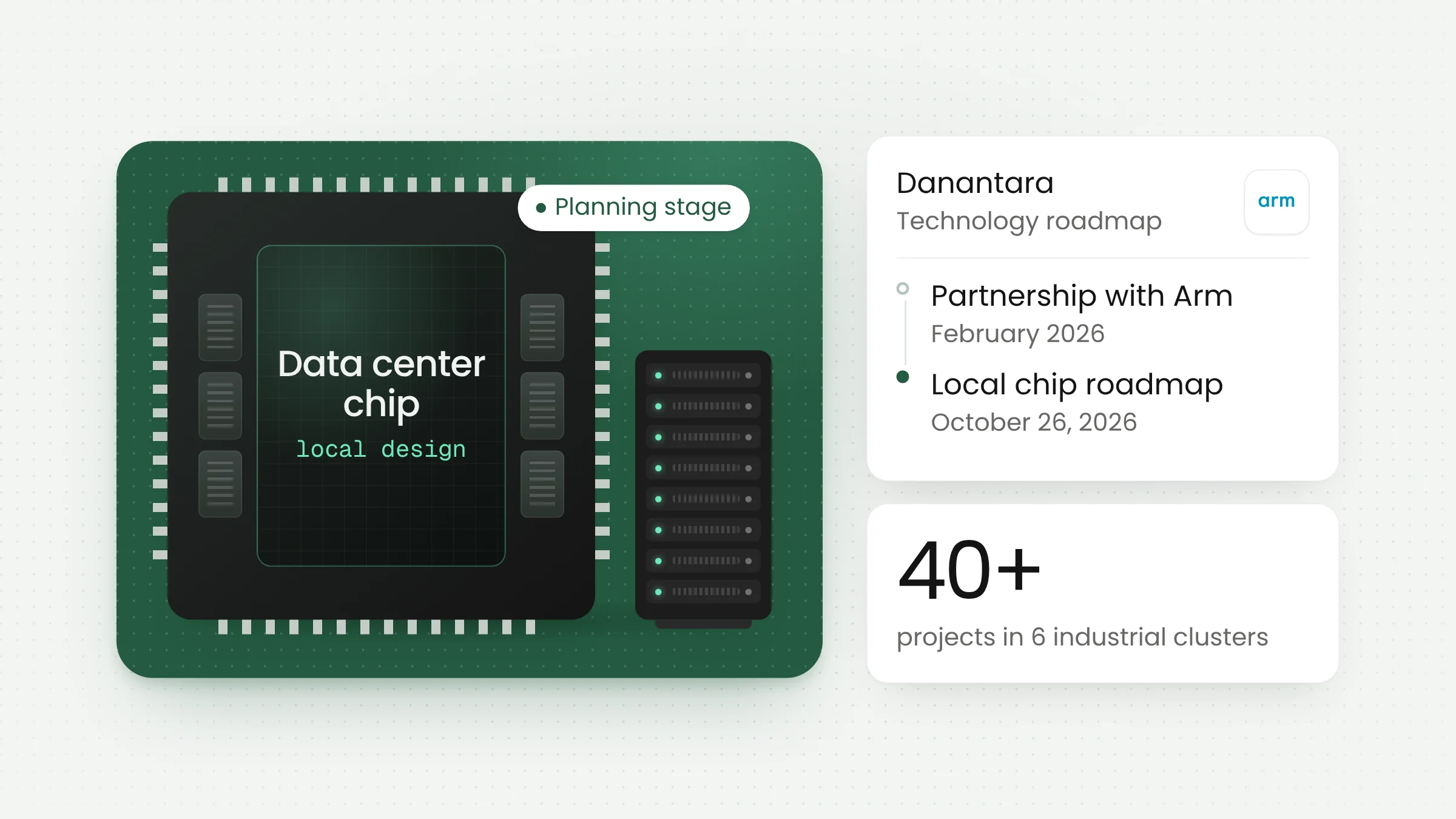
Danantara, Indonesia’s sovereign investment agency, wants the country to build data center equipment and chips instead of only leasing land to operators. At the Danantara Technology Innovation Investment Forum (DTIIF) 2026 in Jakarta on Monday, October 26, CTO Sigit Puji Santosa presented more than 40 projects across six industrial clusters, including data center chips and controllers.
From land leases to building equipment
Danantara, formally the Daya Anagata Nusantara Investment Management Agency, oversees Indonesia’s state-owned enterprises. According to CNBC Indonesia, the agency wants the domestic data center industry to move into higher-value work, starting with manufacturing data center equipment in Indonesia.
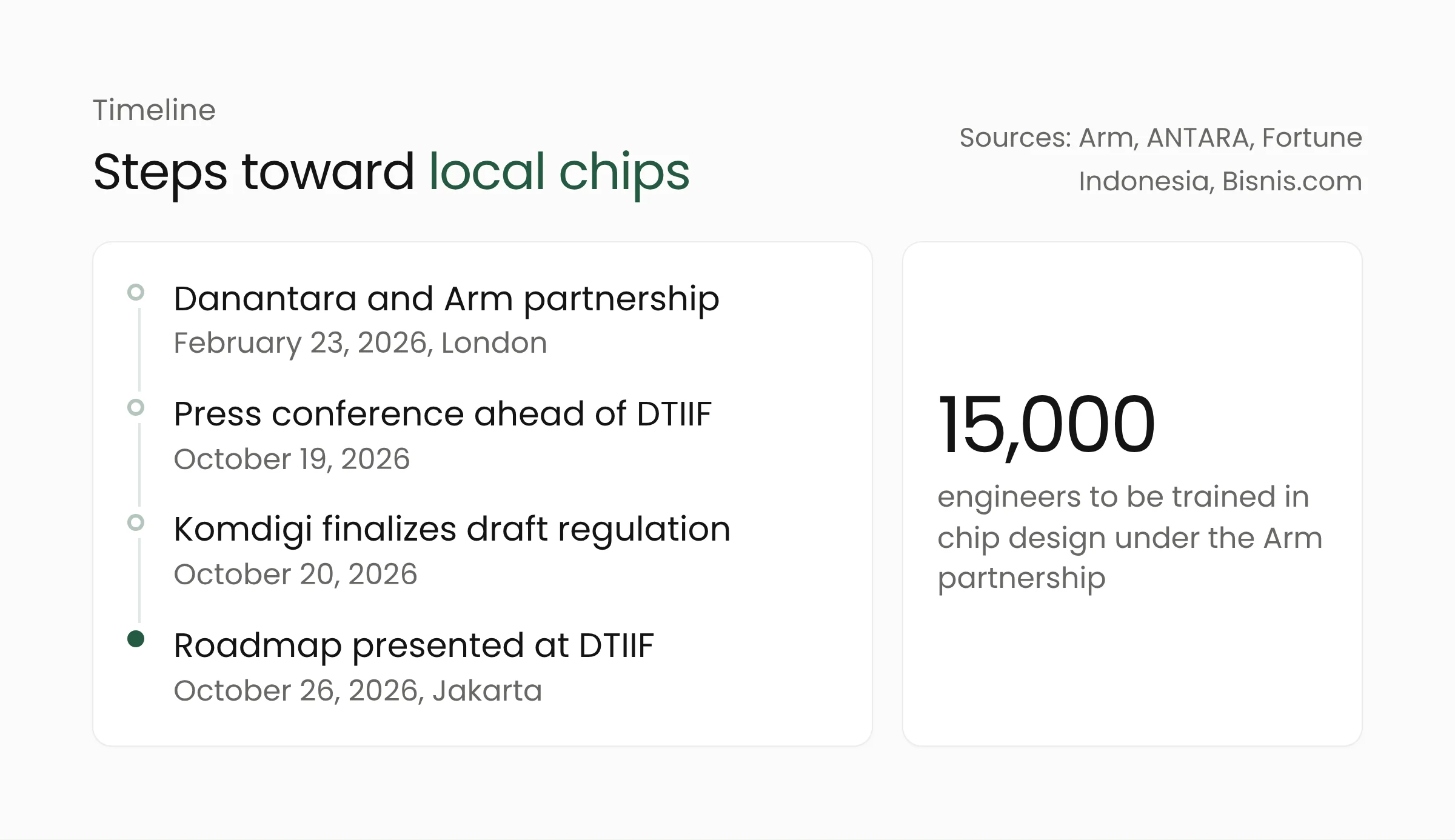
Sigit laid out the reasoning at a press conference ahead of the forum on October 19, as reported by Fortune Indonesia. He pointed to data center investments of $3 billion to $4 billion that generate only about $100 million to $150 million in revenue for the landowners. “Kalau kita hanya menyewakan lahan, impaknya tidak besar,” he said, meaning that leasing land alone has little impact.
Fortune Indonesia also reported Danantara’s projection that deeper involvement by national companies could lift annual revenue from $100 million to $150 million to between $1.5 billion and $7 billion. The figure is the agency’s own projection, and no breakdown of the calculation has been published.
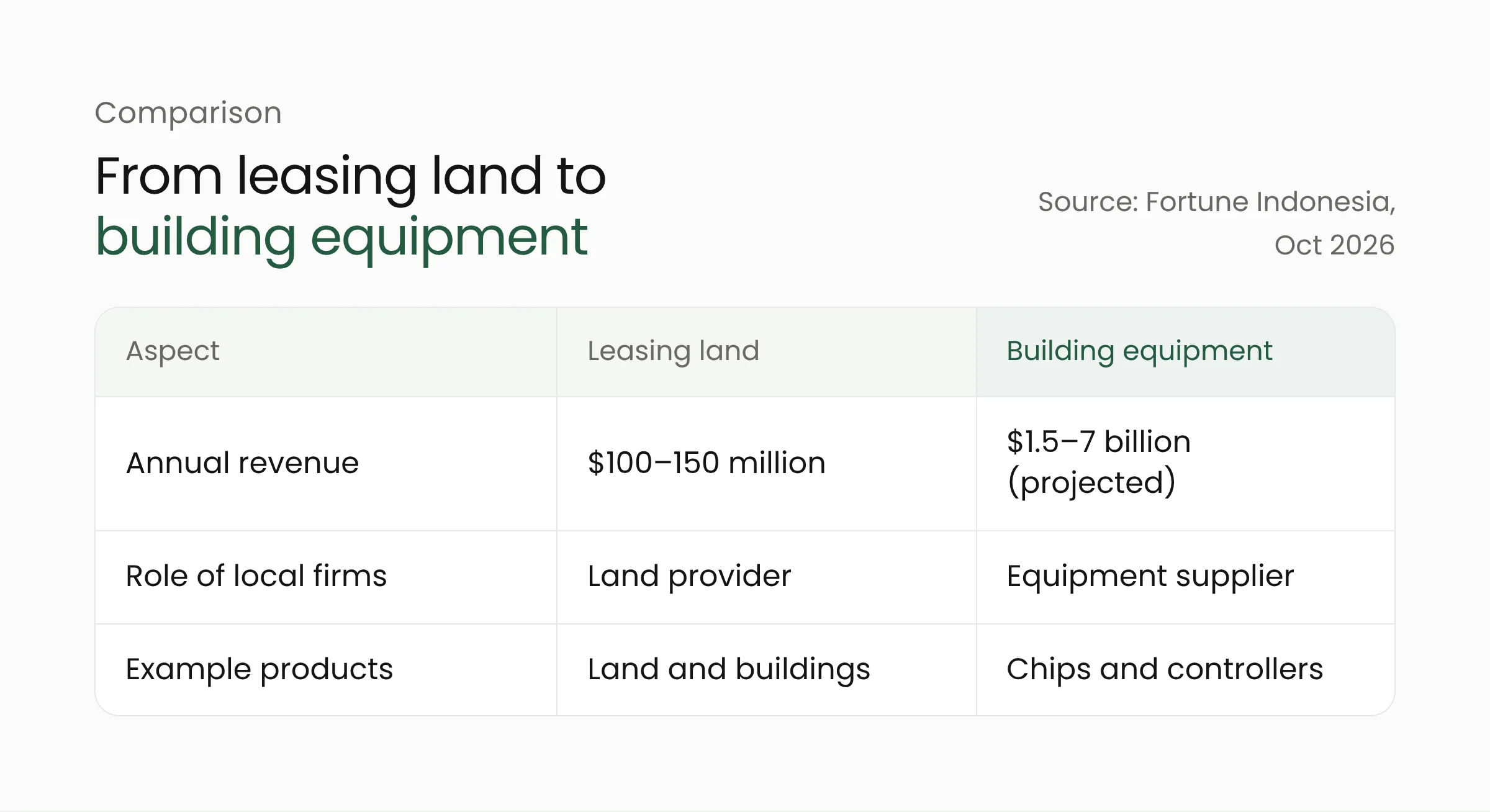
Industry publication The Tech Capital described the shift as Danantara moving beyond data center development into domestic equipment manufacturing and semiconductor capabilities, including chips and controllers.
In a data center, a controller is a chip that manages other hardware, such as power, storage, or networking inside a server. These parts rarely get attention, yet every rack uses many of them. Danantara has not said which types of controllers it plans to develop.
A roadmap of 40 projects in six clusters
In his DTIIF presentation, Sigit said Danantara has more than 40 projects spread across six industrial clusters. CNBC Indonesia listed them as energy; food, health, and agriculture; defense, maritime, and aerospace; advanced materials; telecommunications and mobility; and a cluster for other industries. The list given at the October 19 press conference, according to Fortune Indonesia, was slightly different and named digital infrastructure and banking and financial technology as separate pillars.
The telecommunications and mobility cluster holds the projects closest to the technology sector. CNBC Indonesia said its priorities include a 1-gigawatt data center, national AI sovereignty, national e-commerce, a sovereign cloud, a national blockchain, the Garuda Command Center, national car and motorcycle projects, and a traceability system.
Later projects in the same cluster include next-generation batteries, charging equipment, scanning systems, electric motor traction, and private 5G networks for industry. The remaining cluster covers computing devices, electric heavy machinery, optical sensors and instruments, and industrial robots.
On semiconductors, Danantara said it is developing six sectors. According to Sigit, one of them covers controllers and chips for data centers.
On funding, CNBC Indonesia reported an investment target of $20 billion to $30 billion over two to three years, which Sigit said could be exceeded. About 1,500 people registered for the three-day forum, held October 26 to 28, 2026, at the Fairmont Jakarta. Danantara also plans to sign memorandums of understanding with companies and universities, then map campuses near industrial sites that could support state-owned industries.
Details still to be announced
Available sources do not name a site for the 1-gigawatt data center, a construction timeline, or partners. Investment amounts per project and the facilities that would manufacture the chips have not been disclosed either.
Regulation is another open question. On October 20, 2026, Wayan Toni Supriyanto, Director General of Digital Infrastructure at the Ministry of Communication and Digital Affairs (Komdigi), said a draft presidential regulation on data centers and submarine cables was being finalized after public consultation, according to Bisnis.com. The draft aims to spread data center construction beyond Batam and Java to regions such as Sulawesi and Kupang, taking power supply, water, and site suitability into account.
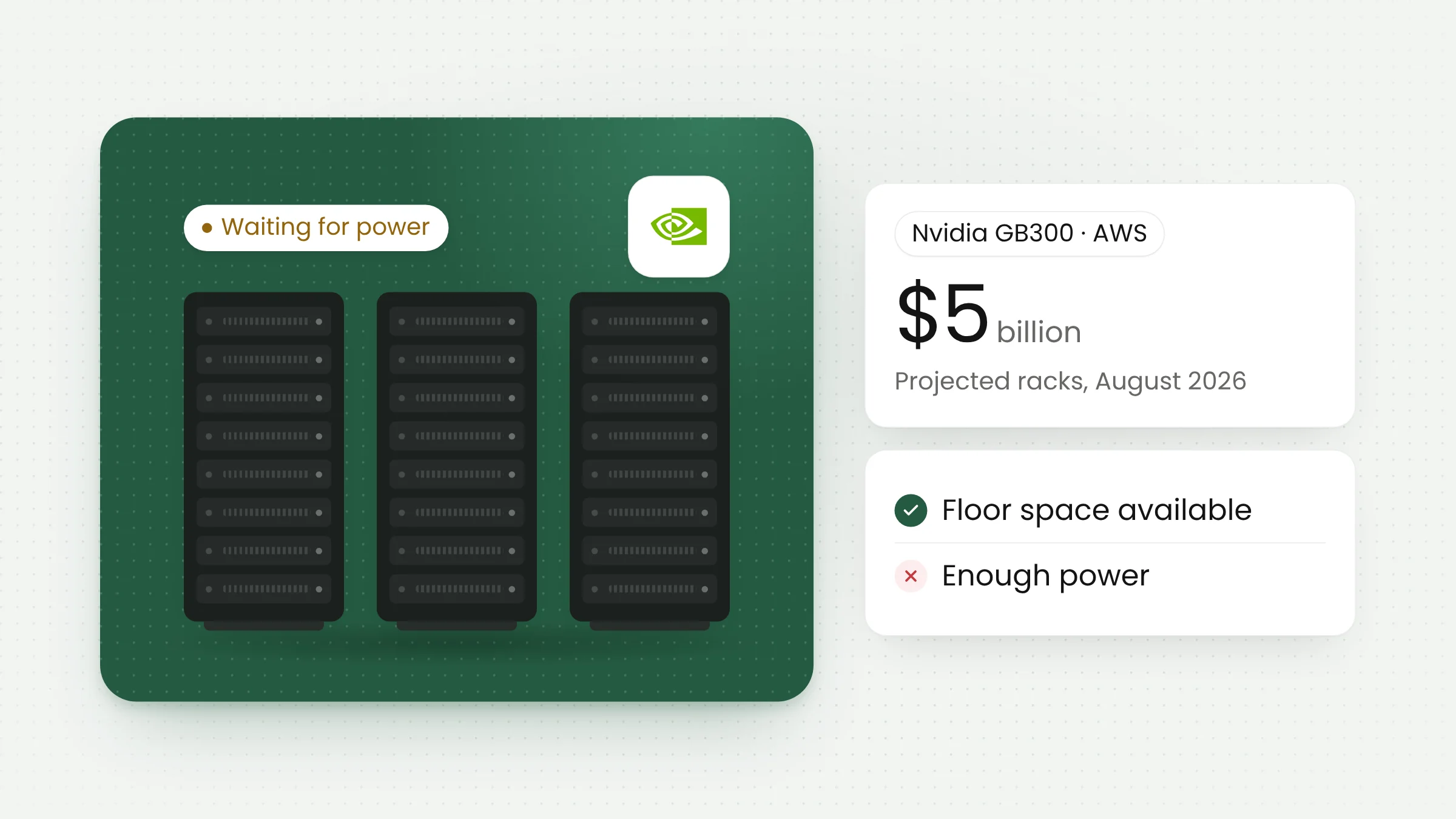
Power supply matters a great deal. The case of Amazon’s Nvidia racks waiting for electricity showed that hardware can arrive well before a site has the power to run it.
The Arm partnership and six national chip designs
Danantara’s chip plans rest on a partnership with Arm, the British chip architecture company. According to Arm, the strategic partnership was signed in London on February 23, 2026, in the presence of President Prabowo Subianto and Arm CEO Rene Haas. Through the Arm Total Access program, Danantara gains access to Arm’s compute platform for edge, physical, and cloud AI. CNBC Indonesia said the partnership was announced in May; the two dates may refer to different milestones.
Arm does not manufacture chips. It licenses its designs and architecture to other companies, which build chips for their own needs and have them produced at a foundry. That licensing model lets a country own chip designs without building everything from scratch.
A day after the signing, Coordinating Minister for Economic Affairs Airlangga Hartarto gave details to ANTARA. The goal is to train 15,000 Indonesian engineers in chip design, backed by initial funding of $150 million for a national semiconductor industry.
Airlangga also named six national chip designs whose intellectual property Indonesia would own: automotive, Internet of Things (IoT), data centers, home appliances, and two options still under discussion, autonomous vehicles and quantum computing. ITB, UGM, and the University of Indonesia have reportedly spent almost two years preparing for the program.
What this means for manufacturers and industry
The plan is still a roadmap, but its direction matters for factories, component suppliers, and technology companies in Indonesia. Chip designs for cars, IoT, and home appliances touch products made in many industrial estates, while private 5G networks and industrial robots appear on Danantara’s project list.
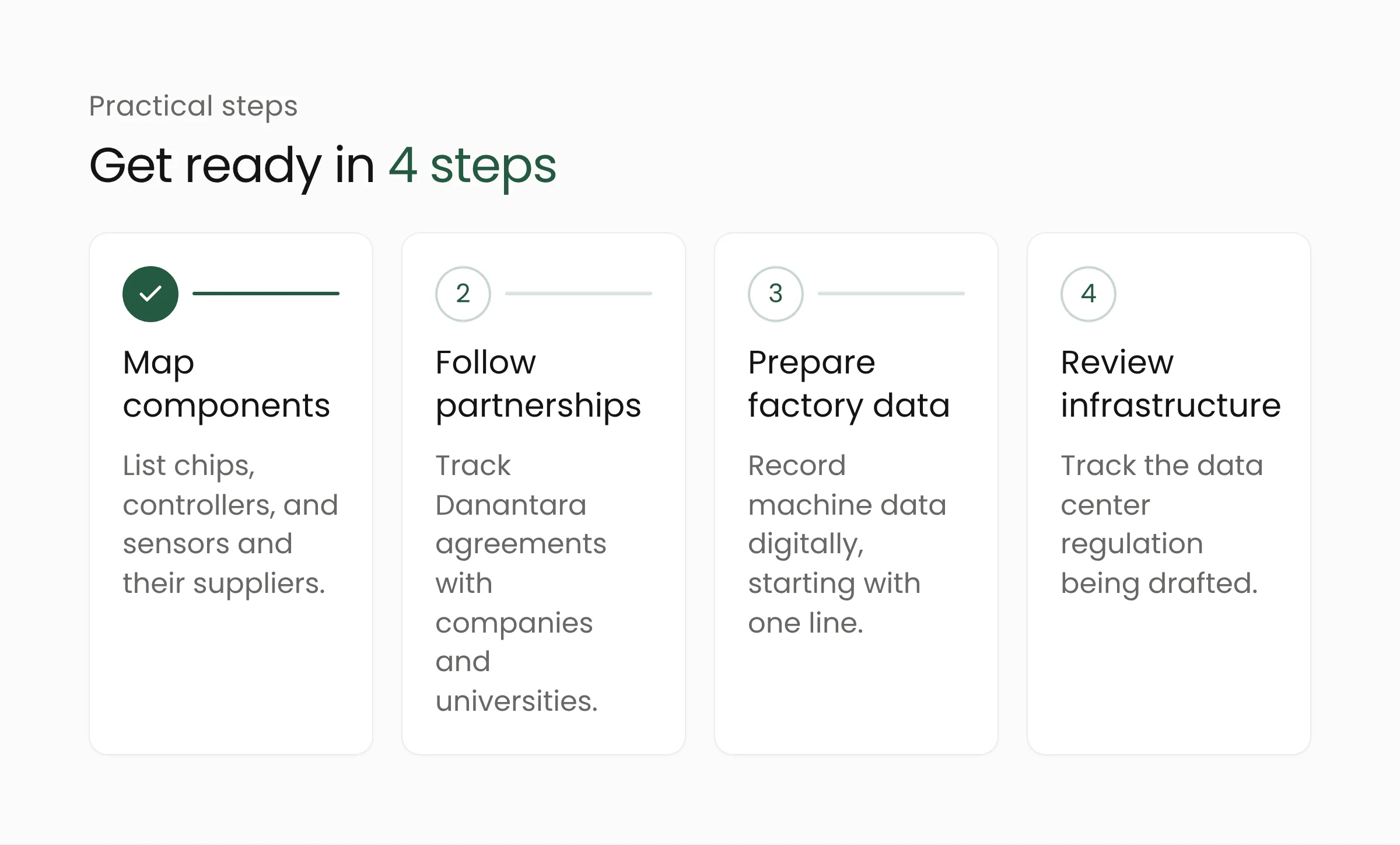
A few steps worth considering now:
- Map the electronics you depend on. List the chips, controllers, and sensors in your products or production lines, along with where they come from. This shows which parts could later draw on domestic supply.
- Follow Danantara’s forum outcomes and partnerships. Agreements with companies and universities will shape who gets involved early. Suppliers near state-owned industrial sites may have an advantage.
- Prepare your team and factory data. Projects such as private 5G, sensors, and industrial robots depend on well-recorded machine data. Plants that already monitor equipment digitally are better placed to adopt new hardware. An industrial automation program supported by IoT services can start with a single production line.
- Revisit infrastructure plans. For companies running workloads in Indonesian data centers or the cloud, a 1-gigawatt facility and a sovereign cloud could influence site and provider choices in the coming years. Cloud computing teams should track the data center regulation now being drafted.
Expectations should stay realistic. Designing a chip and manufacturing it are separate stages, and chip fabrication requires very large investments and long lead times. The sources so far cover design work, engineer training, and investment targets, with no production schedule yet.
Frequently asked questions
Will Indonesia manufacture its own chips?
Danantara says it is developing six semiconductor sectors, including data center chips and controllers, and is working with Arm on chip design. Factory locations, production capacity, and timelines have not been announced.
What role does Arm play?
Arm provides access to its architecture and compute platform through the Arm Total Access program and supports engineer training. According to the government, the target is 15,000 Indonesian engineers skilled in chip design, with Indonesia owning the intellectual property of the national designs.
When will the 1-gigawatt data center be built?
That has not been announced. The project is on the priority list of the telecommunications and mobility cluster, but its location, schedule, and partners have not been disclosed. Komdigi’s data center regulation is also still in draft form.
Conclusion
Danantara’s roadmap puts chips, controllers, and data center equipment into Indonesia’s national industrial plans, backed by a design partnership with Arm and a $20 billion to $30 billion investment target. The project details will decide how quickly factories and data centers feel the change. If your organization wants to get its production data or digital infrastructure ready now, the Merakit Indonesia team can help plan the first steps.
Sources
- Danantara Mau Kembangkan Chip AI Hingga Data Center Raksasa 1 GW, CNBC Indonesia, October 26, 2026
- Ahli Teknologi Kumpul, Danantara Dorong Industri Teknologi di RI, CNBC Indonesia, October 26, 2026
- Danantara Fokus Kembangkan Enam Pilar Industri, Gelar DTIIF 2026 Tarik Pemodal Global, Fortune Indonesia, October 20, 2026
- Indonesia’s Danantara pushes into data centre hardware and chip development, The Tech Capital, October 26, 2026
- Arm and Danantara Indonesia partnership, Arm Newsroom, March 2, 2026
- Indonesia targets 15,000 engineers to master chip design technology, ANTARA, February 24, 2026
- Komdigi Siapkan Perpres Data Center dan SKKL, Dorong Pemerataan ke Indonesia Timur, Bisnis.com, October 20, 2026