Blog Digital Government
FAA Replaces Floppy-Disk Systems With E-IDS at 435 Sites
On this page· 7 sections
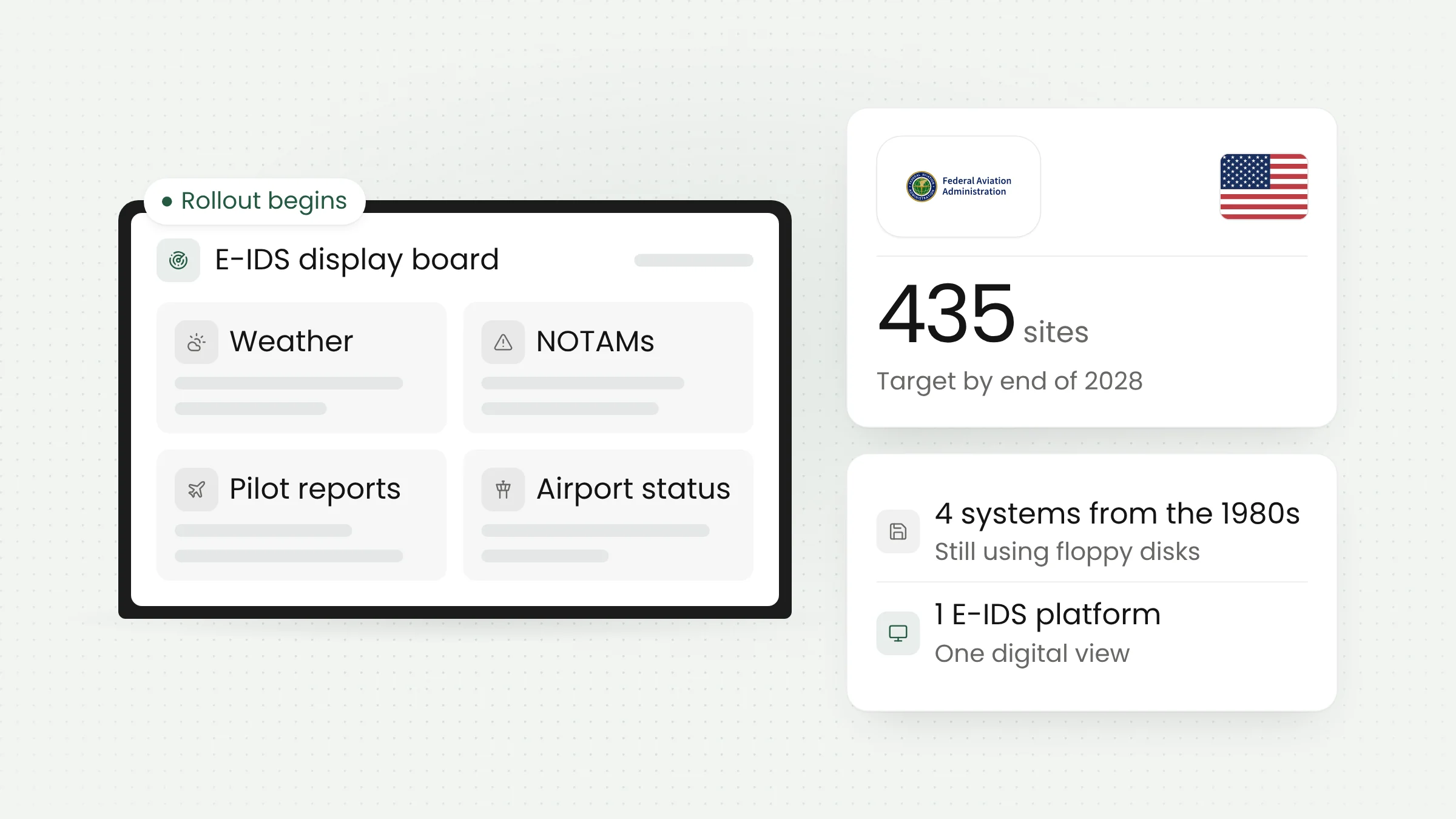
The US Federal Aviation Administration (FAA) has started retiring floppy disks from its air traffic control system. Four information display systems dating back to the 1980s will be replaced by a single platform, the Enterprise Information Display System (E-IDS), starting at five locations and reaching 435 sites by the end of 2028.
The story reads like a joke about obsolete hardware. Behind it sits a problem that many government agencies, including those in Indonesia, know well: old systems that still work, are hard to maintain, and are too important to simply switch off.
E-IDS goes live at the first five locations
US Transportation Secretary Sean P. Duffy announced the move on Thursday, November 5, 2026, in an FAA press release. According to the FAA, the four systems being replaced are in use at more than 400 facilities and hold weather data and other critical information that air traffic controllers depend on.
The first five locations to receive E-IDS are Atlantic City International Airport, Nashville International Airport, Greater Rochester International Airport, and two data processing hubs in Atlanta and Salt Lake City. The FAA then plans to install the system at 435 sites by the end of 2028.
The agency describes E-IDS as a digital display board that puts operational information in one place. That includes notices about equipment issues and disruptions, air traffic conditions, weather impacts, and important advisories. Controllers can see updates and status information without switching between separate systems.
The platform also changes how two types of information are collected and shared. Pilot Reports (PIREPs) are first-hand accounts of weather conditions passed from pilots to controllers. Notices to Airmen (NOTAMs) are official notices about changes to facilities, procedures, or potential hazards. On its E-IDS program page, the FAA lists both among the Top 5 Safety Issues of its Air Traffic Organization, the unit that runs air traffic services.
The four legacy systems being retired
The systems set for retirement are Information Display System 4 (IDS-4), the ASOS Controller Equipment Information Display System (ACE-IDS), the NAS Information Display System (NIDS), and the En Route Information Display System (ERIDS). Each shows a different slice of information, from weather to airport and airspace conditions to flight data.
Ars Technica reports that IDS-4 runs on MS-DOS. Citing a 2018 press release from Systems Atlanta, a vendor that once held a contract to support it, the outlet notes the system has been in constant use since the early 1990s. As PCMag observed, IDS-4 appears to run on desktop PCs fitted with 3.5-inch floppy drives.
The US Government Accountability Office (GAO) gave a more technical account in report GAO-26-107992, published on September 14, 2026. “Legacy display systems rely on obsolete technology (e.g., floppy disks) and interfaces from the 1980s, inefficient data organization, and manual update methods,” the report said. It added that controllers find the systems cumbersome to search, and that running many different systems makes maintenance inefficient.
These displays are used at en route air traffic control centers, terminal radar approach control facilities, and control towers. They show approach charts alongside NOTAMs and weather information, all of which controllers need when communicating with pilots.
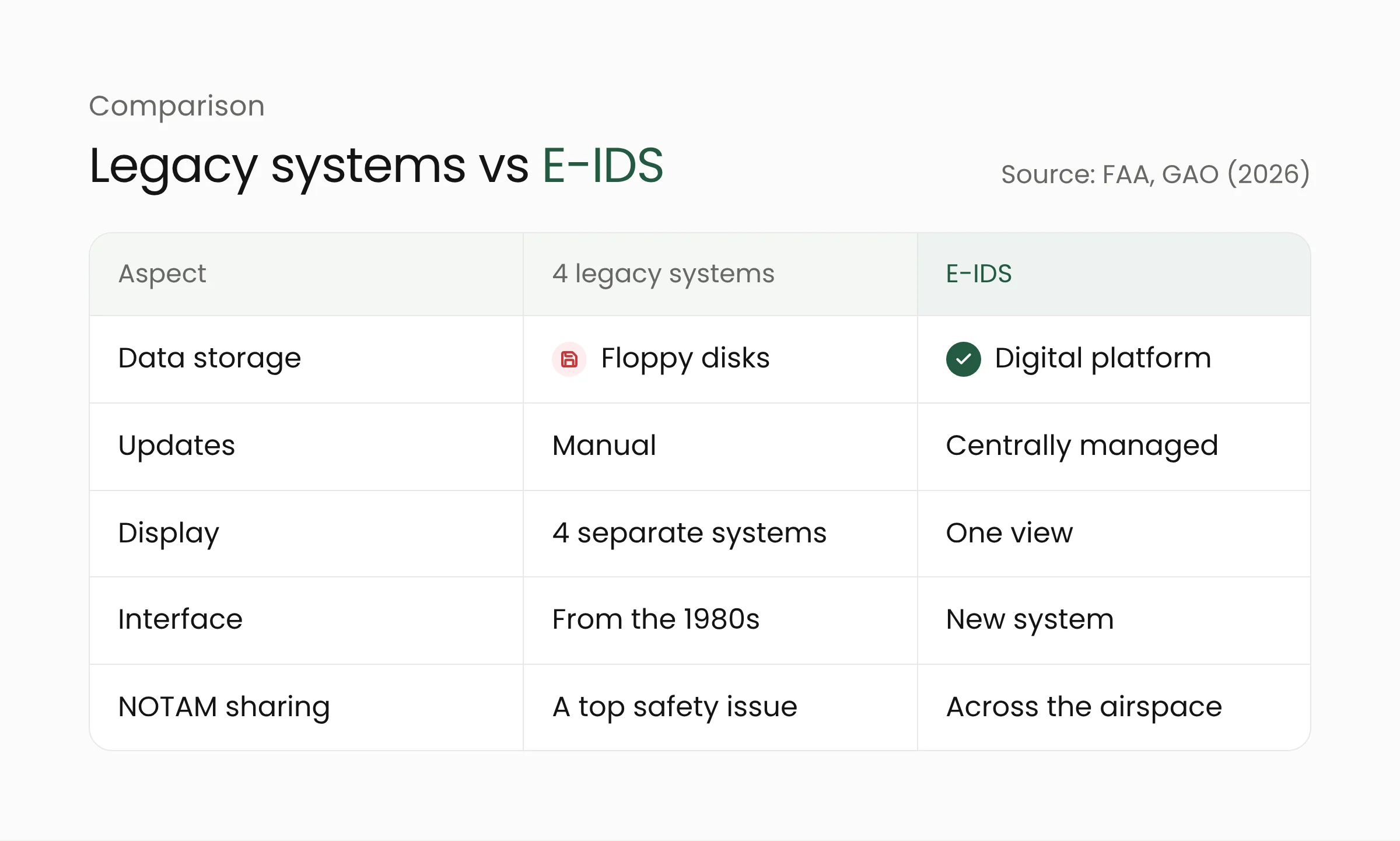
The switch has been a long time coming. Ars Technica notes that the FAA awarded Leidos the contract to design and develop E-IDS in August 2020, which means the system now being installed has been in preparation for more than six years.
Part of a $12.5 billion modernization program
E-IDS is one piece of the Brand New Air Traffic Control System (BNATCS), a modernization effort the Transportation Secretary announced in May 2025. According to the GAO, Congress appropriated $12.5 billion for the program in July 2025, and the FAA is spending most of it on phase 1, which is due to be completed by December 2028.
Phase 1 covers communication, surveillance, weather, and training systems. For phase 2, which involves new automation systems to track aircraft and optimize traffic, the FAA estimates it will need about $10.2 billion, excluding facilities. The agency has not yet set dates for starting or finishing that phase.
Progress figures vary depending on when they were reported. The GAO said that as of May 2026, the FAA had replaced 2,560 of 5,170 old copper wires with fiber optic cables. In its November 5 release, the FAA said 69% of copper wires had been replaced, Surface Awareness Initiative systems had been installed at 143 towers, and 26 towers had moved to electronic flight strips.
The need for an overhaul has been documented for years. In September 2024, the GAO reported that more than 75% of the FAA’s 138 air traffic control systems were unsustainable or potentially unsustainable. Those systems support up to 45,000 flights a day. The Register also recalled the 2023 NOTAM system outage that halted domestic departures nationwide after a file was accidentally deleted.
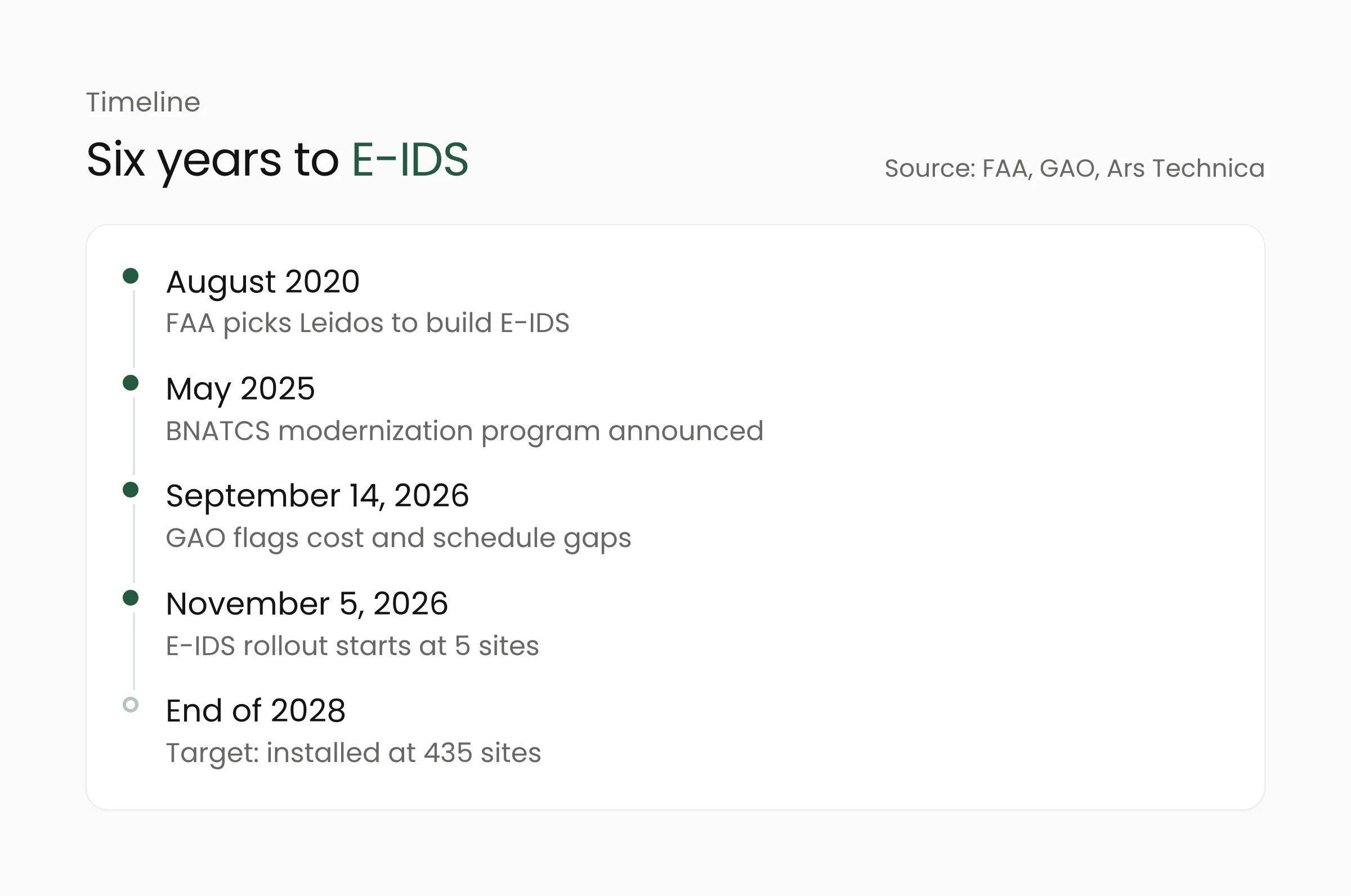
The GAO also raised concerns. It found that the FAA has not developed a reliable lifecycle cost estimate for BNATCS, nor an integrated master schedule for phase 1. Instead, the agency is working from 11,389 individual project schedules that are not integrated, so separate projects are sometimes scheduled at the same sites without being coordinated to limit disruption for controllers.
The GAO recommended that the FAA prioritize both items, and the Department of Transportation partially agreed. Without them, the watchdog warned, the program faces a higher risk of the cost overruns and delays that affected earlier modernization attempts.
What this means for government agencies
Many agencies in Indonesia run applications built years ago: personnel systems at local governments, licensing applications at regional offices, or information systems at regional hospitals. As long as they keep running, such systems rarely get priority. The FAA case shows that a system can still function and yet become a liability as spare parts, skills, and update methods grow scarce.
Several lessons apply directly.
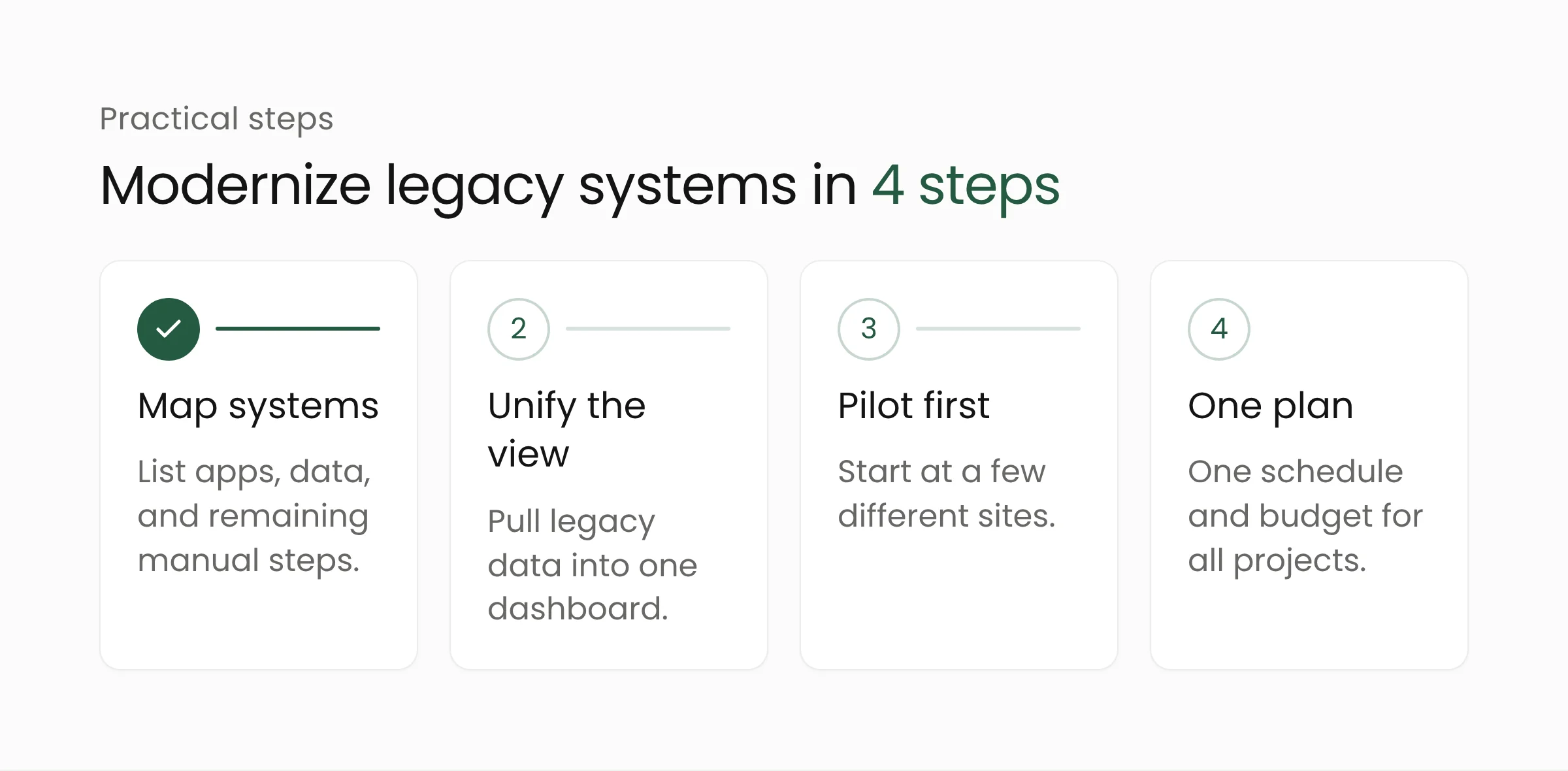
Map your systems and their dependencies. Record every application, who uses it, what data it shows, and which parts still rely on manual steps or hardware that is no longer made. That inventory becomes the basis for deciding what to replace first.
Unify the view before replacing everything. E-IDS does not replace radar or automation systems. Its first job is to bring information from four systems into a single display. For a regional office, a similar approach could be a dashboard that pulls data from several older applications through standard interfaces while the core applications are replaced in stages.
Start with pilot sites. The FAA began at five locations of different types: three airports and two data processing hubs. That pattern allows the system to be tested in real conditions before it reaches hundreds of other sites.
Keep schedules and costs in one plan. The GAO’s finding of 11,389 separate schedules is relevant to any public digitalization program involving multiple vendors and work units. Uncoordinated schedules leave frontline staff absorbing repeated disruption.
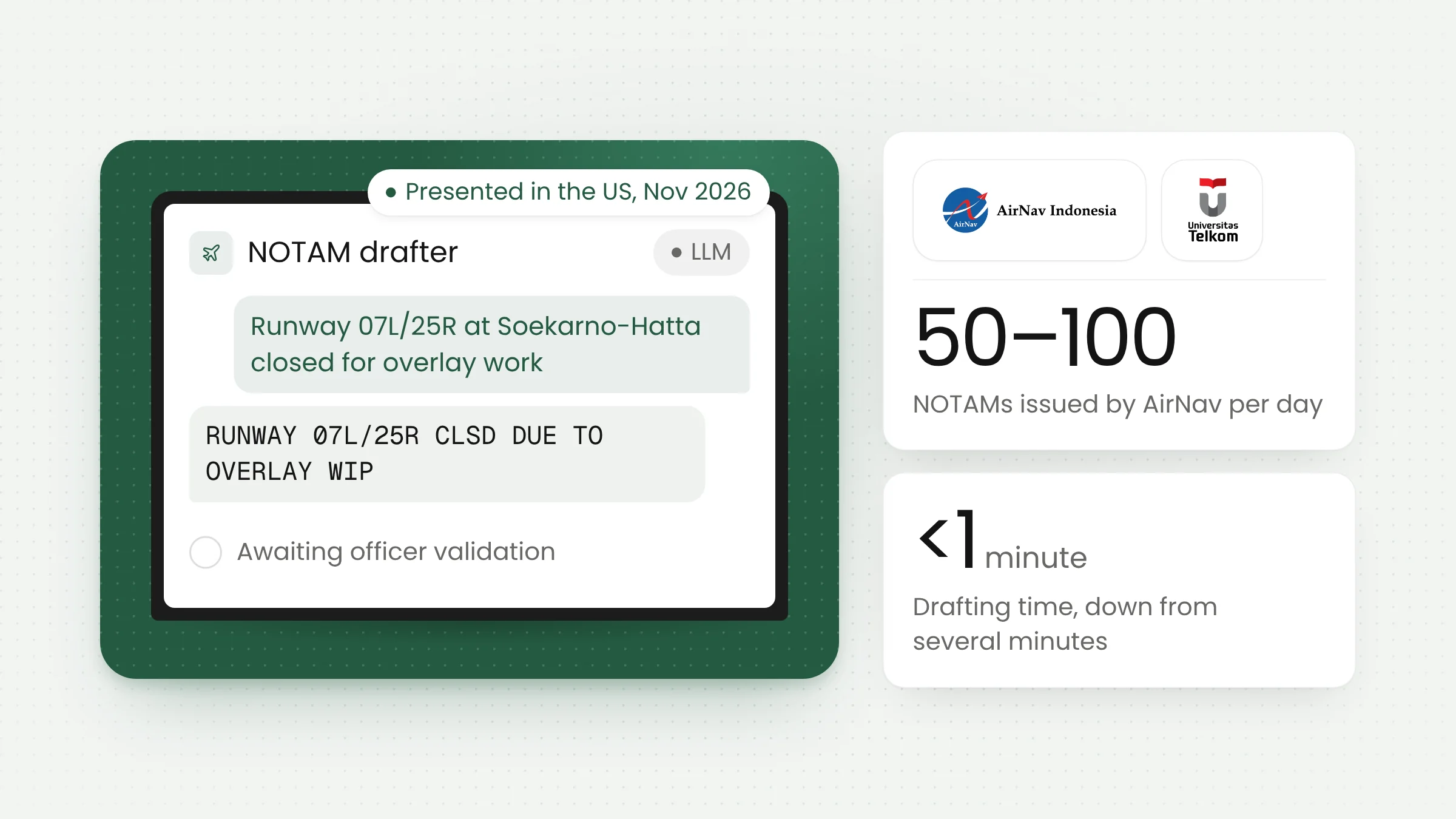
These steps fit with how Indonesia is organizing its own government applications. We have covered how the Ministry of Communication and Digital Affairs (Komdigi) is organizing thousands of government apps through SPLP without merging them into a single application. In Indonesian aviation, AirNav and Telkom University are developing AI-assisted NOTAM drafting, another sign that flight information systems are being updated.
For agencies that are mapping their legacy systems and planning replacements, the FAA’s experience is a useful starting point when planning digital government solutions.
Frequently asked questions
Does the FAA still use floppy disks today?
Yes, at some facilities. E-IDS installations have only begun at five locations, and the FAA aims to finish 435 sites by the end of 2028. Until then, the legacy systems remain in use at facilities that have not yet received E-IDS.
What is E-IDS?
E-IDS is an information display platform for air traffic controllers. It combines weather information, NOTAMs, pilot reports, equipment status, and traffic conditions into one digital view, replacing four separate legacy systems.
Why did the old systems last so long?
Air traffic control systems have to run every day, so they must be replaced without disrupting operations. The GAO notes that the FAA has been trying to modernize its systems since the 1980s with limited results, and that earlier efforts were marked by cost overruns and delays.
Closing thoughts
The FAA’s floppy disk retirement shows that modernizing public systems is rarely a single big launch. The work starts with an inventory, a unified view, and staged rollouts, and is then tested by independent oversight such as the GAO. Agencies that want to begin can start with a list of the systems that are hardest to maintain today and build a realistic replacement plan with their technical teams.
Sources
- FAA: Trump’s Transportation Secretary Sean P. Duffy Begins Retiring Decades Old Floppy Disks from Air Traffic Control (November 5, 2026)
- FAA: Enterprise Information Display System (E-IDS) (updated October 28, 2026)
- GAO-26-107992: Air Traffic Control Systems, Ambitious New Modernization Effort Needs to Improve Cost and Schedule Planning (September 14, 2026)
- Ars Technica: FAA to finally ditch floppy disks in what it calls “historic” tech upgrade (November 6, 2026)
- The Register: US air traffic control enters the 21st century, starts to abandon floppy disks (November 6, 2026)