Blog Artificial Intelligence
How Semarang's AISSA Uses AI and CCTV to Monitor Waste
On this page· 7 sections
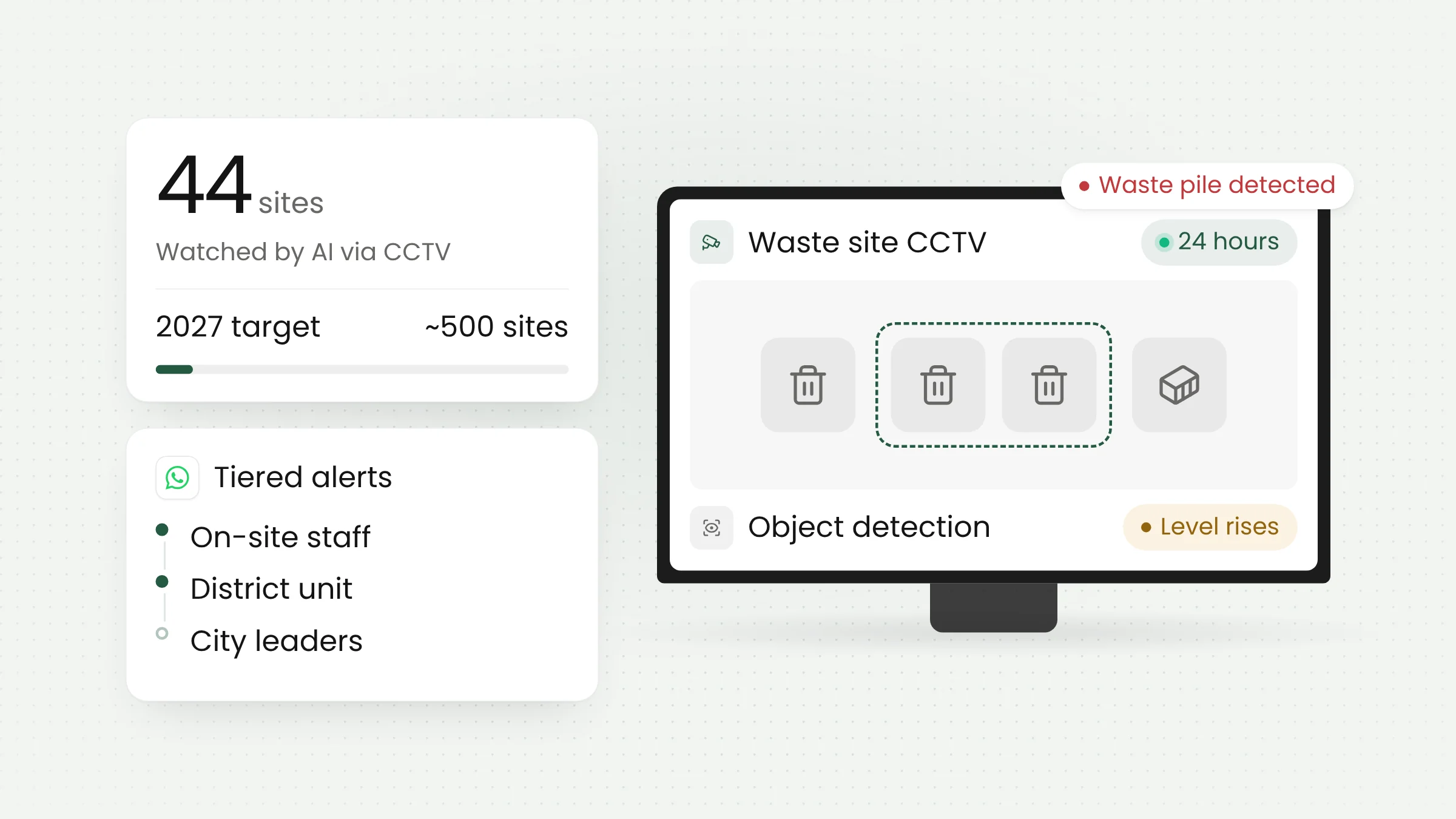
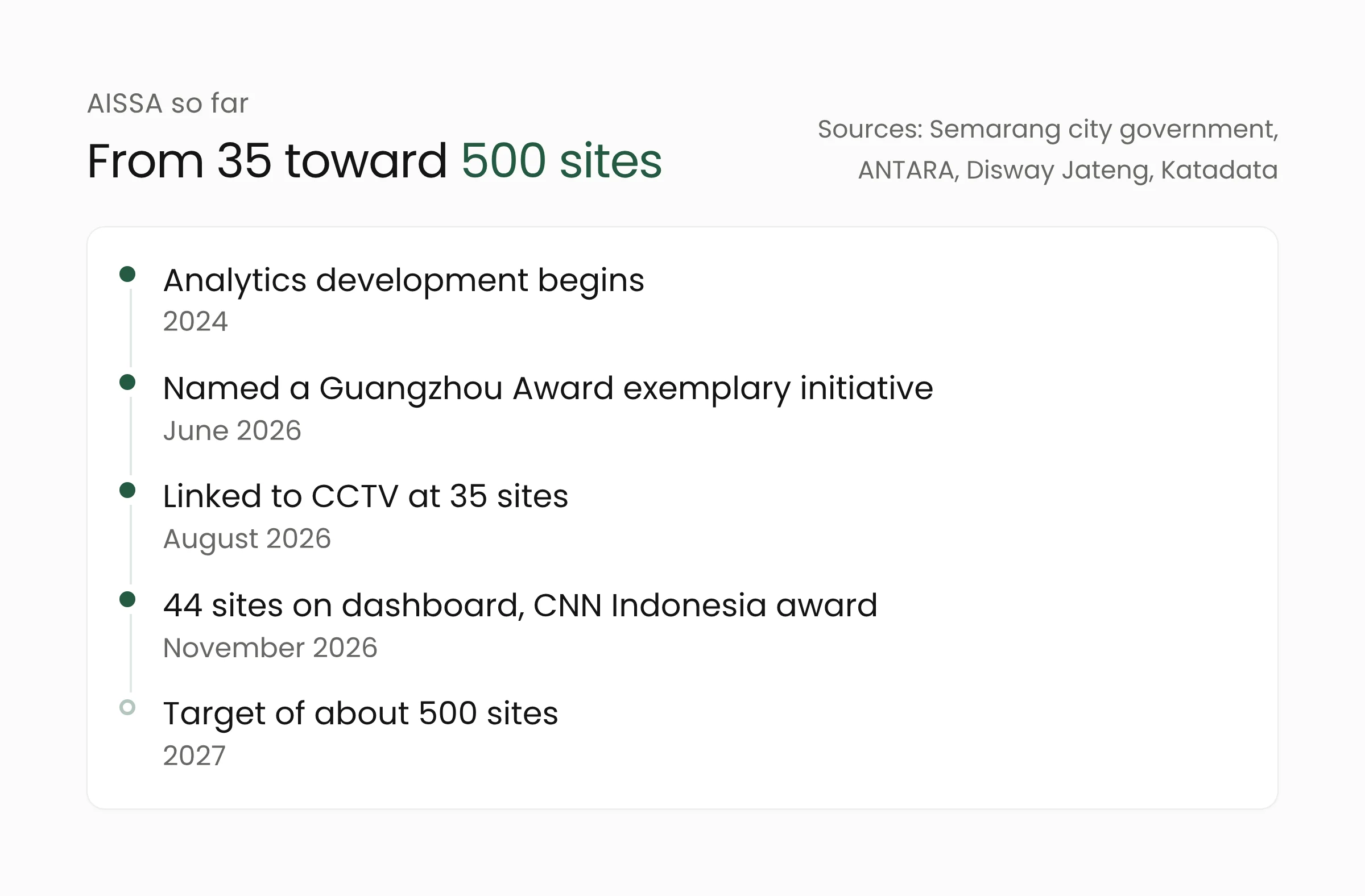
The city government of Semarang, Indonesia, uses an AI waste monitoring system called AISSA (Artificial Intelligence Solusi Sampah) to read footage from CCTV cameras already installed at temporary waste collection points, known locally as TPS. AISSA won an award at the CNN Indonesia Awards 2026 on November 6 and now covers 44 sites, according to its official dashboard.
Two awards for AISSA this year
On the evening of Friday, November 6, 2026, the Semarang city government received the Excellence in Smart Waste Management Innovation award at the CNN Indonesia Awards 2026 in Jakarta. According to CNN Indonesia, Mayor Agustina Wilujeng Pramestuti accepted the award in person.
International recognition came first. In late June 2026, AISSA was named one of 30 Exemplary Initiatives in the seventh Guangzhou International Award for Urban Innovation. The award is organized by the City of Guangzhou together with two global networks of local governments, UCLG and Metropolis. ANTARA reported that this cycle drew 381 entries from 248 cities in 60 countries, with results announced during the UCLG World Congress in Tangier, Morocco.
The problem AISSA targets is large. Semarang produces about 1,200 tonnes of waste a day, Agustina told Katadata. Cleanliness at collection points has long depended on manual reports from field staff. The official AISSA page notes that those reports often arrive late and vary in quality from one district to another.
How AISSA reads the city’s cameras
AISSA connects to Semarang’s CCTV network, which runs around the clock, so no new sensors are needed on site. The footage is processed with computer vision, the branch of AI that lets software recognize objects in images and video. An object detection model flags piles of waste and estimates how much has built up at each collection point.
Detection results feed three outputs: a cleanliness level, daily trends, and a ranking of collection points. The city’s waste agency uses them to set priorities and pickup schedules. The escalation rule is straightforward. Every monitoring cycle that still finds waste raises that site’s warning level.
When a level rises, AISSA sends tiered WhatsApp alerts. The first message goes to cleaning staff at the site, then to the district management unit, and finally to senior officials if the waste is still there. Each message includes the site name, warning level, number of containers, pickup schedule, a detection photo, and a follow-up link for staff to report what they did.
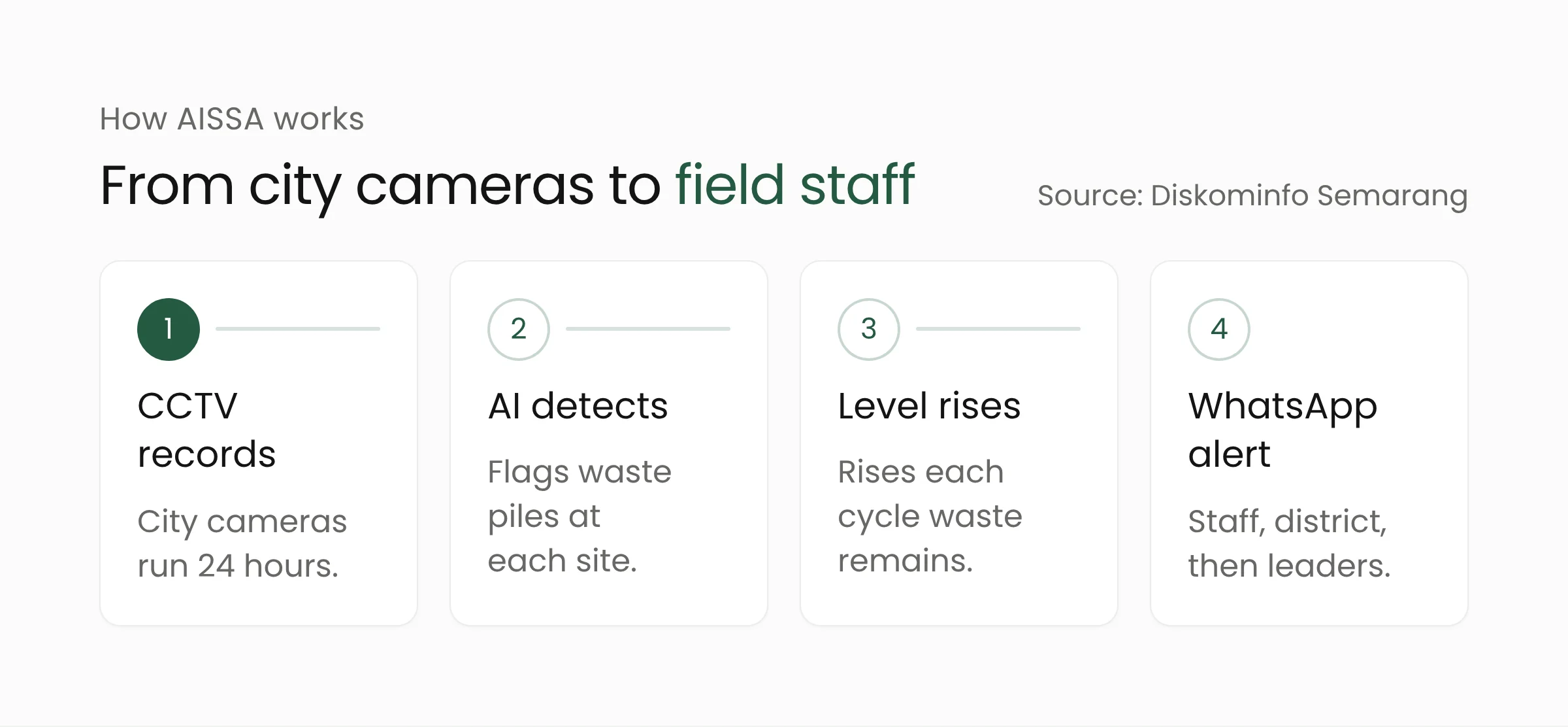
Speaking to reporters on August 31, 2026, Agustina described a more detailed chain. The first alert goes to the subdistrict head (camat). If nobody responds within 30 minutes, it moves up to the division head and then to the head of the agency. After roughly two to three hours without action, it reaches the mayor.
The official page credits Satrio Jati Wicaksono as lead designer and developer of AISSA’s analytics features since 2024. The page is published by Semarang’s communications, informatics, statistics, and encryption agency (Diskominfo). The work covers the detection architecture, the level system, the dashboard, per-site pages, pickup schedule integration, and WhatsApp notifications. The page does not name the AI model in use.
Coverage grows from 35 toward 500 sites
In early August 2026, Agustina said AISSA was linked to CCTV at 35 collection points, Disway Jateng reported. The public dashboard on the city’s PantauSemar portal showed 44 monitored sites when accessed on November 8, 2026. At that point, 42 sites were at level 0, one was at level 1, and one was at level 2 or higher.
The same dashboard ranks sites over the past five days. TPS Watulawang logged the most detections, followed by TPS Pompa Barito and TPS Pasar Kagok. Data like this shows which locations most often need extra pickups.
The target is much larger. According to Katadata, the city aims to deploy AISSA at about 500 collection points by 2027. Because AISSA relies on existing cameras, each new site still needs a camera pointed at it.
AI as a tool for field staff
Agustina has repeatedly said that AI in government needs human oversight. At the Semarang Marketing Festival 2026 on August 4, she said, “AI yang kita pakai ini merupakan sarana dan alat,” which translates as “The AI we use is a means and a tool.” According to Disway Jateng, she added that AI output depends on the quality of its input data. Operating parameters and data entry should be reviewed regularly, and strategic decisions should stay with people.
That view matches how AISSA is built. The system detects and alerts, while collection is still done by staff. The follow-up link in each alert records how staff responded, so officials can see which sites have been cleared and which are still waiting.
Camera-based detection has limits. A camera’s view can be blocked by vehicles, images are less clear at night, and cameras can go offline during power or network outages. Official sources have not disclosed AISSA’s detection accuracy. Accuracy and average response times will matter when the system is judged at hundreds of sites.
What this means for local governments
Many Indonesian cities and regencies already run CCTV for traffic or security. AISSA shows that those cameras can support other services without new hardware in the field. Agencies considering a similar approach should prepare a few things early.
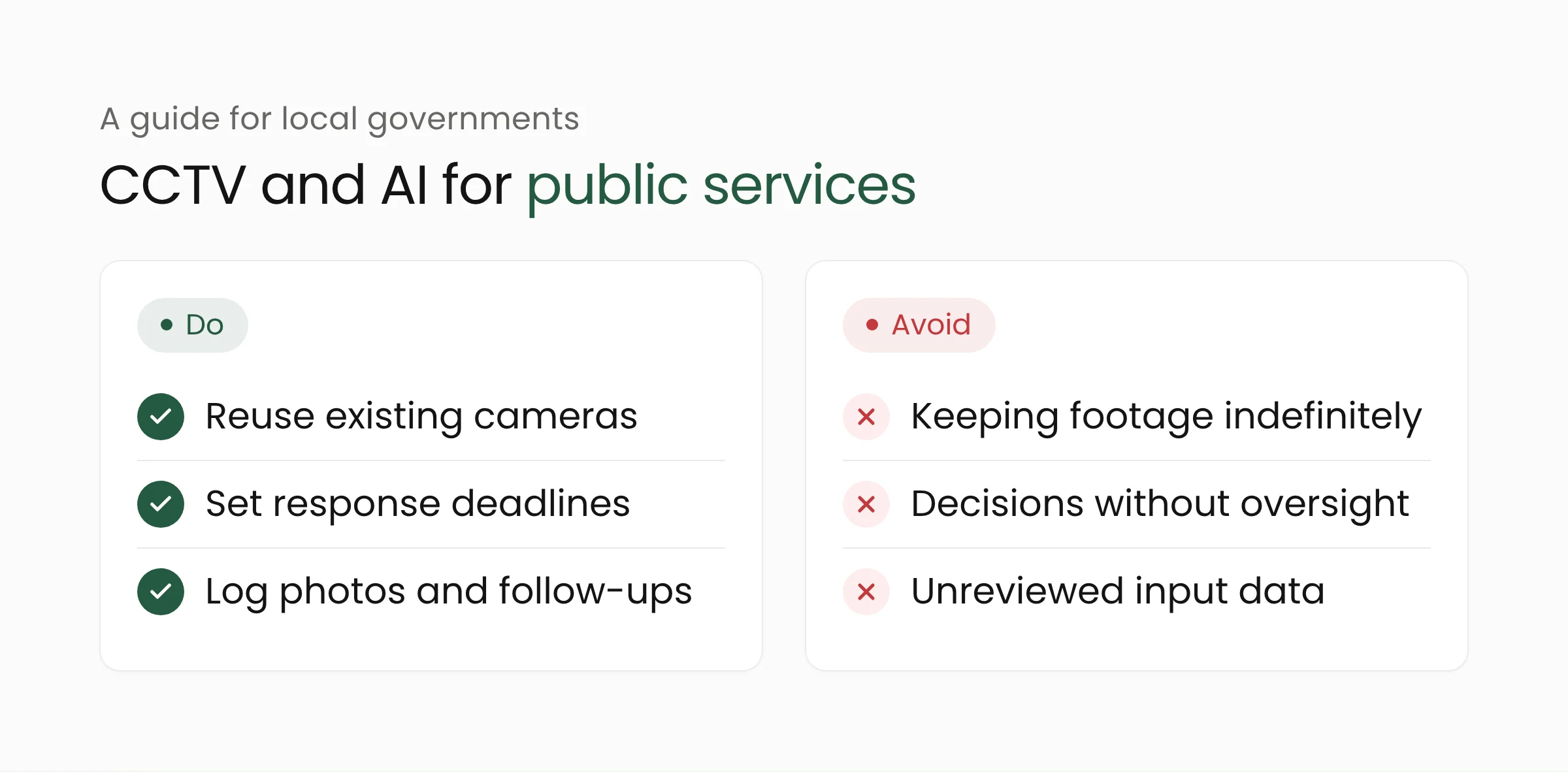
- Map cameras that already face service points. A list of waste sites, markets, or drainage channels already visible on CCTV determines how quickly a pilot can start.
- Set escalation tiers and response deadlines. Automated alerts work when it is clear who receives them, how long they have to respond, and when a message moves up the chain.
- Record every follow-up. Photo evidence and report links make response performance auditable, so the dashboard reflects real work on the ground.
- Limit footage use to its purpose. Cameras in public spaces also record passers-by. Restrict analysis to relevant objects, set retention periods, and define who may access footage, in line with Indonesia’s Personal Data Protection Law (Undang-Undang Pelindungan Data Pribadi).
- Publish success measures. Detection accuracy, average response time, and resident complaints before and after rollout help decide whether expansion is worthwhile.
The same pattern can address other problems visible on camera, such as flooded drains or queues at service offices. Detection data becomes more useful when other agency systems can consume it, in line with Indonesia’s push to connect government apps through SPLP. In digital government projects, Merakit helps agencies map field data, design escalation flows, and build monitoring dashboards. The detection layer can be developed through Merakit’s artificial intelligence services, using computer vision models trained on images from an agency’s own cameras.
Frequently asked questions
Does AISSA install new cameras at waste sites?
According to the official Diskominfo Semarang page, AISSA uses existing camera infrastructure and requires no new sensors. Expanding to other sites still requires CCTV coverage of those locations.
Who receives AISSA’s alerts?
Alerts go out over WhatsApp in tiers: cleaning staff at the site, the district management unit, and then senior officials if the waste remains. Mayor Agustina said the chain starts with the subdistrict head and can reach the mayor after two to three hours without a response.
Can residents see AISSA’s data?
AISSA’s analytics dashboard is publicly available on the city’s PantauSemar portal. It shows the number of monitored sites, the spread of warning levels, recent detection photos, and the sites with the most and fewest detections over the past five days.
Closing
AISSA shows that AI in government can start from assets a city already owns and problems residents see every day. The next test is scaling from dozens to hundreds of sites, along with being open about accuracy and response times. If your agency is weighing how to put CCTV or field data to work for public services, the Merakit team is ready to talk.
Sources
- CNN Indonesia: Kembangkan AI untuk Kelola Sampah, Pemkot Semarang Raih Penghargaan (November 6, 2026)
- Diskominfo Semarang: About AISSA, background and developer of CCTV waste analytics (accessed November 8, 2026)
- PantauSemar: CCTV waste analytics dashboard (accessed November 8, 2026)
- Katadata: Semarang Pakai AI Pantau Tumpukan Sampah, Sasar 500 TPS hingga 2027 (August 31, 2026)
- Disway Jateng: Agustina Ungkap Strategi AI Pemkot Semarang, AISSA Dipasang di 35 TPS untuk Awasi Sampah (August 5, 2026)
- ANTARA: Inovasi AI pengelolaan Semarang raih Guangzhou Award 2026 (July 7, 2026)