Blog Cloud Computing
Google Cloud and Azure Surge: What It Means for Cloud Users
On this page· 7 sections
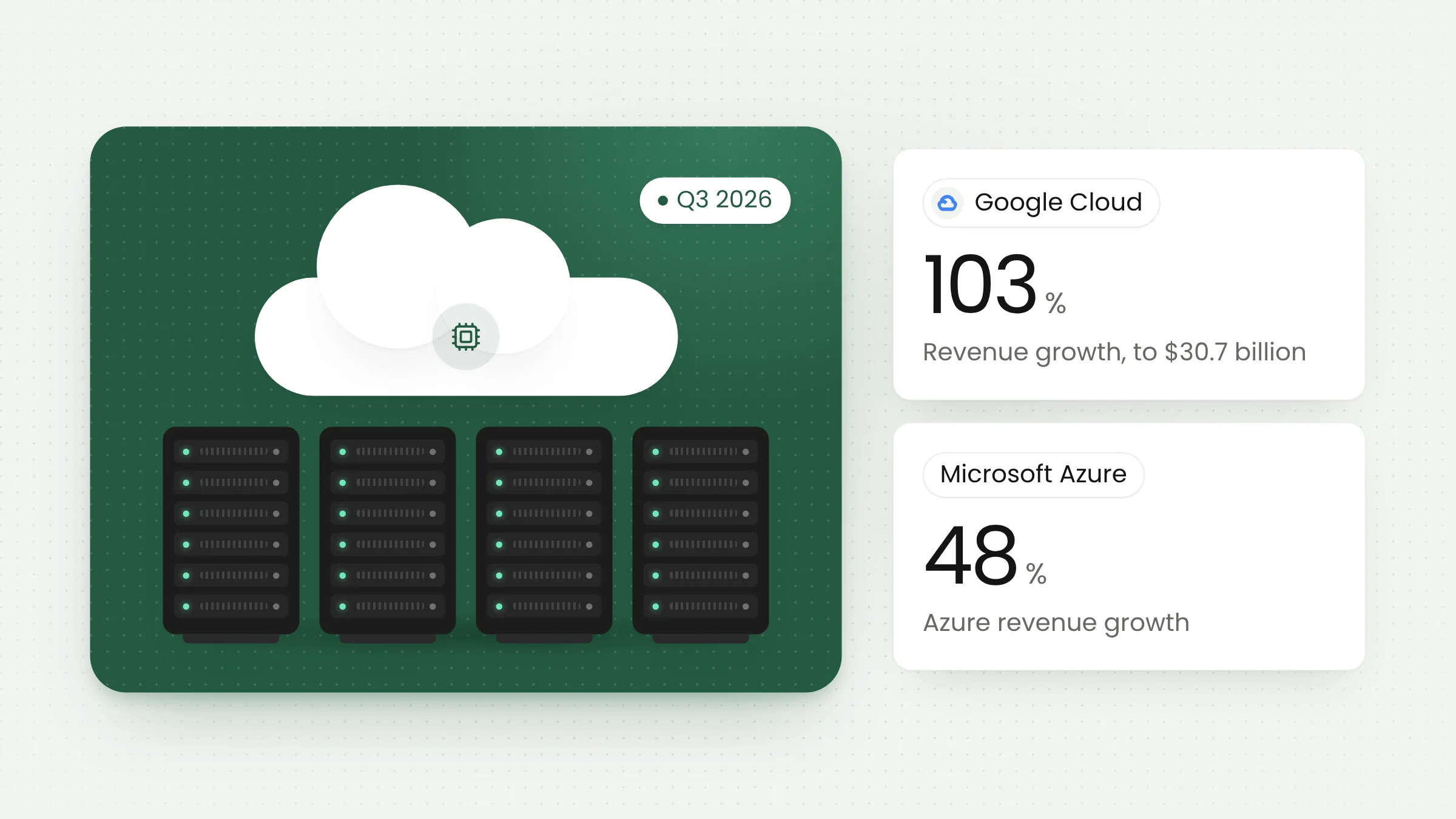
Google Cloud revenue rose 103% to $30.7 billion in the third quarter of 2026, while Microsoft’s Azure revenue grew 48%. Both reports, released on October 28, 2026, show that demand for AI computing in the cloud is still accelerating. For companies that run on cloud services, the numbers offer early signals about capacity, contracts, and costs.
Third-quarter numbers from Alphabet and Microsoft
Alphabet, Google’s parent company, reported revenue of $127.6 billion for the quarter ended September 30, 2026, up 25% from a year earlier. According to Alphabet’s earnings release, Google Cloud contributed $30.7 billion, more than double the same quarter last year.
Google Cloud’s operating income climbed to $11.1 billion, up from about $3.6 billion a year earlier. Alphabet said sales of TPU systems, the AI chips Google designs and offers to customers, were a meaningful contributor to that growth.
Alphabet CEO Sundar Pichai explained the jump in the same release: “Google Cloud revenues grew 103%, powered by huge demand for our AI infrastructure and AI solutions.”
The release also states that Google Cloud product revenue comes primarily from the sale of TPU systems. For customers, that means AI accelerators in the cloud are no longer limited to Nvidia GPUs. Models built to run on more than one type of accelerator give buyers more room to negotiate when one type is hard to get.
On the same day, Microsoft reported results for the first quarter of its 2027 fiscal year, which also ended on September 30, 2026. Microsoft’s release showed revenue of $92.3 billion, up 19%. Microsoft Cloud revenue reached $63.9 billion, up 30%, and Azure revenue grew 48%.
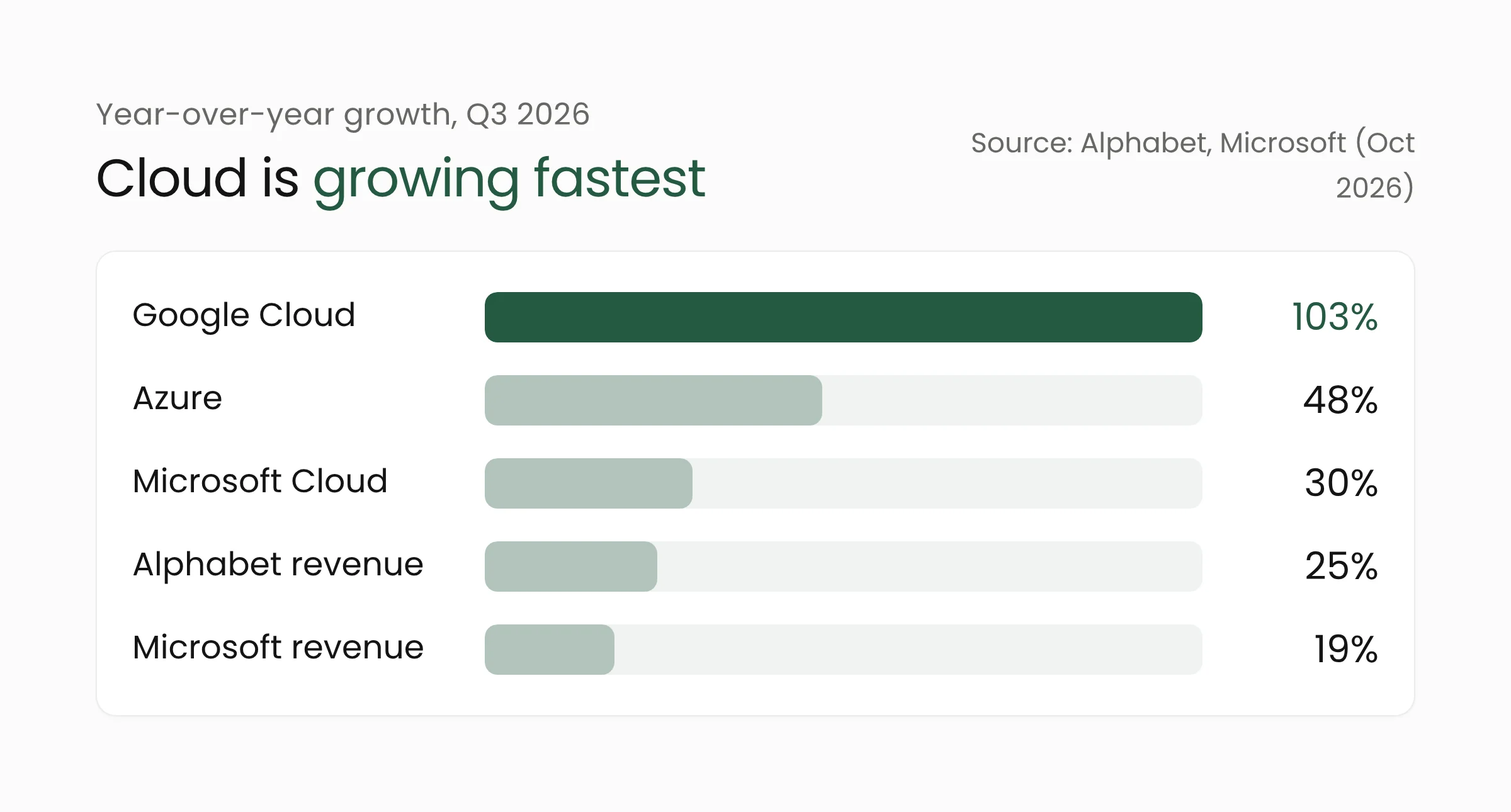
Cloud growth far outpaced each company’s overall growth. Cloud has become the main engine for both businesses, and much of the demand comes from customers that train and run AI models.
Data center spending keeps climbing
Growth at this pace requires buildings, power, servers, and chips at enormous scale. Alphabet spent $51.4 billion on property and equipment in the third quarter, up from about $24 billion a year earlier.
According to Fortune, Alphabet kept its 2026 capital spending forecast at about $200 billion and expects the figure to rise to as much as $300 billion in 2027. Chief Financial Officer Anat Ashkenazi said more details on next year’s plans would come with fourth-quarter results. The spending pushed Alphabet’s free cash flow to negative $9.1 billion for the quarter, and its shares fell more than 11% in after-hours trading.
Microsoft’s capital spending figure depends on how it is counted. WindowsForum put capital expenditure at $45.2 billion, while 24/7 Wall St. reported $39.4 billion spent on property and equipment, more than double the prior year. The two definitions are not directly comparable, but both point to a steep rise in spending.
Capacity remains the constraint
The reports also show that cloud providers still cannot add capacity as fast as customers want it. According to WindowsForum’s summary of the analyst call, Microsoft CFO Amy Hood said some third-party capacity deliveries arrived late, which kept spending below expectations for the quarter. Microsoft also guided for Azure growth of 49% to 50% in the next quarter.
24/7 Wall St. reported that Microsoft’s commercial remaining performance obligation, the value of signed contracts not yet recognized as revenue, rose 73% to $677 billion. Those commitments stretch over coming years, so a share of the new capacity is likely committed before it comes online.
The pattern matches the dark GPU problem at Amazon Web Services, where AI server racks were delivered before the power to run them was ready. Large cloud providers face a similar limit. Chips can be ordered within months, while new data center buildings and grid connections usually take longer.
Cloud regions in Indonesia
For users in Indonesia, the key question is how much of this global capacity race reaches the local market. Both providers already operate local regions. Google opened its Jakarta region (asia-southeast2) in June 2020 with three zones. Microsoft launched its Indonesia Central region on May 27, 2025, with three availability zones, as part of a $1.7 billion investment commitment, according to Katadata.
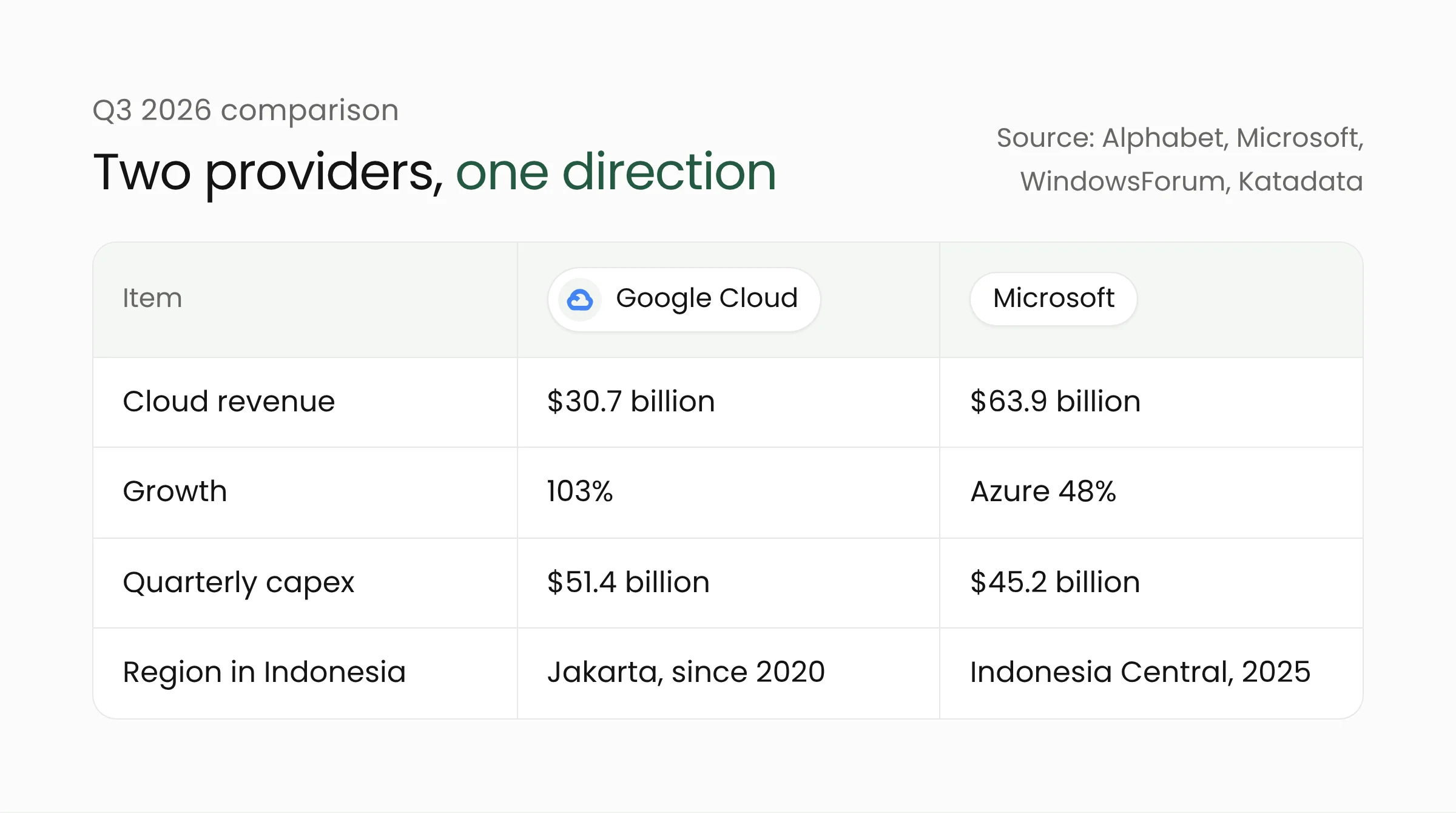
Neither company breaks out capacity by country, so the effect on the Jakarta and Indonesia Central regions cannot be confirmed from these reports. The direction of investment is clear, though. Most of the money is going into AI infrastructure, and GPUs and other AI accelerators are the most contested resources.
What this means for companies using the cloud
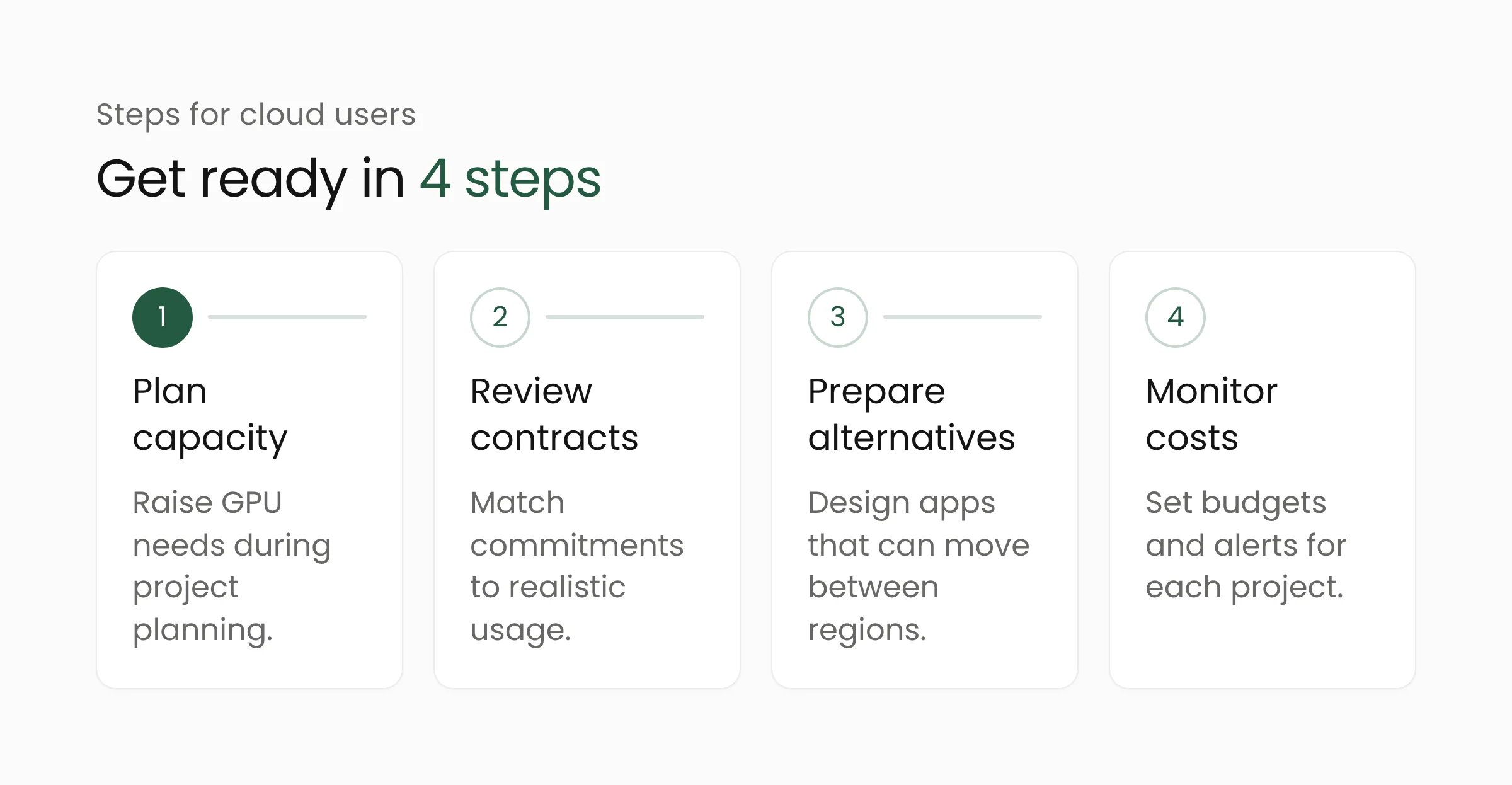
Companies running everyday workloads, such as websites, point-of-sale systems, or internal apps, are unlikely to feel a direct change in the near term. The impact is larger for companies and startups that plan to run their own AI models or add capacity at scale. A few steps are worth considering.
First, plan capacity early. If an AI project needs GPUs in a specific region, raise that requirement with the provider or cloud partner during planning, including any capacity reservation options each provider offers.
Second, review contracts and usage commitments. Long-term commitments usually come with discounts, but they also lock you in. Make sure commitments match realistic usage forecasts rather than the most optimistic targets.
Third, prepare alternatives. Applications designed to run in more than one region or with more than one provider hold up better during capacity shortages and outages. The trade-offs between local and global providers are covered in our piece on local and global cloud for startups and SMEs.
Data covered by personal data protection rules or sector regulators should be mapped from the start. That data is best kept in a domestic region, while less sensitive workloads, such as model training on anonymized data, can move to another region when local capacity is tight.
Fourth, monitor costs regularly. AI cloud bills can rise quickly because GPU usage is billed by the hour. A cost dashboard with per-project budgets and alerts helps teams catch waste before the monthly invoice arrives.
Through its cloud computing services, Merakit helps companies design architecture, estimate capacity, and control cloud costs, including for AI workloads.
Frequently asked questions
Will cloud prices go up?
Alphabet and Microsoft did not announce price changes in these reports. Strong demand may affect availability and discounts for GPU services, but neither provider has confirmed that.
Are the Jakarta and Indonesia Central regions short on capacity?
The earnings reports do not cover capacity by region. The most reliable way to find out is to check availability of the machine types you need in the provider’s console or to ask the provider’s sales team directly.
Why did Alphabet’s stock fall when cloud revenue rose?
According to Fortune, investors focused on very large capital spending, negative free cash flow, and slower Google Search revenue growth of 12%. Strong cloud growth did not offset concerns about the cost of building AI infrastructure.
Closing thoughts
The third-quarter 2026 results show the largest cloud providers growing fast on AI demand while racing to build capacity that still falls short. For companies in Indonesia, now is a good time to put capacity plans, contracts, and cloud costs in order before AI needs grow. The Merakit team is ready to help with the first steps.
Sources
- Alphabet: Announces Third Quarter 2026 Results, Form 8-K Exhibit 99.1 (October 28, 2026)
- Microsoft: Microsoft announces first quarter results (October 28, 2026)
- Fortune: Alphabet’s Google Cloud revenue doubles to $31 billion as cash flow stays deep red (October 28, 2026)
- WindowsForum: Microsoft Azure Revenue Jumps 48% as AI Spending Forecast Falls to $170 Billion (October 28, 2026)
- 24/7 Wall St.: Microsoft Q1 2027 earnings (October 28, 2026)
- Google Cloud Blog: New Google Cloud region in Jakarta is now open (June 24, 2020)
- Katadata: Microsoft inaugurates its first data center cluster in Indonesia (May 27, 2025)