Blog Gadgets
Google Pixel Tag on Sale: How the Find Hub Tracker Works
On this page· 7 sections
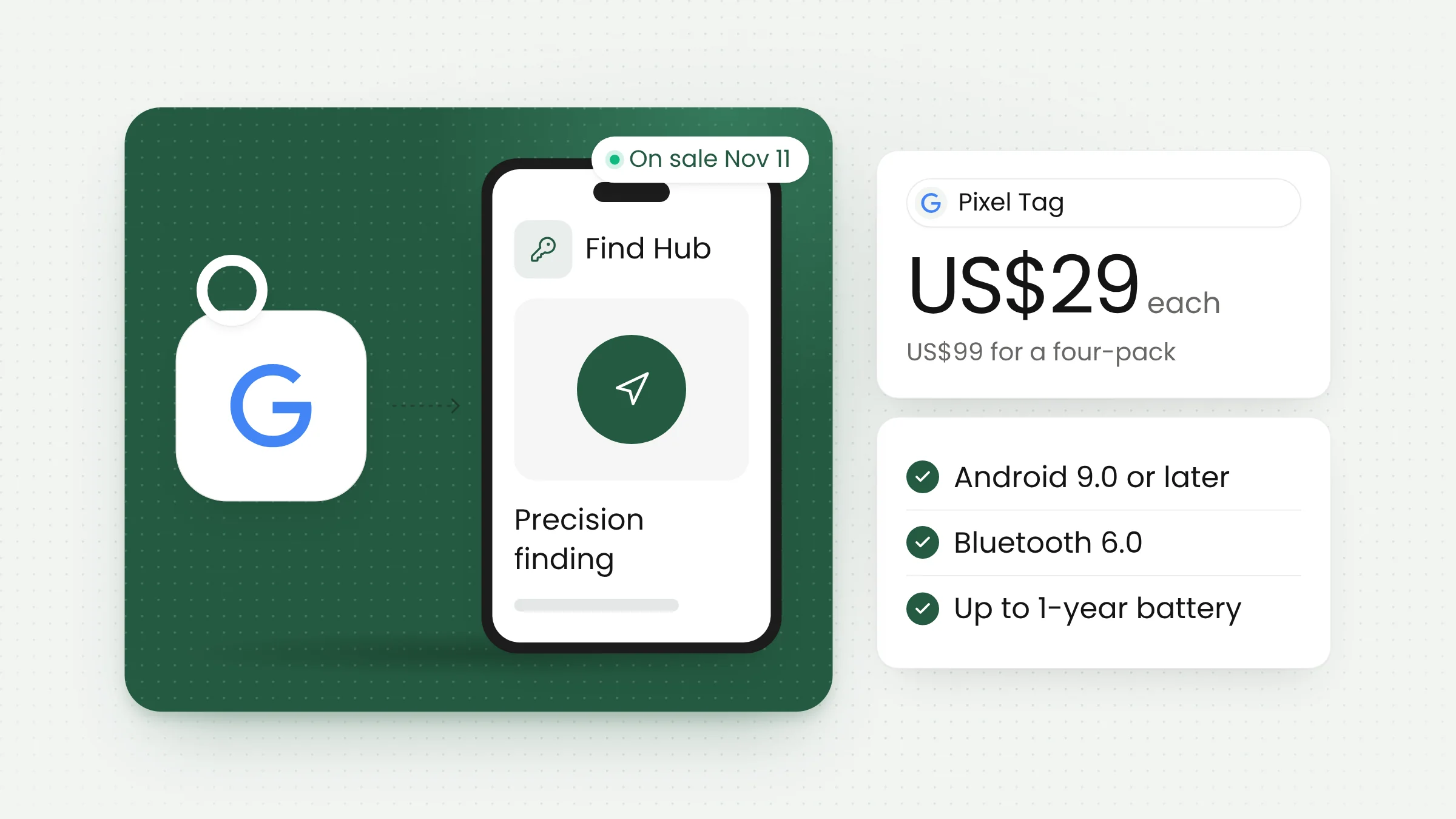
Google started selling the Pixel Tag on November 11, 2026, through the Google Store at $29 for one or $99 for a four-pack. The Pixel Tag is Google’s first item tracker. The small device attaches to keys, bags or luggage, and its location appears in the Find Hub app on Android phones.
Google first showed the Pixel Tag on August 12, 2026, alongside the Pixel 11 lineup, but it only became available to buy this week. The launch matters in markets like Indonesia, where Android is the phone platform most people carry, because the tag is built specifically for Google’s own Find Hub network.
Pixel Tag price and specifications
According to Google’s official announcement, the Pixel Tag sells on the Google Store for $29 for a single unit and $99 for a four-pack. Android Authority notes that the four-pack saves $17 compared with buying four separately.
The tag measures 1.8 by 1.1 inches and is 5.4 mm thick, according to 9to5Google’s hands-on from the launch event. Google says the body uses stainless steel to resist flexing and cracking. The tag is also rated IP67 for dust and water resistance. Google cautions that this resistance can wear down over time and that the device is not built to survive drops.
Other features listed by Google and technology outlets:
- Battery: Google claims up to one year of battery life, based on internal testing with preproduction units. The battery is a CR2032 coin cell that owners can replace themselves.
- Setup: pull the battery tab and bring the tag close to an Android phone. Pairing uses Fast Pair.
- Sharing: a single tag can be shared with up to 10 people.
- Physical button: pressing the button on the tag rings the owner’s phone, which helps when the phone is lost somewhere at home.
- Other devices: the tag can be located and rung from a Pixel Watch, the Find Hub app or a web browser. Pixel Buds owners can also ask Gemini to ring it.
How the Find Hub network works
According to 9to5Google, the Pixel Tag contains an accelerometer, a speaker, Bluetooth and UWB. It has no GPS, so its location comes from other Android devices that happen to be nearby.
While the tag is within Bluetooth range of the owner’s phone, the owner can make it play a sound from the Find Hub app. When an item is left far behind, Find Hub relies on a crowdsourced network that Google says includes more than one billion Android devices. Passing phones pick up the tag’s signal and relay an approximate location to Google. The owner then sees the item’s last known position on a map.
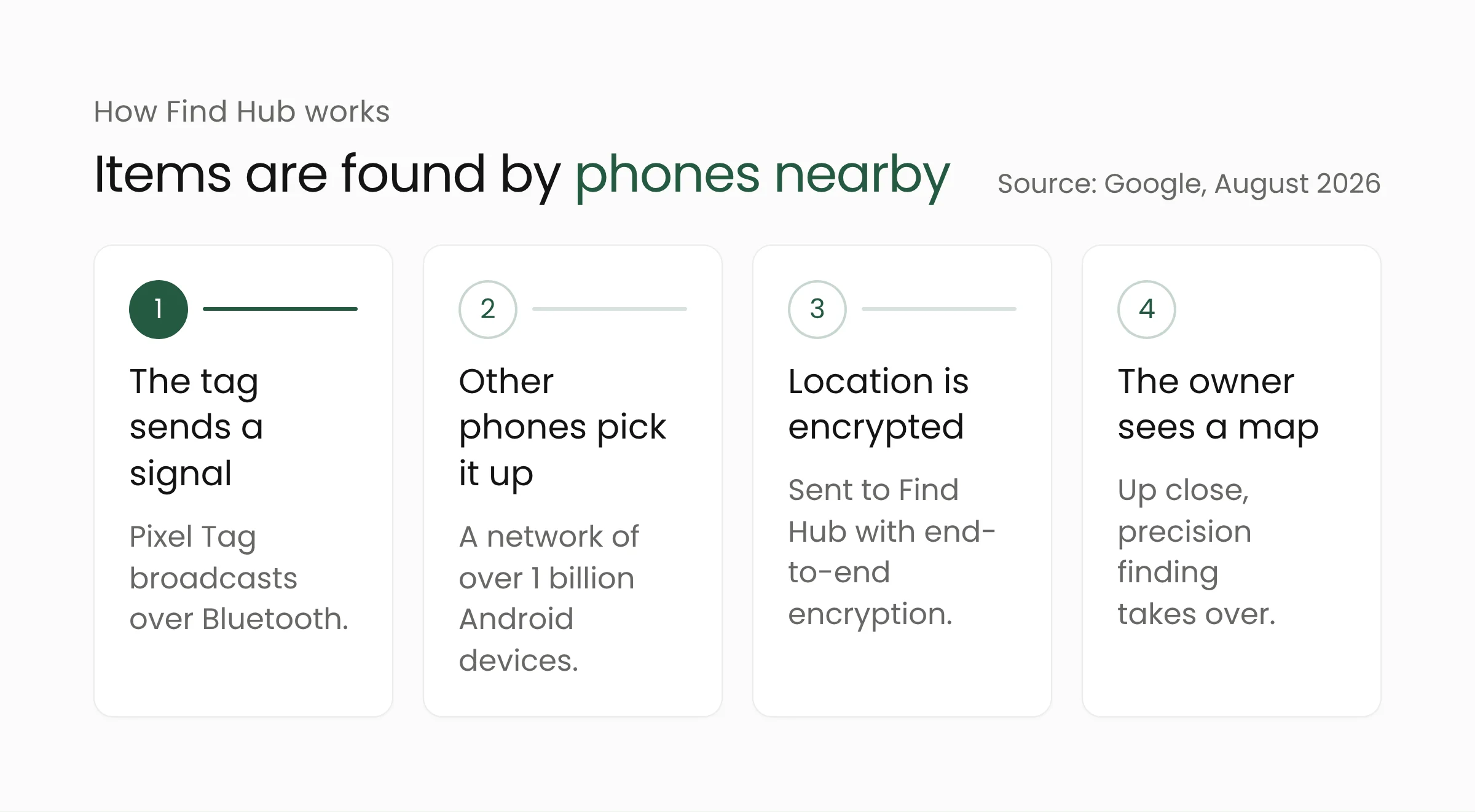
Google states that location information in the network is end-to-end encrypted. In practice, the person whose phone relays the signal does not learn whose item it found. Owners can also turn on Left Behind alerts, which warn them when an item is left behind. Google notes that the timing and reliability of these alerts depend on connectivity and device settings.
Precision finding with UWB and Channel Sounding
The map only shows an approximate location. At close range, the Pixel Tag offers precision finding, which displays distance and direction cues on the phone screen. The feature uses two radio technologies: Ultra-Wideband (UWB) and Bluetooth Channel Sounding. According to 9to5Google, these visual cues work within 50 meters.
UWB is a short-range radio technology that can measure distance and direction accurately. Channel Sounding is a Bluetooth feature developed by the Bluetooth SIG, the consortium that manages the Bluetooth standard. It combines two measurement methods. The first reads how the signal’s phase changes across several frequencies. The second times data packets on a round trip and uses that as a cross-check.
The Bluetooth SIG says Channel Sounding was designed for centimeter-level accuracy, meaning within roughly tens of centimeters. The round-trip timing also guards against relay attacks, in which someone fakes proximity by forwarding a signal from another place. For that reason, the Bluetooth SIG also positions the technology for digital keys on cars, doors and gates.
Protection against covert tracking
Small trackers can be misused to follow people. Google says Android phones will alert their owners when they detect an unknown tag traveling with them. The alert also explains how to ring that tag so it is easier to find.
Phone requirements and availability
The Pixel Tag requires an Android phone running Android 9.0 or later with Bluetooth 6.0 or higher. Android Authority points out that the Bluetooth 6.0 requirement rules out many budget phones. Precision finding is also limited to phones with a UWB chip, which not every Android phone has.
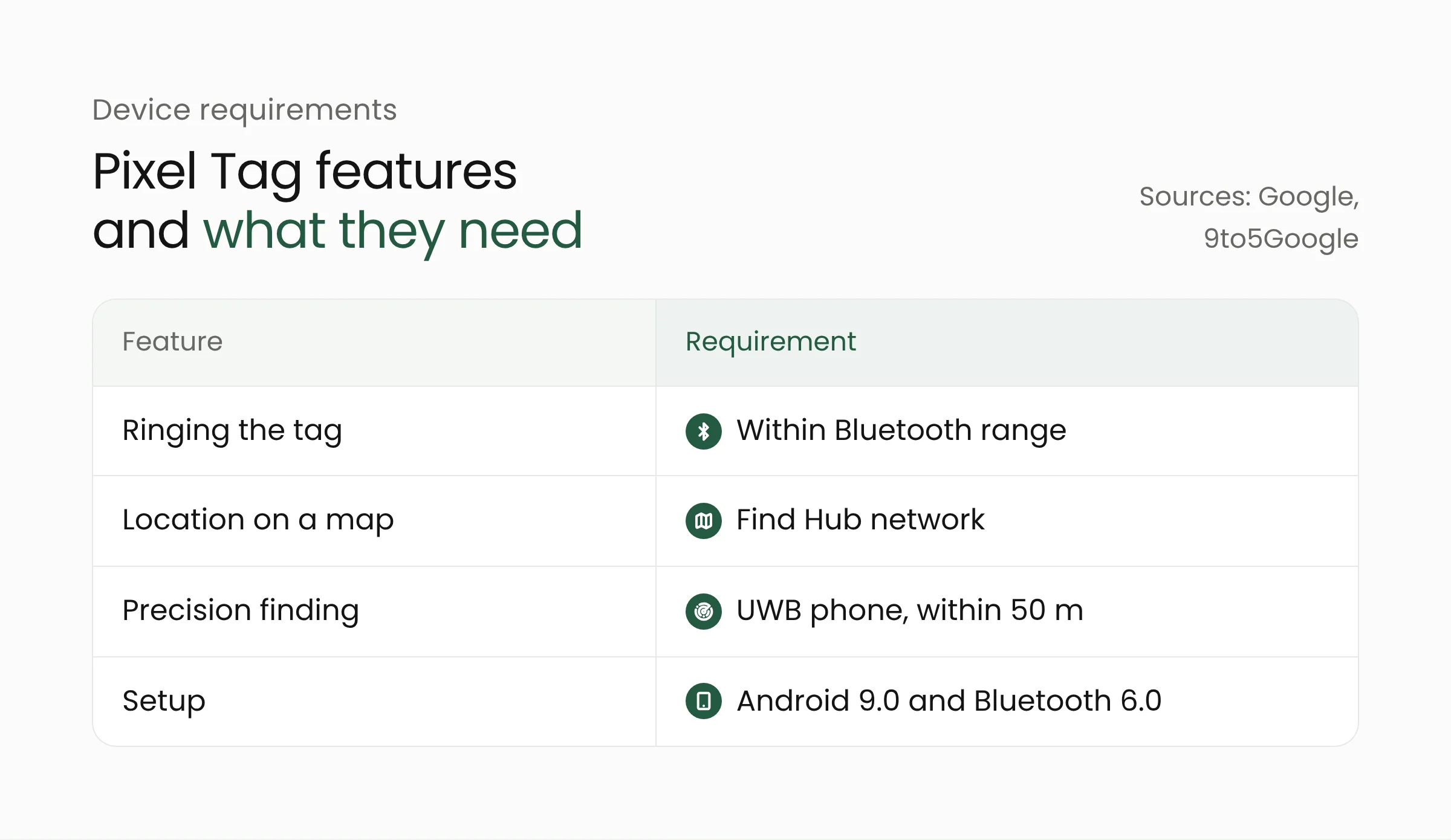
That requirement matters for readers in Indonesia, where much of the phone market sits in the mid-range and entry-level segments. The Bluetooth SIG itself tells manufacturers that older products may need a new Bluetooth chip to support Channel Sounding. Before buying, check your phone’s Bluetooth version on the manufacturer’s official specification page.
As for availability, Google’s announcement does not list countries. Google has also not announced Pixel Tag sales in Indonesia, so an official rupiah price has not been announced either.
What this means for you
For everyday users, the Pixel Tag adds another tracker option for Android owners. The main checks are straightforward: confirm that your phone meets the Bluetooth 6.0 requirement, then decide whether you need precision finding. Without UWB, the tag can still ring and show up on the map.
The more interesting question comes from operations teams. Warehouses, stores, factories and offices regularly lose valuable items such as laptops, measuring tools or toolboxes. A consumer tracker like the Pixel Tag looks tempting because it is cheap and easy to attach. It was designed for personal belongings, however, and that brings limits worth understanding.
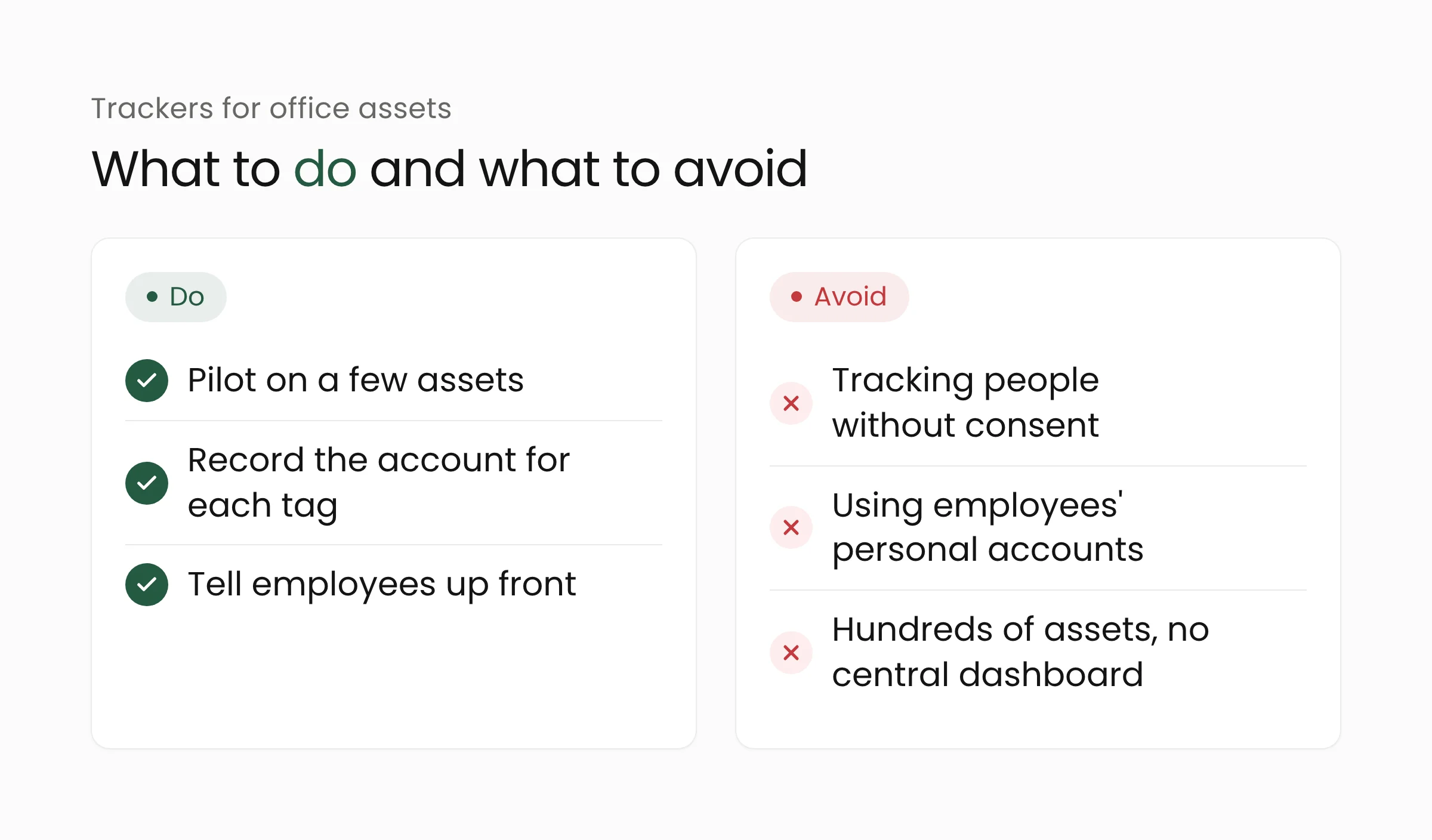
First, each Pixel Tag is linked to a Google account and can be shared with no more than 10 people. Managing hundreds of assets through personal accounts is hard to audit. Second, locations on the Find Hub network depend on Android phones that happen to pass by. Items in a remote warehouse or a closed storeroom may update their location only rarely.
Third, unknown tracker alerts can appear on the phones of employees who carry tagged company equipment. That is expected, since the feature exists to protect people from covert tracking. Companies should tell employees up front and should never use trackers to monitor people.
Large-scale needs usually call for a dedicated asset tracking system. Such a system can use Bluetooth or RFID tags with a gateway at each site, plus a central dashboard that records each item’s movement history. Merakit’s IoT development services can help design that kind of architecture, and our industrial automation solutions page shows how it fits on a production floor. For assets that travel long distances, such as vehicles, satellite-based tracking is a better fit, as we covered in our piece on fleet tracking with NavIC satellites.
Frequently asked questions
Does the Pixel Tag work with an iPhone?
Google’s announcement only mentions Android phones running Android 9.0 or later with Bluetooth 6.0. Google does not list iPhone support, and setup relies on Fast Pair, an Android feature.
Do I need a Pixel phone to use the Pixel Tag?
No. The Pixel Tag can pair with Android phones from other brands as long as they meet the Android 9.0 and Bluetooth 6.0 requirements. Precision finding needs a phone with a UWB chip.
Is the Pixel Tag officially sold in Indonesia?
Not yet announced. Google’s announcement does not list countries, and no official rupiah price has been announced.
Conclusion
The Pixel Tag shows that item tracking for Android users now has direct backing from Google, with the Find Hub network and precision finding built on UWB and Channel Sounding. For users, the Bluetooth 6.0 requirement is the first thing to check. For organizations that want to track assets at scale, the Merakit team is ready to help design a tracking system that fits.
Sources
- Keep tabs on your valuables with Google Pixel Tag, Google, August 12, 2026
- After months of waiting, you can finally buy a Pixel Tag, Android Authority, November 10, 2026
- Google Pixel Tag hands-on, 9to5Google, August 12, 2026
- Channel Sounding, Bluetooth SIG, accessed November 11, 2026