Blog Digital Health
Huawei Watch D3 and 24-Hour Blood Pressure Data for Clinics
On this page· 7 sections
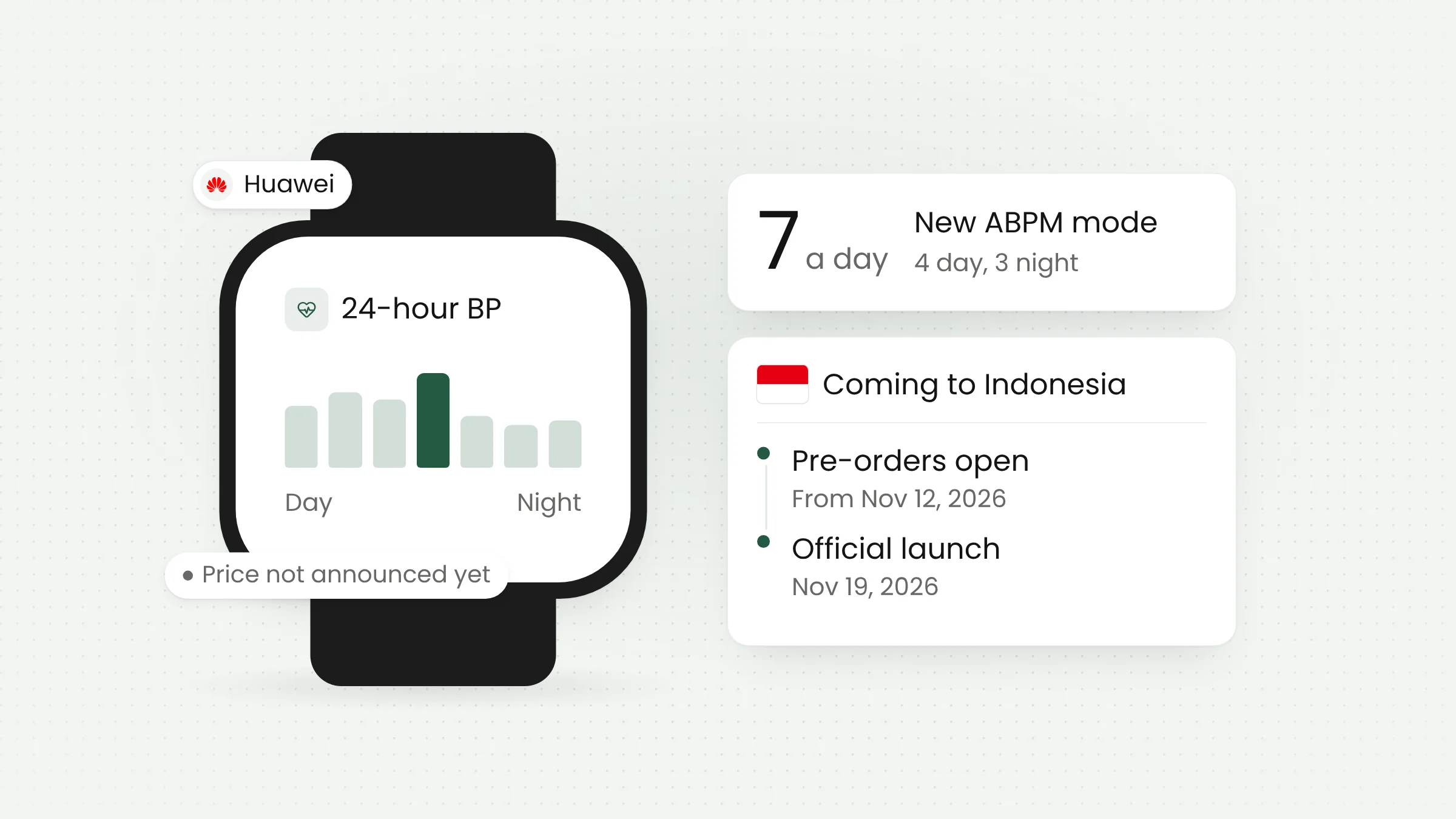
The Huawei Watch D3 goes on sale in Indonesia on November 19, 2026. The smartwatch offers 24-hour ambulatory blood pressure monitoring (ABPM) using a small air bag built into its strap, so it can take readings during the day and while the wearer sleeps. Huawei has not yet announced the Indonesian price.
What the Huawei Watch D3 brings to Indonesia
According to Uzone.id, Huawei opened a pre-order promotion on November 12, 2026, ahead of the November 19 launch. Early buyers receive a one-year warranty extension, a one-year Worry-Free care package and three months of Huawei Health+ membership, a bundle valued at up to 1.7 million rupiah. The price of the watch itself has not been disclosed.
The watch will be sold online through Huawei Store, Shopee, TikTok Shop, Tokopedia, Blibli, Lazada, erafone.com and Eraspace, and in physical stores including Huawei Authorized Experience Stores and Erafone. It works with both Android phones and iPhones through the Huawei Health app.
Europe saw the device first. Huawei previewed the Watch D3 at ESC Congress 2026 in Munich, the annual meeting of the European Society of Cardiology, before its formal launch on September 2, 2026. Huawei’s press release says the watch holds the European Union’s CE MDR medical device certification, covering single blood pressure readings, ambulatory monitoring, and readings before and after exercise. In the UK it costs £399.99 and went on sale on September 23, 2026, according to The5KRunner.
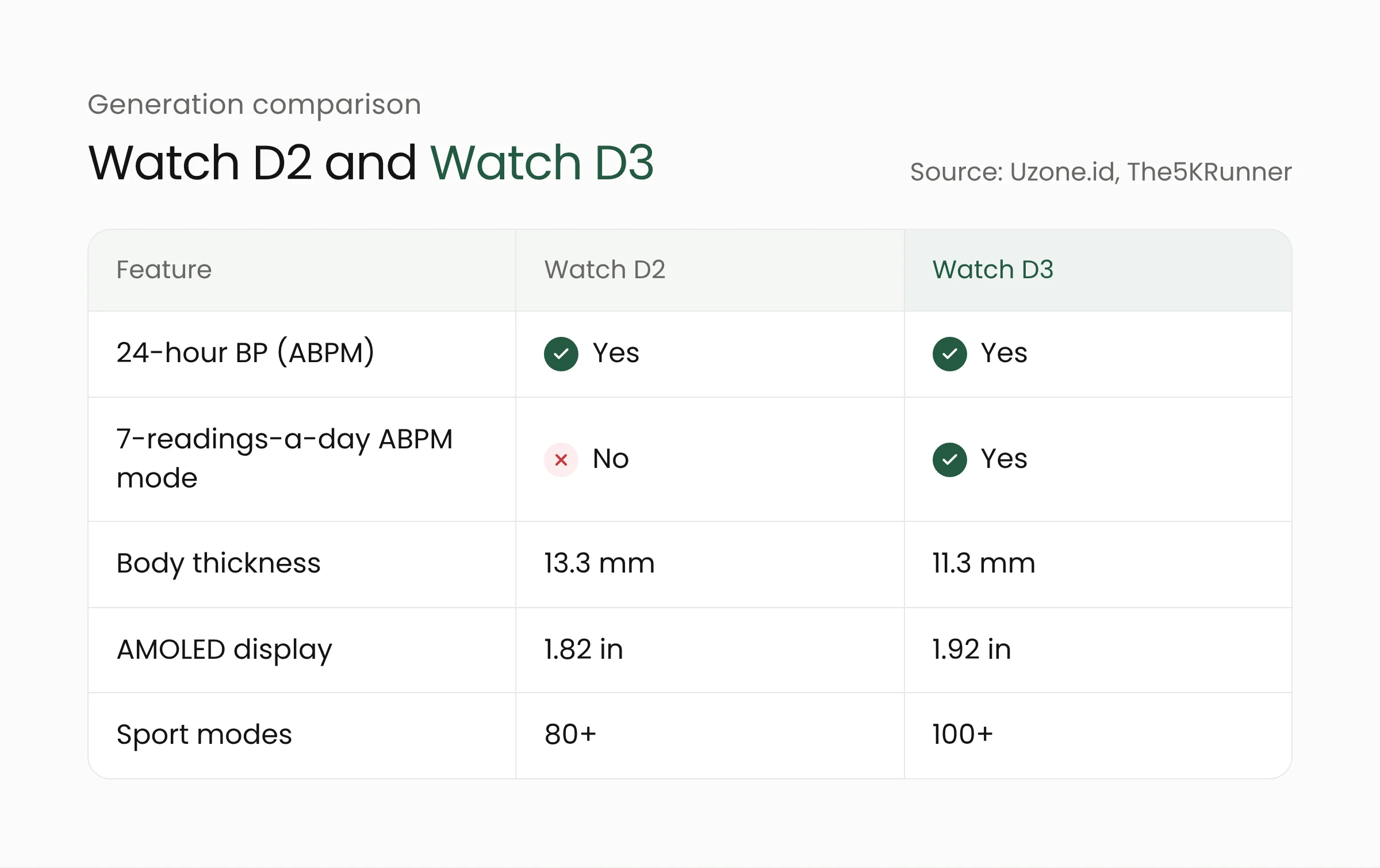
The D3 is the third model in the line. The original Huawei Watch D arrived in 2021, and the Watch D2 added 24-hour monitoring in 2024. The D2 reached Indonesia in November 2024.
How a watch measures blood pressure around the clock
Most smartwatches estimate heart data with optical sensors on the underside of the case. The Watch D3 works more like a home blood pressure monitor. A micro-pump inside the watch inflates an air bag in the strap until it presses on the artery at the wrist, and a sensor reads the pressure oscillations to calculate systolic and diastolic values. The technique is called oscillometric measurement.
ABPM refers to repeated blood pressure readings over 24 hours while a person goes about a normal day. The result is a pressure curve for daytime and night, including how far pressure drops during sleep. That night-time pattern is hard to capture with occasional checks at a clinic.
A seven-readings-a-day ABPM mode
The main new feature on the D3 is a Minimally Disruptive ABPM Study. It takes seven readings a day, four during the day and three automatically at night, so the strap inflates less often. Results appear in the Blood Pressure section of Huawei Health with day and night averages, a trend chart and reading history. Users can save or print the report to take to a doctor.
A separate mode records blood pressure before and after a workout. If the pre-exercise reading is too high, the watch advises postponing intense training. Beyond blood pressure, the D3 includes an ECG sensor, pulse wave analysis for irregular heart rhythms, and tracking of heart rate variability, breathing during sleep and stress.
Huawei Health also offers two studies on the watch. A coronary heart disease risk study gathers data over three to four days, and a diabetes risk study runs for three to fourteen days. As detikInet reported, Huawei says both studies only give an early picture of potential risk and do not replace a doctor’s diagnosis.
Round-the-clock monitoring and hypertension in Indonesia
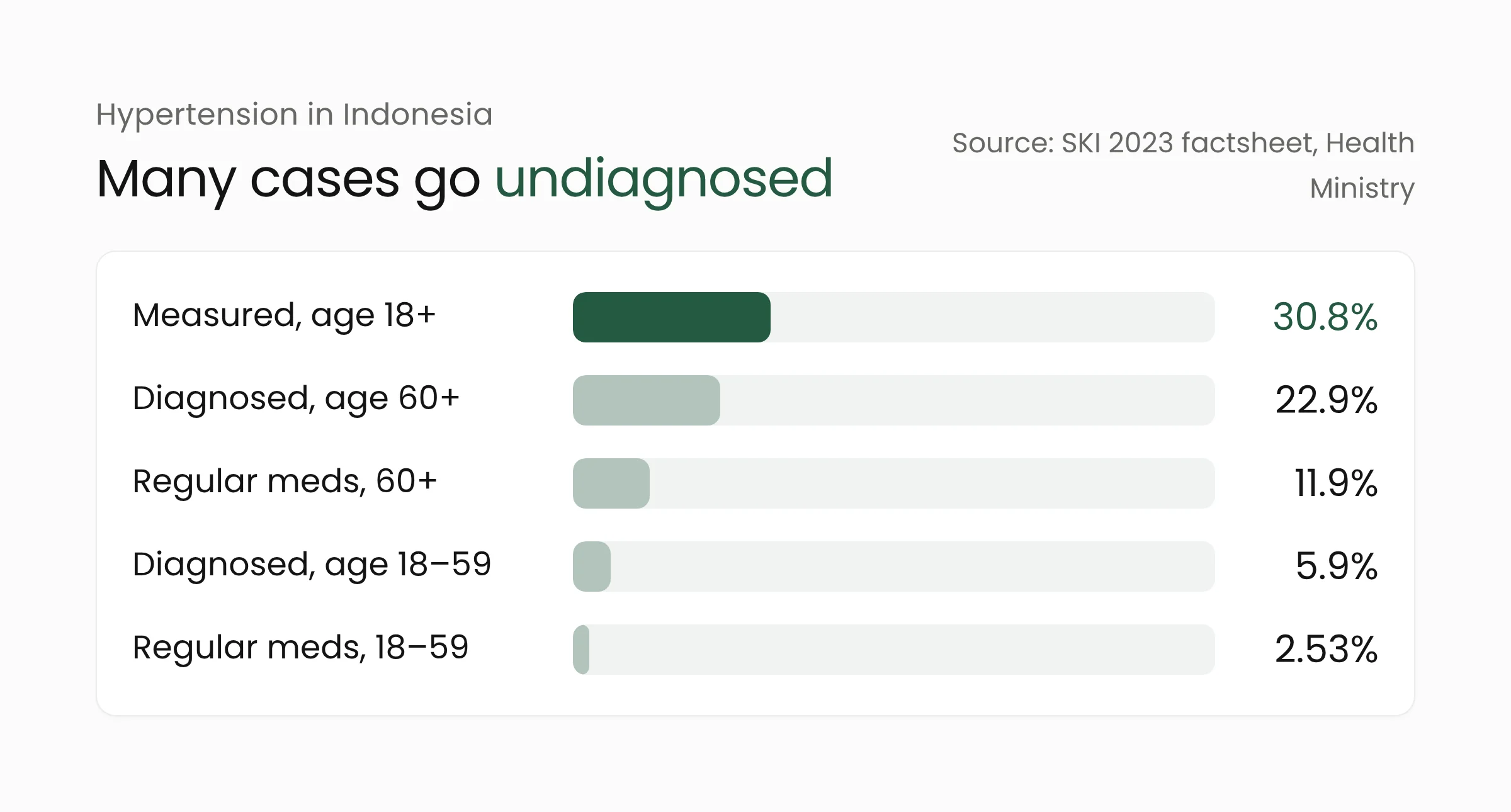
High blood pressure often has no symptoms, so many people learn about it only after complications appear. The Indonesian Health Survey (SKI) 2023 factsheet from the Ministry of Health puts hypertension prevalence among people aged 18 and over at 30.8% based on measured blood pressure. That is down from 34.1% in the 2018 Basic Health Research survey (Riskesdas).
The gap between measurement and diagnosis is wide. Among people aged 18 to 59, 5.9% had been diagnosed with hypertension and 2.53% took medication regularly. Among those aged 60 and over, the figures were 22.9% and 11.9%. The ministry concluded that people with hypertension still do too little to seek treatment.
Repeated monitoring helps close that gap. Blood pressure can rise during a clinic visit because the patient is nervous, a pattern known as white coat hypertension, while other patients look normal in the clinic and run high at home. Dr. Tjhin Willy of Halodoc’s Board of Medical Excellence, speaking at the launch event covered by detikInet, said that a single reading may not reflect a person’s actual condition. He also noted that readings from a device still need to be reviewed with a doctor.
Limits worth understanding
The CE MDR certification applies in the European Union. None of the sources we reviewed state whether the Watch D3 holds a medical device distribution permit in Indonesia, so clinics should ask Huawei Indonesia directly before using the watch’s data in formal clinical care.
Accuracy has also not been independently tested. The5KRunner notes that no independent study of the D3 exists yet and that the claims for exercise readings rest on manufacturer data. Huawei says the D3 is more accurate than the D2, a claim that also lacks outside verification. Huawei’s own press release describes Health Glance and health study data as “for reference only, and should not be used for diagnosis or treatment.”
Comfort affects data quality too. Night readings mean the strap inflates while the wearer sleeps, and arm position during a reading changes the result. Gaps in the data or readings taken in the wrong position make the 24-hour curve less reliable.
What this means for clinics and health services
Watches like the D3 mean patients may arrive with several days of blood pressure data. For clinics, community health centers and telemedicine services, that data can help if it is handled properly.
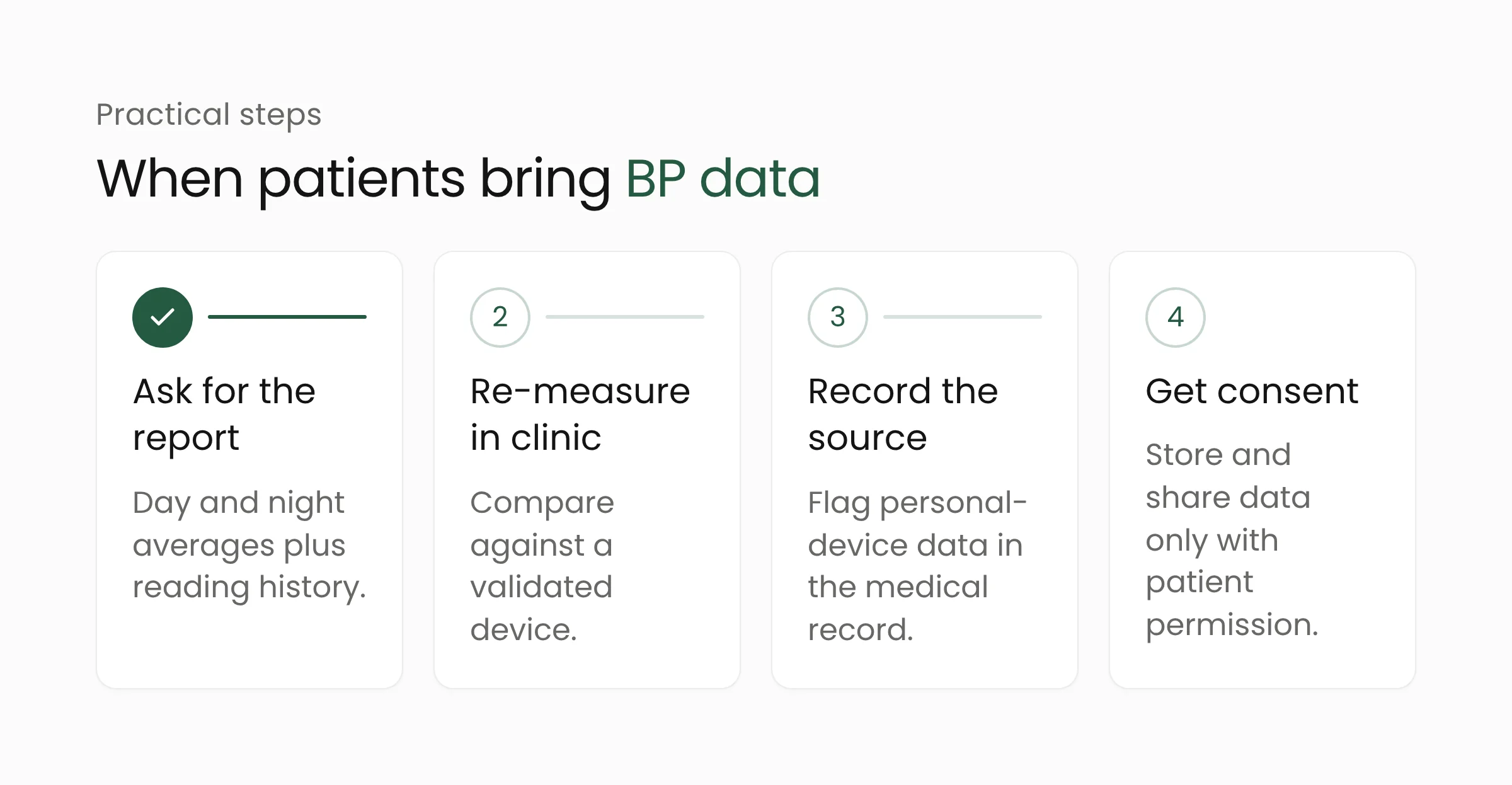
Ask for the full report. Day and night averages and the reading history say more than a single number on the watch face. A printed Huawei Health report can open the conversation with the patient.
Compare against clinic equipment. Re-measure the patient’s blood pressure with a validated monitor. If the readings differ widely, clinical decisions should rest on the clinic’s device or a standard ABPM test.
Record where the data came from. An electronic medical record should be able to flag data that comes from a patient’s personal device, including the brand, dates and time span. The next doctor can then tell which numbers were measured in the clinic and which the patient brought in. Building records like this is part of our digital healthcare solutions work at Merakit.
Protect consent and security. Indonesia’s Law Number 27 of 2022 on Personal Data Protection (Undang-Undang Nomor 27 Tahun 2022 tentang Pelindungan Data Pribadi) classifies health data and information as specific personal data. Clinics that receive data from patient apps should record consent, limit who can open the data and keep it out of chat groups.
For teams building health apps, wearables like this add a data source that needs to be designed in from the start, from a report upload form to a trend view for doctors. A patient monitoring app built through mobile app development can handle that flow without asking patients to retype every reading. We covered a related question about wearable health data in our piece on the Samsung Health update.
Frequently asked questions
How much does the Huawei Watch D3 cost in Indonesia?
Huawei had not announced the Indonesian price ahead of the November 19, 2026 launch. For reference, the UK price is £399.99.
Can the Huawei Watch D3 replace a home blood pressure monitor?
The watch measures blood pressure with a cuff-style air bag and carries CE MDR certification in the European Union. Even so, its accuracy has not been confirmed by an independent study and its regulatory status in Indonesia has not been announced. Readings should be compared with a validated monitor and discussed with a doctor.
Are the heart and diabetes risk studies a diagnosis?
No. Huawei says the two studies only give an early indication of potential risk. A diagnosis still requires a medical examination by a doctor.
Closing thoughts
The Huawei Watch D3 brings cuff-based blood pressure readings to the wrist on a schedule that is easier to live with. In a country where many cases of hypertension go undiagnosed, data like this could prompt people to get checked earlier. Its value to health services depends on how clinics read, verify and store that data.
Merakit Indonesia helps healthcare providers build systems that accept patient data safely. Get in touch if your clinic wants to plan how data from patient devices should flow.
Sources
- Huawei Watch D3 Bawa Studi Deteksi Dini Jantung dan Diabetes, detikInet, November 13, 2026
- Huawei Watch D3 Bisa Pantau Tensi 24 Jam, Masuk RI 19 November, Uzone.id, November 13, 2026
- HUAWEI WATCH D3 Makes Early Debut at ESC Congress 2026, Huawei press release via PR Newswire, August 30, 2026
- Huawei Watch D3 Launches With New Blood Pressure Features and a Thinner Design, The5KRunner, September 3, 2026
- Factsheet on hypertension and diabetes prevalence, impact and control in Indonesia (SKI 2023), Health Policy Agency, Ministry of Health of Indonesia
- Article 4 of Law Number 27 of 2022 on Personal Data Protection, Pasal.id