Blog Digital Government
SAGARA: Indonesia's Data Hub for Early Peat Fire Warnings
On this page· 7 sections
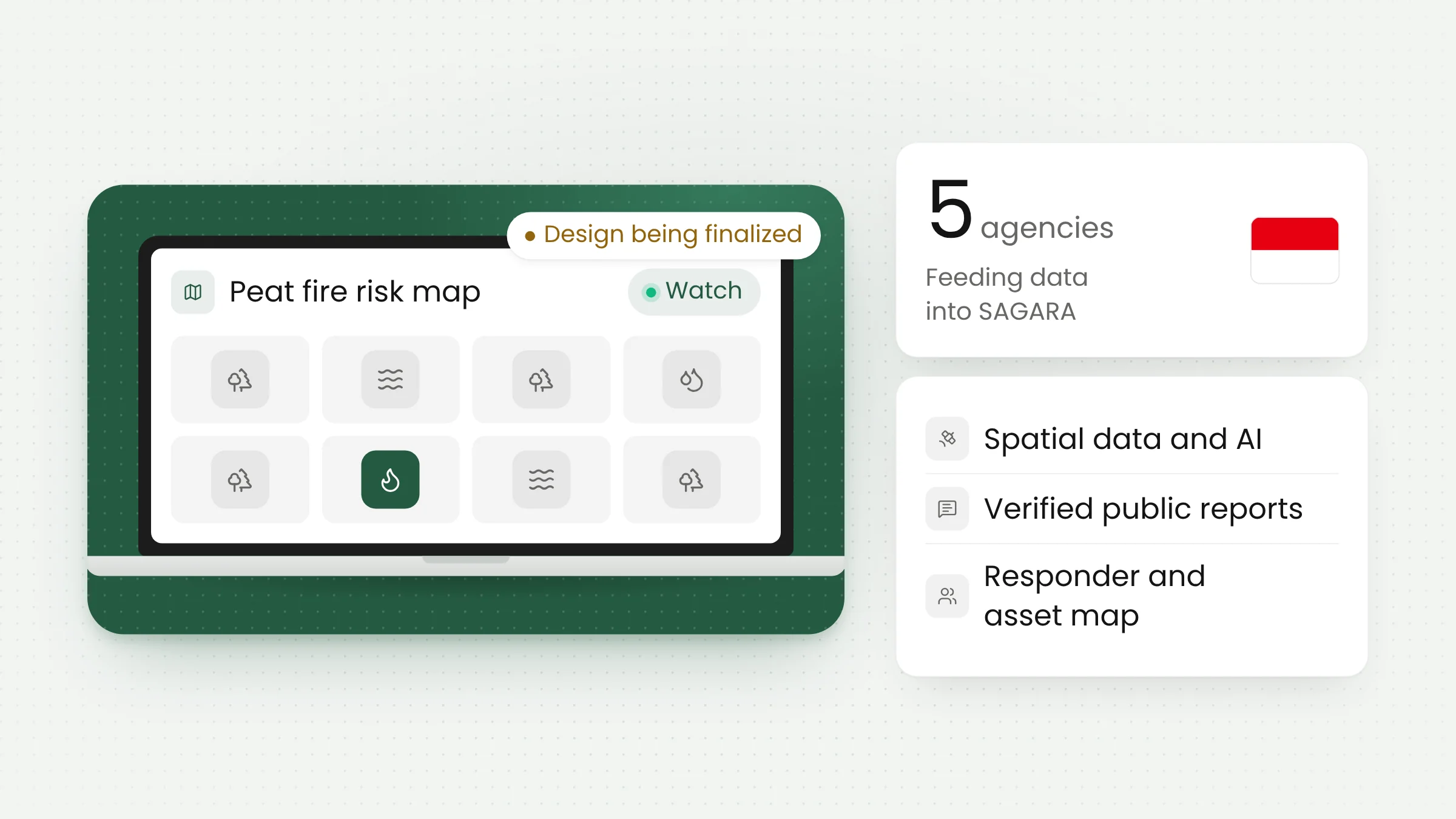
Indonesia’s new National Peat and Mangrove Management Agency (BPGMN) is finishing the design of SAGARA, short for Sistem Analisis Gambut dan Mangrove Nusantara. The system pulls together data from five government bodies and applies spatial analysis and artificial intelligence (AI) to give early warning of peat fires and mangrove damage. No launch date has been announced.
SAGARA design finalized in Palembang
The SAGARA blueprint was discussed on October 30, 2026, at the Hotel Swarna Dwipa in Palembang, South Sumatra. The meeting was chaired by BPGMN deputy head Major General Sriyanto and attended by Universitas Sriwijaya, the Ministry of Forestry, the Ministry of Environment, the meteorology agency BMKG, the South Sumatra provincial government, members of the regional leadership forum, and civil society groups, according to Republika.
Sriyanto described SAGARA as a place where everyone involved in managing peatland and mangroves can exchange data and knowledge. Speaking to Okezone, he called it a “clearing house” and a knowledge center for peat and mangrove management. In data terms, a clearing house is a hub where information from many owners is collected, checked, and passed on to the people who need it.
Republika reported that SAGARA will draw on data from the Ministry of Forestry, the Ministry of Environment, BMKG, the disaster management agency BNPB, and the national research agency BRIN. Each holds a different piece of the picture: forest and land cover, environmental conditions, weather and climate, disaster events, and research findings. The system is built on spatial technology, meaning data tied to precise locations on a map, with AI added to support decision-making.
SAGARA is still at the design stage. JPNN reported on October 31, 2026, that BPGMN was completing revisions to the system’s blueprint. There is no official word yet on an operating date, a budget, or the AI models involved.
How SAGARA turns data into action
Based on what has been published, SAGARA is meant to go further than a digital map. The design calls for fire-risk levels drawn from expert analysis and verified reports from the public. From there, the system would recommend prevention and response steps suited to conditions on the ground.
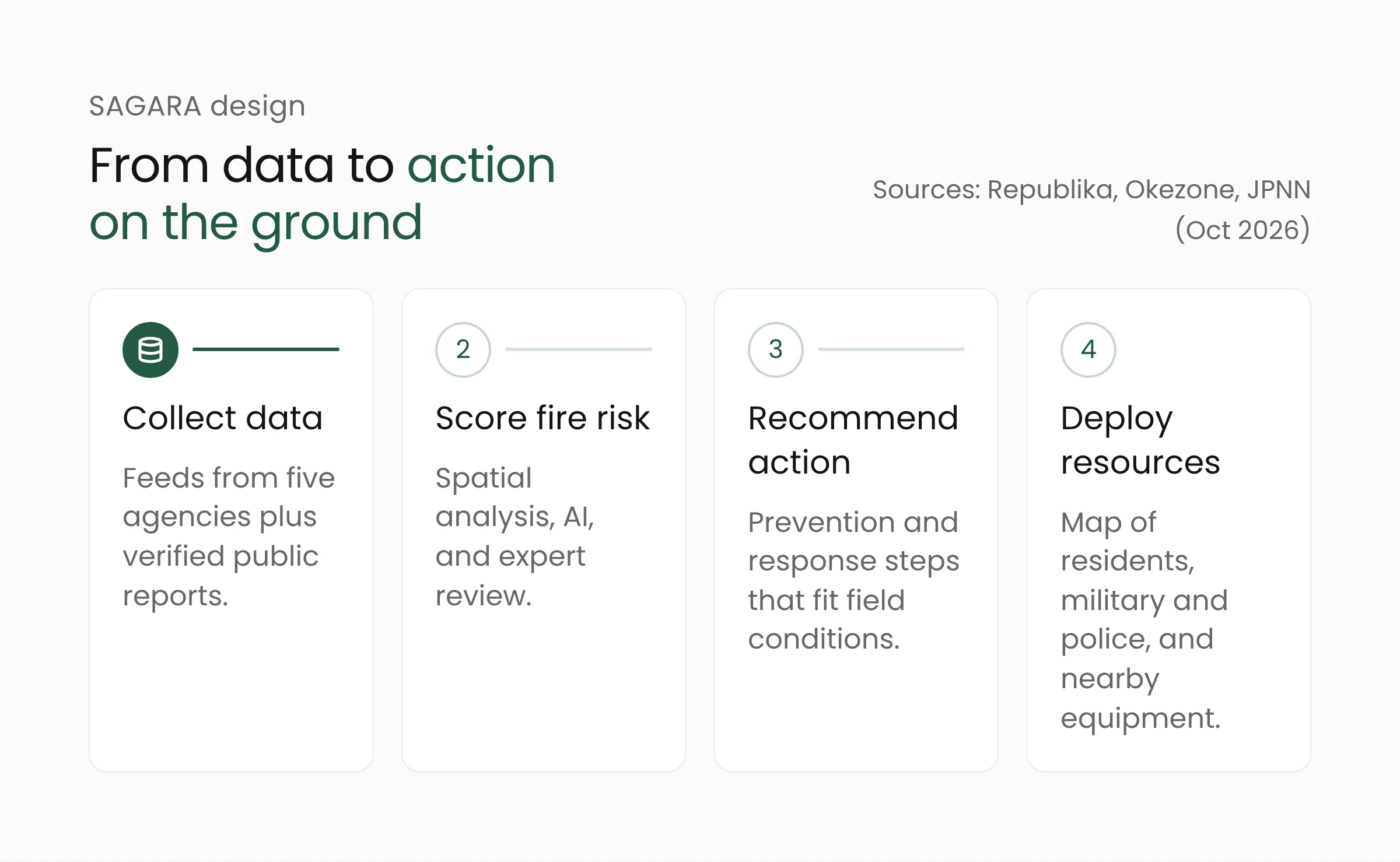
The most practical piece is a resource map. According to Okezone and Republika, SAGARA will show who and what is available near a high-risk area: local residents, military and police personnel, and equipment or infrastructure that can be used to fight fires or protect the area. A warning then becomes more than a red dot on a screen, because responders can see who is closest and what tools are at hand.
Republika also reported plans for an open-access feature to support transparency and performance reviews. If it materializes, the public and local governments could see how each warning was handled, in addition to how many hotspots were detected. Who will be able to see which data has not been spelled out.
Public reports are both valuable and hard to manage. People living in peatland villages often notice smoke before satellites do, especially under heavy cloud or when fire smolders below the surface. Field reports can also be wrong or duplicated, so the verification step that BPGMN describes will decide whether that data is reliable enough to act on.
A new agency with a familiar mission
BPGMN is a very young institution. According to Fortune Indonesia, President Prabowo Subianto decided to create it at a meeting with 22 experts and academics at Merdeka Palace on September 24, 2026. Forestry Minister Raja Juli Antoni said the agency would report directly to the President, with forest and land fire prevention, especially on peatland, as its main task.
Its predecessor, the Peat and Mangrove Restoration Agency (BRGM), had a four-year mandate under Peraturan Presiden Nomor 120 Tahun 2020 (Presidential Regulation No. 120 of 2020) that ended on December 31, 2024, according to the same report. Fortune Indonesia also listed six peat-rich provinces in focus: Riau, Jambi, South Sumatra, West Kalimantan, Central Kalimantan, and South Kalimantan.
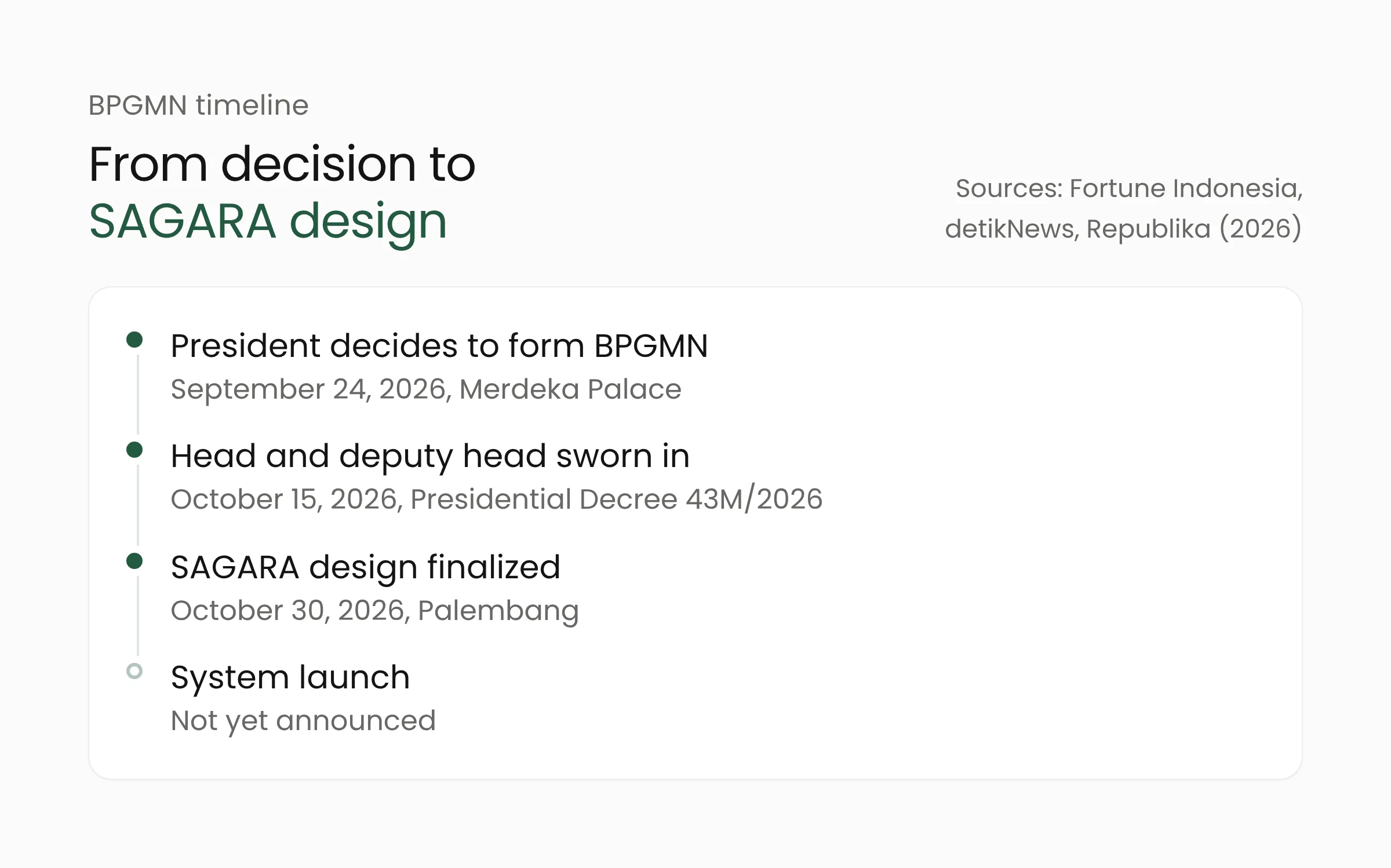
On October 15, 2026, the President swore in Satyawan Pudyatmoko as head of BPGMN and Major General Sriyanto as deputy head under Keputusan Presiden Nomor 43M Tahun 2026 (Presidential Decree No. 43M of 2026), detikNews reported. Two weeks later, the SAGARA blueprint was already on the table in Palembang, which suggests the data system is one of the new agency’s first priorities.
BRIN’s role was flagged from the start. After the September 24 meeting, BRIN head Arif Satria told NU Online that the agency already works with the Ministry of Forestry on hotspot detection and will keep upgrading the AI it uses. He said about 41 million people live around peat hydrological areas and that village fire-care groups, known as Masyarakat Peduli Api, would be revived as the first line of prevention.
That 41 million figure explains why early detection matters. Peat fires are hard to put out because they can spread underground, and the haze affects health, schools, flights, and business activity far from the fire itself.
What this means for local governments
SAGARA is a cross-agency system whose hardest problems are likely to sit in data governance more than in the AI model. Provincial governments, regional disaster agencies (BPBD), and environment and forestry offices in the six peat provinces can start preparing now.
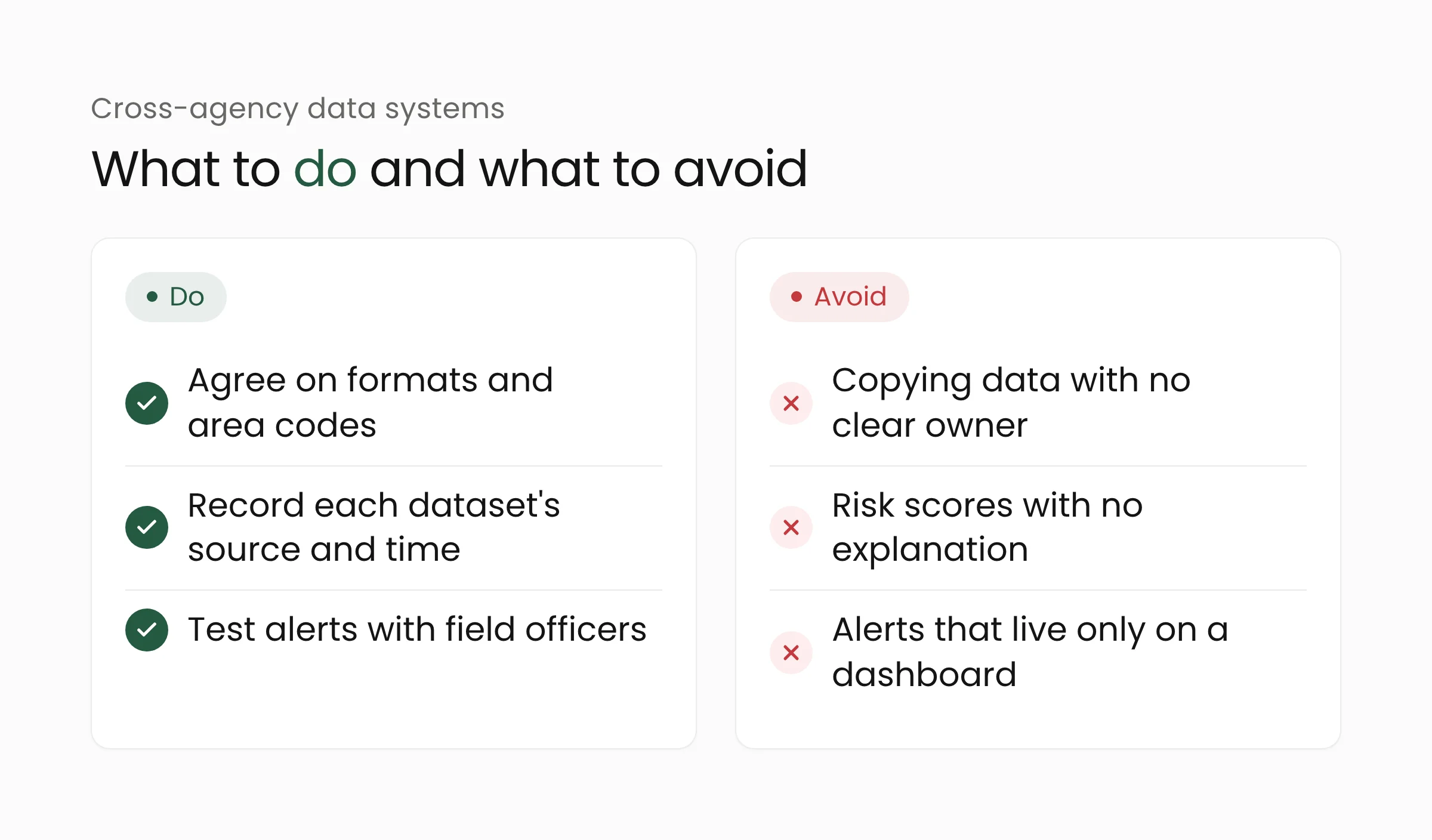
First, clean up local data. Records of high-risk sites, command posts, water reservoirs, pumps, village fire crews, and village heads’ contacts should be stored in consistent formats, use official area codes, and have a clear owner. This is exactly the kind of data SAGARA’s resource map will need, and organizing and analyzing it is the work of data analytics services.
Second, record where each dataset comes from and when it was last updated. A risk map that layers weather, hotspots, and public reports can only be trusted when every layer has a known source and timestamp. Hotspot data that is a few hours late can lead to the wrong call.
Third, ask for risk scores that can be explained. Field officers need to know why a village is flagged: days without rain, a nearby hotspot, or smoke reported by residents. Scores without reasons tend to be ignored, or followed without question.
Fourth, make sure alerts reach the right people. Peatland villages often have weak mobile coverage, so text messages, radio, and manual coordination channels still need to be in place. An alert that only appears on an office dashboard may never reach the crew in the field.
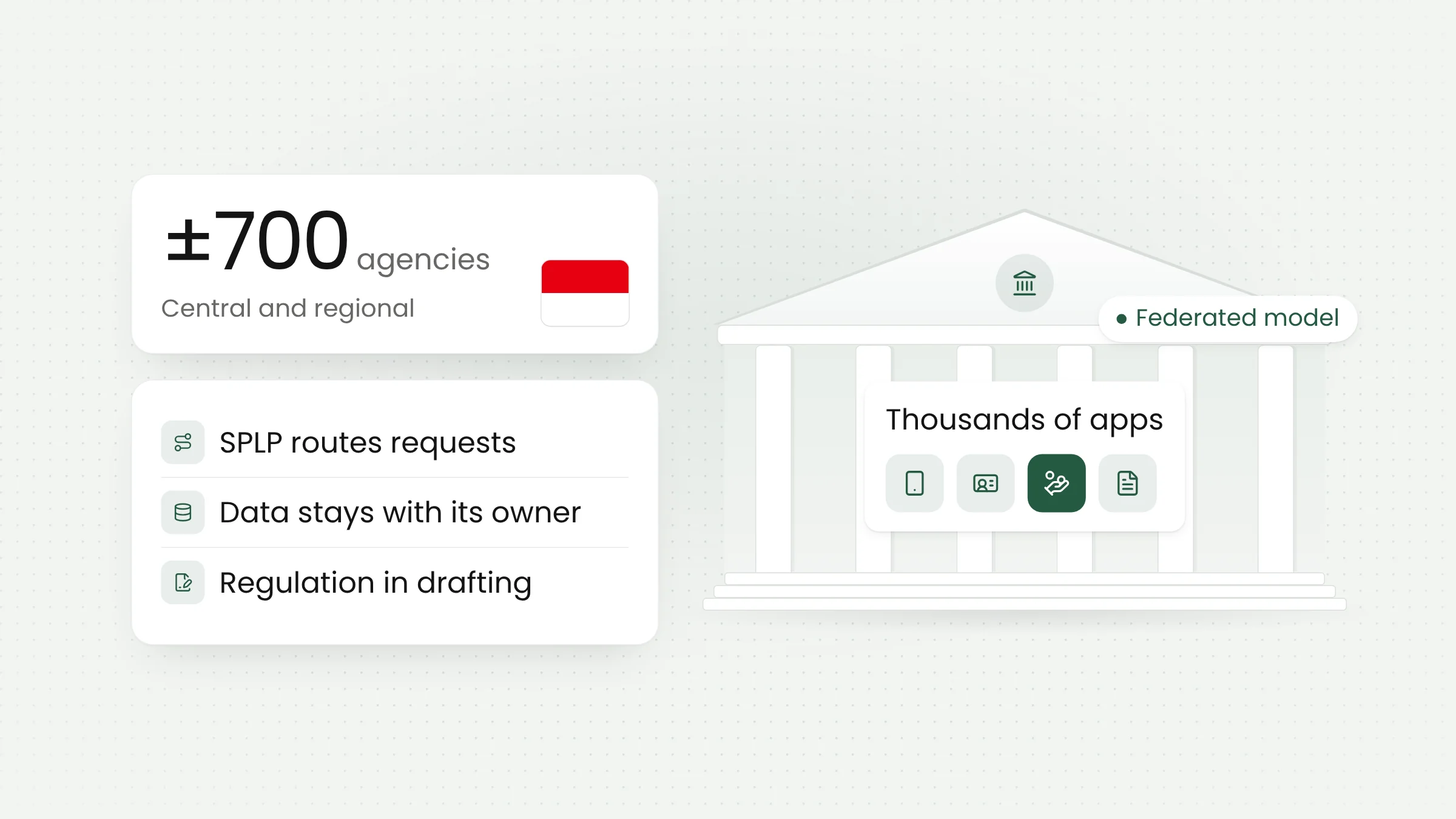
This approach to sharing data fits the direction the central government is taking with its own systems, such as the plan to organize thousands of government apps through SPLP. Each agency keeps its own data and shares it through agreed channels. For offices preparing that kind of integration, Merakit offers digital government solutions for managing services and data across work units with clear workflows.
Frequently asked questions
What is SAGARA?
SAGARA (Sistem Analisis Gambut dan Mangrove Nusantara) is a system being developed by BPGMN. It is designed as a single gateway for peatland and mangrove data and as an early warning tool for peat fires and mangrove damage, using spatial technology and AI.
When will SAGARA go live?
That has not been announced. As of October 31, 2026, BPGMN was still finalizing the design after the Palembang meeting. No budget or launch schedule has been disclosed.
Can members of the public report to SAGARA?
The design lists verified public reports as one source of fire-risk information. How people will submit reports, whether through an app or another channel, has not been officially explained.
Closing
SAGARA is still a blueprint, but its direction is clear: link data from many agencies to action on the ground. Its success will depend on data quality, fast verification, and how ready local governments are to act on warnings. If your agency is planning a cross-agency data system or an early warning service, the Merakit team is ready to help you design it.
Sources
- BPGMN Kembangkan Sagara, Sistem AI Pendeteksi Kebakaran Gambut dan Kerusakan Mangrove, Republika, October 31, 2026
- Cegah Kebakaran Gambut, BPGMN Siapkan Sistem Deteksi Dini Berbasis AI, Okezone, October 31, 2026
- Portal SAGARA, Basis Data Pelestarian Gambut & Mangrove, JPNN, October 31, 2026
- Prabowo Lantik Satyawan Pudyatmoko dan Mayjen Sriyanto Jadi Kepala-Wakil BPGMN, detikNews, October 15, 2026
- BPGMN Dibentuk untuk Pencegahan Karhutla Gambut, Fortune Indonesia, September 25, 2026
- BRIN akan Perbarui Teknologi AI untuk Deteksi Dini Karhutla, NU Online, September 25, 2026