Blog Robotics
Spot Robots at GlobalFoundries and Lessons for Factories
On this page· 7 sections
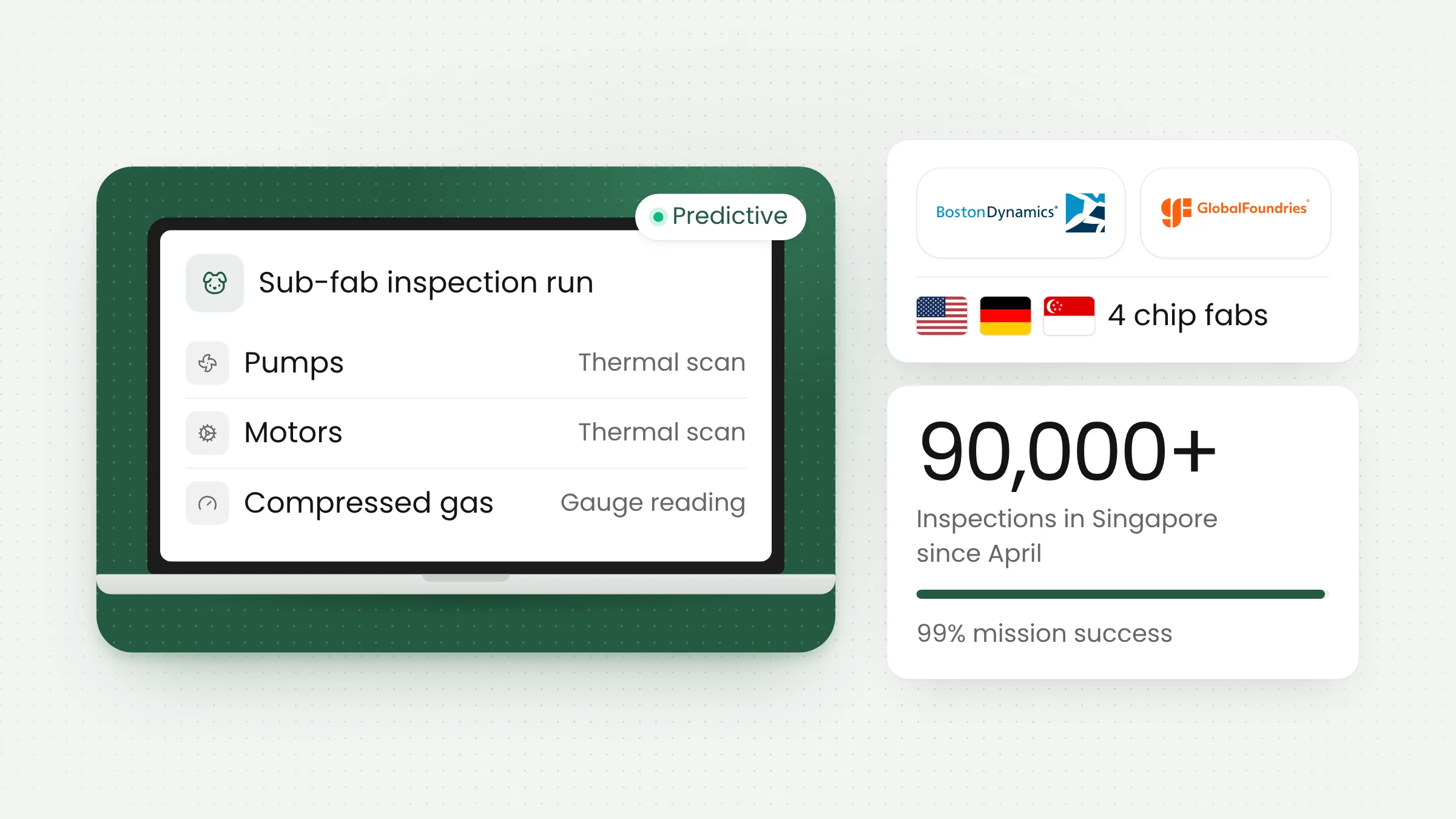
Boston Dynamics’ Spot robots will patrol four GlobalFoundries chip plants in the United States, Germany, and Singapore. The November 17, 2026 announcement came with field data. Two Spot robots in Singapore have run more than 90,000 inspections since April, and the Atlas humanoid will start onsite tests at GlobalFoundries in early 2027.
For plant managers, the numbers matter more than the robot itself. Routine inspection is repetitive, easy to skip, and expensive to replace with thousands of fixed sensors. This partnership shows what that work looks like when a robot does it every day at factory scale.
Spot expands to four GlobalFoundries fabs
According to the joint press release distributed by Business Wire, GlobalFoundries (GF) will use Spot for autonomous enterprise asset management across its fabs. The expansion covers Malta, New York; Burlington, Vermont; Dresden, Germany; and Singapore.
GlobalFoundries is a contract chipmaker, a foundry that manufactures chips designed by other companies. In a plant like this, an unplanned equipment stop can delay customer orders.
The two companies have worked together for more than four years. Spot started at the Burlington fab, and Boston Dynamics published a case study on that work in 2022. Zack Jackowski, Boston Dynamics’ chief product and technology officer, described GF as one of Spot’s earliest customers.
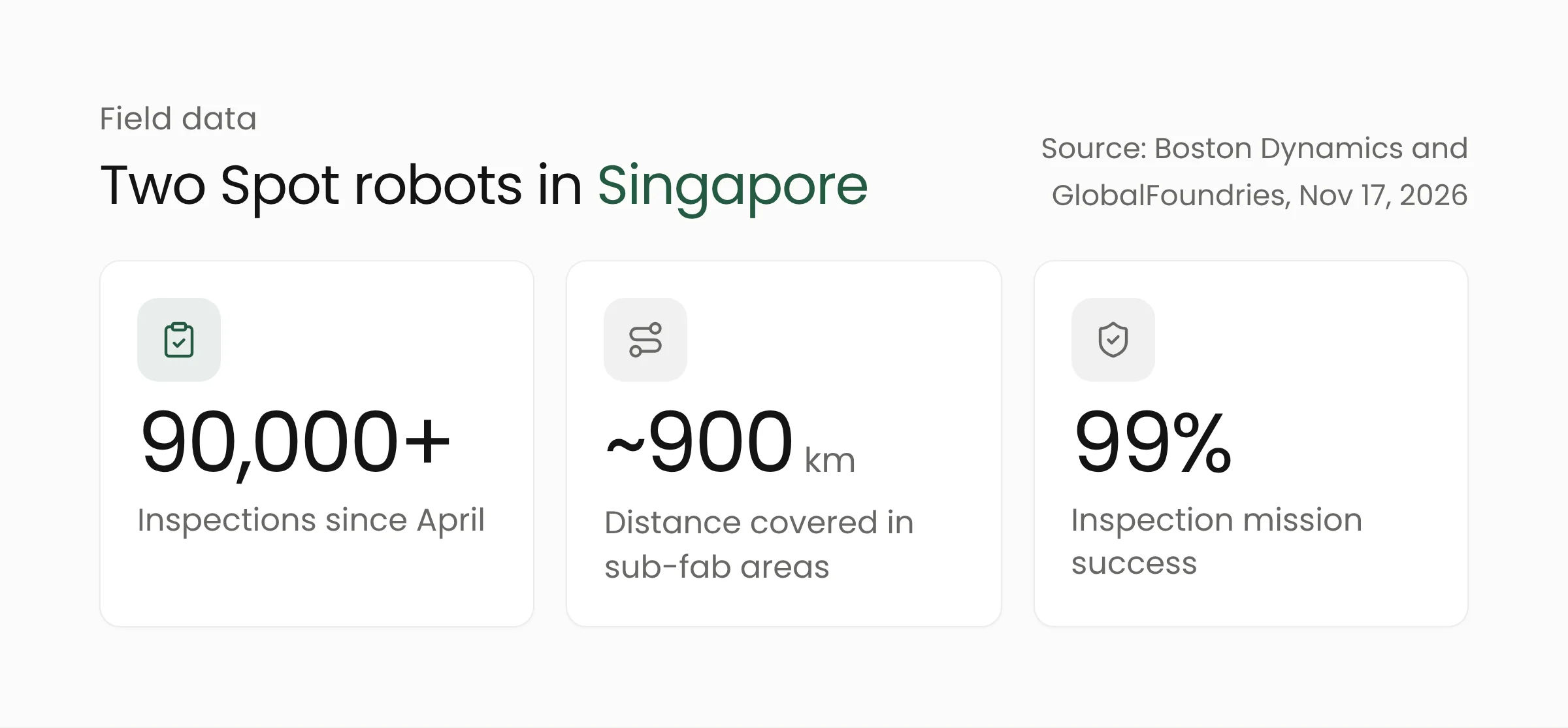
The most concrete figures come from Singapore. Two Spot robots there have covered nearly 900 kilometers in sub-fab areas and completed more than 90,000 inspections since April, with a 99 percent mission success rate. GF also moved 875 routine inspections to the robots in two weeks after adopting updated hardware and software, and it plans to more than double that number.
How Spot inspects equipment in the sub-fab
The sub-fab is the support level beneath a chip plant’s production floor. Highways Today describes it as an extensive service area below the fabrication floor. It houses the pumps, motors, and gas lines that keep production tools running.
Boston Dynamics’ case study on the Burlington fab explains what Spot does there. The robot runs automated inspection missions, collects thermal condition data, and reads analog gauges on pumps, motors, and compressed gas systems. Computer vision models from Levatas, a Boston Dynamics partner, turn gauge images into readings that can be analyzed.
The case study also records why GF chose a robot. Fitting a sensor to every machine in a facility that large was not considered economical. A robot carrying visual and thermal cameras can visit many points with one device, without changes to the equipment.
Pradip Singh, chief manufacturing officer at GlobalFoundries, summed up the effect: “Spot has helped us shift from reactive to predictive maintenance.” In practice, the plant team moves from fixing machines after they fail to anticipating failures from trends in the data. Singh said the data is collected across thousands of inspection points to prevent downtime.
Details still undisclosed
Some details are missing. Highways Today notes that GF has not published cost savings or downtime reduction figures. The number of additional robots, the investment, and the rollout schedule for each site have not been disclosed either. The benefits described so far come from the two companies and have not been independently verified.
Atlas joins an early test program in 2027
The second part of the announcement concerns Atlas, the Boston Dynamics humanoid. GF is the first customer outside the automotive industry to test Atlas and the first semiconductor maker in the Atlas early adopter program. Onsite testing begins in early 2027.
The program is exploratory. The companies will identify suitable humanoid tasks, assess the plant’s readiness and integration needs, and then begin testing and training Atlas for specific jobs. Interesting Engineering notes that the number of robots and the tasks to be tested have not been disclosed.
The move follows the plan Boston Dynamics laid out when it introduced the product version of Atlas at CES in January 2026. At that time, Boston Dynamics said all 2026 units were committed to Hyundai Motor Group and Google DeepMind, and that it planned to add customers in early 2027. The company says Atlas can lift up to 50 kilograms and swap its own batteries at a charging station. Other published specifications include 56 degrees of freedom and a reach of up to 2.3 meters.
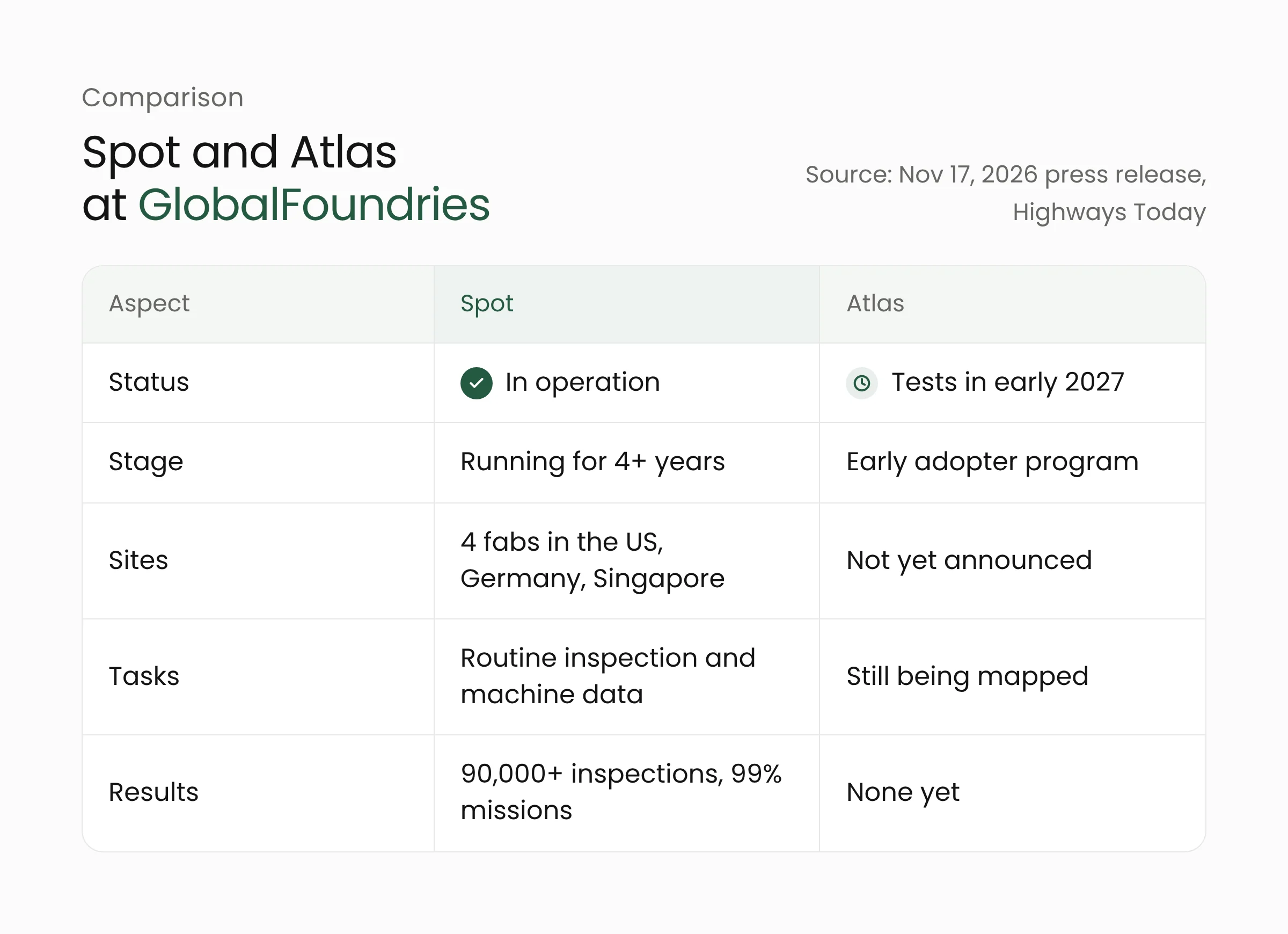
The difference between the two robots is worth noting. Spot has years of operation behind it and published operating data. Atlas is only entering testing, and lessons from car plants may not transfer directly to chip fabs that run cleanrooms.
What this means for factories in Indonesia
Plants in Indonesia, from cement works and food processors to power stations, carry out similar rounds: staff walk the floor, read gauges, check motor temperatures, and record results on forms. The GF experience offers a few lessons that apply before any robot purchase.
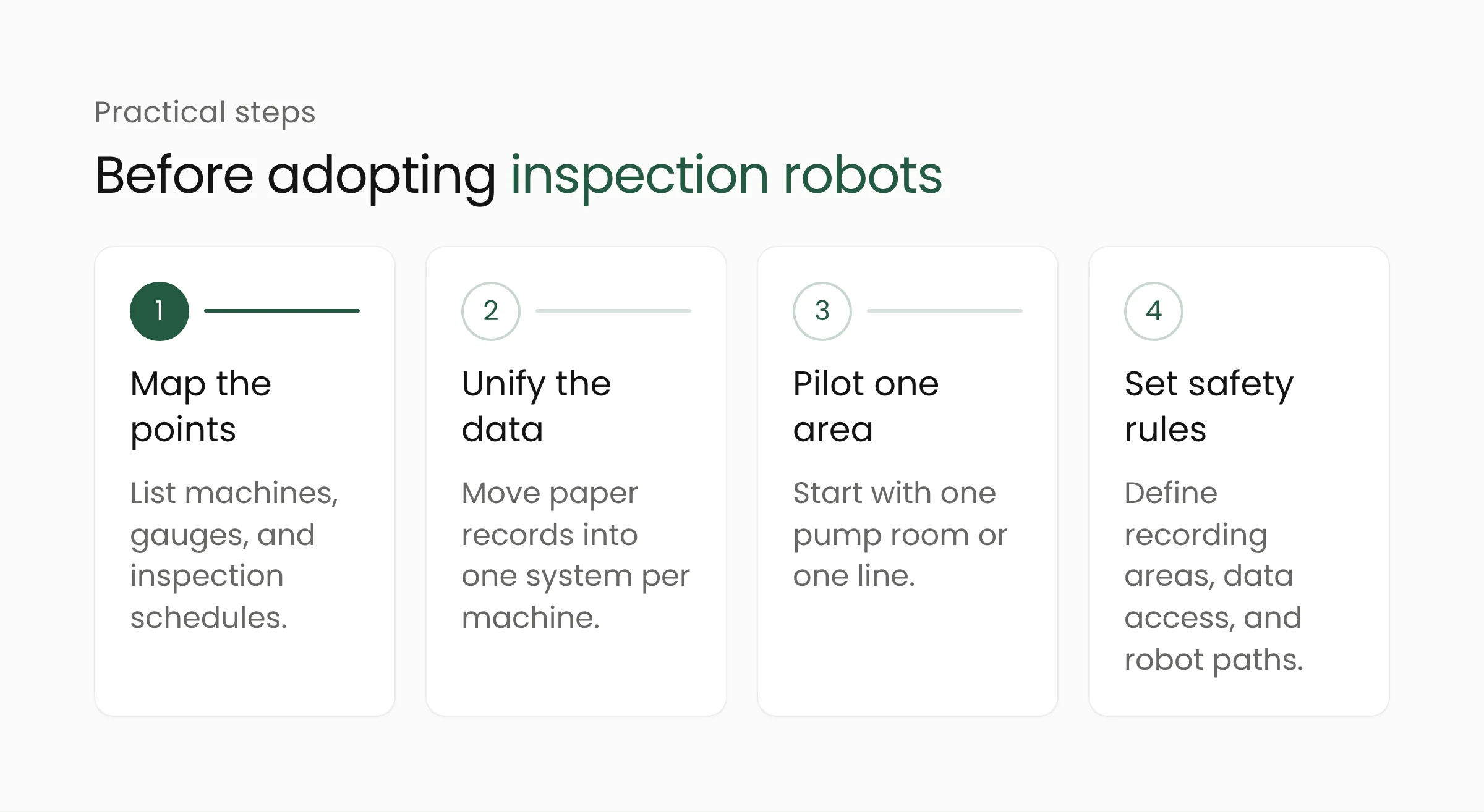
First, map the inspection points. List the machines, gauges, and inspection schedules. That list is the basis for deciding which points suit fixed sensors, which suit a roaming robot, and which should stay with staff.
Second, organize the data before automating. Spot’s value at GF comes from data collected and compared over time. Inspection results that still live on paper or in separate spreadsheets should first move into one system with a history for each machine. At this stage, Internet of Things services and monitoring dashboards help bring data from sensors and staff into one place.
Third, start with one area. GF ran Spot at one fab for several years before expanding to four sites. A plant can follow that pattern with a pilot in one pump room or one production line, then measure the results: early findings, downtime, and staff hours shifted to other work.
Fourth, set rules for safety and data. A roaming robot brings cameras onto the plant floor. Decide which areas may be recorded, who can access the data, and how the robot shares walkways with workers.
Robots are one option among several for gauge reading. Our article on Gemini Robotics ER 2 on Google Cloud covers an AI model that reads gauges from images, which also works with fixed cameras. The right choice depends on floor area, the number of points, and site risks. Merakit’s industrial automation team can help build that comparison from your plant’s data.
Frequently asked questions
What is the Spot robot?
Spot is a four-legged robot made by Boston Dynamics, the robotics company owned by Hyundai Motor Group. In industry, Spot is used for inspection rounds, carrying monitoring equipment such as visual and thermal cameras.
Will inspection robots replace plant staff?
At GF, the robots take over repetitive routine inspections. Staff are still needed to follow up on findings, repair equipment, and make decisions. The pattern is similar to sensor monitoring: data collection is automated, while decisions stay with the team.
When will Atlas start working in chip plants?
Onsite Atlas testing at GlobalFoundries begins in early 2027. It is an early adopter program, so no schedule for routine use, robot count, or specific tasks has been announced.
Closing thoughts
The Boston Dynamics and GlobalFoundries partnership shows that inspection robots have moved past the demo stage at some large plants. Their main value lies in steady routine data that is used to maintain machines before they break. If your plant wants to start by mapping inspection points and consolidating its data, the Merakit team is ready to talk.
Sources
- Boston Dynamics and GlobalFoundries Expand Robotics Collaboration, Business Wire, November 17, 2026
- Atlas moves beyond automotive industry with chipmaking trials, Interesting Engineering, November 17, 2026
- Boston Dynamics takes Atlas into chip factories in partnership with GlobalFoundries, The Korea Times, November 18, 2026
- Boston Dynamics Spot Robots Complete 90,000 Inspections at GlobalFoundries, Highways Today, November 18, 2026
- GlobalFoundries case study, Boston Dynamics
- Boston Dynamics Unveils New Atlas Robot to Revolutionize Industry, Boston Dynamics, January 5, 2026