Blog Satellite Internet
Starlink Mini 2 Adds a Swappable Battery for Remote Clinics
On this page· 7 sections
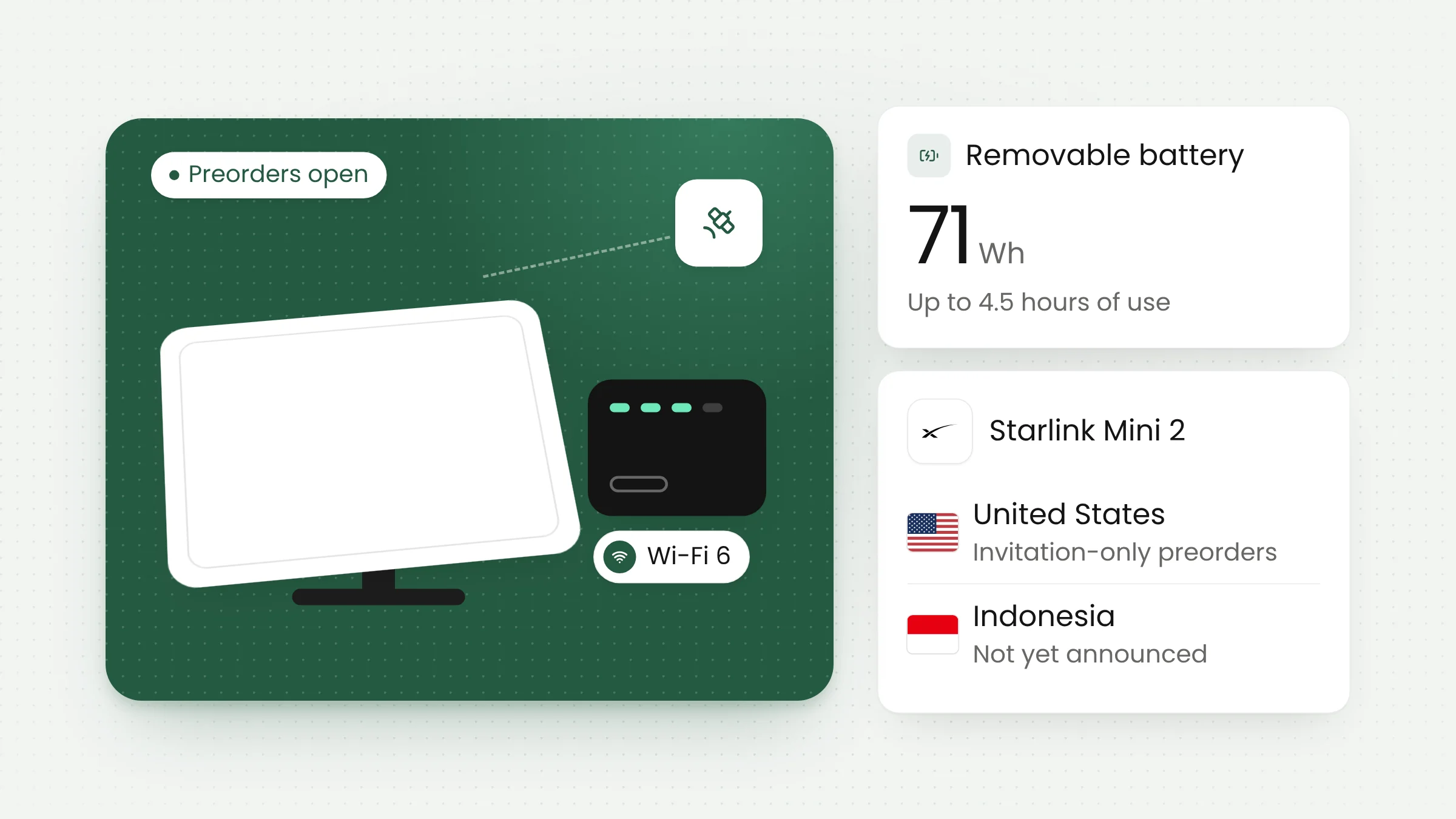
SpaceX unveiled the Starlink Mini 2 on November 10, 2026, a portable satellite internet dish that now carries its own power. Its removable 71 Wh battery is rated for up to 4.5 hours of use, which lets the dish run at sites with no electricity. For now, preorders are open by invitation only in the United States.
The change matters for field work that struggles with two gaps at once: mobile coverage and a reliable power supply. In Indonesia, one clear example is health care on remote islands and in isolated villages, where the previous generation of Starlink hardware was trialed in 2024.
Starlink Mini 2 specs and what changed
The first-generation Starlink Mini is compact enough to fit in a backpack, but it still needs an outside power source such as a wall outlet or a vehicle supply. The Mini 2 changes that with a battery module that clips onto the back of the dish.
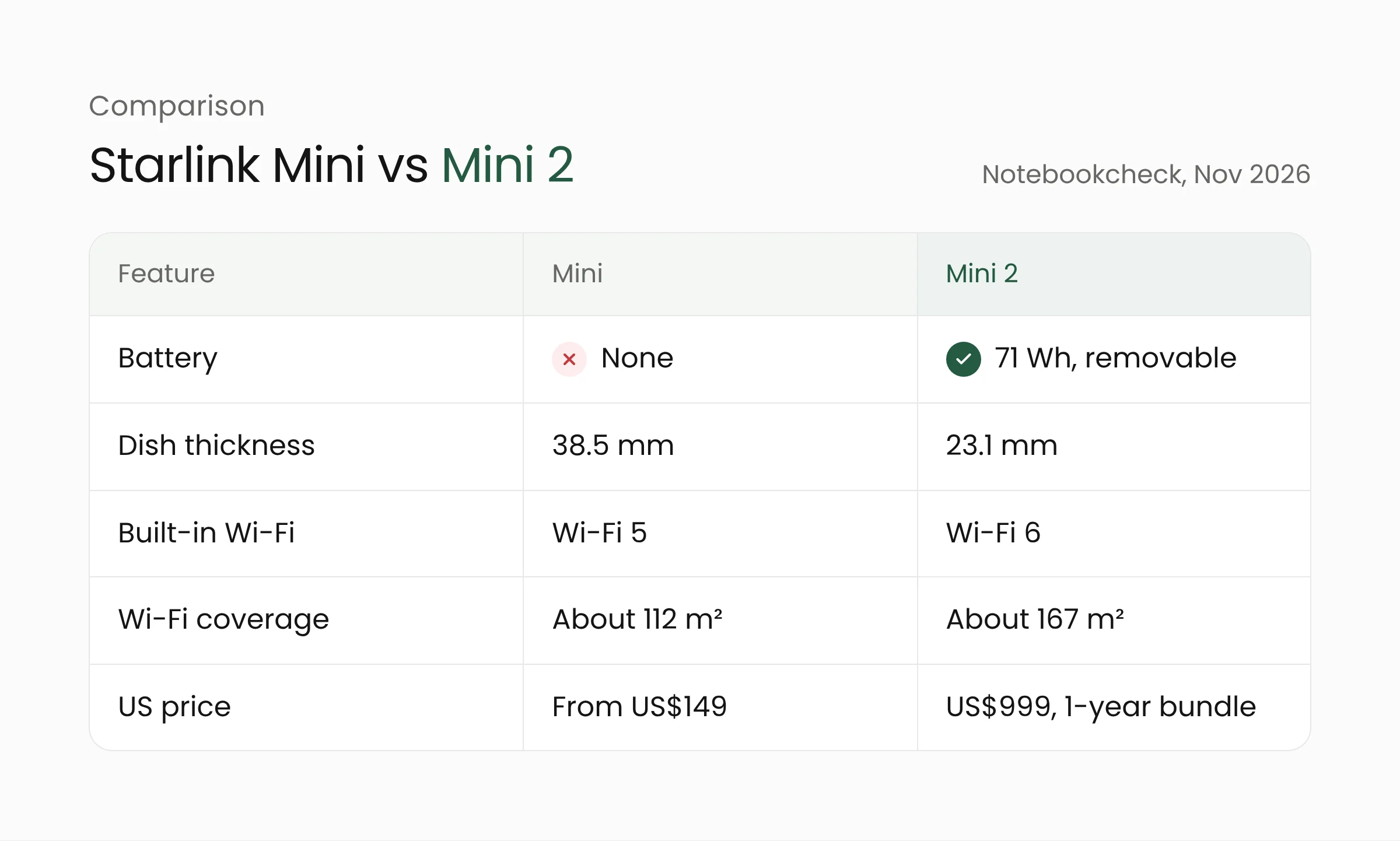
According to Notebookcheck, citing Starlink’s product page, the battery is rated at 71 Wh and weighs 490 grams. It attaches and detaches without tools, has LED charge indicators, and comes with its own USB-C port. A spare can therefore charge separately while the dish keeps running.
Other changes reported by The Next Web and Tesla Oracle:
- Thinner body. The dish is 23.1 mm thick, down from 38.5 mm on the original Mini. It weighs 1.6 kg with the battery and kickstand.
- Wi-Fi 6. The built-in router moves from Wi-Fi 5 to Wi-Fi 6, with coverage of up to about 167 square meters, up from about 112 square meters.
- 60 W USB-C charging. The dish charges over 60 W USB-C, and the box includes a 60 W charger and a 3-meter USB-C cable.
- Physical power button and IP67 rating. IP67 means the unit is dust-tight and can survive immersion in water within set limits. The dish also has a folding kickstand and a standard tripod thread.
These are SpaceX’s own figures and have not been independently tested. Download and upload speeds for the Mini 2 have not been detailed in the available reports either. Notebookcheck suggests that heavy uploaders, or users who run the dish straight from a vehicle’s power supply, may still be better served by the original Mini.
Pricing and limited availability
Starlink has not announced a standalone price for the Mini 2. What it has opened is a US$999 preorder bundle in the United States, available only to invited customers. The bundle includes the dish, one battery, and a year of Roam Unlimited service.
According to Notebookcheck, buyers pay a refundable US$100 deposit, and the remaining US$899 is charged at shipment. Starlink expects shipments to begin in mid-December 2026. Roam Unlimited covers use while moving at up to 100 miles per hour and international travel of up to 30 days at a time.
Before the announcement, Starlink website code spotted by the DISHYtech channel referred to a “Mini 2 Beta Kit” at US$249 and a spare battery at US$50. Those figures are tied to a limited beta program and have not been confirmed as retail prices. For comparison, the original Mini starts at US$149 in the United States.
Starlink says preorders will open to more customers and countries. Timing and pricing for Indonesia have not been announced, so buyers there should wait for official details on Starlink’s website, including which service plans apply locally.
Satellite links for remote community health centers
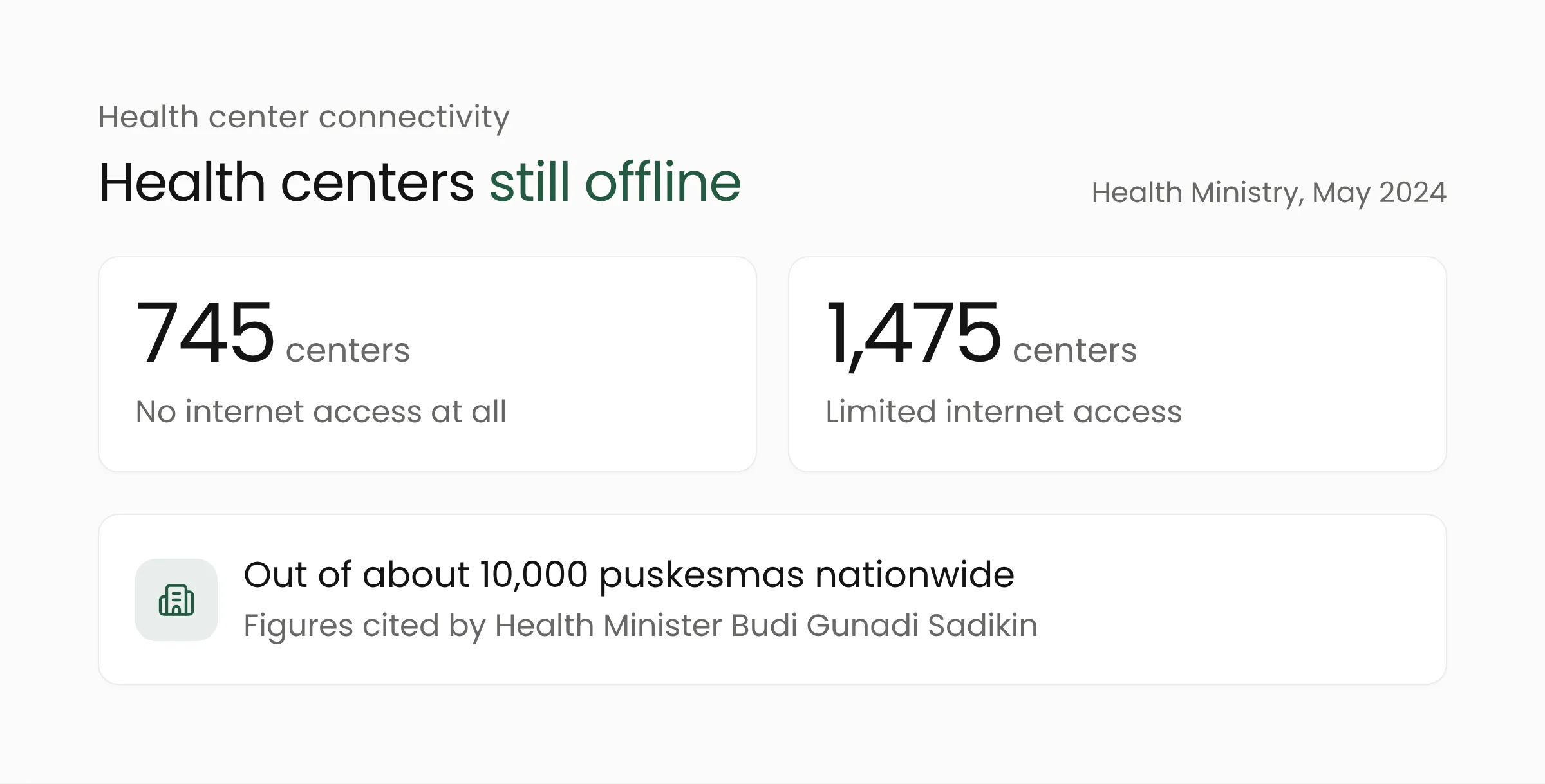
Indonesia’s Ministry of Health mapped the connectivity gap at its health facilities when it launched a partnership with Starlink on May 19, 2024. In the ministry’s official release, Health Minister Budi Gunadi Sadikin said that of about 10,000 community health centers, known as puskesmas, around 745 had no internet access at all. Another 1,475 had only limited access.
The trials at the time ran at two auxiliary health posts, Sumerta Kelod in Denpasar and Bungbungan in Klungkung, and at the Tabarfane health center in the Aru Islands, Maluku. The aim was to record immunizations, noncommunicable disease screening, and child weighing digitally through the ministry’s ASIK app, with results shown on a live dashboard. The ministry also named telemedicine and specialist consultations as the next goals. Subscription and equipment costs were covered by the Health Operational Assistance (BOK) fund within the Special Allocation Fund.
The field experience offered a lesson as well. Selular.id reported on May 22, 2024, that the Starlink unit at the Bungbungan post had been removed because the connection was not yet stable, and the post went back to its previous internet provider. A midwife there said speeds fluctuated while the unit was still searching for a signal. The episode shows that satellite links still need on-site testing before they become a facility’s main connection.
The Mini 2 adds an option for work that moves around, such as mobile clinics, village health posts far from the grid, or health teams during disaster response. A removable battery lets staff carry one or two spare modules instead of relying on a generator or a car battery. For a permanent link at a health center building, a standard dish on mains power still makes more sense.
What this means for remote health services
For district health offices, community health centers, and health organizations working in remote areas, a device like the Mini 2 only pays off when it is planned together with workflows and software. The following points can guide planning now, while availability in Indonesia remains unconfirmed.
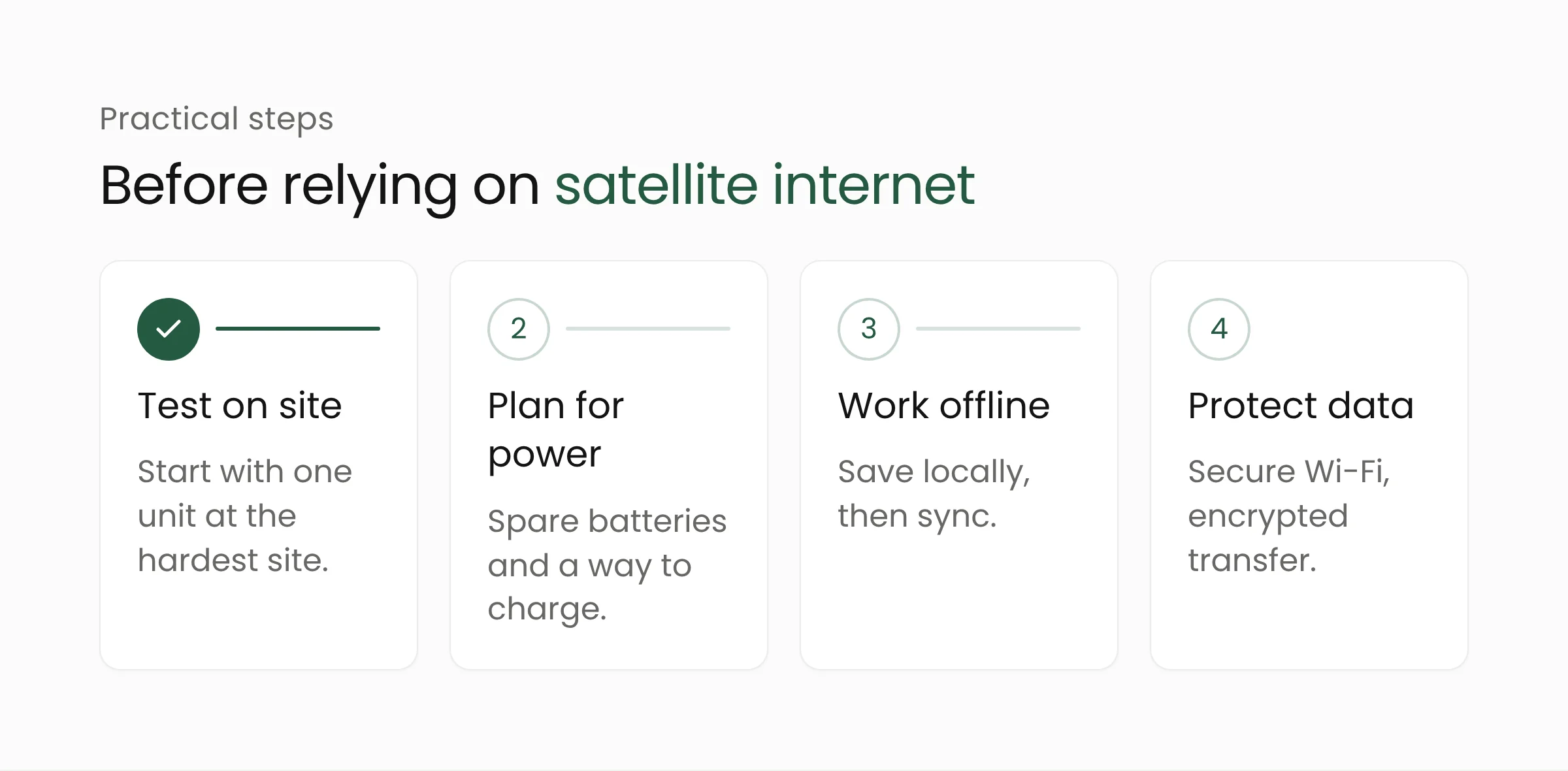
- Test the signal on site before buying at scale. Install one unit at the hardest location, log its stability and speed over several days, and compare it with alternatives such as mobile networks or radio.
- Calculate power needs per activity. The 71 Wh battery is rated for up to 4.5 hours. For longer sessions, decide how many spare batteries are needed and how they will be recharged, for example with solar panels or village power.
- Design apps that keep working offline. Satellite links can drop because of weather, tree cover, or a flat battery. Patient record apps should save data on the device first and sync it once the connection returns.
- Protect patient data on field networks. The Wi-Fi network from the dish needs a strong password, and health data should travel encrypted. Indonesia’s Undang-Undang Nomor 27 Tahun 2022 tentang Pelindungan Data Pribadi (Personal Data Protection Law) applies to this data.
The third step is often decisive. Phone or tablet apps built to work without a signal let health workers keep recording immunizations or screening results, whatever the connection quality that day. A mobile app development team usually handles this with local storage, a sync queue, and conflict handling for when two workers edit the same record.
Devices spread across the field also need monitoring. Temperature sensors in vaccine refrigerators or the battery status of a dish, for example, can report regularly to a district health dashboard so problems surface before an outreach session begins. Merakit helps health facilities and agencies build systems like this through its digital health solutions, including the accessibility considerations covered in our piece on Indonesia’s health app inclusivity guidelines.
Frequently asked questions
Can I buy the Starlink Mini 2 in Indonesia yet?
Not yet. Preorders are currently open by invitation only to selected customers in the United States, with shipments expected to start in mid-December 2026. Starlink says more countries will follow, but timing and pricing for Indonesia have not been announced.
How long does the Starlink Mini 2 battery last?
SpaceX says one 71 Wh battery provides up to 4.5 hours of use. Real-world runtime may vary with weather, temperature, and the number of connected devices. Because the battery is removable, users can carry spares and charge them separately over USB-C.
How is it different from Starlink’s direct-to-phone service?
The Starlink Mini 2 is a dish that broadcasts Wi-Fi, so nearby laptops, tablets, and phones connect through it. Direct-to-phone service works without an extra dish and was covered in our article on Starlink Mobile and Qualcomm’s terrestrial 5G network.
Closing thoughts
The Starlink Mini 2 points to satellite internet hardware that is smaller and no longer tied to a power outlet. For remote health services, its value depends on on-site testing, a power plan, apps that tolerate dropped connections, and sound data protection, all prepared together. If your team is designing field services like these, Merakit can help from the planning stage.
Sources
- Notebookcheck: Starlink launches rugged Mini 2 dish with $50 battery add-on (November 10, 2026, updated November 11, 2026)
- Notebookcheck: Starlink cuts Roam plan fees as it prices Mini 2 launch bundle at $999 (November 11, 2026)
- The Next Web: SpaceX launches Starlink Mini 2 with a swappable battery and Wi-Fi 6 (November 11, 2026)
- Tesla Oracle: SpaceX unveils Starlink Mini 2 satellite broadband terminal (November 10, 2026)
- Indonesian Ministry of Health: Kemenkes dan Starlink akan sediakan akses internet di puskesmas terpencil dan terluar (May 19, 2024)
- Selular.id: Starlink di puskesmas Bali dibongkar (May 22, 2024)