Blog Digital Health
Walmart Better Care Services Shows Care Costs Before Booking
On this page· 7 sections
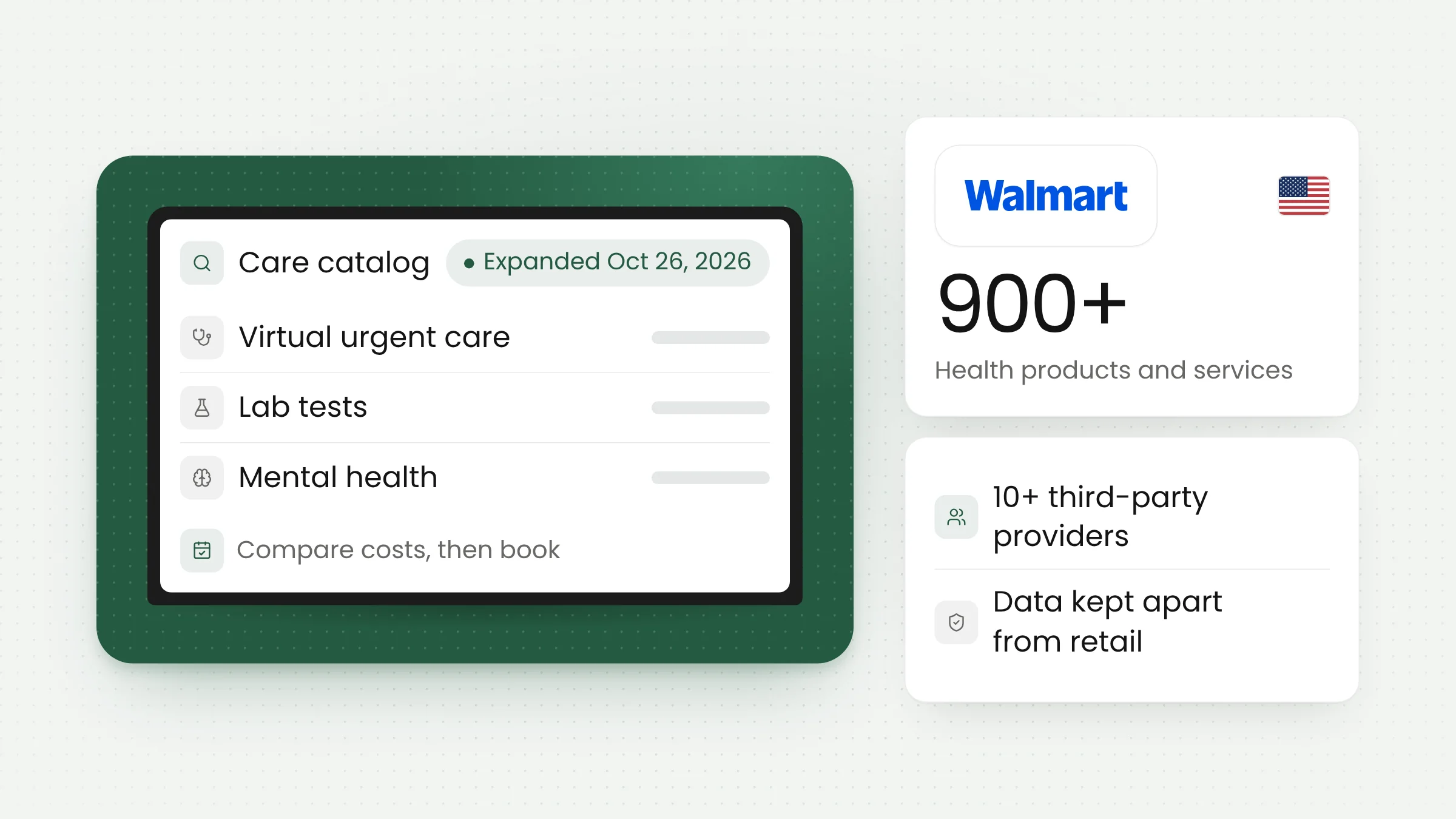
Walmart expanded Better Care Services on October 26, 2026, turning it into an online healthcare catalog. Through its website, app, and the Sparky assistant, US customers can compare providers, availability, and insurance-based cost estimates before they book. The technology comes from General Medicine, a startup founded by people behind PillPack.
What Walmart added on October 26
Better Care Services first launched in January 2026 as a network for virtual urgent care and behavioral health consultations. According to Supermarket News, the October update adds a central catalog where customers can compare services, providers, and likely costs on a single page.
The scope is now much wider. HLTH counts more than 900 health products and services, covering virtual and in-person urgent care, primary care, mental health, chronic disease management, and lab testing. Digital Health News adds pediatric care, nutrition services, and weight-management support. In-person urgent care is booked through Solv.
The division of labor is clear. Walmart runs the customer-facing experience, while General Medicine supplies the technology that connects care options, insurance coverage information, and cost estimates. General Medicine is also one of the providers in the catalog, alongside more than 10 third-party providers that were already part of Better Care Services. Walmart says it will add more providers over time.
General Medicine is based in San Francisco and was founded in 2023 by TJ Parker, Elliot Cohen, and Ashwin Muralidharan. The Shelby Report notes that Parker and Cohen previously founded PillPack, the online pharmacy Amazon acquired in 2018. General Medicine launched nationwide in May 2025 and offers more than 2,900 products and services on its own platform; the 900-plus figure above refers to what is available through Walmart. HLTH also reports that General Medicine has raised a $120 million Series B.
Parker sums up the company’s idea in four words: “Healthcare needs a store.” In his framing, care should be laid out like a shop shelf that people can understand, compare, and buy from.
How the healthcare catalog works
The flow Walmart describes resembles ordinary online shopping. A customer searches for a service, such as a blood test or a mental health consultation, and then filters the options by location, cost, availability, and personal preference.
Cost information is the part drawing the most attention. The catalog shows estimated out-of-pocket costs based on the customer’s insurance details, plus cash prices where a provider offers them. After choosing, the customer can book an appointment or arrange fulfillment, depending on the service.
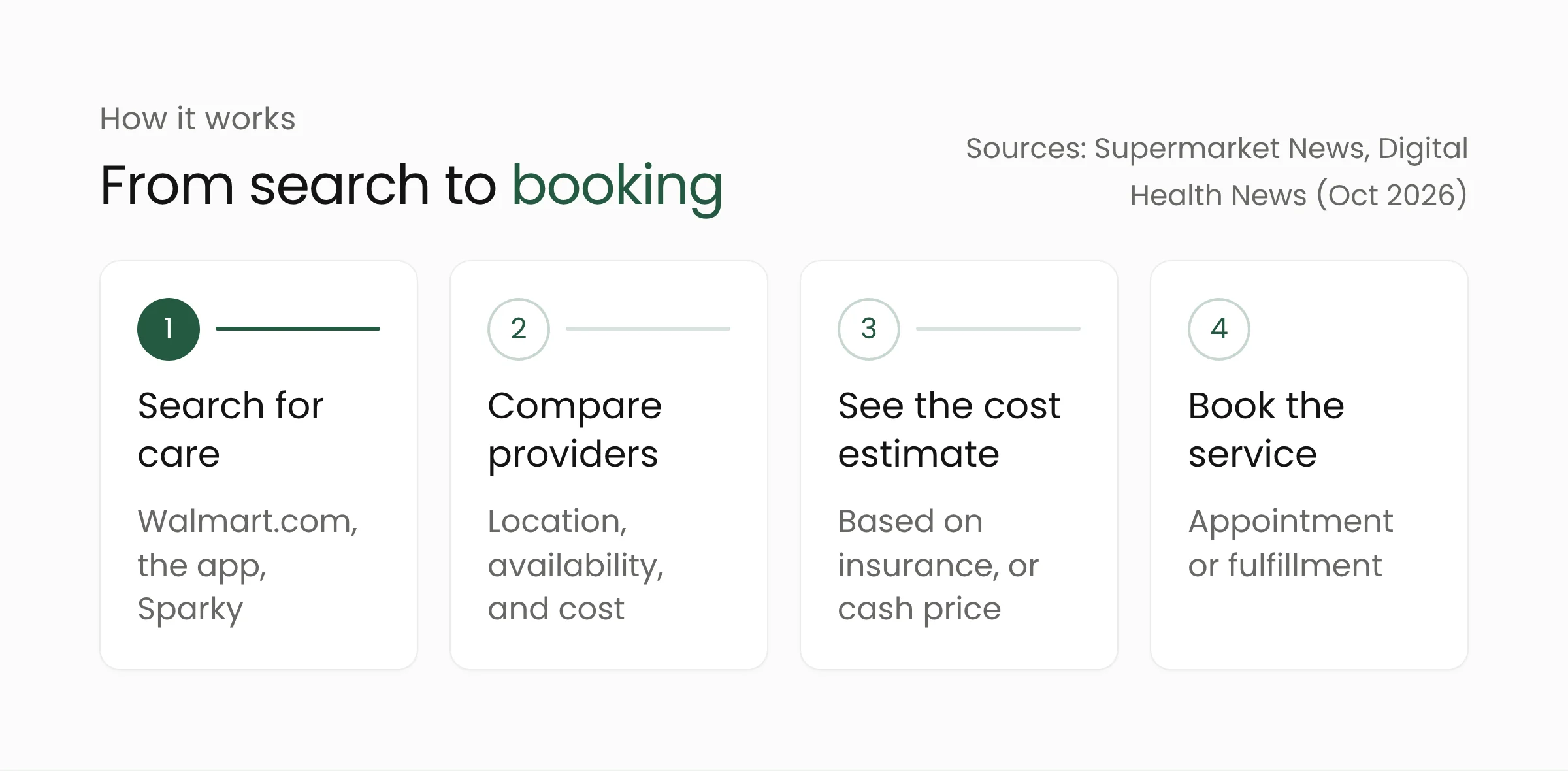
The catalog is available on Walmart.com, in the Walmart app, and through Sparky, Walmart’s conversational AI shopping assistant. In practice, customers can ask about care options in the same window they use to shop for household goods.
There are caveats. So far no independent comparison has tested whether catalog prices beat other channels. The claims about convenience and affordability come from Walmart and General Medicine themselves. Estimates also depend on the insurance information users enter and on each provider’s terms.
A new strategy after Walmart closed its clinics
The move stands out because Walmart once took a very different route. On April 30, 2024, Walmart announced it would close all 51 Walmart Health centers in five states, along with its virtual care service. As NPR reported via APR, the company pointed to a difficult reimbursement environment and rising operating costs, and concluded the business model was not sustainable.
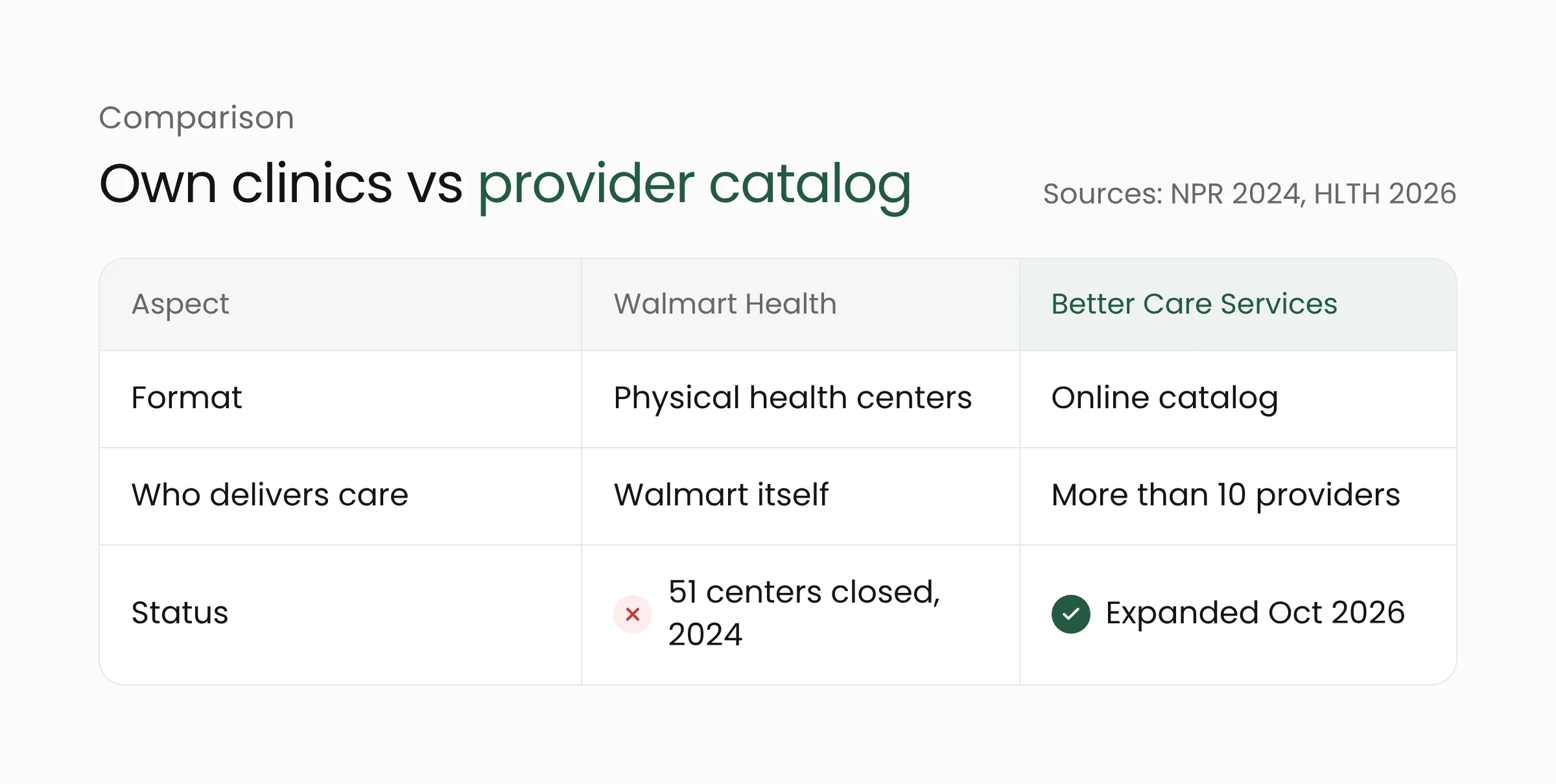
Walmart no longer runs clinics of its own. It now acts as a storefront that connects customers with other providers, who carry out the examinations and treatment. The model relies on assets Walmart already has: heavy customer traffic and a pharmacy network. HLTH puts weekly traffic across Walmart’s US stores and digital channels at about 150 million customers, while The Shelby Report cites a global figure of about 280 million customers and members a week. Walmart also operates roughly 4,600 pharmacies that can fill prescriptions after virtual visits.
Walmart frames the expansion as part of a long-running affordability effort that includes its $4 generic prescription program, launched more than 20 years ago. Ralph Clare, executive vice president of Health and Wellness at Walmart U.S., said the expansion brings more care options into one place so customers can compare them and decide what to do next.
On data, Walmart says General Medicine manages Better Care Services accounts and customer information separately from Walmart’s retail business. That separation matters because health data is sensitive, and customers will want assurance that their lab history does not sit alongside their grocery receipts.
What this means for clinics and pharmacies in Indonesia
Better Care Services is not available in Indonesia, and Walmart does not operate here. Still, the model Walmart is testing is relevant for private healthcare providers, pharmacy chains, and retailers that are starting to sell health services.
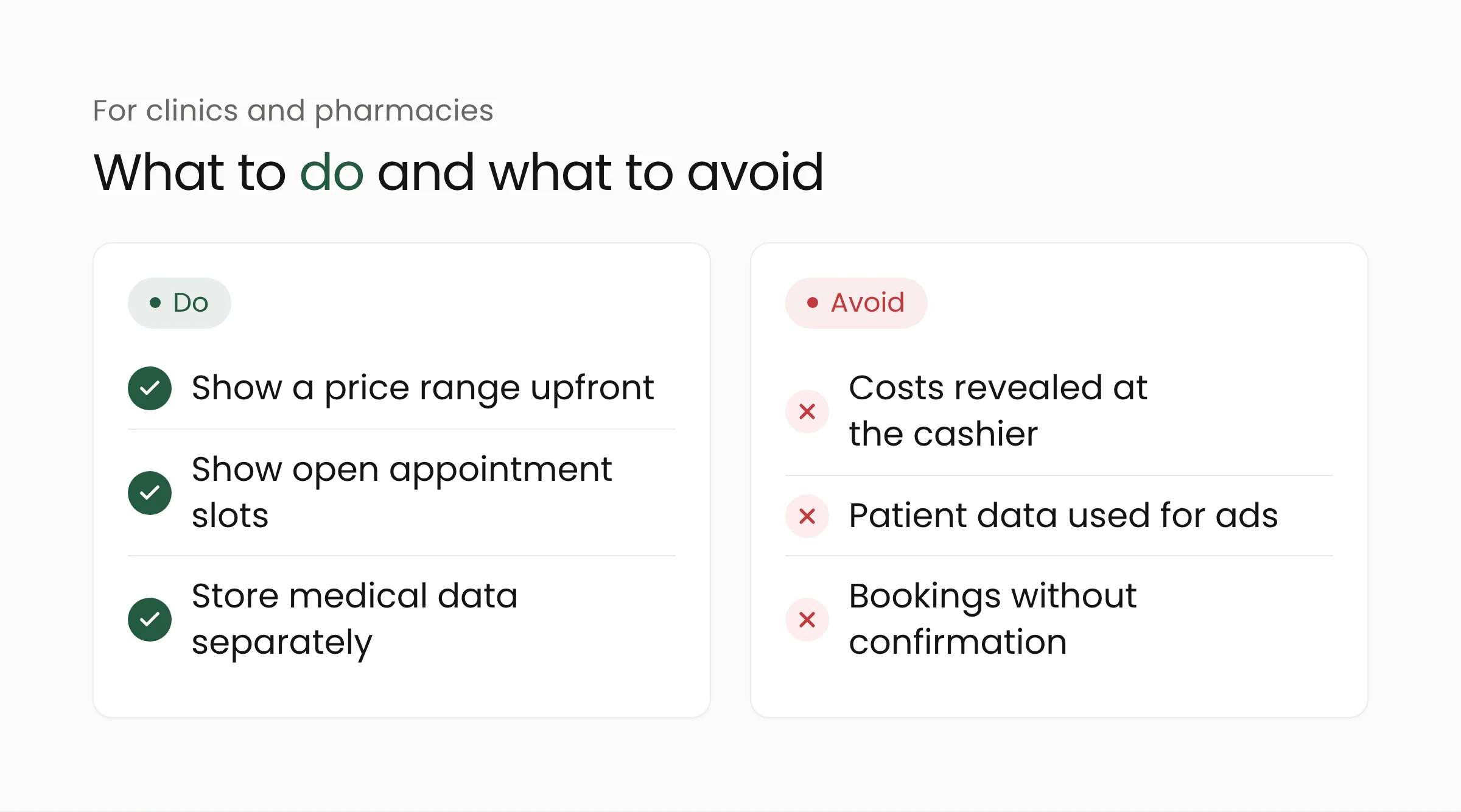
Show costs upfront. Patients covered by Indonesia’s national health insurance (JKN) generally do not pay per service, but self-paying patients and people with private insurance often learn the total only at the cashier. Clinics can start by publishing price ranges for the most requested services, such as a complete blood count or a general practitioner visit, along with items that may add to the bill.
Show slots that are actually open. A catalog only helps if doctor schedules and lab slots are updated in real time. JKN members are already used to taking queue numbers in the Mobile JKN app, so they will expect the same from private providers. Systems like this call for digital healthcare solutions designed alongside existing scheduling and medical record systems.
Keep medical data apart from marketing data. Walmart’s decision to separate health accounts from its retail business mirrors Indonesia’s Undang-Undang Nomor 27 Tahun 2022 tentang Pelindungan Data Pribadi (the Personal Data Protection Law), which classifies health data and information as specific personal data. Pharmacies and retailers with loyalty programs should avoid using medicine purchases or test results for advertising without clear consent.
Confirm every booking. Booking care is different from ordering goods. Patients need confirmation of the time, location, preparation steps, and cost breakdown before they arrive.
For retailers, the lesson is integration. Walmart links its care catalog with the pharmacies and shopping app customers already use. Pharmacy chains and health stores in Indonesia can weigh a similar approach through retail management systems that bring stock, transactions, and customer service together while keeping medical data walled off. For a related look at doctor booking through AI agents, see our piece on Zocdoc.
Frequently asked questions
Can Better Care Services be used in Indonesia?
No. The service is aimed at Walmart customers in the United States and depends on providers and insurance systems there. Walmart has not announced plans to expand it to other countries.
Are prices in Walmart’s catalog always cheaper?
There is no independent data to show that. The catalog displays cost estimates based on the user’s insurance and cash prices where available, so users can compare for themselves. The final amount still depends on the provider and the individual insurance plan.
Can Walmart see customers’ health data?
According to Walmart, Better Care Services accounts and customer information are managed by General Medicine separately from Walmart’s retail business. The technical details of that separation have not been made public.
Conclusion
Better Care Services marks a new direction for Walmart in healthcare: acting as a storefront that shows options and costs, and leaving care to experienced providers. For clinics, pharmacies, and retailers in Indonesia, clear pricing, accurate schedules, and separate handling of medical data are steps that can start now. If you are designing a booking service or a healthcare catalog, the Merakit team is ready to talk.
Sources
- Supermarket News: Walmart Expands Health Care Marketplace (October 26, 2026)
- The Shelby Report: Walmart Expands Better Care Services With General Medicine’s Healthcare Store (October 26, 2026)
- HLTH: Walmart Partners With General Medicine to Expand Better Care Services (October 27, 2026)
- Digital Health News: Walmart Expands Better Care Services Through General Medicine Partnership (October 27, 2026)
- NPR via APR: Walmart Says It Will Close Its 51 Health Centers and Virtual Care Service (May 1, 2024)
- InfoPublik: Mobile JKN, Solusi Praktis Akses Layanan Kesehatan dari Genggaman (June 6, 2025)
- Undang-Undang Nomor 27 Tahun 2022 tentang Pelindungan Data Pribadi