Blog Internet of Things
AIoT Sensors in Lamongan Grouper Ponds Cut Feed Use by 20%
On this page· 7 sections
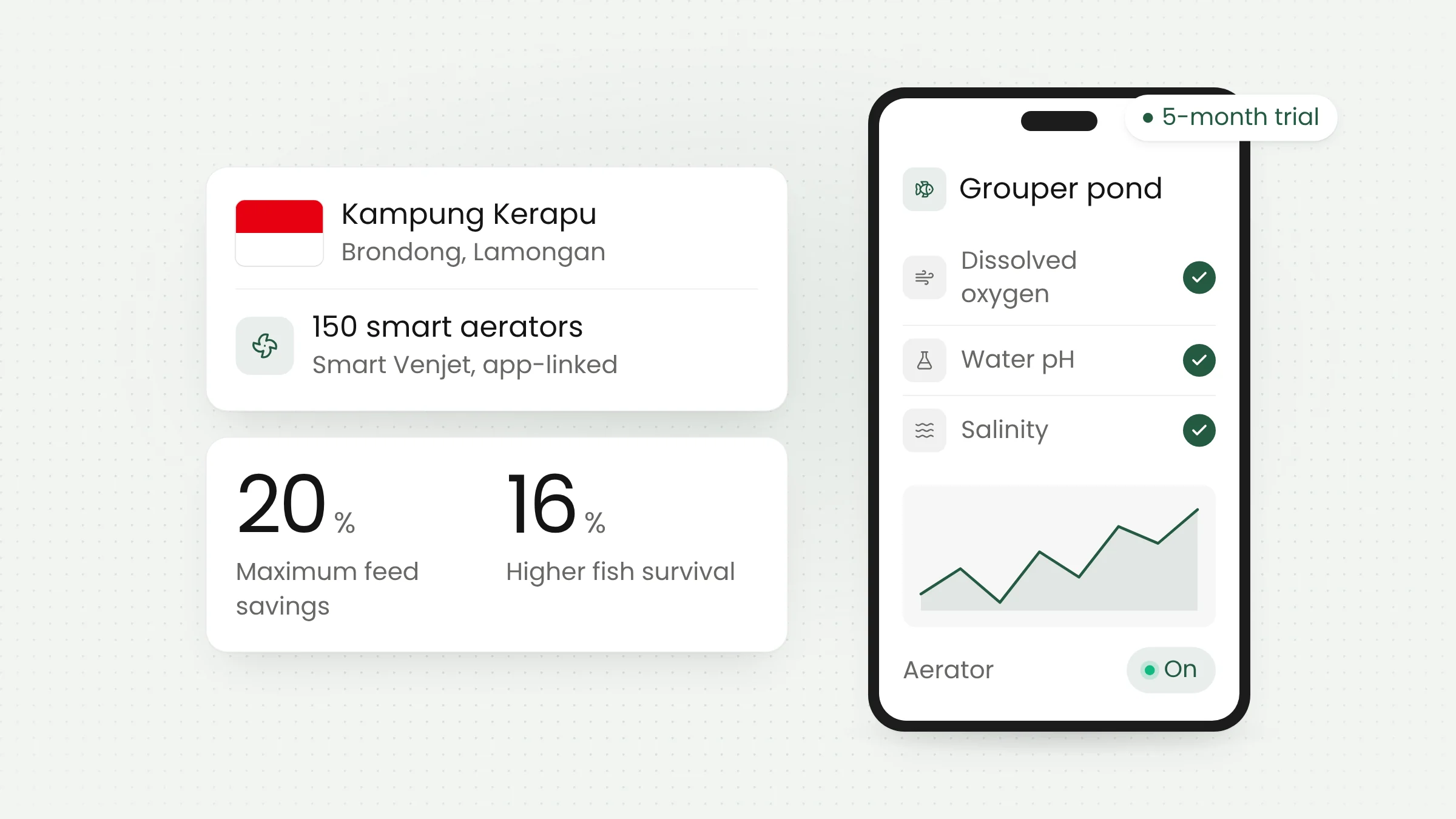
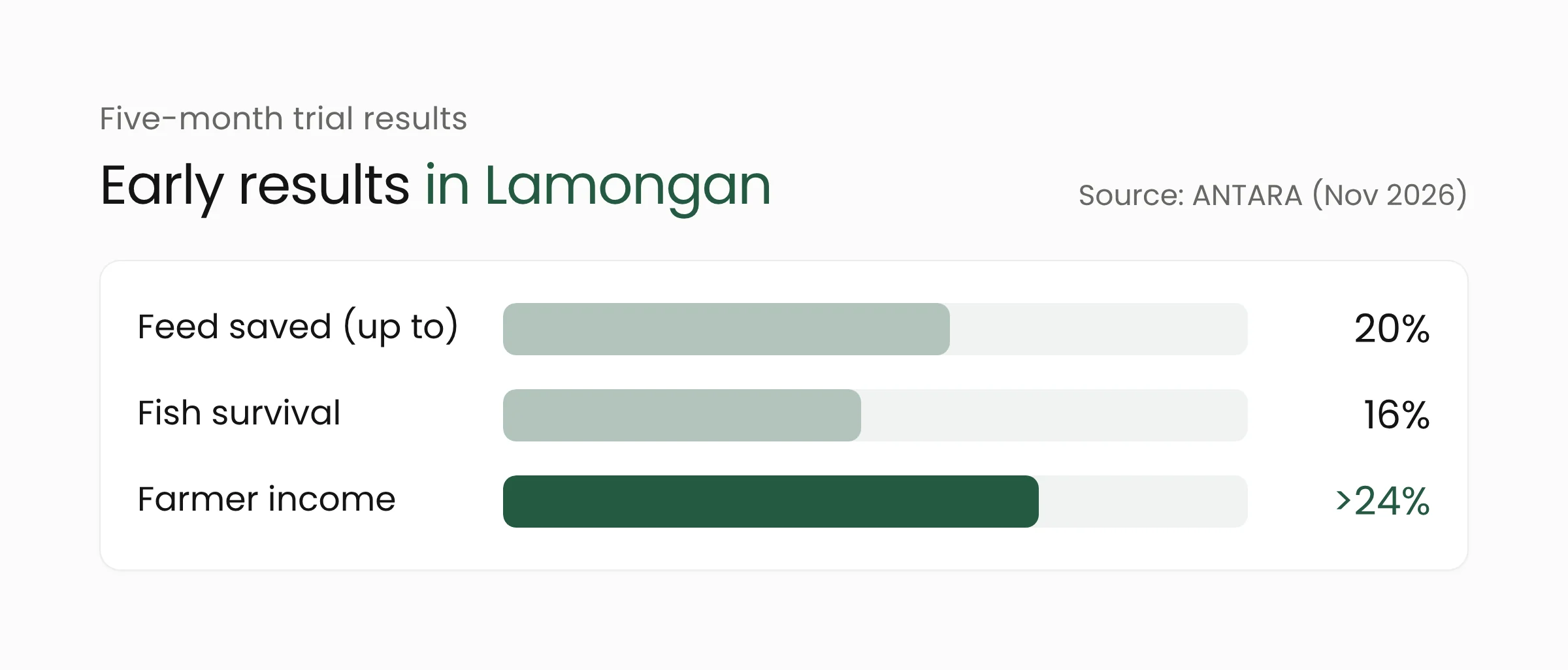
AIoT sensors installed in grouper ponds in Lamongan, East Java, have produced encouraging early results. According to Indonesia’s Ministry of Communication and Digital Affairs (Komdigi), a five-month trial cut feed use by up to 20%, raised fish survival by 16% and lifted farmers’ income by more than 24%.
Communication and Digital Affairs Minister Meutya Hafid shared the figures at a harvest event in Kampung Kerapu, a grouper farming village in Labuhan, Brondong district, on Tuesday, November 3, 2026. The project stands out because the technology sits in brackish ponds run by farmer groups, far from factory floors and office buildings. In that setting, practical problems such as mobile coverage, equipment upkeep and measuring results become very real.
The AIoT trial at Kampung Kerapu
AIoT stands for artificial intelligence of things: internet-connected sensors (IoT) combined with AI that processes the data they collect. In Lamongan, sensors track pond water quality. Farmers can check the readings and operate some of the equipment remotely, including from home.
The program is a collaboration between Komdigi, the Lamongan regency government and PT Venambak Kail Dipantara, an aquaculture technology company. Katadata reports that the government supplied 150 automatic jet aerators, called Smart Venjet, to grouper farmers. ANTARA says Komdigi and the company distributed the 150 Venjet aerators on July 22, 2026.
Meutya described the system as the work of local engineers developed together with Habibie Garden. Komdigi also pledged to back the rollout with adequate internet access. At the same event, Komdigi’s Director General of Digital Ecosystems, Edwin Hidayat Abdullah, spoke at a session titled “Teknologi Digital AIoT Tepat untuk Petani dan Pembudidaya” (appropriate AIoT technology for farmers and fish farmers), according to InfoPublik.
The site is sizable. ANTARA and Katadata say Kampung Kerapu covers more than 300 hectares of ponds managed by six farmer groups. Data from the Lamongan Fisheries Office, cited by ANTARA, put 2025 grouper production at 1,830.62 tons, worth more than Rp174 billion. Output through September 2026 reached 1,481.5 tons, including fish sold for export.
How the sensors and smart aerators work
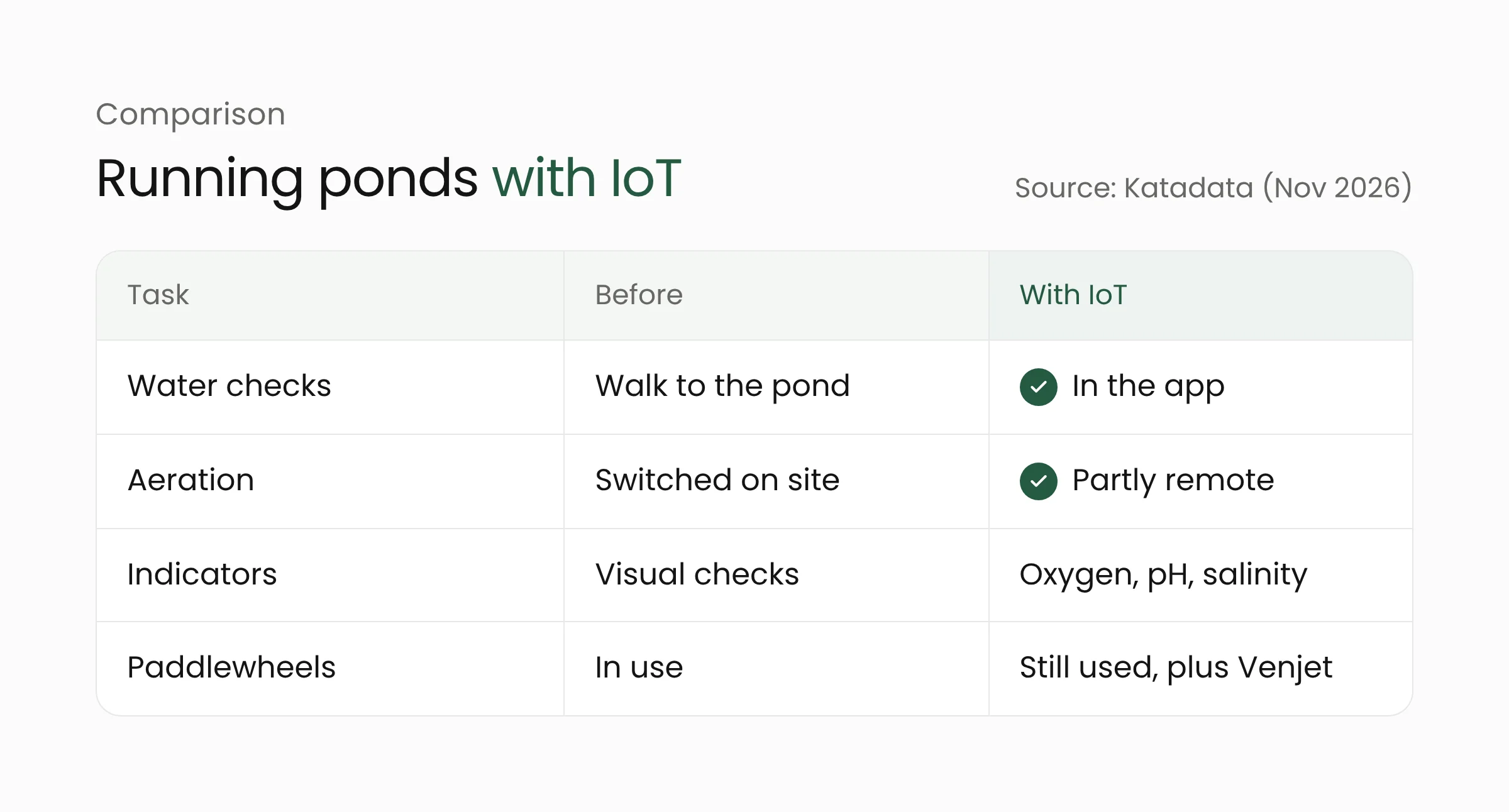
The sensors in Lamongan track three core water quality indicators: dissolved oxygen, pH and salinity. All three affect the health of farmed fish. Dissolved oxygen is the amount of oxygen in the water that fish can breathe. pH measures how acidic the water is. Salinity is the salt level, which matters in brackish ponds because it shifts with rainfall and tides.
Without sensors, farmers have to walk to each pond to check the water and switch on the paddlewheels. Katadata profiles Soekarno, a farmer in Labuhan who runs 38 ponds on about 10 hectares. Twenty of his ponds now have Smart Venjet units, so he can handle part of the monitoring and operation through an app without being on site.
Smart Venjet does not replace the existing paddlewheels. According to Katadata, paddlewheels move water for circulation and add oxygen, while the Venjet pushes oxygen into the water. Each unit has a control and monitoring system linked to the app. Katadata also says AI will be integrated with the IoT setup to track more indicators, though the report does not explain what role AI plays in the system today.
The design follows a familiar pattern in Internet of Things services across other industries. Sensors collect field data, a gateway sends it to an app, and people act on what they see on their phones. The difference is that a pond is a harsh place for electronics, with water, salt, heat and long distances from the nearest town.
Reading the early numbers carefully
The Lamongan results deserve credit, but the numbers need context. The monitoring period has run for only about five months, while grouper take roughly a year to reach harvest. Katadata notes the equipment had been in use for around six months, and Soekarno said his fish look healthier but he cannot yet confirm gains in overall productivity or cost efficiency.
The sources also describe the headline figure differently. ANTARA and Telset report the more-than-24% figure as an increase in farmers’ income, while Katadata describes it as a productivity gain. None of the reports explain the baseline or the measurement method behind the 20%, 16% and 24% figures.
Lamongan Regent Yuhronur Efendi said the IoT system has made fish healthier, reduced mortality and improved operational efficiency. Katadata quotes him as saying the size and quality of the grouper improved over the past five months. That is a reasonable early read, and a full harvest cycle will give a firmer picture.
Reports also differ on the extension of the mentoring program. ANTARA says Meutya approved extending the Kampung Kerapu digitalization mentoring from eight months to one year. Katadata says the government is still considering an extra four months, which would bring the total to a year. Both agree that farmers need more time to use the technology effectively.
Connectivity and maintenance come first
According to iNews, Meutya set out three conditions for AIoT to benefit farmers: being connected, growing and being maintained. Devices need an internet connection, that connection has to support productive work, and users need training to keep the equipment in good shape. She also asked recipients to use and care for the equipment they received.
The first condition is often the hardest to meet along the coast and in remote farming areas. Merakit has covered a similar challenge in its article on Starlink Mobile coverage for devices in remote locations, including water quality sensors at fish ponds.
What this means for aquaculture businesses
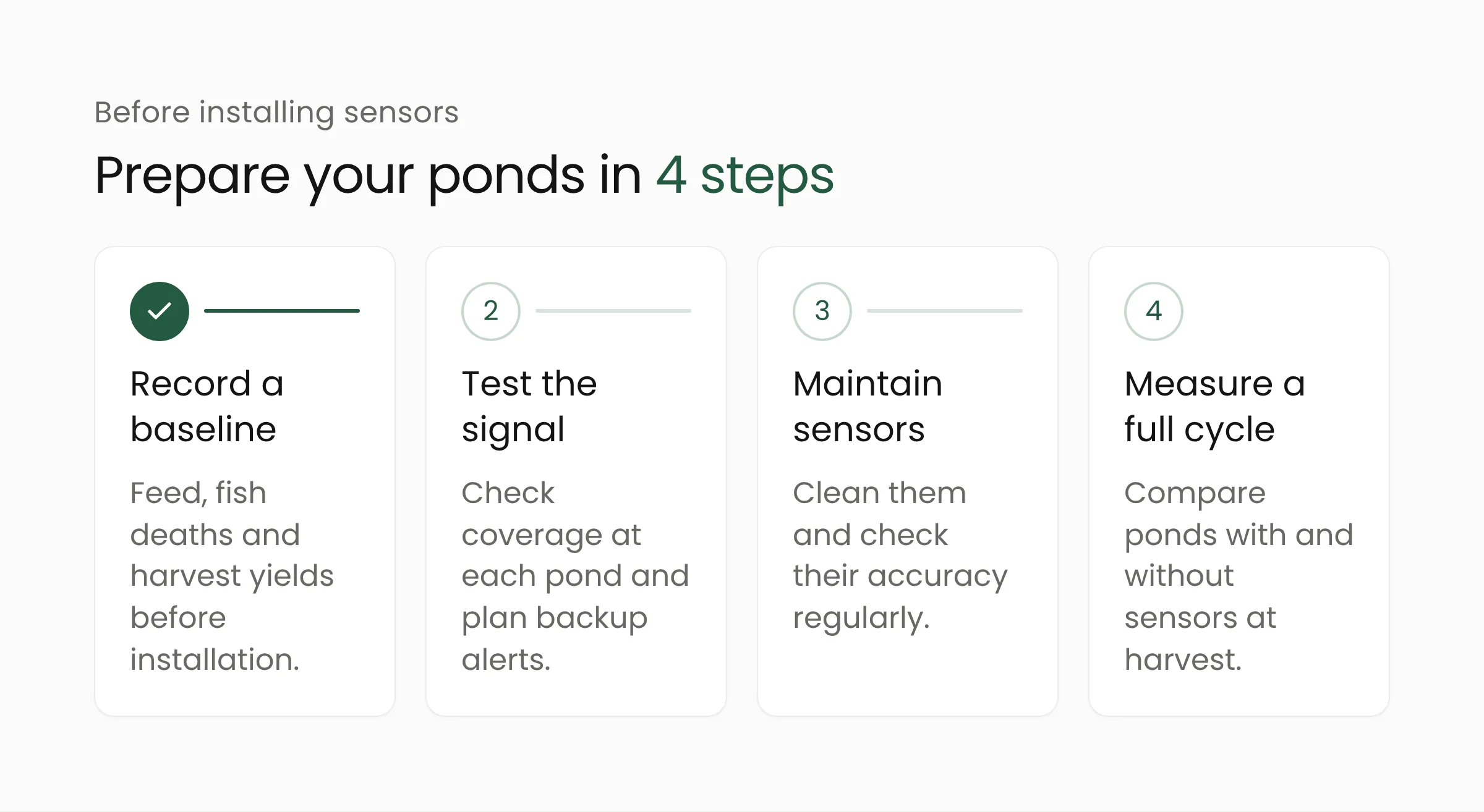
For pond owners, cooperatives and seafood processors, the Lamongan trial offers a useful checklist of what to prepare before installing sensors. Monitoring technology only pays off when the data is reliable and feeds into daily decisions.
Steps worth considering:
- Record baseline data first. Keep records of feed use, fish deaths and harvest yields before the equipment goes in. Without a baseline, claims about feed savings or higher income are hard to prove.
- Test the signal at every pond. Coverage in the middle of a pond can differ from an operator’s map. Plan how alerts will still get through when the connection drops, for example by SMS or by storing data on the device until the link returns.
- Schedule sensor maintenance. Sensors sitting in brackish water need regular cleaning and accuracy checks. Decide who is responsible in each farmer group.
- Measure results over a full cycle. Compare ponds with the equipment against ponds without it, and assess the outcome at harvest.
The data can also be put to further use. Water quality history, feeding schedules and harvest records from many ponds can be analyzed to find patterns, such as the hours when oxygen tends to drop. At that stage, data analytics helps turn daily logs into better-informed decisions. The same principle applies to industrial automation in feed mills, cold storage and fish processing plants.
For small-scale farmers, the group model used in Kampung Kerapu is worth a closer look. Sharing the cost of devices, modems and training makes adoption more affordable, and one group’s experience can guide the next.
Frequently asked questions
What do the sensors in the Lamongan grouper ponds measure?
The sensors track dissolved oxygen, pH and salinity in the pond water. Farmers can view the data in an app and operate some equipment, such as the aerators, remotely.
Does Smart Venjet replace pond paddlewheels?
No. According to Katadata, Smart Venjet is an additional tool. Paddlewheels are still used to circulate water and add oxygen, while the Venjet pushes oxygen into the water and comes with a monitoring system linked to an app.
Are the 20%, 16% and 24% results final?
Not yet. The figures come from a trial of about five months, while a grouper harvest cycle takes around a year. The available reports also do not explain the baseline or measurement method, so results from a full cycle are still needed.
Conclusion
The Kampung Kerapu trial shows that sensors and monitoring apps can work in a food sector that has long relied on experience and direct observation. The early results are positive, and a full harvest cycle will show how large the impact really is. If your organization is planning sensor-based monitoring for ponds, warehouses or production lines, the Merakit team can help design it, from the devices to the dashboard.
Sources
- ANTARA: Menkomdigi sebut AIoT tingkatkan hasil budi daya kerapu Lamongan (November 3, 2026)
- Katadata: Petambak Kerapu Lamongan Mulai Pakai AI, Produksi Ikan Melonjak (November 3, 2026)
- Telset: AIoT Komdigi Naikkan Pendapatan Pembudidaya Kerapu Lamongan 24 Persen (November 4, 2026)
- iNews: Petani dan Pembudidaya Konvensional di Lamongan Beralih ke AIoT (November 3, 2026)
- InfoPublik: Kemkomdigi Dorong Digitalisasi Budidaya Kerapu (November 3, 2026)