Blog Data Centers
Batam Starts Kabil SWRO Plant to Supply Its Data Centers
On this page· 7 sections
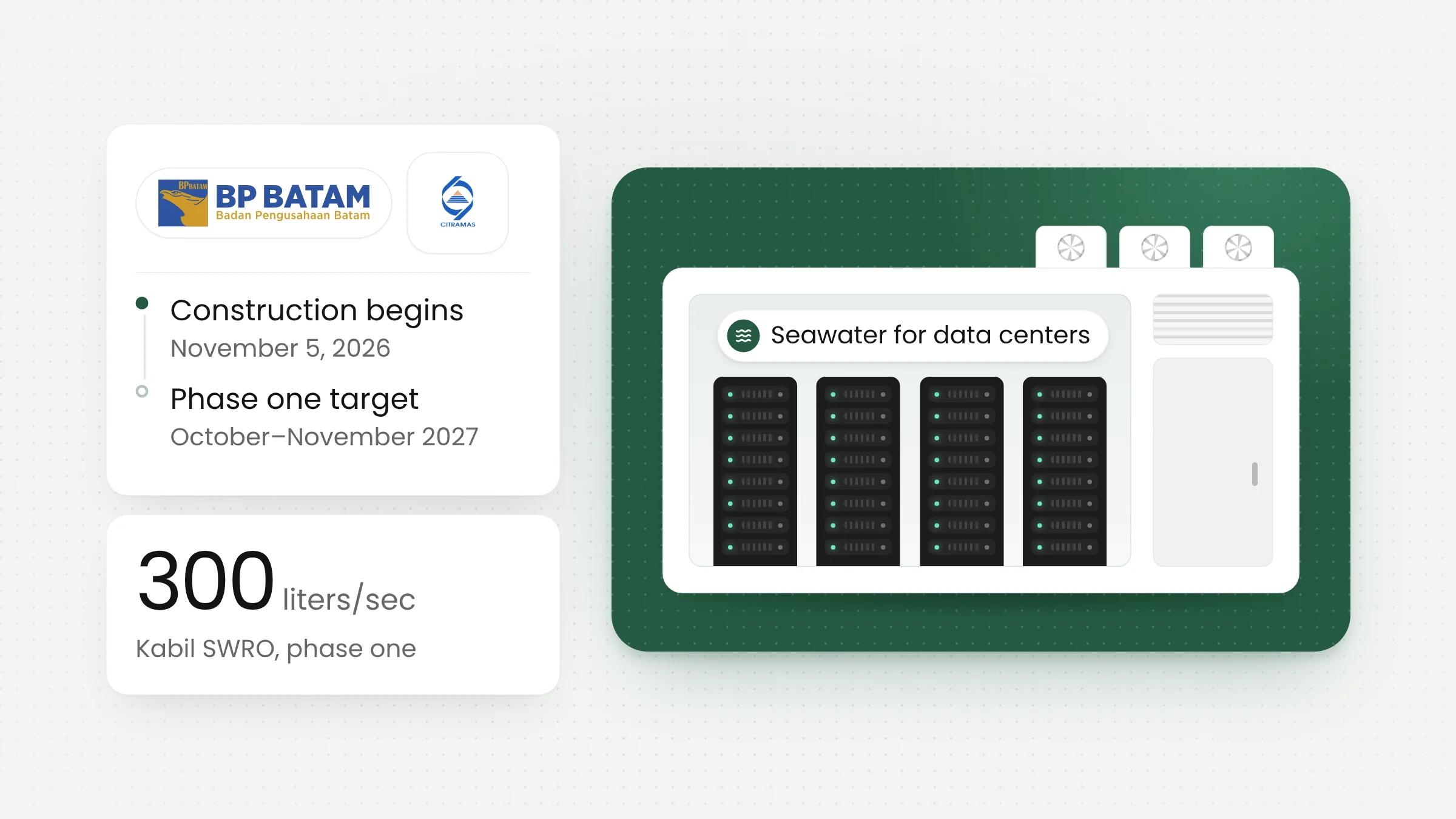
Construction of a seawater reverse osmosis (SWRO) desalination plant began on November 5, 2026 in the Kabil industrial estate on Batam, Indonesia. The first phase of the Kabil SWRO plant will produce 300 liters of fresh water per second for data centers in Kabil and Nongsa, at an investment of Rp600 billion.
The project matters because it exposes a constraint that rarely makes data center headlines. Most coverage focuses on power, subsea cables and server capacity. On Batam, fresh water now decides whether a data center can run at full load, because the island’s development authority, BP Batam, requires data center developers to secure their own supply.
The Kabil SWRO project and its capacity targets
The groundbreaking was held alongside the signing of construction contracts, attended by BP Batam, Kabil estate operator PT Kabil Citranusa and Citramas Group. According to ANTARA, De Nora Water PTE LTD will supply the SWRO system, PT Mitra Kharisma Konstruksi Prima will handle civil works and mechanical and electrical installation, and a separate contractor will build the seawater intake.
Sources differ slightly on timing. BP Batam chairman Amsakar Achmad said the first phase is due for completion in October 2027, while Citramas Group CEO Michael Wiluan targets operation in November 2027, as reported by Ulasan.co and Batamtv. Both outlets put the first-phase investment at $32.8 million, or about Rp600 billion.
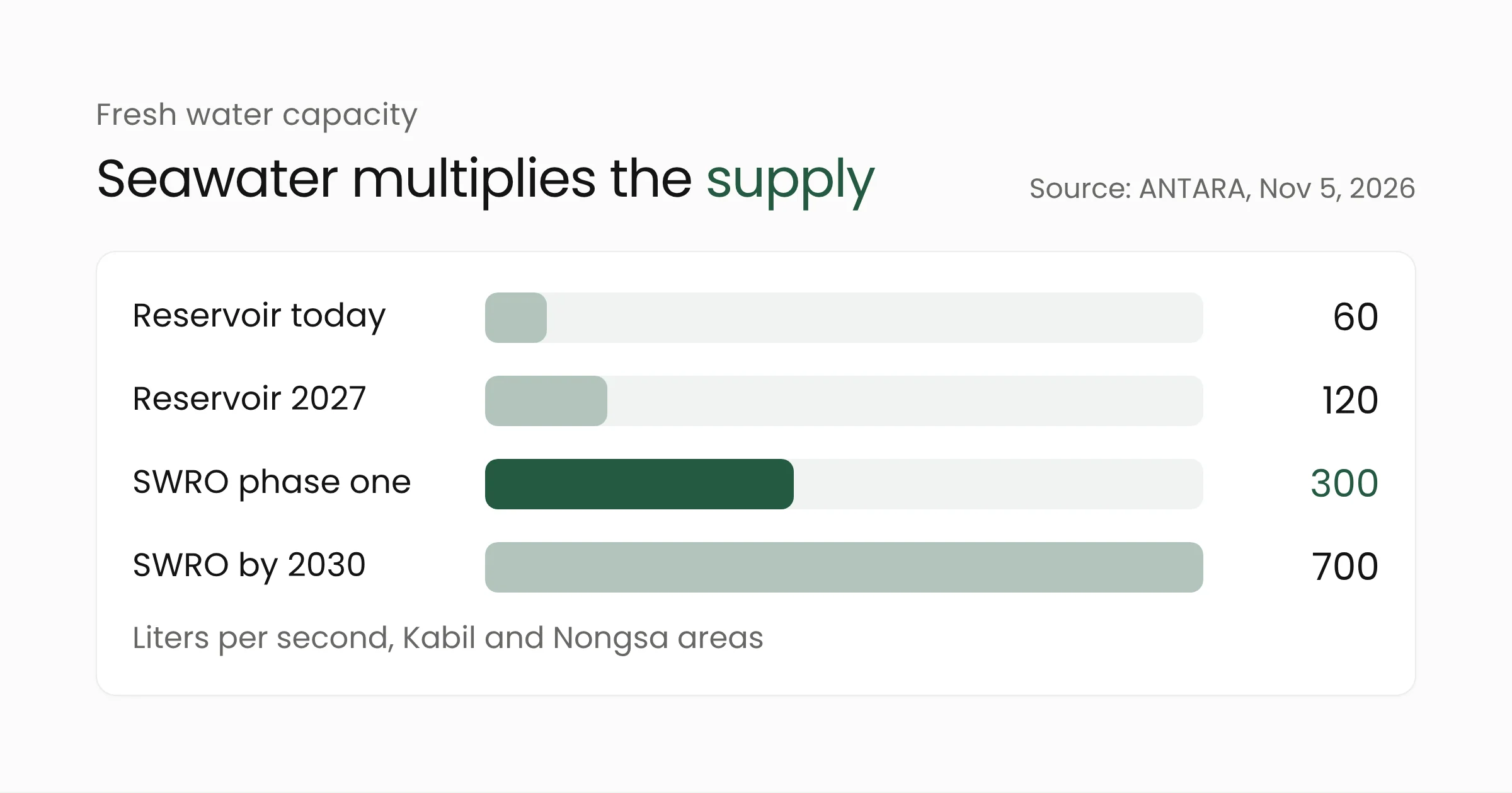
PT Kabil Citranusa president director Peters Vincen said the site was chosen for its proximity to the sea, about one kilometer from the development area. Treated water will travel through a 12 kilometer transmission pipeline from Kabil to Nongsa. The initial 300 liters per second is only the first step, with capacity rising gradually to 700 liters per second by 2030.
Until now, Kabil and the Nongsa Digital Park have relied on a reservoir in Kabil. ANTARA put its capacity at 60 liters per second, with plans to reach 120 liters per second in the first quarter of 2027. Citramas gave slightly different figures: current output of 5,200 cubic meters per day (60.2 liters per second), rising to 10,000 cubic meters per day (about 115.74 liters per second) in early 2027 through a new reservoir in Nongsa and recycled industrial wastewater.
How SWRO turns seawater into fresh water
Reverse osmosis pushes water through a membrane with extremely fine pores. Water molecules pass through while salt and other dissolved substances stay behind. Because seawater has to be forced through at high pressure, the process uses a significant amount of electricity and depends on well-maintained membranes.
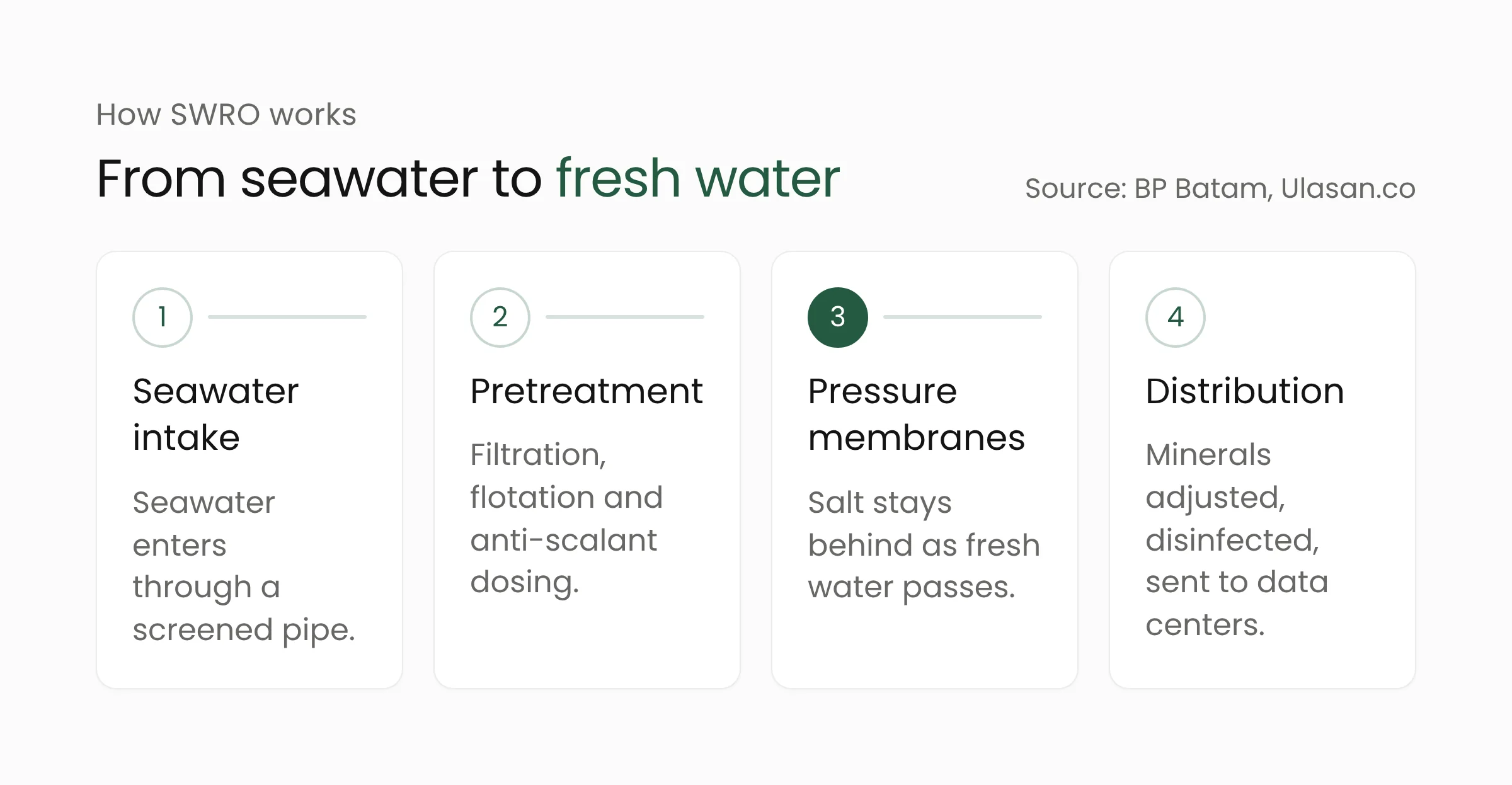
Ariastuty Sirait, BP Batam’s deputy for public services, outlined five SWRO stages in remarks reported by Ulasan.co. Seawater enters through a screened intake pipe. It then goes through pre-treatment: filtration, dissolved air flotation (lifting out particles with fine air bubbles) and anti-scalant dosing to prevent mineral buildup. The third stage separates salt using high-pressure membranes, which she said accounts for the largest share of the investment. Finally, the water’s mineral content is adjusted, and it is disinfected, stored and distributed.
In Kabil, Peters Vincen said treated water will be held in tanks before it is piped to data centers in Kabil and Nongsa. Ariastuty estimated that an SWRO plant of around 300 liters per second costs Rp400 billion to Rp500 billion and takes one to three years to build. That is BP Batam’s general estimate; the Kabil first-phase contract is valued at Rp600 billion.
Desalination also leaves behind concentrated brine. Peters said the brine will receive special treatment before it is discharged back into the sea, and that the method has been discussed with the local environment agency. Sudirman Saad, BP Batam’s deputy for strategic policy and licensing, said the project must hold every required permit, including marine spatial use approval (PKKPRL), an environmental impact assessment (Amdal) and a building approval (PBG), ANTARA reported.
Why Batam wants data centers to bring their own water
Many data centers use water for cooling, for example in cooling towers that shed heat from server halls through evaporation. Demand depends on facility size and technology. “Sebagian fasilitas membutuhkan sekitar 10 liter per detik (LPS), sementara pusat data berkapasitas lebih besar mungkin memerlukan hingga 100 LPS,” Peters Vincen told ANTARA, meaning some facilities need around 10 liters per second while larger ones may need up to 100. He added that some newer data centers can reduce water use for cooling or avoid it entirely.
The self-supply rule grew out of Batam’s limited raw water. In mid-October 2026, Gokepri reported that falling levels at the Nongsa reservoir during an El Niño dry season had disrupted supply to residential areas. BP Batam responded with an interconnection pipe from the Duriangkang reservoir network and more water tanker deliveries. In the same report, BP Batam said data center developers must build and operate their own SWRO plants once their facilities reach full operation, and that water from Duriangkang during construction is temporary and very limited.
The industry is still taking shape. Ariastuty said ten data center companies are registered on Batam: six in Nongsa Digital Park, two elsewhere in Nongsa and two in the Kabil Industrial Estate, each at a different stage of construction. Peters estimated current operating capacity in the area at 20 to 30 megawatts, with development targeted to reach one gigawatt by 2030.
Location is also on the national agenda. A draft presidential regulation on data centers encourages development outside Batam and Java while weighing power and water supply, as covered in our article on Danantara’s plans for local data center chips and equipment.
What this means for data center customers
Most organizations do not build their own data centers. Banks, online retailers, hospitals and government agencies rent colocation space or use cloud services hosted in facilities like those on Batam. Utility readiness at those sites feeds directly into service reliability. Points worth considering:
- Ask providers about water sources and cooling. When choosing a colocation site or cloud region, ask where the water comes from, what backup capacity exists during dry spells and whether cooling depends on water. Facilities with air-based or closed-loop cooling are less exposed to supply disruptions.
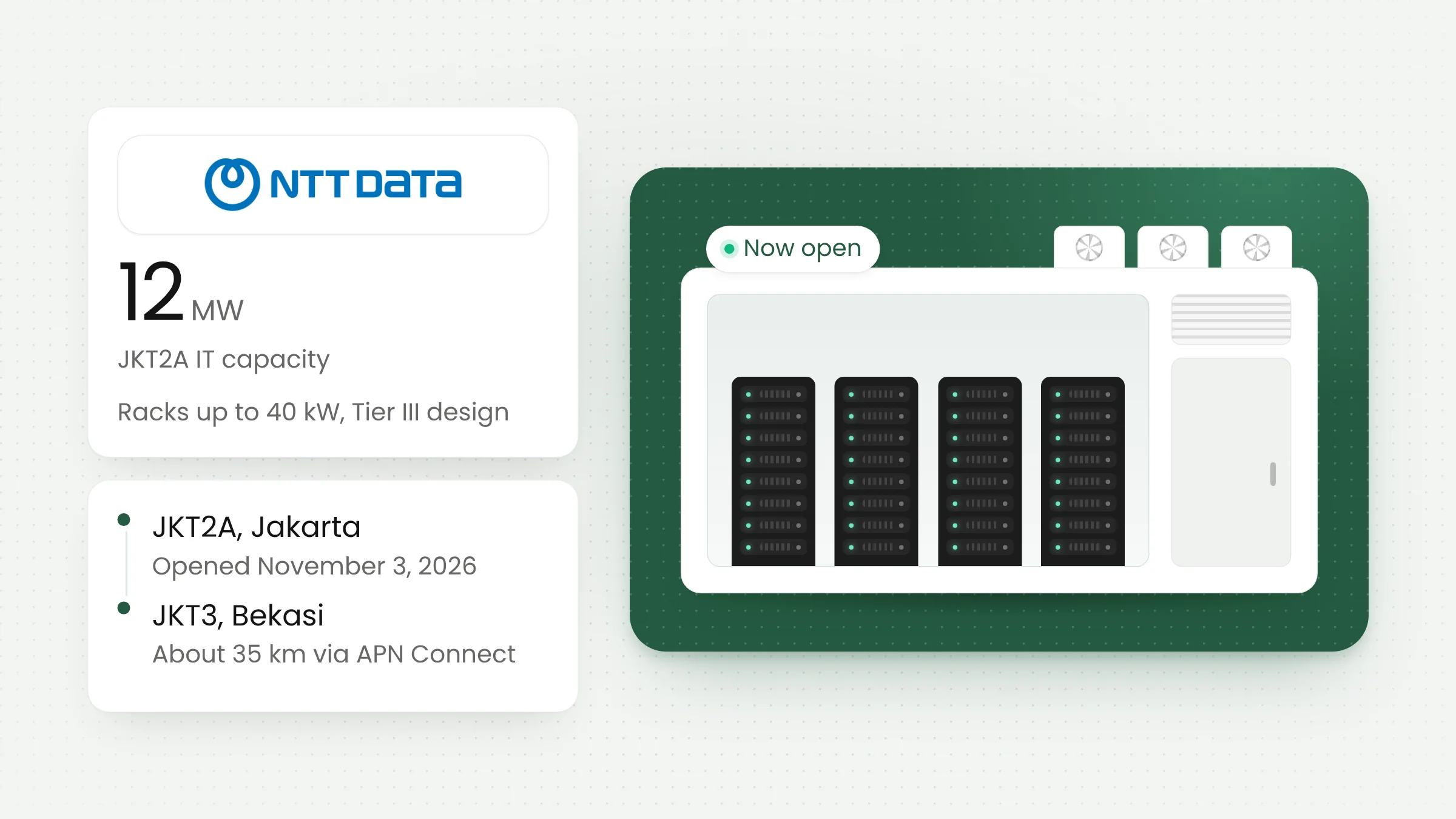
- Add utility risk to disaster recovery plans. A water or power disruption in one estate can affect several data centers at once. Replicating data to another site, as discussed in our article on the JKT2A data center and APN Connect, helps keep services running.
- Match migration plans to site readiness. The first phase of the Kabil SWRO plant is not due until late 2027. Organizations planning to move workloads to new Batam facilities should check each site’s operating status, including its water supply, before signing long-term contracts.
- Treat utilities as monitored data. Industrial estate operators and factories can install flow, pressure and tank level sensors connected to a monitoring system, so supply problems are spotted before they disrupt operations. This falls within industrial automation and utility monitoring.
Architecture choices matter as well. Workloads designed to move between zones or regions are easier to shift when one site runs into trouble. That strategy can be planned with a cloud computing services partner familiar with Indonesian compliance and data residency requirements.
Frequently asked questions
What is SWRO and why is Batam using it?
SWRO (seawater reverse osmosis) converts seawater into fresh water by forcing it through membranes that hold back salt. Raw water from Batam’s reservoirs comes under pressure when rainfall is low, so BP Batam considers SWRO the best current option for large industrial users such as data centers.
When will the Kabil SWRO plant start operating?
BP Batam’s chairman said the 300 liter per second first phase is due for completion in October 2027, while Citramas Group targets operation in November 2027. Capacity is planned to rise gradually to 700 liters per second by 2030.
How will the plant handle brine?
According to PT Kabil Citranusa, the concentrated brine left over from treatment will receive special handling before being discharged back into the sea, and the approach has been discussed with the local environment agency. The project also requires marine spatial use approval and an environmental impact assessment.
Conclusion
The Kabil SWRO plant shows that data center readiness rests on something more basic than server racks: reliable water and power. For organizations hosting systems in a data center, utility questions belong on the checklist when choosing a provider. The Merakit team can help you plan cloud infrastructure and a recovery strategy that fits your organization’s needs.
Sources
- ANTARA: Batam mulai bangun SWRO untuk penuhi kebutuhan air pusat data (November 5, 2026)
- ANTARA: BP Batam pastikan pembangunan SWRO wajib penuhi seluruh perizinan (November 5, 2026)
- Ulasan.co: Citramas Mulai Bangun SWRO Kabil 300 Lps untuk Data Centre, Target Operasi 2027 (November 5, 2026)
- Ulasan.co: 10 Perusahaan Data Center Terdaftar di Batam, Enam di Antaranya di Nongsa Digital Park (November 5, 2026)
- Batamtv: Investasi Rp600 Miliar, SWRO Kabil Dibangun untuk Perkuat Pasokan Air Kawasan Data Centre (November 5, 2026)
- Gokepri: Utamakan Kebutuhan Air Warga, BP Batam Buka Peluang Kemitraan Swasta dan Pemerintah (October 16, 2026)
- ANTARA: Industri besar di Batam wajib pakai SWRO, jaga kebutuhan air lokal (October 21, 2026)