Blog Digital Health
SATUSEHAT EMR and JKN Claims: Is Your Hospital Ready?
On this page· 6 sections
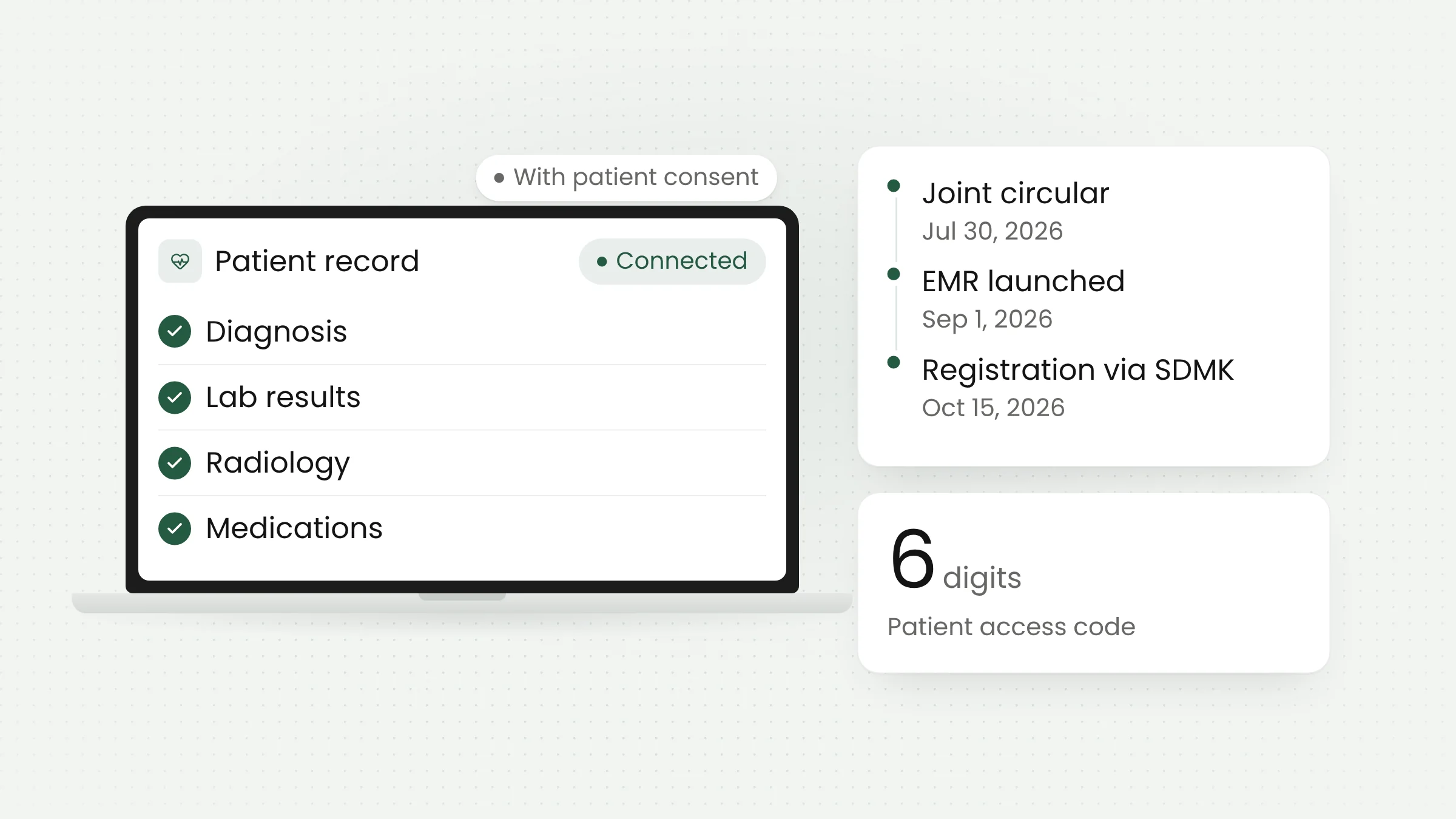
As of October 15, 2026, medical doctors and other health workers in Indonesia can register only through SATUSEHAT SDMK, another step in the Ministry of Health’s SATUSEHAT ecosystem. At its center sits SATUSEHAT RME, a national electronic medical record (EMR) that is now tied to claims under JKN, the national health insurance. Here is what it means for hospitals and clinics.
What SATUSEHAT RME is
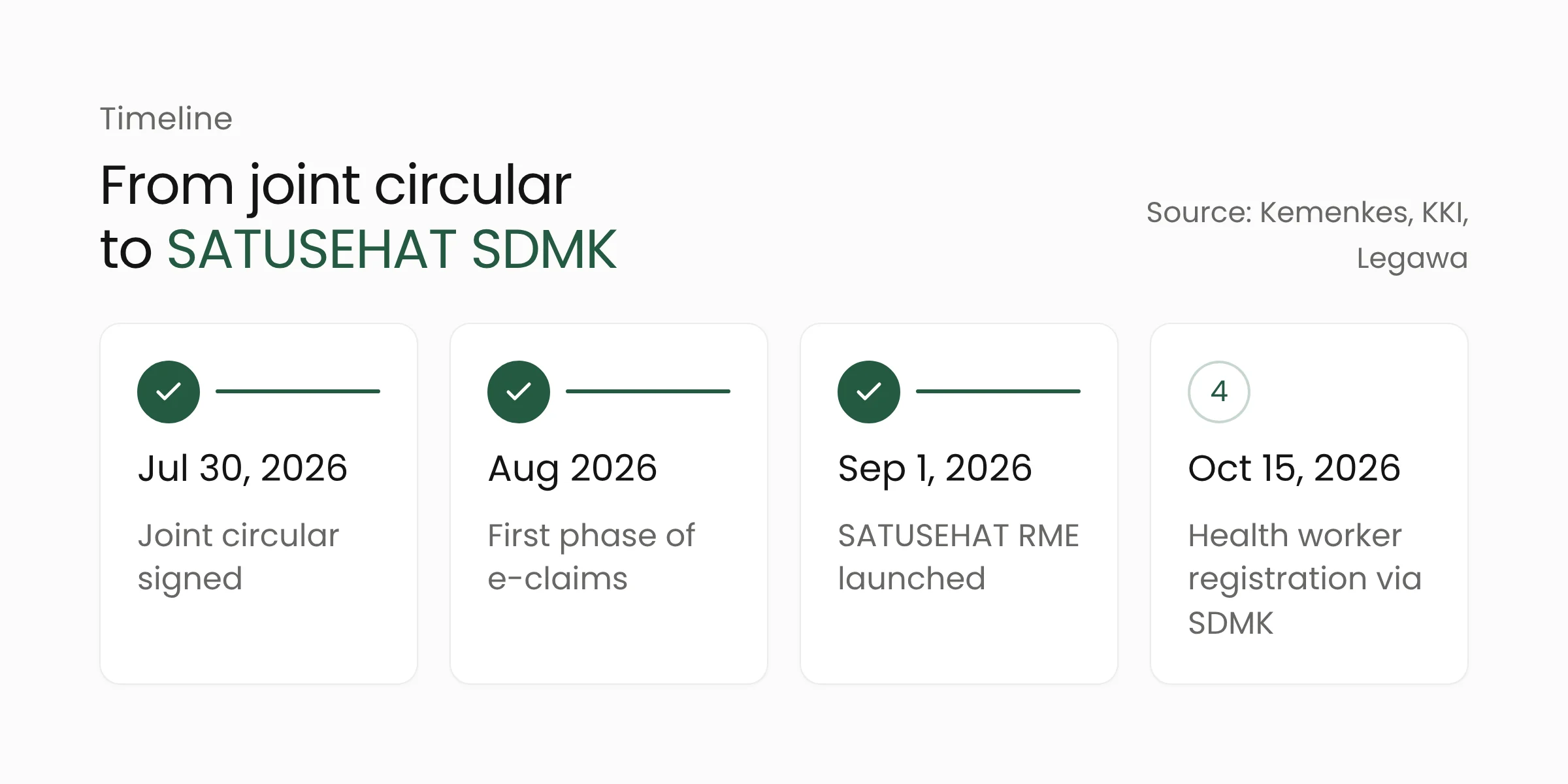
The Ministry of Health (Kemenkes) launched SATUSEHAT Rekam Medis Elektronik, or RME, on September 1, 2026 in Jakarta. The idea is simple: a patient’s health data from many healthcare facilities (fasyankes) connects into one national ecosystem instead of staying locked inside each hospital’s or clinic’s own system. Health Minister Budi Gunadi Sadikin described the difference this way: “Data ini disimpannya bukan berbasis fasyankes, tetapi berbasis individu.” In English, the data is stored by individual, not by facility.
Data follows the patient, not the building
According to Kemenkes, the data integrated per person covers diagnoses, lab results, medications, medical procedures, vital signs, and radiology results. The effect is clearest at referral time. Referrals between facilities no longer need physical files or manual re-entry, and existing lab results can be viewed by another facility if the patient grants access, so repeat tests can be avoided.
Patients with a verified SATUSEHAT Mobile profile can also open their own medical summary after an examination, consultation, or procedure. Rollout is phased. It starts at RSUP Dr. Wahidin Sudirohusodo in Makassar and RS PON Prof. Dr. dr. Mahar Mardjono in Jakarta, then expands to every facility already integrated with SATUSEHAT.
Who can open a patient’s data
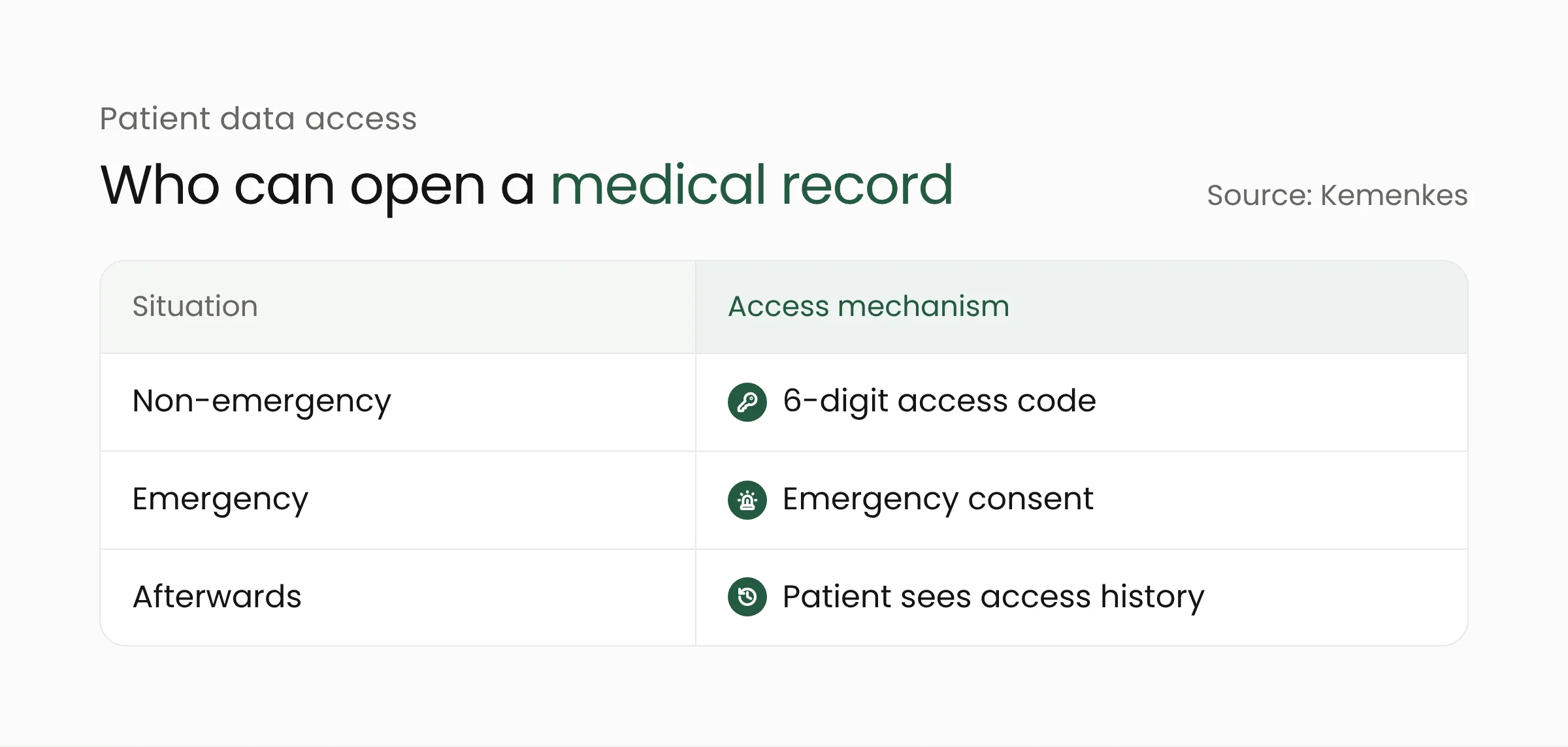
Easier access comes with consent rules. Kemenkes explains that in non-emergency situations, access is granted after the patient approves it with a six-digit access code from SATUSEHAT Mobile. In an emergency, when the patient is unconscious or unable to consent, health workers can use an emergency consent mechanism for the sake of patient safety. Patients can still see the access history in SATUSEHAT Mobile.
From PDF files to electronic claims
The national EMR is not the only news. On July 30, 2026, Kemenkes, the Corruption Eradication Commission (KPK), the Ministry of Home Affairs, BPJS Kesehatan, and the National Cyber and Crypto Agency (BSSN) signed a Joint Circular Letter (Surat Edaran Bersama) on accelerating SATUSEHAT-integrated EMR for JKN claims management. It sets an NIK-based (national ID) EMR integrated with SATUSEHAT as a supporting electronic document for claims, and serves as a national guideline for hospitals. Kemenkes names the goals as more transparent and accountable services, a traceable digital record, and prevention of irregularities in services and claims.
An analysis by Legawa of the circular calls the policy “No EMR, No Claim”: claims are submitted and verified only from the EMR. The same analysis lists several technical requirements. EMR data must carry a validated NIK, the medical summary used for a claim must carry a certified electronic signature, data must reach SATUSEHAT complete and in real time, and claim documents go through Kemenkes’ E-Klaim application. Systems exchange data through HL7 FHIR, a shared format that lets software from different vendors read health data the same way.
Phased, not all at once
Legawa’s analysis notes that the first phase applies from August 2026 to hospitals with infrastructure ready, while hospitals not yet ready may keep using PDF files during the transition. A later phase is described as falling in June 2027. We could not find that date in an official Kemenkes release, so treat it as an estimate and check official documents.
The scale of claims explains the push. BPJS Kesehatan’s IT director, Setiaji, said the agency processes about two million claims a day from primary and referral health facilities. During a visit to RSUP Dr. Wahidin Sudirohusodo, he said claim data should ideally come straight from the EMR rather than being printed as PDFs and uploaded by hand, and that a certified electronic signature from BSSN or BSrE is needed to make EMR documents legally valid. RSUP Wahidin itself has a one-year transition for electronic signatures starting August 2026.
Health workers switch lanes too
On the workforce side, announcements on the Indonesian Health Council (KKI) site and on SATUSEHAT SDMK both state that from October 15, 2026, registration of medical and health workers can be done only through SATUSEHAT SDMK. The council also takes requests to convert an old registration certificate (STR) into a lifetime STR on the same platform. However, the council’s FAQ page, when we read it, still said first-time STR and renewals go through the KKI registration portal, so check the latest announcement before filing paperwork.
What this means for your hospital or clinic
The good news is that most of the preparation is tidying up that is worth doing whatever the deadline. A few concrete considerations:
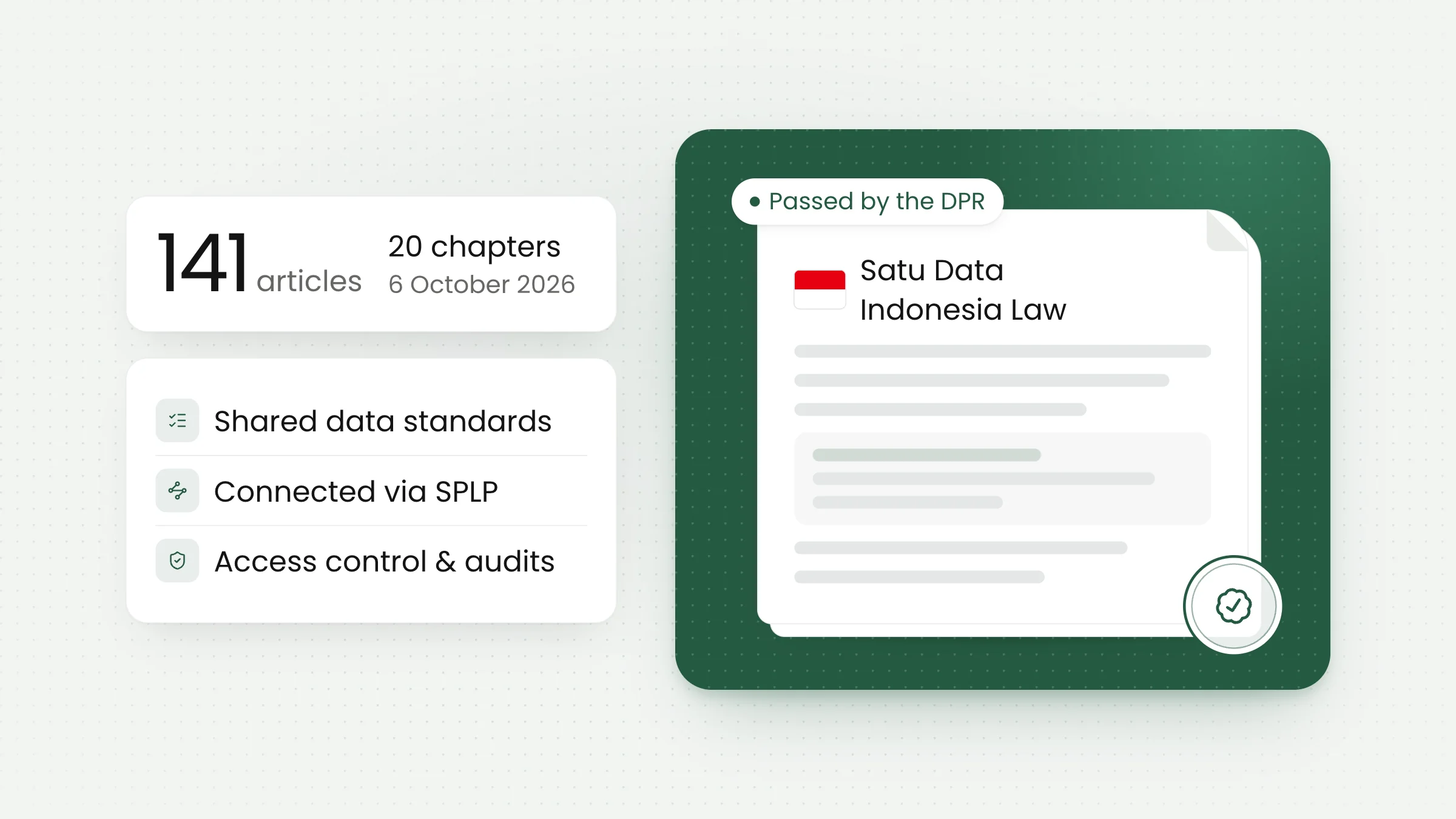
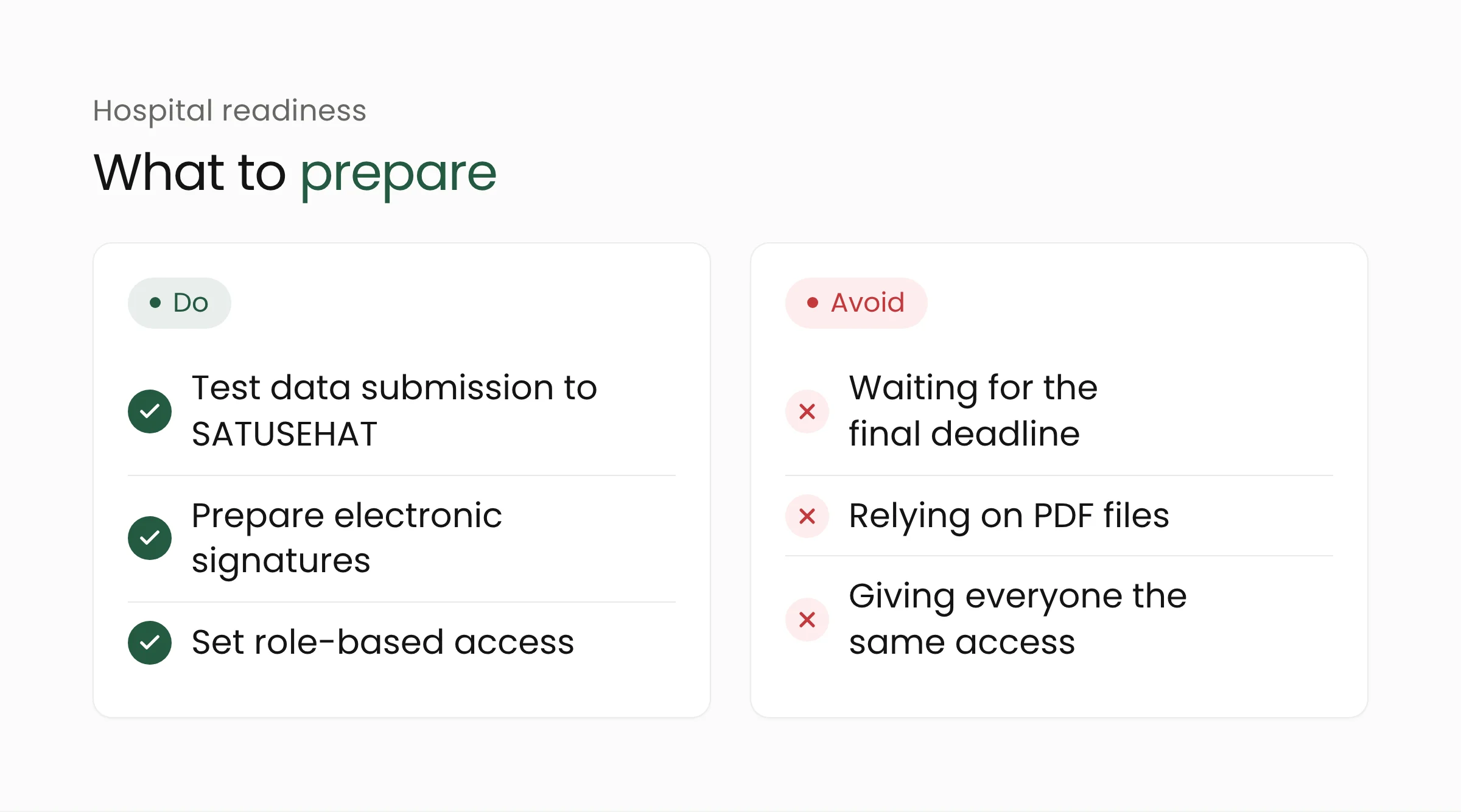
Check EMR readiness and integration. Ask your hospital information system (SIMRS) vendor whether the system already connects to SATUSEHAT, can validate NIK, and can send complete data in real time. Ask for proof of a test submission, not just a promise. Exchanging data between systems like this is a question of data interoperability, a theme we also covered in our piece on the One Data Indonesia law.
Prepare certified electronic signatures. The medical summaries and discharge summaries behind a claim need them. Decide who is authorized to sign, how certificates are issued, and who manages the accounts.
Clean up data quality from the registration desk to the ward. An NIK-based EMR means a typo in an identity can leave records unlinked or a claim stuck. Train registration and medical-records staff, and check that summaries are complete before they are sent.
Control access and protect patient data. Health data is sensitive personal data. Apply role-based permissions, keep logs of who opened what, and prepare a procedure for emergency access. If your IT team wants help structuring this, our cybersecurity services and healthcare solutions are a fair place to start the conversation.
Update health worker records. Make sure the profile and professional data of doctors and nurses in SATUSEHAT SDMK are complete, especially after the change in registration route.
Frequently asked questions
Does a patient have to consent to data access?
In non-emergency situations, yes: access is granted after the patient approves it with a six-digit code from SATUSEHAT Mobile. In an emergency, when the patient is unconscious or unable to consent, health workers can use the emergency consent mechanism. Patients can still view their access history.
If a hospital is not ready, can it no longer file claims right away?
According to Legawa’s analysis of the joint circular, hospitals that are not ready may keep using PDF files during the transition. Details can differ by hospital, so confirm with BPJS Kesehatan and the official documents that apply to your facility.
Since when does health worker registration go through SATUSEHAT SDMK?
Announcements on the Indonesian Health Council site and SATUSEHAT SDMK give October 15, 2026 as the date from which registration of medical and health workers can be done only through SATUSEHAT SDMK.
Closing thoughts
SATUSEHAT RME turns the medical record from an archive in one building into data that follows the patient, and JKN claims are heading the same way. Hospitals that start tidying data, electronic signatures, and access now will be calmer when the next phase arrives. If you would like to talk about health system integration in your organization, feel free to contact us.
Sources
- Kemenkes RI, “Kemenkes Luncurkan SATUSEHAT RME, Rekam Medis Pasien Terintegrasi Secara Nasional” (launch on September 1, 2026)
- Ditjen Kesehatan Lanjutan Kemenkes, “Kemenkes Perkuat Tata Kelola Klaim JKN melalui Integrasi Rekam Medis Elektronik dengan SATUSEHAT” (July 31, 2026)
- Ditjen Kesehatan Lanjutan Kemenkes, “RSUP Dr. Wahidin Sudirohusodo dan BPJS Kesehatan Dorong Integrasi RME serta TTE demi Percepatan Klaim JKN” (August 5, 2026)
- Indonesian Health Council (KKI), registration announcement and FAQ (read October 15, 2026)
- SATUSEHAT SDMK, Kemenkes (read October 15, 2026)
- Legawa, “Dari Berkas PDF ke Data Digital: SEB RME–SATUSEHAT dan Kredensialing FKRTL 2026” (October 7, 2026)