Blog AI Data Center
Jatiluhur AI Data Center Halt: Lessons for Your Hosting
On this page· 9 sections
- 1What happened in Jatiluhur
- 2Why AI data centers need so much power and water
- 3How officials and analysts responded
- 4Permits are not a formality, even for IT projects
- 5Why this matters if you don’t own a data center
- 6What this means for your organization
- 7Frequently asked questions
- 8Closing thoughts
- 9Sources
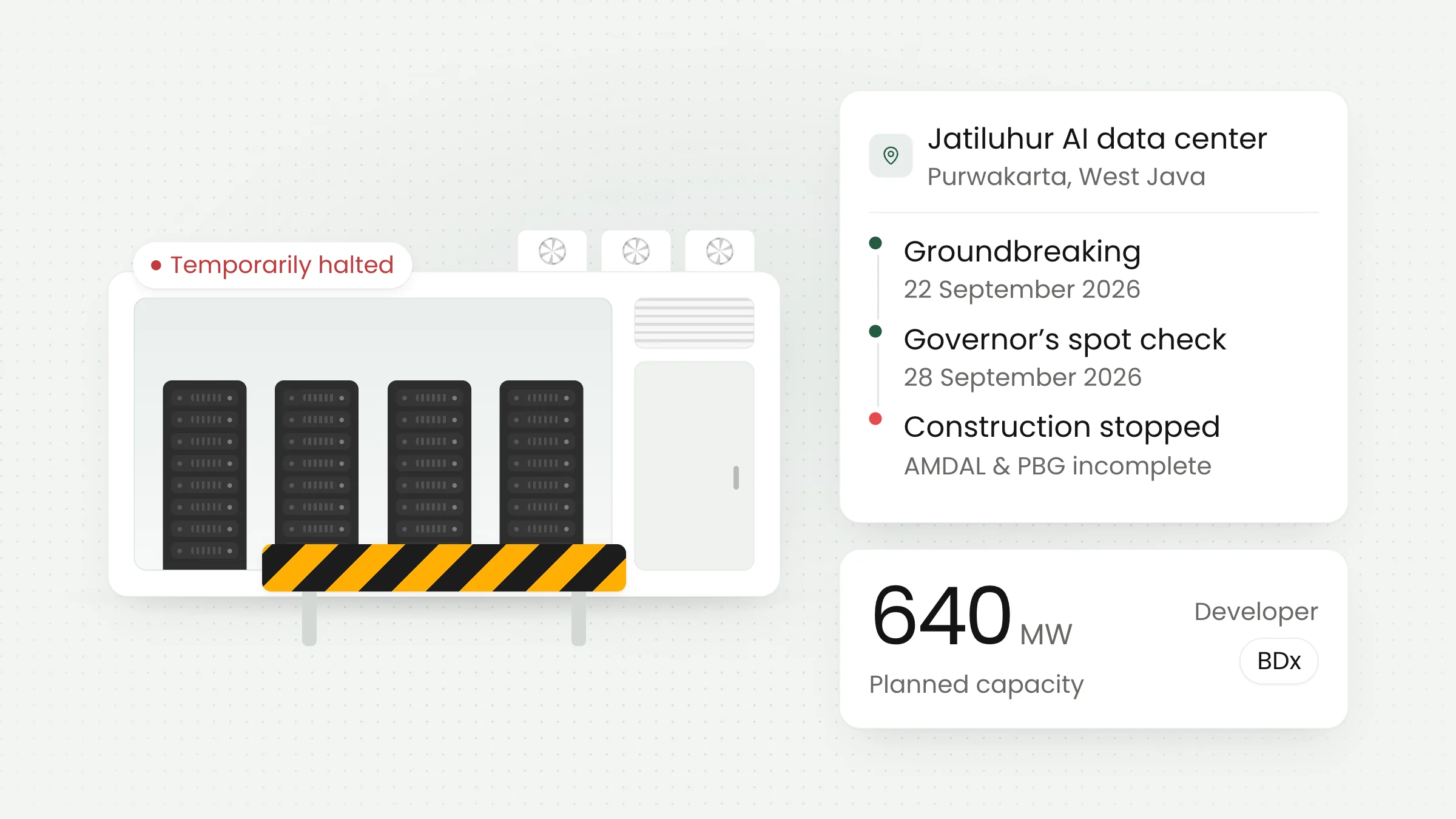
West Java’s provincial government has temporarily halted construction of BDx’s AI data center in Jatiluhur, Purwakarta, because its environmental assessment (AMDAL) and building approval (PBG) were incomplete. The planned capacity is 640 megawatts. For schools, agencies, and companies leaning more on cloud and AI, it is a reminder that digital services rest on real power, water, and permits.
What happened in Jatiluhur
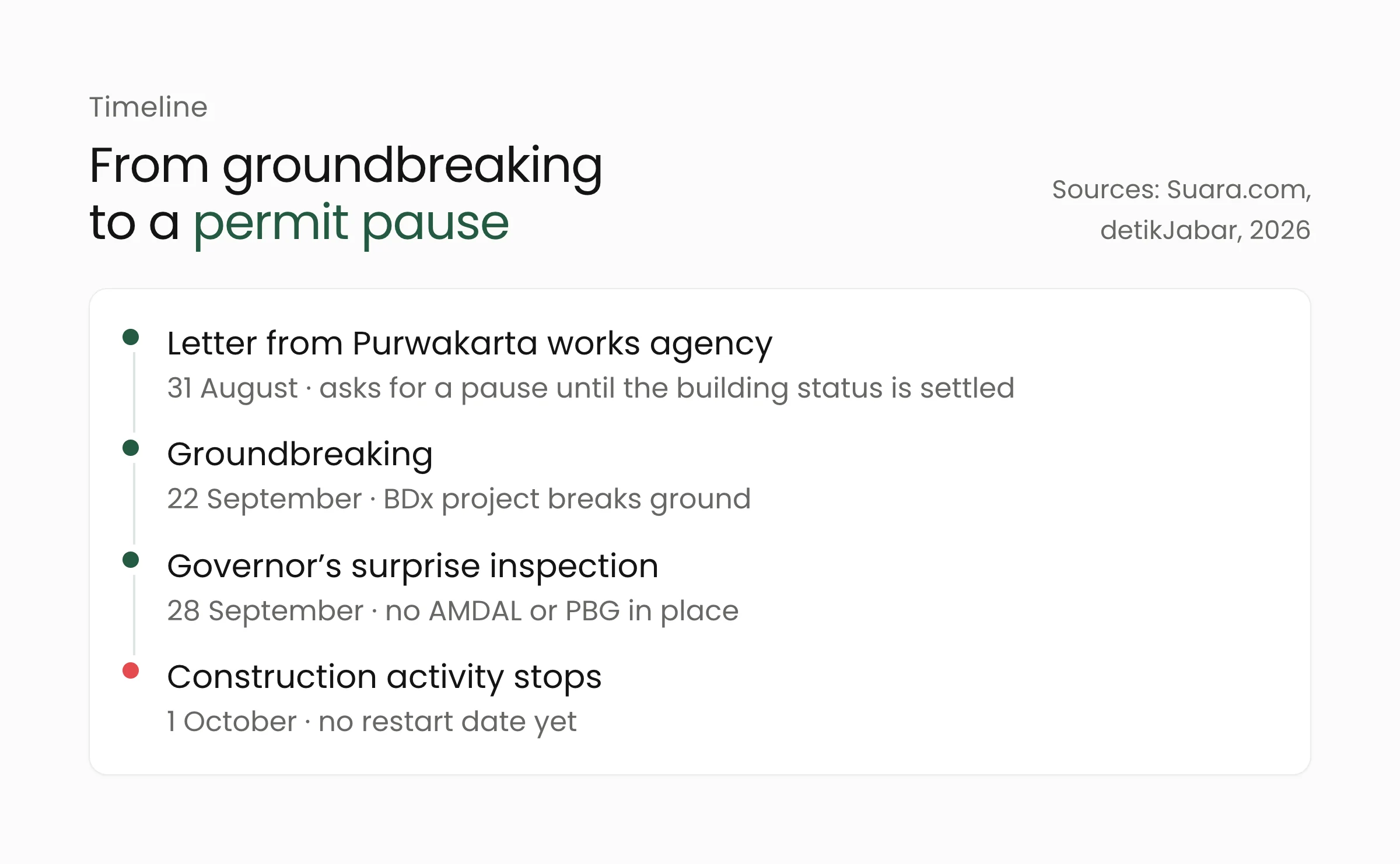
According to Suara.com, the groundbreaking took place on 22 September 2026. Six days later, on 28 September, West Java Governor Dedi Mulyadi made a surprise inspection and found work underway without an AMDAL (environmental impact analysis) or a PBG (building approval) from the Purwakarta regency government.
detikJabar reported on 1 October that construction activity had stopped. Purwakarta’s regional secretary, Sri Jaya Midan, said the developer must first complete requirements “such as the AMDAL permit” (our translation). The public works agency had also sent a letter dated 31 August asking the developer to pause until the building’s legal status was settled, and the submitted PBG file still needed corrections.
Worth noting: the province is not rejecting the investment. West Java’s communications office head, Adi Komar, told detikNews that the province supports the development, but that a project this large must follow every rule. So this is better described as a permit pause than a rejection. No date has been given for resuming construction, and we found no response from BDx in the reports we read.
Why AI data centers need so much power and water
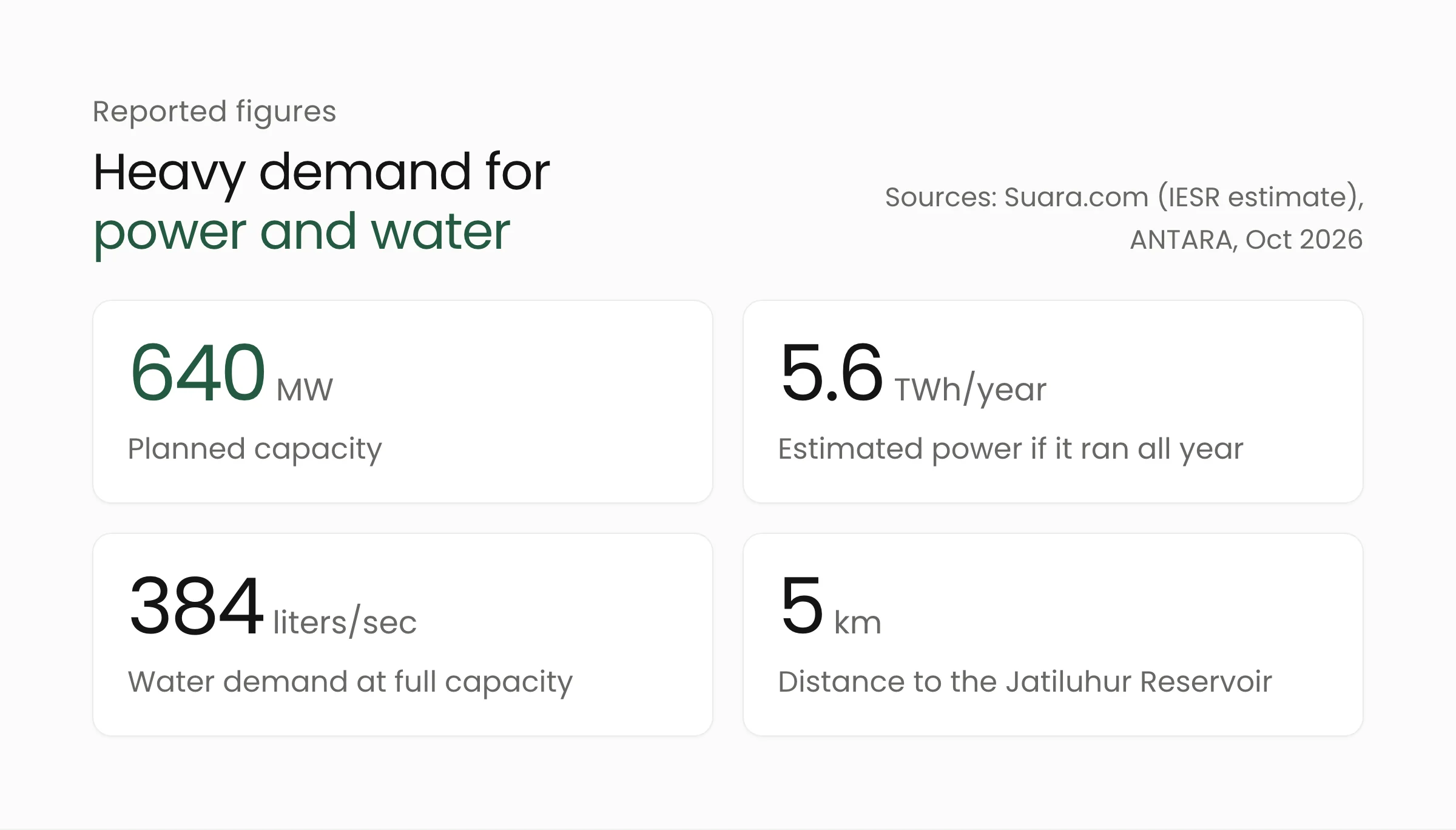
The reported numbers explain the attention. Per Suara.com, 640 MW running all year is roughly 5.6 TWh of electricity annually. That is an estimate from the research group IESR, not a project document. The site sits about 5 km from the Jatiluhur Reservoir, which irrigates rice fields across West Java.
On water, ANTARA reported demand of up to 384 liters per second (about 33,000 cubic meters a day) at full capacity, and around 6,000 cubic meters a day in the early phase. Much of that goes to cooling servers. Picture thousands of processors working nonstop; the heat has to go somewhere.
One caveat: ANTARA also lists the land at 8,000 square meters, a ratio that looks unusual for that capacity. We could not verify it against official documents, so treat the technical figures as media reports rather than final facts.
How officials and analysts responded
Communication and Digital Minister Meutya Hafid, according to 20detik, said all factors must be met before choosing a data center site: computing capacity, energy supply, and assurance that residents’ water supply is not disrupted. This is a paraphrase, not a direct quote, and it is unclear whether she was addressing Jatiluhur specifically.
Coordinating Minister for Infrastructure AHY said on 12 October that data centers should be built without upsetting environmental balance, and mentioned Indonesia’s chance to become a Southeast Asian data center hub, partly in industrial zones.
IESR took a more technical line. It backed the halt and asked for the AMDAL and a study of grid impact on the Java-Madura-Bali system to be made public. It also proposed national standards, such as a PUE (a data center energy-efficiency measure) below 1.3 and waterless or closed-loop cooling. Those are proposals, not rules in force. The key point: without national standards, each project is judged case by case.
Permits are not a formality, even for IT projects
According to detikJabar, the legal basis cited by Purwakarta’s public works head, Didi Garnadi, is Government Regulation No. 16 of 2021 (implementing Law No. 28 of 2002 on Building Structures) and Purwakarta Regional Regulation No. 12 of 2023 on Building Structures. The PBG file was submitted through the SIMBG system and was found to be incomplete. The agency also issued a first warning letter giving 14 days to fix the PBG process.
It sounds far from everyday computing, but the same pattern shows up at a smaller scale. A school building a server room, a campus adding a computer lab, or an agency installing a new network also touches building permits, electrical work, and spatial planning. If that paperwork is left to the end, a system launch can slip with it. Checking requirements early is almost always cheaper than stopping work halfway.
Why this matters if you don’t own a data center
It is fair to ask what a construction site in Purwakarta has to do with your school or office. The link is the supply chain. Your exam app, attendance system, and digital archive almost certainly run in a data center, local or global.
Three indirect effects are worth watching. First, domestic computing capacity may grow more slowly than planned if permits and environmental impact get checked more closely. Second, energy and water costs eventually shape cloud and AI pricing. Third, providers that are tidy about permits and efficiency will be more dependable than those that only promise big capacity.
To be fair, nothing here has disrupted anyone’s service. There are no reports of outages or price changes tied to Jatiluhur. What we are drawing out is the planning lesson.
What this means for your organization
You don’t need to change strategy today. A few simple questions are enough to make hosting decisions more mature.
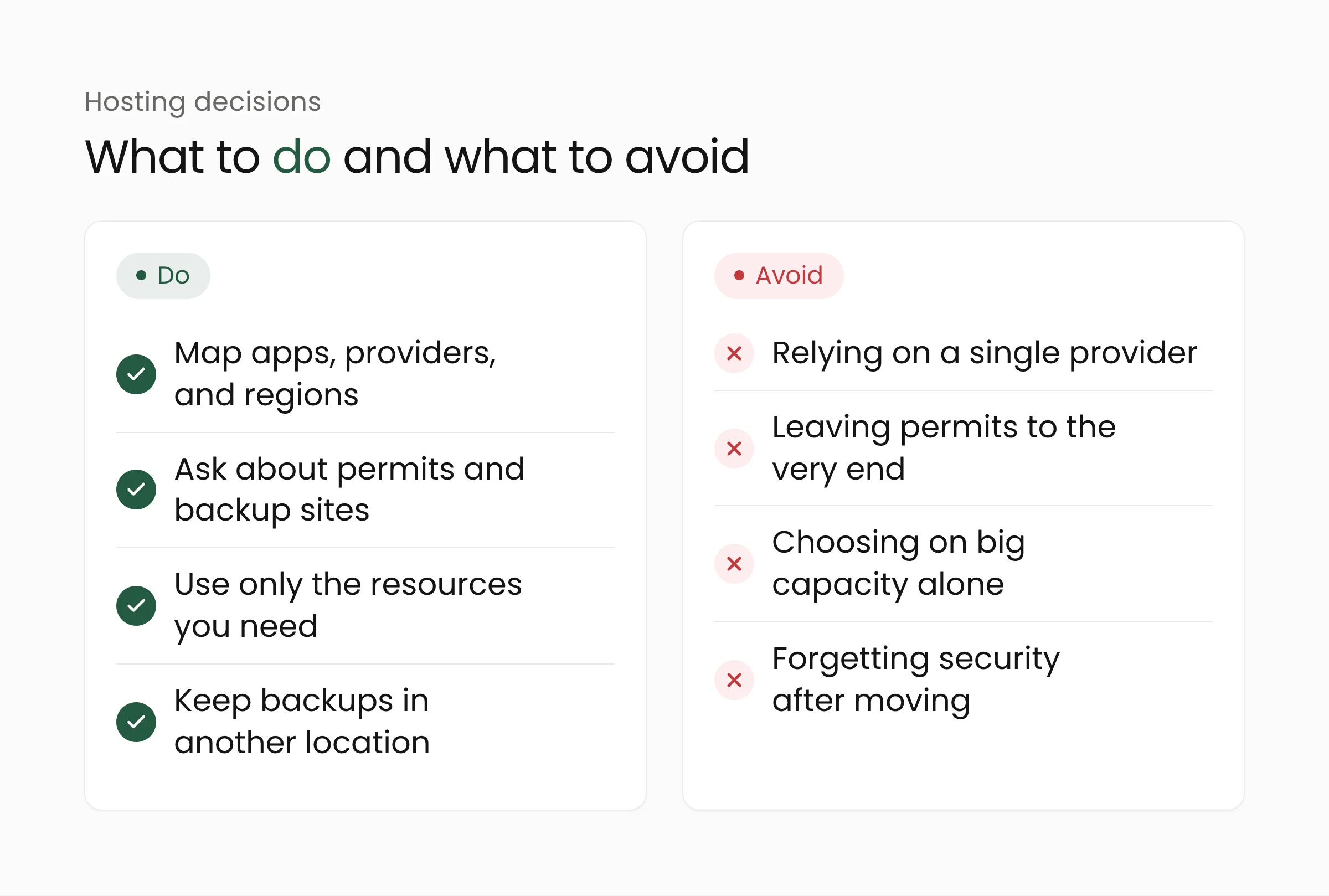
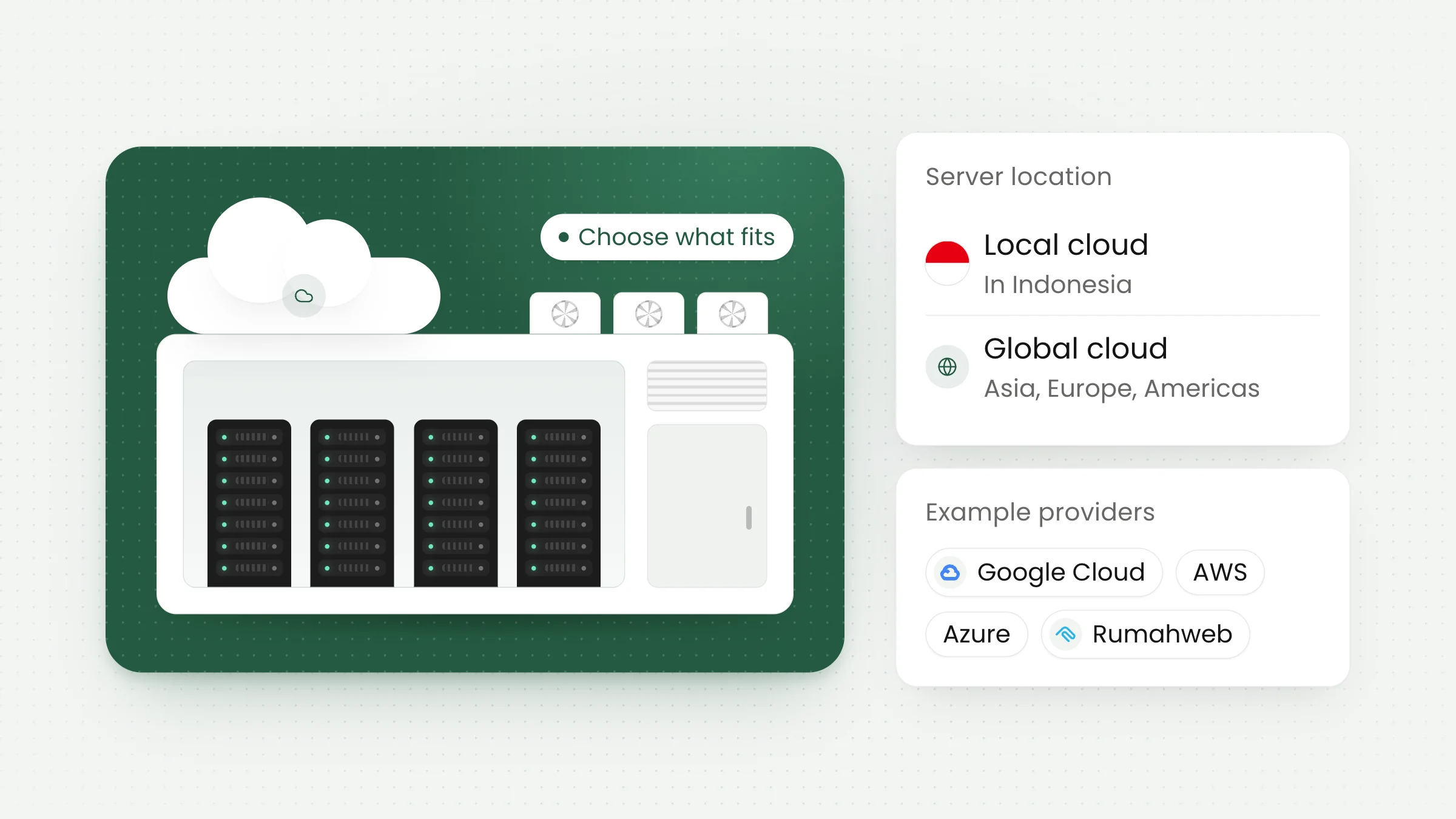
Map where your systems run. List your critical applications, their hosting providers, and regions. Many organizations only realize they depend on one provider when something breaks. Our piece on local vs global cloud is a decent starting point.
Ask providers practical questions. Is the facility fully permitted? Is there a backup site? How do they manage power and cooling? Serious providers usually welcome the questions.
Separate heavy workloads from light ones. Not everything needs large-scale AI. Attendance summaries or exam result processing often run fine on modest resources. Using only the model and infrastructure you need saves money and energy.
Prepare a fallback. Backups in a different location and a manual procedure for when systems go down are cheap insurance. Our cloud computing work often starts with an audit like this.
Keep security in every layer. Moving to the cloud does not move responsibility for access and configuration. A regular cybersecurity review helps keep your data safe wherever it lives.
Frequently asked questions
Has the Jatiluhur AI data center project been cancelled?
No. According to the reports we read, construction is paused until the AMDAL and PBG are complete. The province says it is not anti-investment. No restart date has been given.
Does this affect the cloud services I use today?
There are no reports of direct impact. The project is still under construction and not serving customers. Indirect effects, such as capacity availability, would only show up over a longer period.
What are AMDAL and PBG?
AMDAL is an environmental impact assessment required before a major project proceeds. PBG is a local government approval for a building before it is built. In this case both are issued at the regency level.
Closing thoughts
Reliable digital infrastructure comes from patient planning: complete permits, enough energy, safe water, and a ready backup. The same principle applies at the scale of your school or office. If you’d like to review where your systems run and how ready they are for disruption, get in touch for a relaxed conversation.
Sources
- detikNews: Proyek Pusat Data AI Jatiluhur Disetop Sementara (30 September 2026)
- detikJabar: Pembangunan Proyek Data Center AI BDx di Purwakarta Dihentikan Sementara (1 October 2026)
- Suara.com: Pembangunan Data Center AI Jatiluhur Disetop, IESR Minta Kajian Dampak Dibuka ke Publik (2 October 2026)
- 20detik: Kata Menkomdigi soal Pembangunan Data Center Jatiluhur Disetop (7 October 2026)
- ANTARA: Menko AHY dorong pembangunan data center jaga keseimbangan lingkungan (12 October 2026)