Blog Supply Chain Security
Ledger Hardware Implant: Check Where Your Devices Come From
On this page· 7 sections
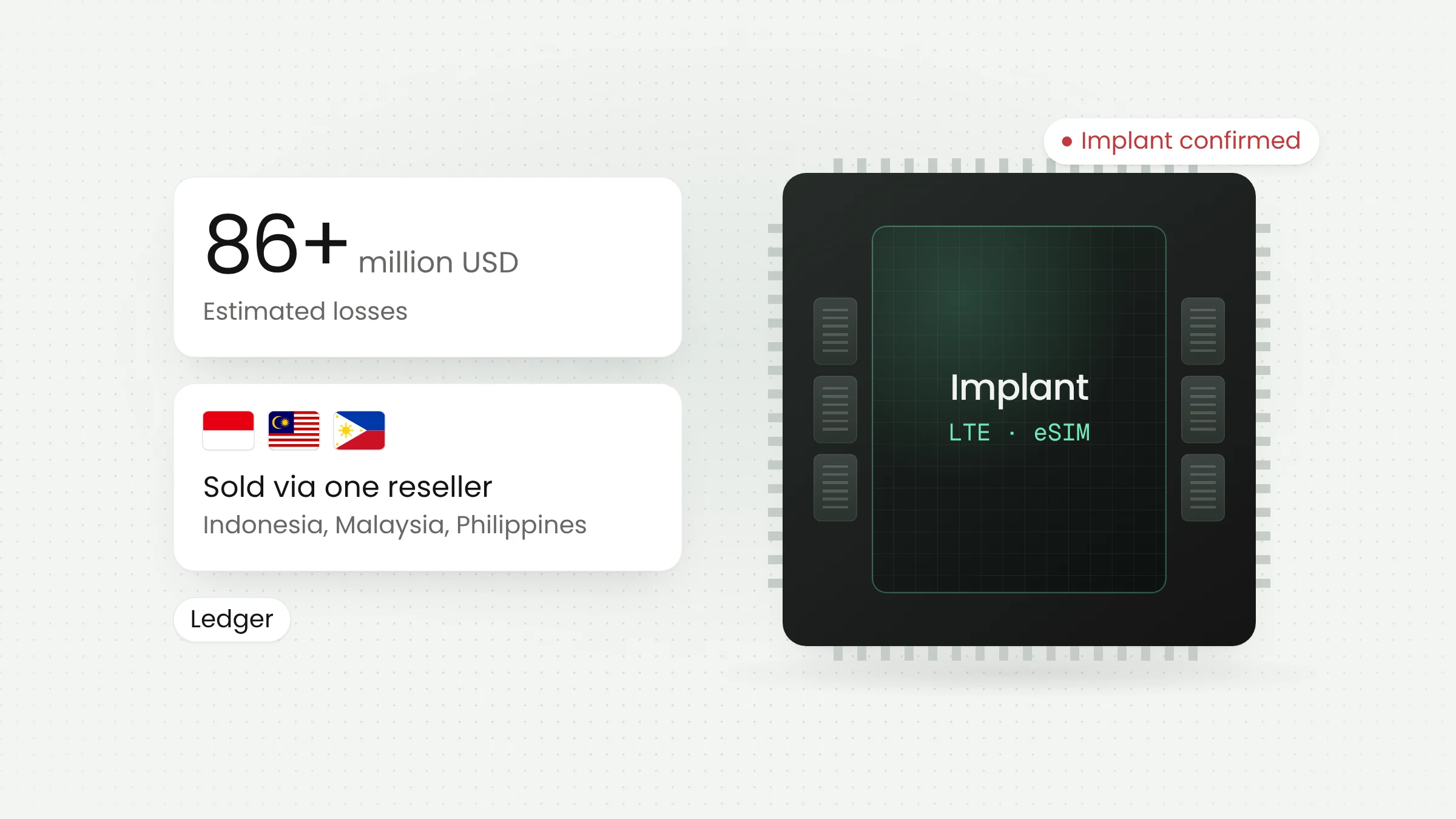
On October 10, 2026, Ledger confirmed that a device belonging to one of the affected users, who had lost funds, contained an unauthorized hardware implant. Every confirmed loss traces back to devices sold through a single reseller in Southeast Asia. The case is a reminder that a device can be compromised before it ever reaches your desk.
What happened to the Ledger wallets
Ledger makes hardware wallets, sometimes called signers, that hold the keys to crypto assets. According to BleepingComputer, Ledger began investigating user reports of drained funds on October 9 and asked a reseller named CryptoBilis to stop selling and shipping its devices. A day later Ledger said, “Ledger can confirm that one of the impacted users’ devices contained an unauthorized hardware implant.”
On October 13, SecurityWeek reported that Ledger added that all confirmed losses involved devices sold through CryptoBilis. Ledger also said it saw no sign that its own infrastructure, systems, or services were breached, and it described the number of affected devices as “limited.”
The reseller matters to readers in Indonesia. Blockfence calls CryptoBilis an authorized reseller serving Indonesia, Malaysia, and the Philippines, while BleepingComputer describes it as a Malaysia-based retailer operating across Southeast Asia. The quotes we read do not explain what “authorized” means in this case, so treat it as a detail still waiting for clarification.
How the implant reportedly works
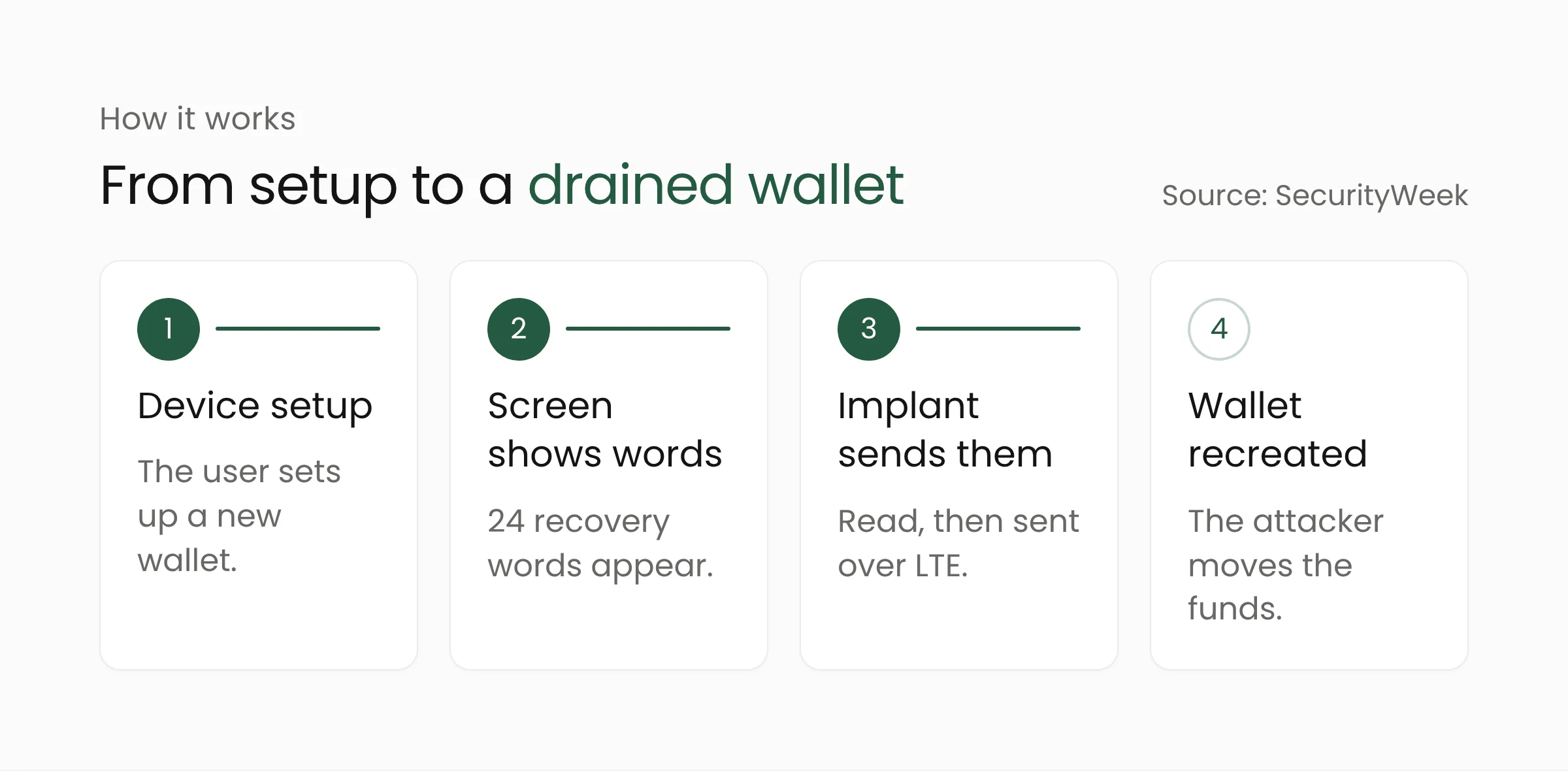
SecurityWeek says Ledger described an implant inside the casing that reads whatever the screen shows. During setup the screen displays the 24-word recovery phrase. The implant’s microcontroller recognizes that screen, decodes the words, and sends them over LTE using a provisioned eSIM. Ledger says the implant only steals information and does not change the device’s operating system, transactions, or signatures.
One caveat: BleepingComputer writes that these technical details came from independent researchers, including Tibane Labs, rather than from Ledger itself. Two outlets attribute the description differently, so we present it as the reported mechanism, not a single final investigation result.
With the 24 words in hand, an attacker never needs the physical device. They simply recreate the wallet elsewhere and move the contents.
The loss figures: which numbers to trust
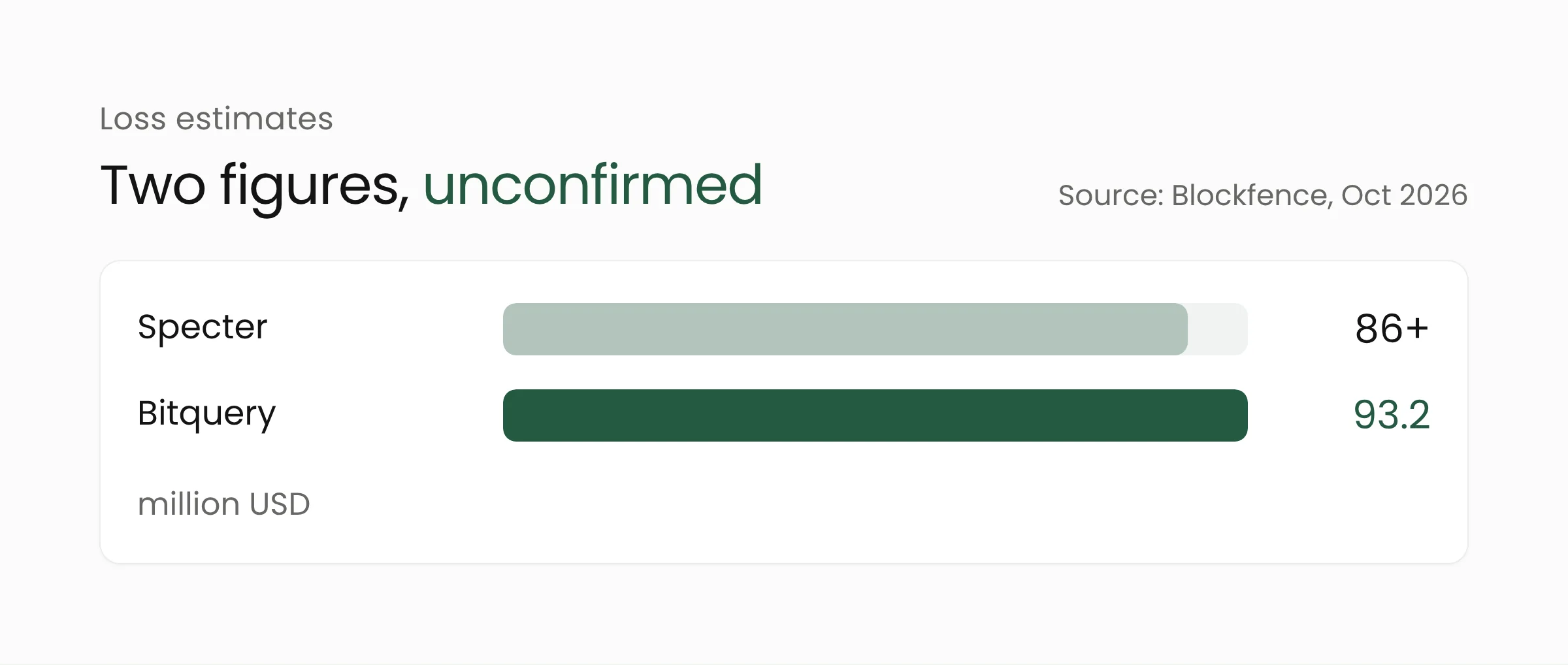
Loss figures differ between sources, and Ledger has confirmed neither. On-chain investigator Specter estimated losses could top 86 million US dollars. Bitquery’s analysis, summarized by Blockfence, put it at roughly 93.2 million US dollars drained from 315 wallets across six networks. Blockfence adds that investigators have not established whether every wallet was compromised the same way.
Bitquery reported a few more details. On the Tron network, 25 wallets approved the same spender within three seconds, and about 29 million US dollars in USDT was withdrawn within seconds. Tether reportedly froze about 10 million US dollars of USDT across 20 addresses, though a freeze does not mean the money returns to victims.
Researchers quoted by BleepingComputer also say modified devices appeared as early as September 16, priced at about half the original. For any buyer tempted by a steep discount, that is worth remembering.
Why a standard authenticity check is not enough
Many people assume a device is safe if it passes the manufacturer’s authenticity test. BleepingComputer notes that Ledger’s Genuine Check cannot detect an added implant as long as the original Secure Element is intact. In other words, a device can pass the check and still carry a foreign component that watches its screen.
That is why hardware security cannot rest on one test. The weak points sit in the supply chain: factory, warehouse, distributor, reseller, courier. Ledger itself reminded resellers to source stock only through authorized channels and not to resell products customers had returned.
Who installed the implant somewhere along the distribution chain is also unconfirmed, according to SecurityWeek. The suggestion that it was soldered in by hand comes from a third party’s social media post, not from a confirmed finding.
What this means for your organization
You may not hold any crypto. But your school, campus, agency, or company almost certainly buys devices: laptops, routers, cameras, exam tablets, attendance terminals, IoT sensors. The lessons from this case apply to all of them.
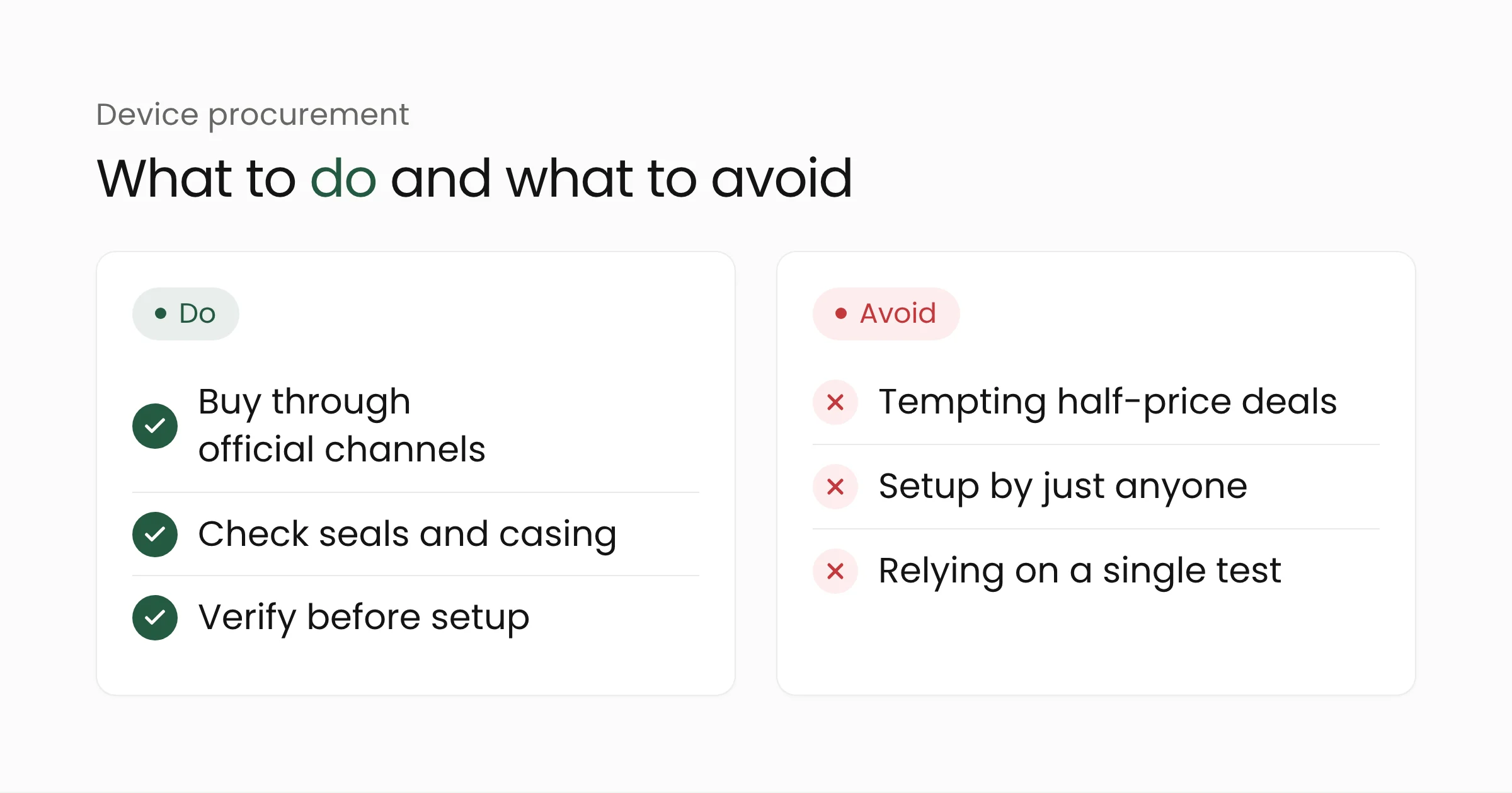
Buy through channels you can account for. Write into your procurement rules that important devices come only from official distributors or resellers listed directly on the manufacturer’s website. A price far below market, or a seller who cannot show where stock comes from, is a cue to stop and ask questions.
Inspect packaging and seals before use. When equipment arrives, check the box, the seals, and the casing screws. Photograph them and compare with devices from earlier purchases. It is imperfect, but cheap, and often enough to catch a unit that someone clearly opened.
Do not initialize sensitive devices before they are verified. Ledger’s advice to CryptoBilis buyers from the past 90 days follows the same principle: if the device has not been set up, do not start setup. For organizations, anything that stores keys, credentials, or important data should be configured by authorized staff, not by whoever opens the box first.
Have a plan for when it is too late. Ledger advises users who already set up a device from that reseller to move their assets to a new device with a fresh recovery phrase. The general version: if a device may be compromised, rotate every secret that ever passed through it, not just the hardware.
Watch for odd outbound traffic. An implant like this talks outward, here over LTE that bypasses your office network. For devices that do use your network, outbound traffic to unknown destinations is still a signal worth investigating. We covered a related pattern in cheap devices in Anthropic’s research on AI that could copy itself.
If you need help drafting procurement and device inspection rules, we offer cybersecurity services and have experience with the Internet of Things. For digital asset projects, see our blockchain services too.
Frequently asked questions
Are all Ledger wallets unsafe now?
There is no evidence for that. Ledger says all confirmed losses relate to devices sold through CryptoBilis and that it sees no sign its own systems were breached. Still, the loss figures and number of affected devices are unconfirmed by Ledger, so the full picture is still developing.
How can I tell if my device was tampered with?
There is no single reliable way. Genuine Check reportedly cannot detect an added implant while the original Secure Element is intact, so physical inspection, purchase channel, and a realistic price are your first clues. If you bought from the reseller in the past 90 days and already set up the device, follow Ledger’s advice and move your assets to a new device.
Is this risk only about crypto assets?
The case involved crypto wallets, but the principle is broad. Any device bought through an unclear channel could carry extra components or software. The more sensitive the data a device stores or handles, the stricter your purchasing should be.
Closing thoughts
The Ledger case shows that trust in a device is not only about its brand, but about the path it traveled before reaching your desk. Start simple: record where each important device was bought, and write down who is allowed to open it first. If you would like to talk it through, feel free to contact us.
Sources
- SecurityWeek, “$86 Million Crypto Heist Linked to Ledger Signer Hardware Implant” (October 13, 2026)
- BleepingComputer, “Ledger confirms spy chip implant behind wallet crypto thefts” (October 12, 2026)
- Blockfence, “Ledger Confirms Hardware Implant in Wallet as Suspected Crypto Thefts Exceed $86 Million” (October 12, 2026)
- TokenPost, “Ledger Finds LTE Implant in Signer Linked to Suspected $86M Drain” (October 13, 2026)