Blog AI Adoption
Calls to Slow AI: What They Mean for Your AI Adoption
On this page· 8 sections
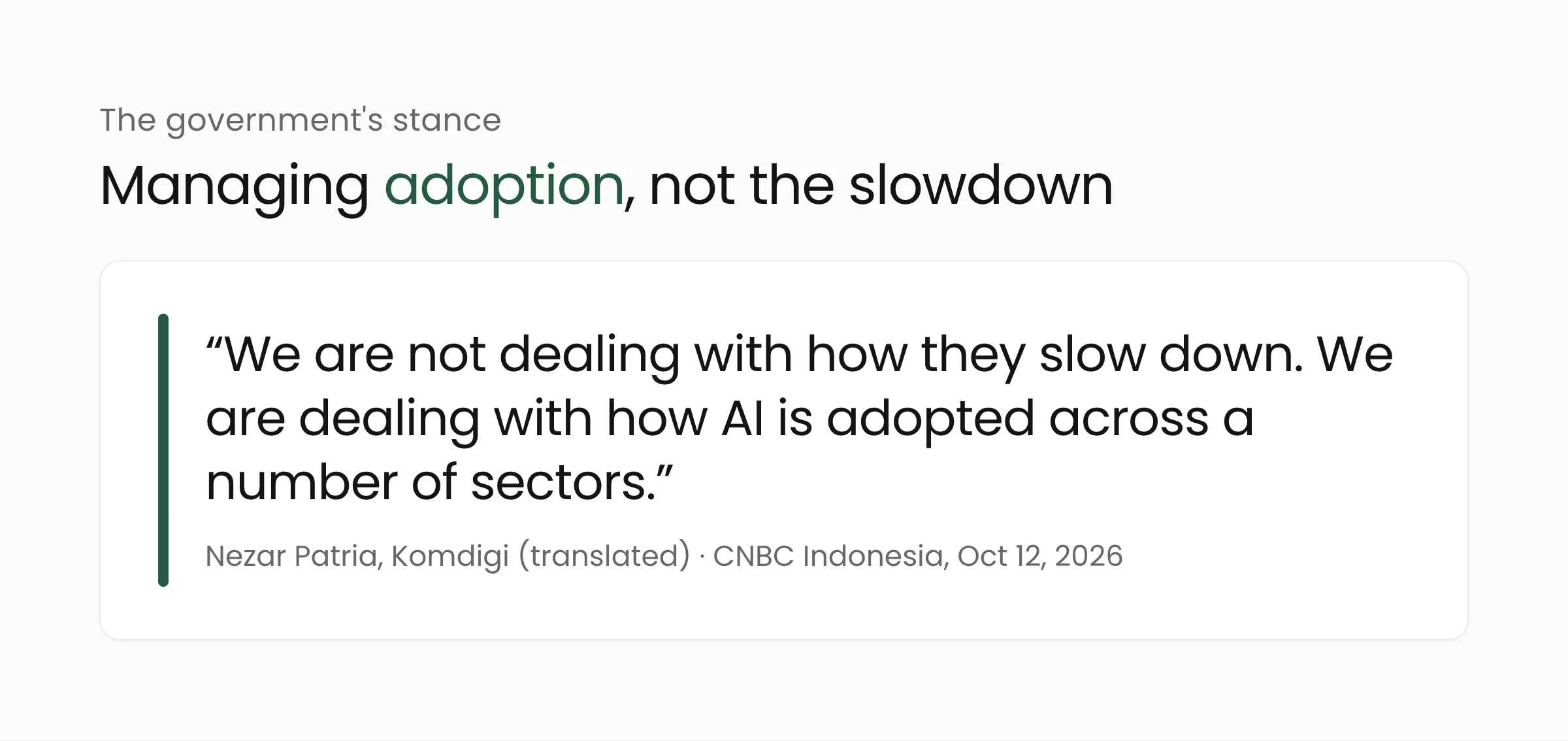
On October 12, 2026, Indonesia’s Deputy Minister of Communication and Digital Affairs, Nezar Patria, responded to calls to slow down AI development. The government, he said, is not in the business of managing that slowdown. It is working on rules for how AI is adopted across sectors. For your school, agency, or company, that means the decision to use AI stays with you, and it needs to be managed well.
Where the calls come from
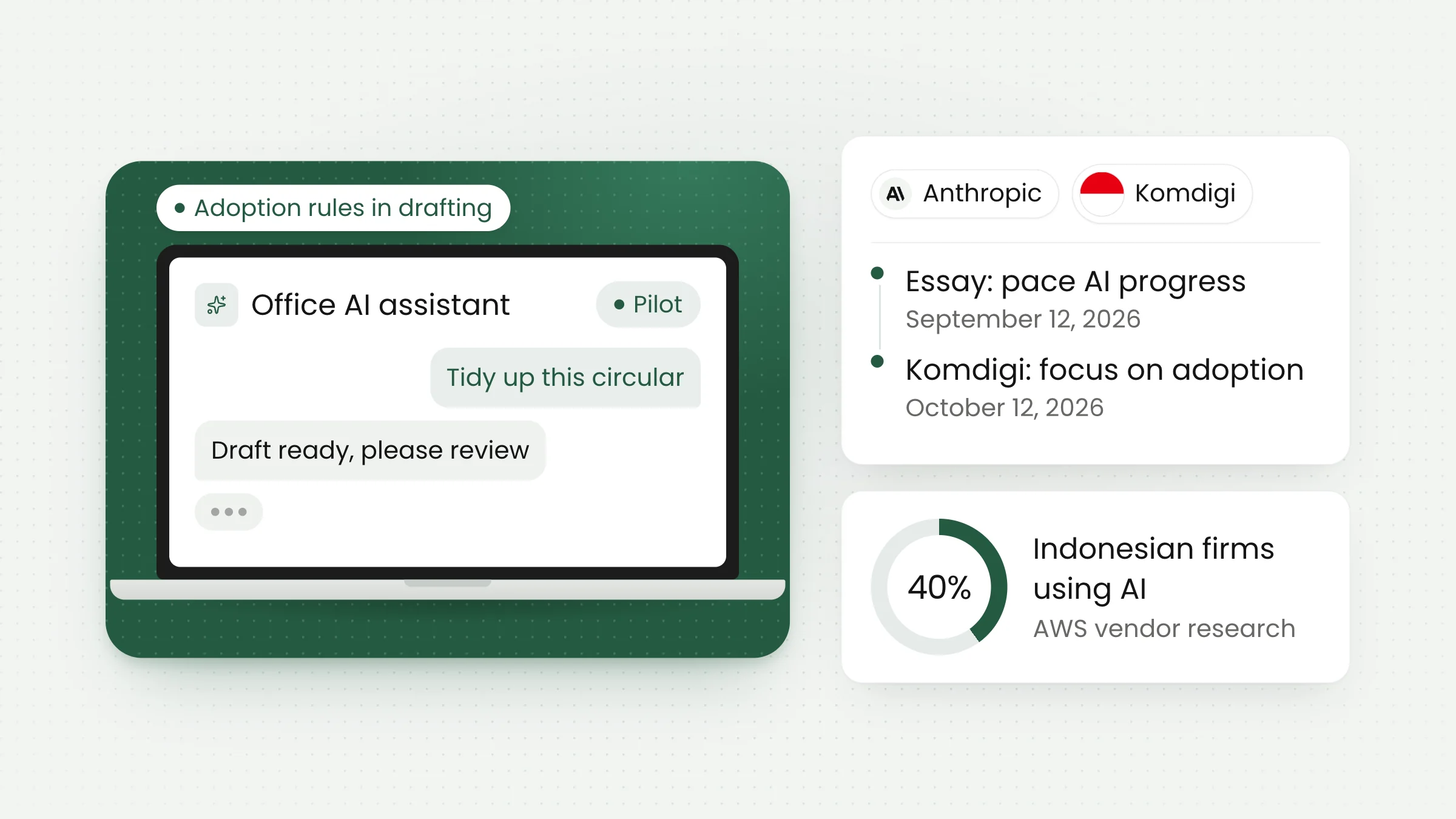
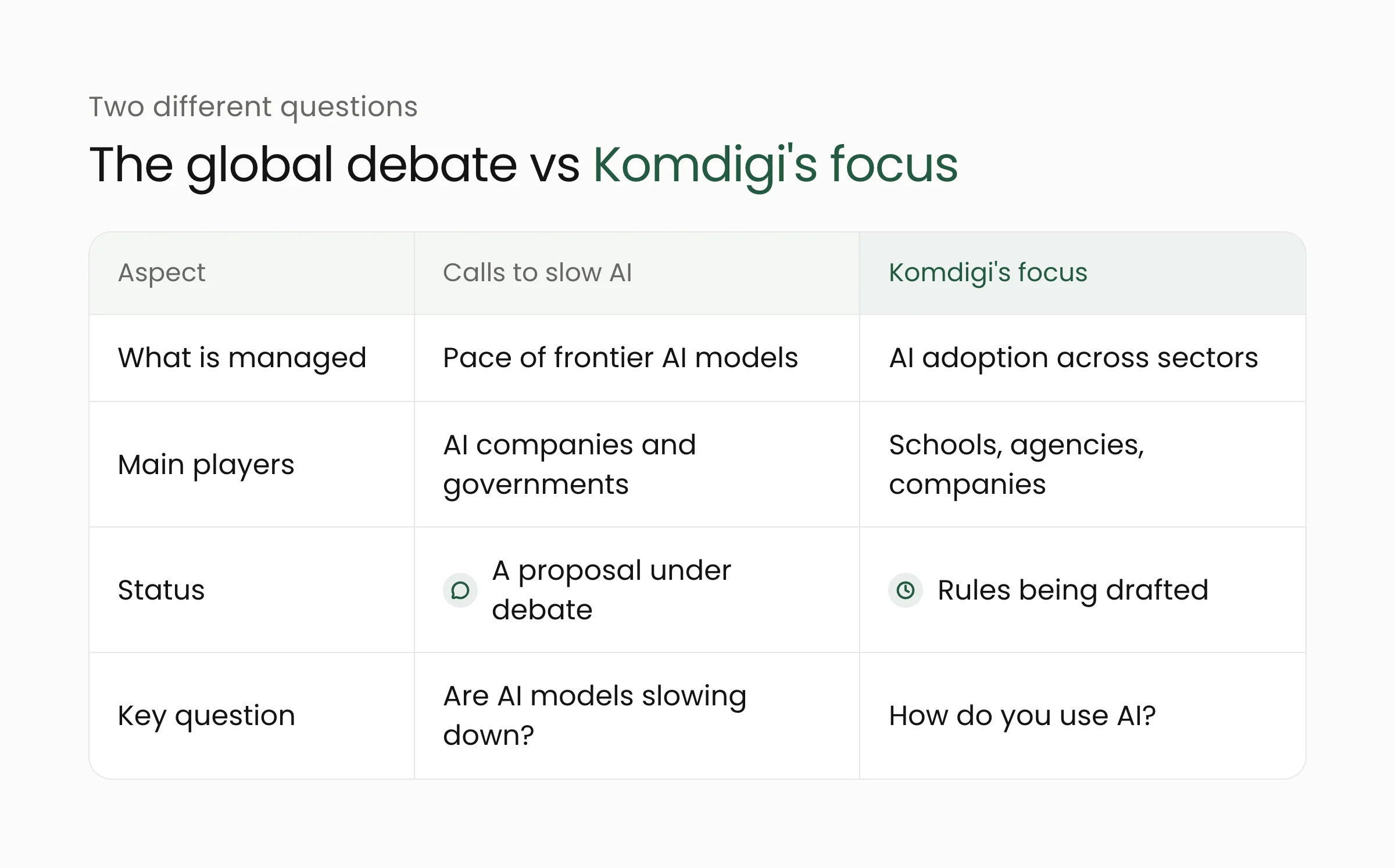
It started with an essay. On September 12, 2026, Anthropic CEO Dario Amodei published We Must Pace the Frontier. His argument is that AI models are gaining capability faster than we can test them for safety, so the pace needs to be managed.
What he does not ask for matters just as much. The essay states that pacing does not mean halting model training or technical progress. It asks for more time for companies to align and safeguard their models, with independent parties checking the work.
The proposal has three steps. First, third-party evaluators get employee-level access to verify a company’s safety practices, and Anthropic says it will do this first. Second, leading AI companies in democratic countries agree on shared safety standards. Third, coordination widens to governments, including those with different political systems.
According to a MindStudio review, reactions from the industry were mixed. OpenAI CEO Sam Altman called independent evaluators a great idea and said his company would do the same, while Meta’s Mark Zuckerberg questioned the need for public calls for regulation. So read this as a proposal under debate, not an industry standard.
What Komdigi said in Jakarta
Patria addressed the issue at the Digital Infrastructure Summit 2026 in Jakarta. CNBC Indonesia reported that he sees the concern as part of the normal dynamics of the global AI industry.
He pointed to two business questions. One is that the business models around AI still need to find a better fit. The other is that data center construction may not yet have a balanced economy of scale. A call to slow AI, he said, does not mean automation will stop, but companies may need to reset their strategies.
On the government’s own role, he was blunt: in his words, Indonesia is not concerned with how those companies slow down, but with how AI is adopted in various sectors. The same report says the AI rules now being drafted will focus on adoption.
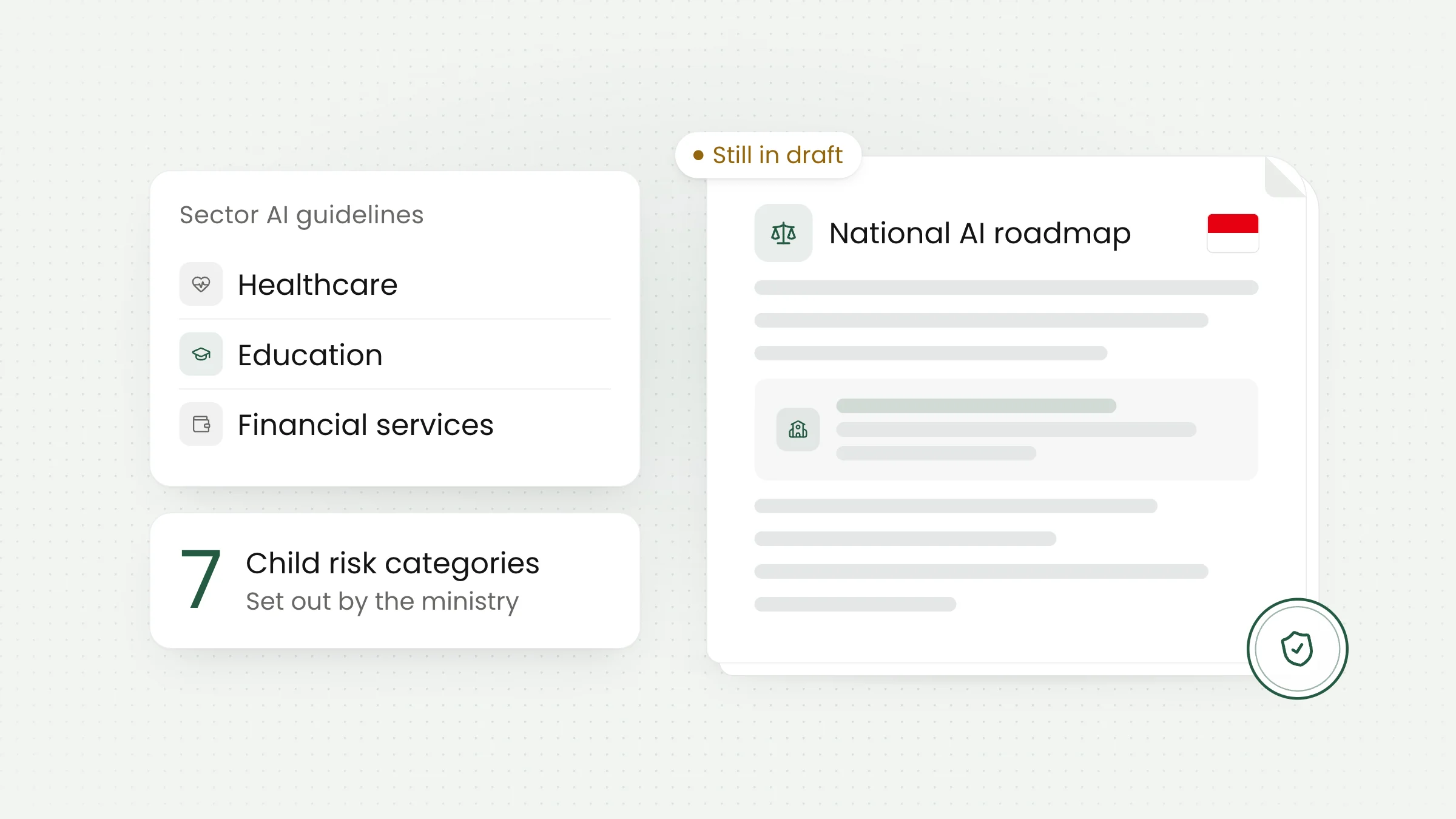
That direction matches what we covered earlier on sector-specific AI guidelines for schools. Niaga.Asia reported on October 8, 2026 that the national AI roadmap is meant as shared guidance, and that the draft Presidential Regulation is still under inter-ministry discussion.
AI adoption in Indonesia is already underway
For many organizations, the global debate feels distant. Yet AI is already on the desk. In research cited by Medcom on August 6, 2026, AWS said about 40 percent of companies in Indonesia use AI in their operations. That is vendor research, so treat it as a rough picture rather than an official statistic.
On the ground it looks ordinary. A school administrator asks a chatbot to tidy up a circular. A finance team uses an AI assistant to summarize reports. A teacher drafts practice questions with AI help. Often this happens without a written policy, sometimes without leadership knowing.
That is where Komdigi’s message becomes practical. If the government is focused on adoption, the question your organization will eventually face is not whether global AI models are slowing down. It is how you use AI, with what data, and who is accountable.
What this means for your organization
You do not need to wait for final rules or guess where the global debate lands. What you can do today is make adoption measured. Think of it as the spirit of “pacing” from the essay, applied at the scale of your own organization.
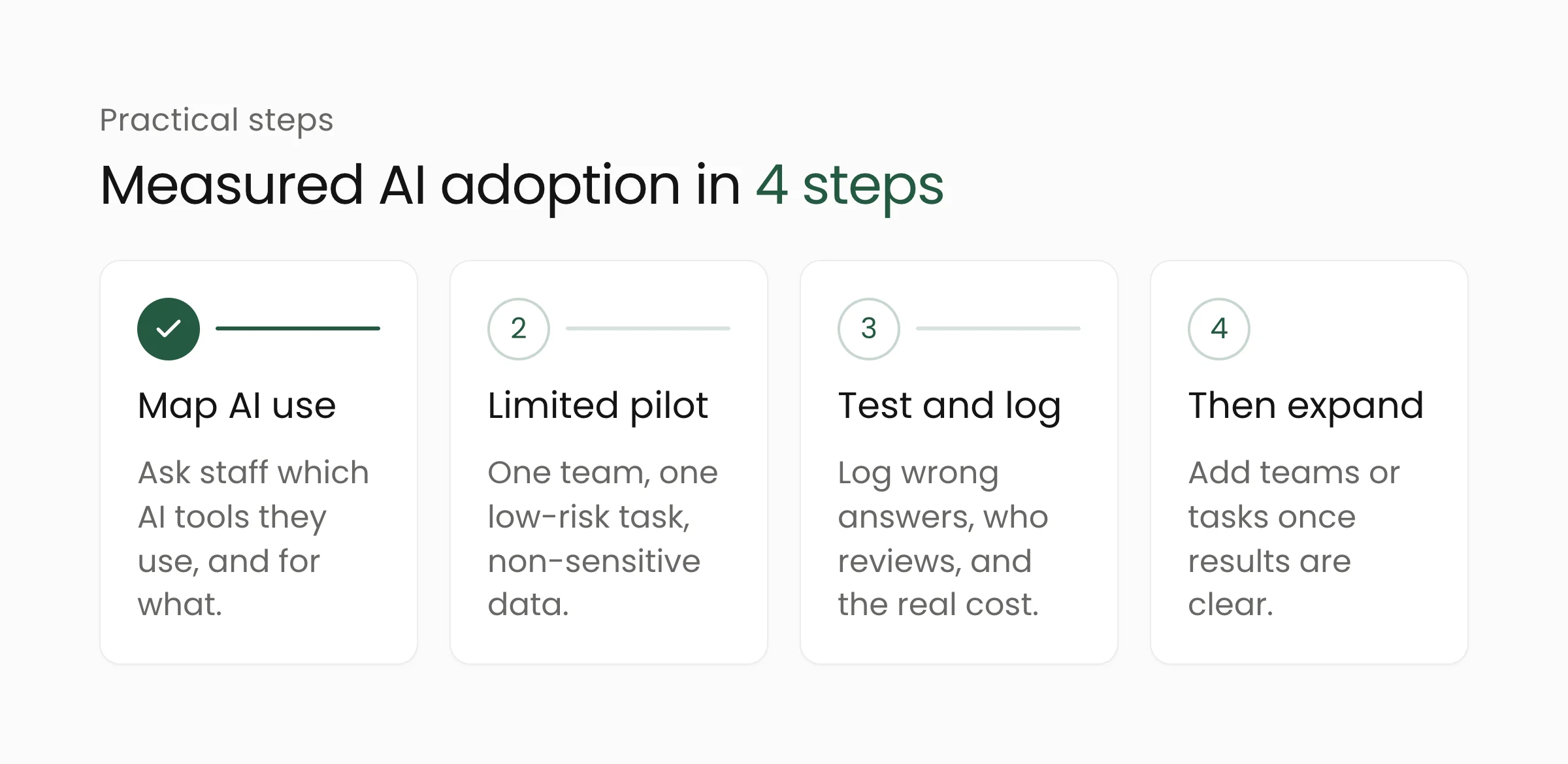
Map the use that already exists. Ask staff openly which AI tools they use and for what. The goal is not to find who is at fault, but to learn what data may already have gone to third-party services.
Start with a limited pilot. Pick one team and one low-risk use case, such as summarizing internal meeting notes or drafting an announcement. Use non-sensitive data first. The head of administration at a vocational school, for example, could try an AI assistant on draft invitations to parents before going anywhere near grade data.
Test and record the results. Note how often answers are wrong, who reviews them, and what it really costs. A one-page log is enough. You will also want it if an auditor or a district office ever asks.
Expand once results are clear. Add teams or use cases only when the first pilot gives results you can stand behind. Where personal data is involved, bring security in from the start, including the obligations under Law Number 27 of 2022 on Personal Data Protection (Undang-Undang Nomor 27 Tahun 2022 tentang Pelindungan Data Pribadi).
Insist on an open vendor. When choosing an AI service, ask where the data is stored, whether your data is used to train models, and how you can leave if you want to switch. These questions apply to global and local providers alike. If you want a thinking partner, our artificial intelligence services team is used to mapping use cases like these, and cybersecurity can be covered in the same conversation.
For a district office or a small business with limited resources, the short version is the same: do not start with a big project. One tool, one task, one person in charge, and one record of the results is enough to build good habits before official rules arrive.
What is still unclear
Some things cannot be confirmed yet. The details of the AI adoption rules said to be in drafting have not been announced, so we do not know whether they will take the form of a Presidential Regulation, a ministerial regulation, or sector guidelines, or when they would apply. We also have not found an official statement that Indonesia will follow the independent evaluator model from Amodei’s essay.
On data centers, Patria’s comments were views, not policy. Avoid jumping to conclusions, such as the idea that AI investment in Indonesia will stop. Follow official sources as things develop.
Frequently asked questions
Do calls to slow AI mean we should stop using AI?
No. The essay behind the debate says slowing down is not halting, and Komdigi said the calls do not mean automation will stop. What changes is the emphasis: use AI in a measured way that you can answer for.
Are there binding AI rules for private organizations and schools yet?
No detailed adoption rules have been announced. What exists is direction from the national AI roadmap, which is guidance, with a draft Presidential Regulation still under discussion. Existing law such as the Personal Data Protection Law still applies whenever AI processes personal data.
Where should we start if we have no AI policy at all?
Start by mapping current use and writing a one-page policy: which tools are approved, what data must never be entered, and who to call when something goes wrong. Then run one small pilot.
Slow and steady still moves forward
The debate about AI speed will probably continue globally. Inside your organization, the answer is simpler: choose use cases with clear benefits, measure the results, and keep control of your data. If you would like to talk through how to begin at your school, agency, or company, we are happy to chat through our contact page, with no obligation.
Sources
- We Must Pace the Frontier, Dario Amodei, September 12, 2026
- Ramai-ramai minta AI direm, Komdigi buka suara, CNBC Indonesia, October 12, 2026
- Komdigi siapkan aturan AI untuk kesehatan, pendidikan hingga keuangan, Niaga.Asia, October 8, 2026
- Jamin kedaulatan data dan keamanan AI, AWS komit investasi di Indonesia, Medcom, August 6, 2026
- Anthropic’s pace the frontier: what it means for AI labs, MindStudio, September 19, 2026