Blog Arity
Arity to Acquire INRIX as Traffic Data Meets Insurance
On this page· 8 sections
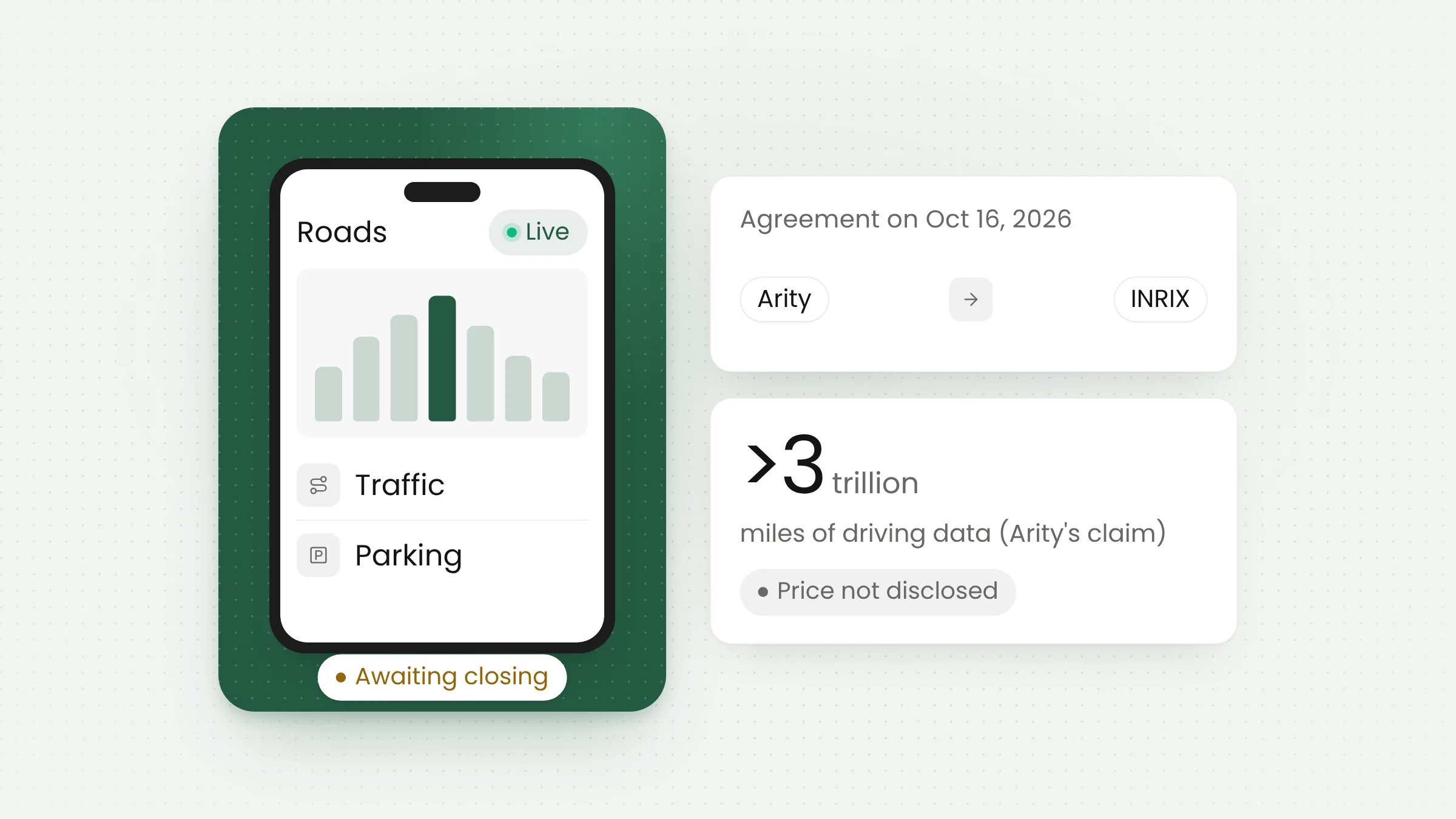
Arity, the mobility data company owned by insurer Allstate, signed an agreement on October 16, 2026 to acquire substantially all of the assets of INRIX, a provider of traffic data and mobility analytics. The price was not disclosed, and closing is expected in 2026. The deal brings driving-behavior data together with road-network data.
What Arity and INRIX announced
According to Arity’s press release, the agreement is definitive and covers substantially all of INRIX’s assets. The companies did not disclose the value of the deal. Closing is expected in 2026 and remains subject to customary closing conditions.
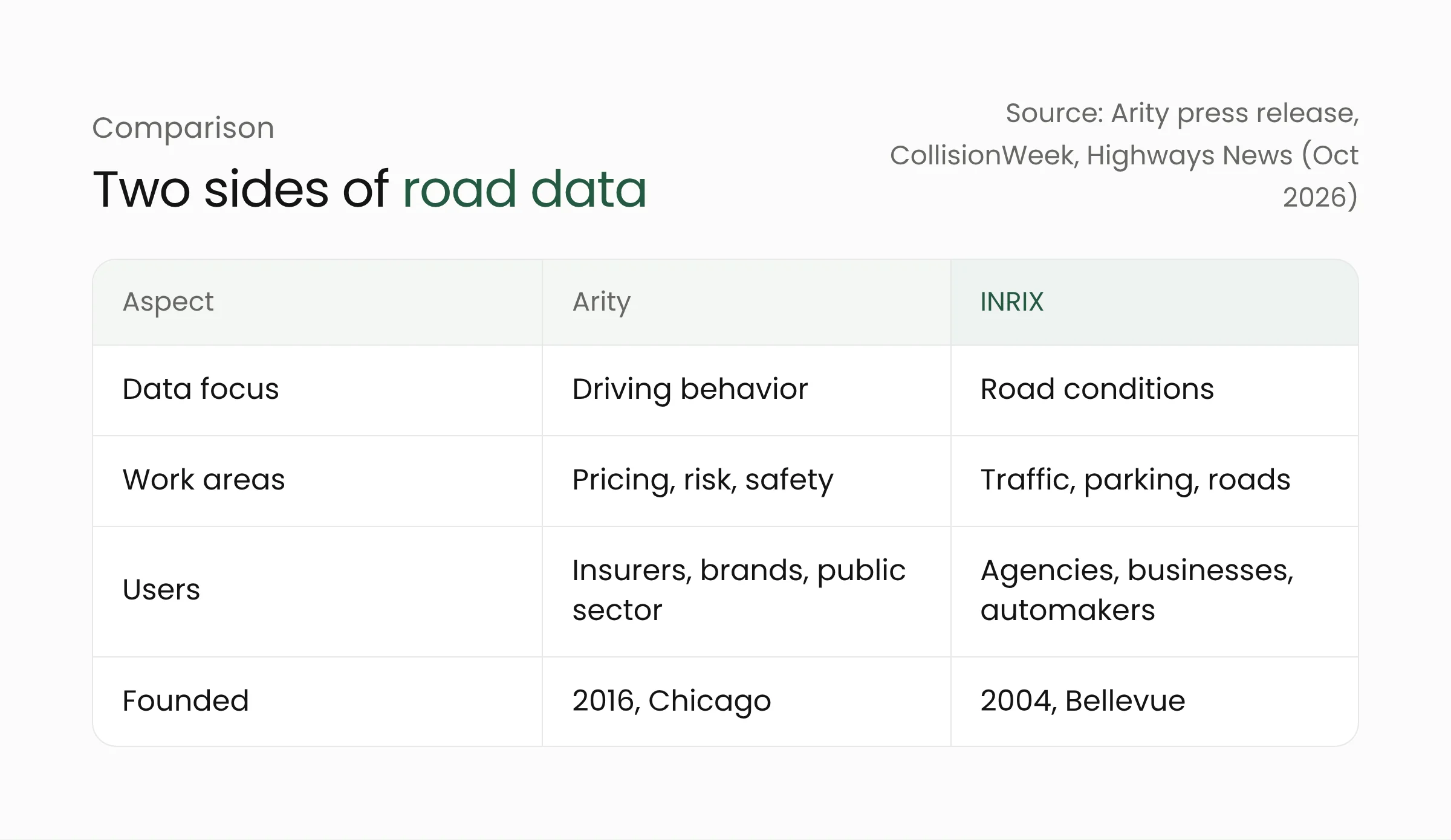
Arity was founded in 2016 and is headquartered in Chicago. It says it holds more than three trillion miles of driving data, which it turns into insight for insurers, brands, and public-sector partners making decisions on pricing, risk, marketing, and safety. INRIX was founded in 2004 and is based in Bellevue, Washington, according to CollisionWeek. Co-founder Bryan Mistele serves as its CEO.
Arity president Gary Hallgren summed up the rationale in one sentence: “Transportation operates as one connected system”. The release says the two teams have complementary expertise and describes the deal as part of Allstate’s wider investment in data, analytics, and mobility intelligence.
How traffic data works
A map that shows red and green road segments is usually assembled from many small signals. Each phone or connected vehicle on the move reports its position and speed. Once thousands of points are collected and cleaned, a system can estimate the average speed on each segment and compare it with what is normal for that hour. INRIX’s release says its raw material is big data from connected devices and vehicles, processed with machine learning and AI.
The output serves two audiences. Drivers get travel-time estimates, while agencies and companies get deeper analysis, such as recurring bottlenecks or how a road closure affects nearby streets.
Two kinds of data, one company
Highways News lists INRIX’s work as spanning traffic, parking, road analytics, and transportation infrastructure. Its customers include public agencies, businesses, vehicle manufacturers, mobility providers, and technology companies.
Arity comes from a different direction. Its data describes driving behavior, such as braking habits or speed, and is used to assess risk. Put simply, INRIX explains the condition of the road, while Arity explains how drivers behave on it.
The two datasets complement each other because driving risk depends on road conditions. A driver who brakes hard on a congested stretch means something different from one who does so on an empty road. Both companies say the combination will give a broader view of how people, vehicles, goods, and roads interact. According to Highways News, insurers could use it to manage risk, businesses to move goods, and public authorities to work on road safety and infrastructure planning.
No new product has been described yet. Plans to integrate the data, the future of existing INRIX products, and the timing of any combined service have not been announced.
Privacy questions around location data
Mobility data comes from real people. A trail of trips can reveal where someone lives, where they work, and their daily routine, so processing it requires a clear basis and consent that users actually understand. The press release and coverage reviewed do not explain how the two companies will combine data and protect privacy after the deal closes. That is worth watching once details emerge.
Ownership raises a second question. CollisionWeek describes the deal as putting INRIX’s traffic, road, and transportation-network data inside an analytics business owned by an insurer. INRIX’s government and automotive customers will likely want to know whether service terms, data security commitments, and data-sharing practices stay the same. No answer is available yet, so waiting for official statements is wiser than drawing conclusions.
In Indonesia, location data that can be linked to a person counts as personal data. Handlers are bound by Law No. 27 of 2022 on Personal Data Protection (Undang-Undang Nomor 27 Tahun 2022 tentang Pelindungan Data Pribadi), which requires a lawful basis for processing, consent being one of them. Organizations that collect travel data should define the purpose, retention period, and who may access it from the start.
What this means for your organization
The deal in the United States does not directly change anything for organizations in Indonesia. Its direction is relevant to three groups, though.
Transport agencies and local governments. Accurate traffic data helps decide which intersections to fix, how to time signals, and where public transport routes should run. In cities reorganizing mass transit, travel-time data from before and after a route change shows whether the policy worked. Before buying or building a system, define the policy questions you want answered and confirm that the data can be shared across agencies. This echoes our earlier piece on Indonesia’s One Data law and interoperability. Technical support is available through our digital government solutions.
Vehicle insurers and financiers. Driving data can support risk assessment that is more detailed than vehicle age or type. The approach only works when customers know what is recorded and what they get in return. A careful driver, for example, will reasonably ask whether that habit shows up in their rate, and companies should have an answer ready before launching a similar program. Our financial services solutions page describes related work.
Logistics and retail. Delivery fleets generate position and travel-time data every day. Combining it with road-condition data can improve arrival estimates and route choice. An online store promising same-day delivery, for instance, needs realistic estimates so that promises to customers are not missed often. For businesses with their own fleet, the first step is to tidy the data already on hand through data analytics services.
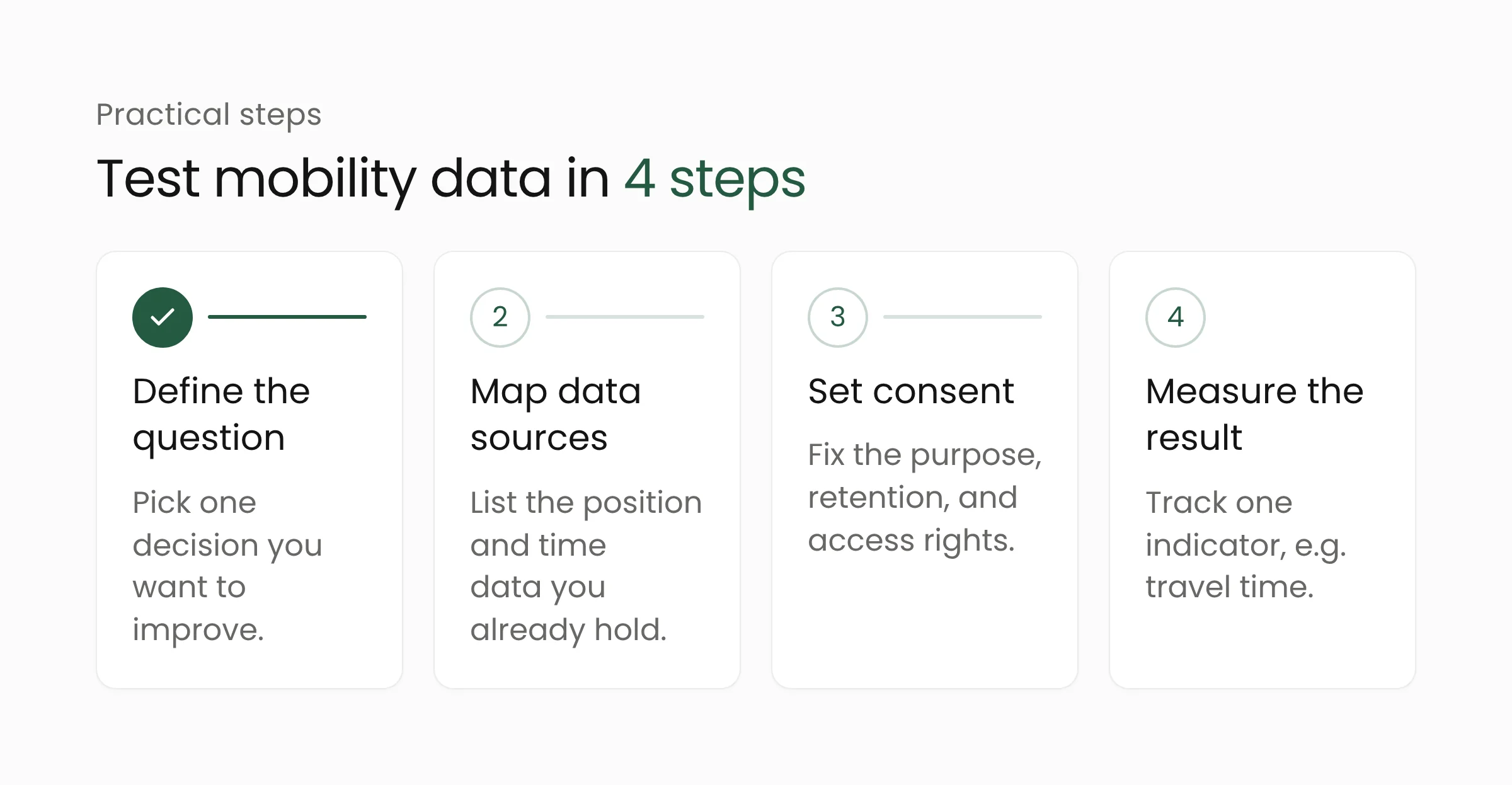
Small organizations do not need to start with a large project. One clear question and one existing data source, such as a month of fleet trip logs, are enough to test whether mobility analytics delivers real value. Whatever the sector, the sequence is similar: define the question, map the data you already hold, set consent and access rights, then measure the result with a single clear indicator, such as average travel time or the number of accident-prone spots.
Frequently asked questions
What is Arity buying from INRIX?
Arity agreed to buy substantially all of INRIX’s assets, including its mobility data and analytics business. The value has not been disclosed, and closing is expected in 2026.
Is the deal complete?
Not yet. The companies only signed the agreement on October 16, 2026, and closing remains subject to customary conditions. The release says closing is still a target, and no changes to either company’s services have been announced.
Will INRIX services change?
That has not been announced. The sources reviewed do not describe the fate of INRIX products or customers after the deal. Users of its services should wait for official statements from the two companies.
Conclusion
The acquisition shows that driving-behavior data and road-network data are increasingly treated as one body of information. The effect on the Indonesian market will depend on how widely the combined service is offered outside the United States, which has not been announced. Organizations that want to put operational data to work, from fleets to city traffic, can talk with the Merakit team through our data analytics services page or contact us.
Sources
- Arity press release: Arity to Acquire INRIX, Advancing a Connected Vision for the Future of Transportation, October 16, 2026
- CollisionWeek: Allstate’s Arity to Acquire Traffic Data Provider INRIX, October 19, 2026
- Highways News: Arity set to acquire INRIX in move to unite driving and transport intelligence, October 19, 2026