Blog Cross-Border QRIS
QRIS Cross-Border Payments Extend to Hong Kong, Timor-Leste
On this page· 7 sections
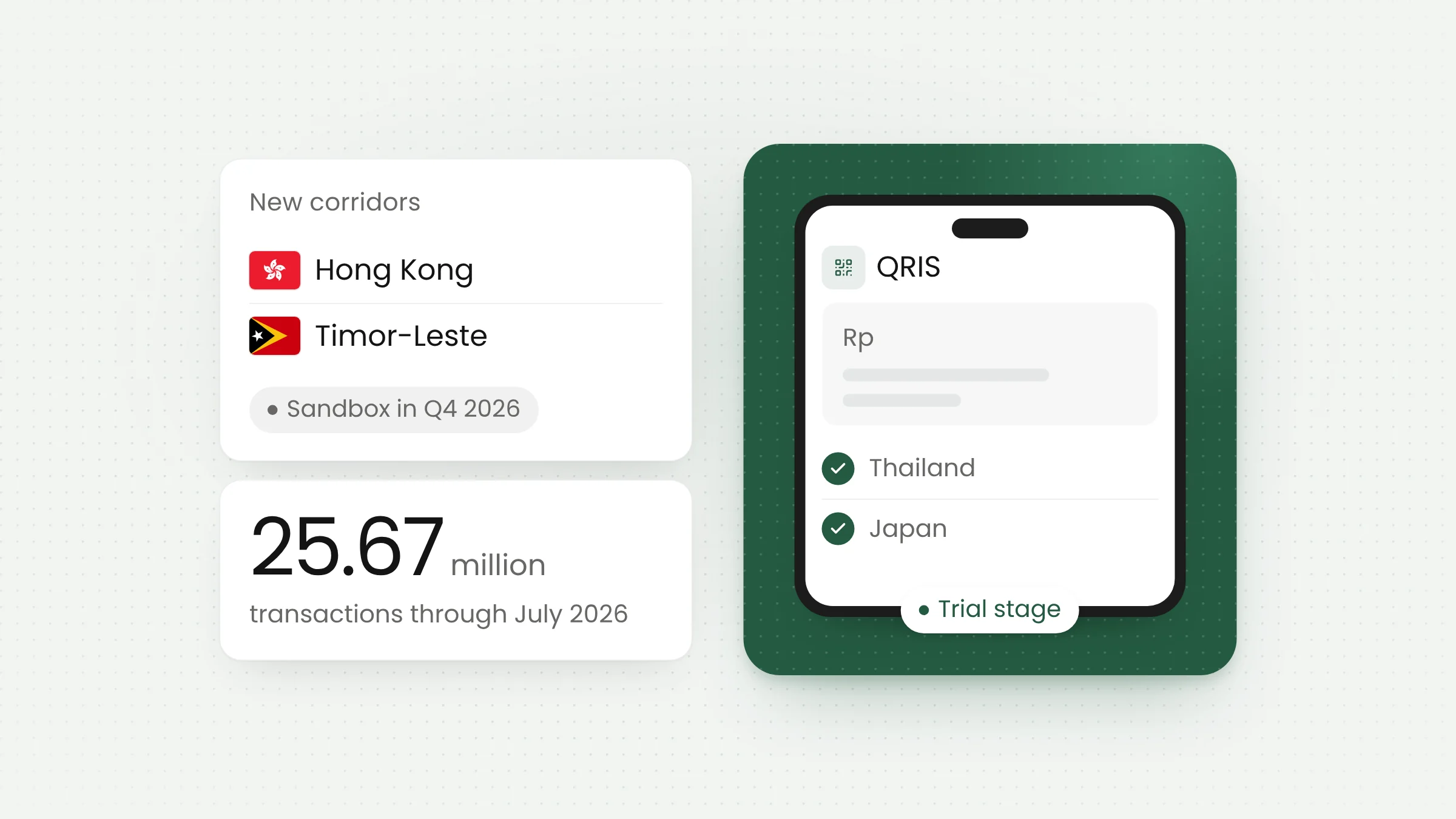
Bank Indonesia will begin testing an extension of its cross-border QRIS payment link to Hong Kong and Timor-Leste in the fourth quarter of 2026. The central bank announced the plan after its Board of Governors meeting on 20 and 21 October 2026. The first stage is a limited trial, so QRIS payments to the two destinations are not yet open to the public.
What Bank Indonesia decided
The meeting results were presented on Wednesday, 21 October 2026. According to CNBC Indonesia, Governor Destry Damayanti said that Bank Indonesia is expanding cross-border QRIS cooperation through “sandboxing” of the Timor-Leste and Hong Kong corridors starting in the fourth quarter of 2026. The Indonesian wording reads: “BI memperluas kerja sama QRIS Antarnegara melalui sandboxing koridor Timor Leste dan Hong Kong mulai triwulan IV 2026”.
A sandbox is a controlled test environment. The report says this stage is used to develop and test how the cooperation works before it is widened. A corridor is a payment route between Indonesia and one partner economy, and QRIS stands for Quick Response Code Indonesian Standard, the national QR payment standard.
The stated goals are to support economic growth, widen digital economic and financial activity, and make cross-border transactions easier for people and businesses dealing with Indonesian partners.
The expansion falls under the Indonesia Payment System Blueprint (BSPI) 2030. The sources we read do not give an exact start date, the participating banks or payment providers, or transaction limits during the trial. These details have not been announced. Readers should wait for official announcements from Bank Indonesia and payment providers before promising anything to customers.
In May 2026, BI Deputy Governor Filianingsih Hendarta named three countries targeted for this year: India, Hong Kong and Timor-Leste, as reported by Pasardana. In the October briefing as quoted by the media, only Hong Kong and Timor-Leste were mentioned. The sources we read do not explain what happens to the India corridor.
Cross-border QRIS use through July 2026
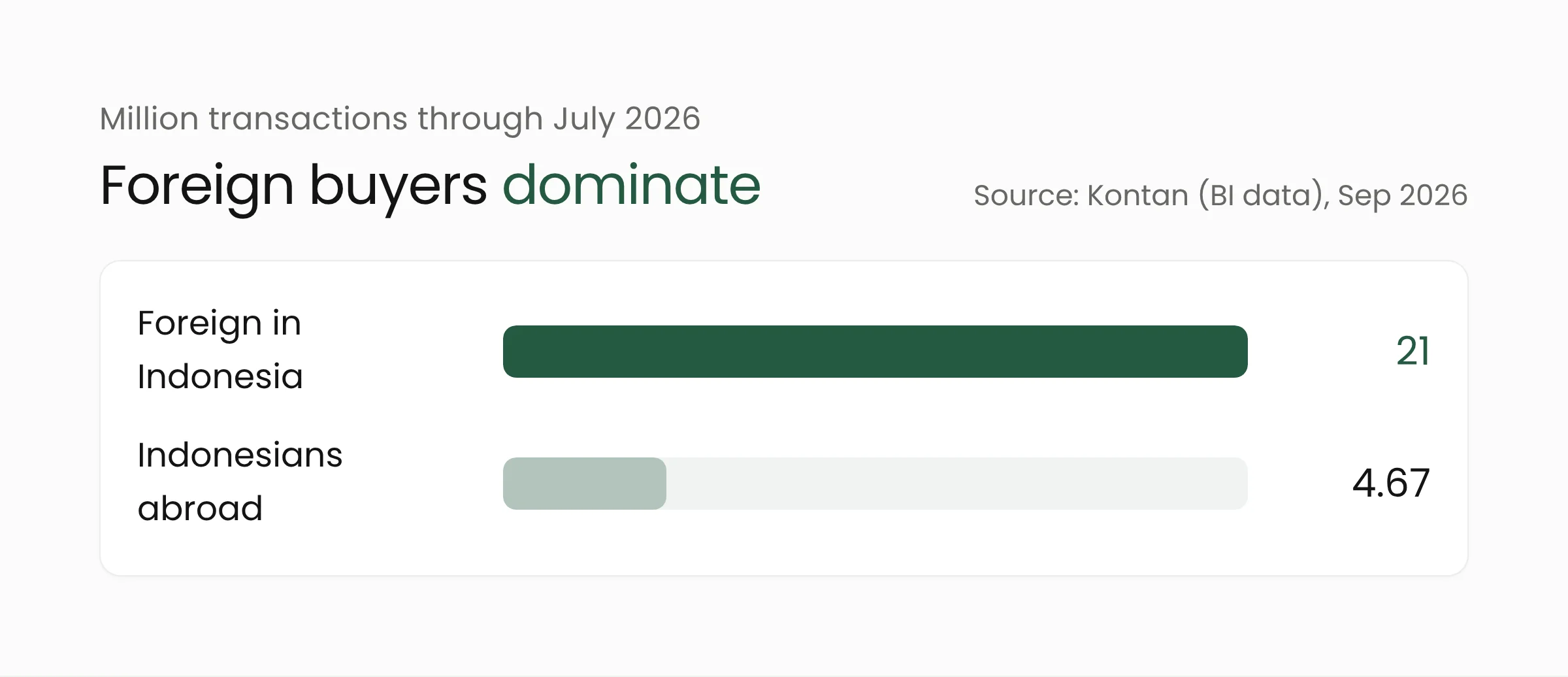
Cross-border QRIS is already linked to six countries: Thailand, Malaysia, Singapore, Japan, South Korea and China. BI data cited by Kontan on 22 September 2026 shows 25.67 million transactions worth Rp7.63 trillion through July 2026.
Most of that volume came from foreign users paying in Indonesia: 21 million transactions worth Rp5.90 trillion. Indonesian users paying abroad recorded 4.67 million transactions worth Rp1.73 trillion. In other words, more than four in five transactions took place at merchants inside Indonesia.
That pattern helps explain what a new corridor means. Each connected economy opens a flow of foreign buyers to Indonesian merchants and a flow of Indonesian users to merchants abroad. How large each direction will be for Hong Kong and Timor-Leste will only become clear once the trial runs, and those figures are not yet available.
For payment providers, the two directions call for different work. Inbound payments require the ability to accept payments from foreign apps and record them correctly. Outbound payments require clear service for Indonesian users, from showing amounts in rupiah to handling failed transactions while they are overseas.
Three other measures in the same policy package
Besides cross-border QRIS, CNBC Indonesia lists three other payment system measures that also start in the fourth quarter of 2026.
The first is wider use of the Indonesian Credit Card (KKI). For the retail segment, BI is strengthening first-mover participants and bringing in next-mover participants. For the government segment, BI is optimizing online payment features.
The second is a Bank Indonesia regulation on payment system data. It is meant to provide the legal basis for data exchange and, according to the report, will align with the Personal Data Protection Law. The text of the rules has not been published in the sources we read.
The third is a reorganization of cooperation between payment system providers (PSP) and supporting providers (PP). PSPs run the payment services, while PPs supply technical or supporting services. New rules could affect contracts and the division of responsibility between the two.
What this means for merchants and payment providers
The trial has only just been announced, so the sources we read mention no change that merchants must make. Still, a few points are worth preparing now, especially for businesses that serve buyers from abroad. This section offers general advice, not a forecast of policy, and there is no word yet on which merchants take part in the trial.
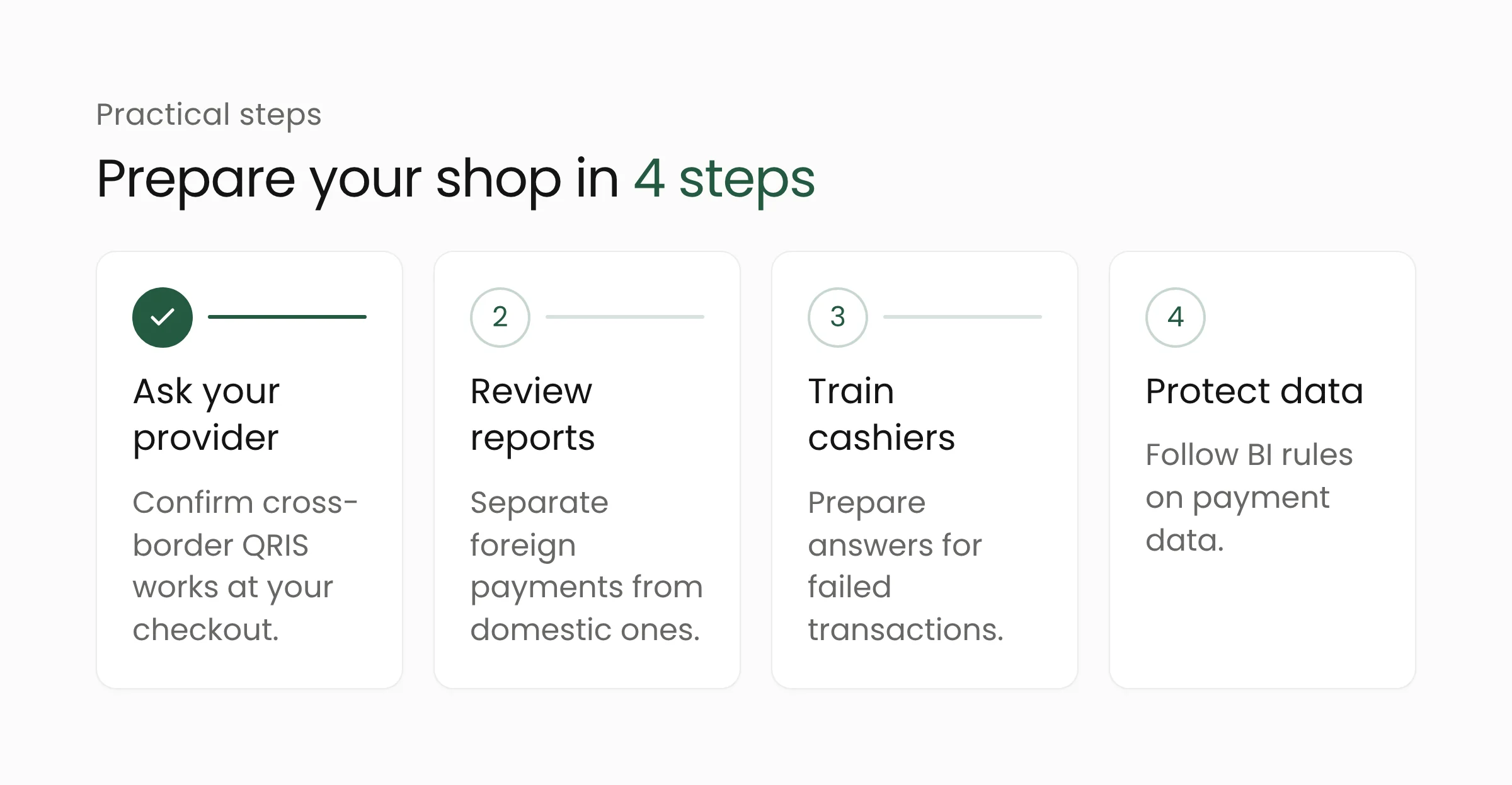
First, confirm that your checkout or payment provider already supports cross-border QRIS for the connected countries, then ask about its schedule for Hong Kong and Timor-Leste. Second, review your transaction reports: are payments from foreign users recorded separately from domestic ones, with the rupiah value and status? That separation makes end-of-day reconciliation easier and helps trace transactions a buyer disputes.
Third, train cashiers to handle visitor questions and failed transactions. Fourth, set up careful handling of customer data, since a Bank Indonesia regulation on payment system data is being prepared. Developers of payment systems should follow the draft rules before designing features that share data between parties.
For a small shop, the simplest step is to ask the bank or provider that supplies the QRIS code, without replacing any system first. For a mid-sized business with several branches, decide who owns cross-border transaction reports and who handles buyer complaints. A clear division of tasks from the start prevents transactions from stalling with no owner.
One more point: official figures arrive with a delay. July 2026 data was only reported in September, so results from the Hong Kong and Timor-Leste trials may take months after the start to read. Meanwhile, merchants can use their own transaction data to see how often foreign buyers visit and at what hours.
For banks, e-wallets and checkout providers, a new corridor means integration, testing and monitoring of cross-currency transactions. Systems that receive many payments from different apps also need monitoring for unusual patterns, since new routes tend to attract fraud attempts. Merakit’s digital financial services and retail management work covers system needs of this kind. Our earlier article on zero MDR for QRIS covers the cost side for shops.
Frequently asked questions
When can QRIS be used in Hong Kong and Timor-Leste?
There is no public launch date. BI says the trial starts in the fourth quarter of 2026, from October to December. The cooperation is widened only after the trial, and the length of the trial has not been announced.
Can cross-border QRIS already be used in other countries?
Yes. According to BI data cited by Kontan, cross-border QRIS is linked to Thailand, Malaysia, Singapore, Japan, South Korea and China. Coverage can differ by country, so check the payment app you use.
Do merchants need to register again?
The sources we read mention no new obligation for merchants. Merchants should ask the bank or payment provider that manages their QRIS code about readiness.
Conclusion
Cross-border payments are now a routine part of Indonesia’s digital finance, and Hong Kong and Timor-Leste add new directions for cross-border QRIS, while the data rules and the provider reorganization shape how those routes run. If your organization builds payment services or checkout systems, contact the Merakit team to discuss integration readiness and data security.
Sources
- CNBC Indonesia: QRIS RI Mau Masuk Timor Leste & Hong Kong, BI Mulai Uji Coba Q4-2026 (21 October 2026)
- CNBC Indonesia: Banyak yang Baru, Ini Daftar Keputusan BI Dalam RDG Oktober 2026 (21 October 2026)
- Kontan: Transaksi QRIS Antarnegara hingga Juli 2026 (22 September 2026)
- Pasardana: BI Targetkan Tahun Ini QRIS Bisa Dipakai di India hingga Timor Leste (21 May 2026)